The Institutional Disconnect: Why Wall Street Isn’t "Bailing Out" Altcoins
The hope that major asset managers will eventually rotate capital into a broad range of altcoins to spark a new "altseason" is being met with skepticism by seasoned market observers. Experts emphasize that firms like BlackRock, Fidelity, and Franklin Templeton view the majority of altcoins not as viable long-term assets, but rather as internal fundraising vehicles for specific projects. From an institutional perspective, many tokens lack a direct, legally enforceable link between the project’s utility or revenue and the token itself.
This disconnect is a primary reason why institutional interest remains highly selective. Analysts point out that BlackRock’s strategy is rooted in fiduciary responsibility and risk management; the firm has little incentive to "absorb the bags" of retail investors who entered positions during speculative peaks. Instead, the institutional focus is shifting toward the infrastructure itself. Rather than betting on a multitude of individual tokens, Wall Street is looking at high-performance Layer-1 (L1) networks as the future rails for global finance.
The Shift Toward Tokenized Real-World Assets (RWA)
Weiss Crypto recently projected a future where the integration of cryptocurrency and Wall Street moves away from speculative trading and toward the tokenization of real-world assets (RWA). In this envisioned ecosystem, traditional companies may choose to bypass legacy stock exchanges entirely, opting instead to list assets directly on blockchains such as Solana or Ethereum. This would allow for 24/7 trading, instant settlement, and reduced intermediary costs.
The implications of this shift are profound. If major corporations begin issuing equity or debt directly on-chain, the value proposition moves from the speculative token to the ownership of the underlying asset. In such a scenario, the blockchain serves as a high-performance ledger. This explains the institutional preference for networks like Solana, which offers the throughput and low latency required for high-frequency financial operations. As Solana makes significant headway into Wall Street conversations, it is being viewed less as a "crypto-currency" and more as a decentralized operating system for the future of finance.
The Altcoin Winter: Technical Data and Market Underperformance
While the narrative of institutional adoption grows, the current reality for the majority of altcoins remains grim. Technical data indicates that the "altcoin winter" is not merely a sentiment-driven lull but a structural period of underperformance. Approximately 84% of altcoins listed on Binance are currently trading below their 200-day moving average (MA). This indicator is widely used by institutional traders to determine the long-term health of an asset; trading below this line typically signals a bearish trend.
This streak of underperformance has persisted for nearly eight months, marking the second-longest period of its kind since 2020. The only period that surpassed this current stagnation was the ten-month bearish cycle during the previous major bear market. This prolonged weakness suggests that liquidity is being sucked out of the broader altcoin market and concentrated into Bitcoin or stablecoins.
Furthermore, the CoinMarketCap Altcoin Season Index currently sits at 48/100. A score below 75 indicates that it is "Bitcoin Season," meaning Bitcoin is outperforming the majority of the top 50 altcoins. The Total 3 index, which tracks the total market capitalization of all cryptocurrencies excluding Bitcoin and Ethereum, continues to slide, highlighting the lack of buy-side pressure for mid-cap and small-cap assets.
The Race for the Next Crypto ETF: Solana, XRP, and Beyond
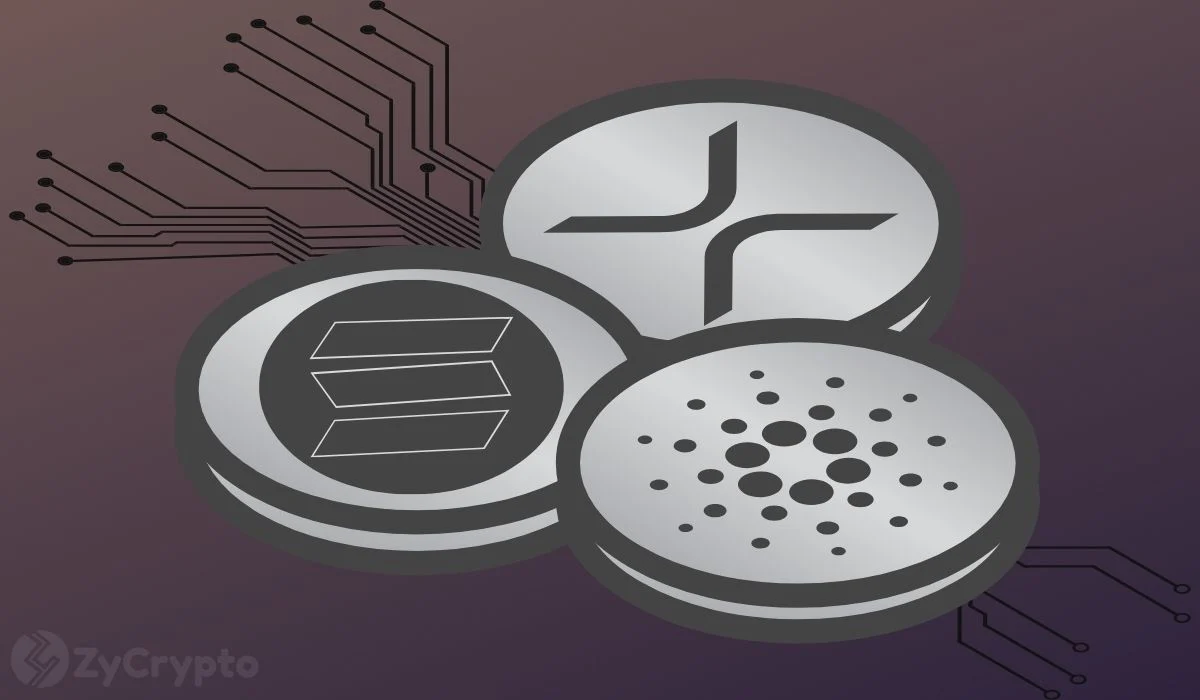
Despite the broader market’s struggles, the success of Bitcoin and Ethereum Spot ETFs has opened the floodgates for applications targeting other major assets. Following the SEC’s approval of Ethereum ETFs, the industry’s attention has turned to Solana (SOL). Investment firms like VanEck and 21Shares have already filed the first S-1 applications for a Spot Solana ETF, arguing that SOL’s decentralized nature and utility make it a commodity similar to Ethereum.
The "ETF table" at the SEC is expected to become increasingly crowded. Speculation is mounting that XRP, Cardano (ADA), and even Shiba Inu (SHIB) could be next in line for filing. For XRP, the path is somewhat clearer following a pivotal court ruling that determined the token itself is not a security when sold on public exchanges. Ripple CEO Brad Garlinghouse has frequently hinted that an XRP ETF is "inevitable" given the asset’s role in cross-border payments and its established regulatory standing in several international jurisdictions.
However, the inclusion of assets like Cardano and Shiba Inu faces steeper hurdles. The SEC has previously labeled ADA as a security in various lawsuits against exchanges, a classification that Input Output Global (IOG) vehemently denies. For Shiba Inu, the challenge lies in its origin as a "meme coin," although its developers have worked to build a functional ecosystem including the Shibarium Layer-2 network. Analysts suggest that while filings may reach the SEC’s table, the approval process for these assets will likely be more contentious than those for Bitcoin and Ethereum.
Price Action and Critical Support Levels
The market’s current fragility is reflected in the price action of top-tier assets. Ethereum has experienced a decline, dipping 2.54% to $1,579.21. This downward pressure is attributed to hawkish signals from central banks, which suggest that interest rates may remain higher for longer, reducing the appetite for "risk-on" assets. Additionally, Ethereum has shown a strong negative correlation with the S&P 500 recently, failing to catch the tailwinds of the traditional stock market’s resilience.
Binance Coin (BNB) has also faced setbacks, declining 2.57% following a technical breakdown below critical support levels. Regulatory pressures on the exchange and a cooling of the Binance Smart Chain (BSC) ecosystem have contributed to the asset’s inability to maintain its upward momentum.
XRP, meanwhile, has slipped 2.36% to $1.04. For XRP traders, the psychological and technical level of $1.00 is currently the most critical battlefield. Defending this mark is essential to prevent a deeper correction that could wipe out the gains made following its legal victories. The market is currently teetering at major support levels across the board, and without a significant fundamental catalyst—such as an unexpected SEC approval or a pivot in Federal Reserve policy—this period of stagnation is expected to continue.
Timeline of Recent Developments
To understand the current state of the market, it is essential to look at the chronology of events over the past year:
- January 2024: The SEC approves the first Spot Bitcoin ETFs, leading to billions of dollars in institutional inflows.
- May 2024: In a surprise move, the SEC approves the 19b-4 filings for Spot Ethereum ETFs, signaling a shift in the agency’s stance on Layer-1 tokens.
- June 2024: VanEck files the first-ever application for a Spot Solana ETF, citing its high performance and growing developer adoption.
- July 2024: Speculation intensifies regarding an XRP ETF following Ripple’s continued legal progress and the resolution of several key phases of its litigation with the SEC.
- August 2024: The Altcoin Season Index hits a mid-year low, confirming "Bitcoin Season" as the dominant market theme.
- Present: Institutional focus shifts toward the tokenization of Real-World Assets (RWA) and the utilization of Solana and Ethereum for institutional settlement layers.
Broader Impact and Market Implications
The evolution of the cryptocurrency market from a retail-driven speculative bubble into an institutional-grade asset class is a painful transition for many. The current "stagnation" in altcoin prices is a reflection of a market that is maturing. Investors are no longer buying tokens based solely on hype; they are looking for sustainable tokenomics, regulatory clarity, and real-world utility.
For the SEC, the upcoming wave of ETF applications will be a test of its "regulation by enforcement" strategy. If the agency continues to lose court battles regarding the classification of tokens, it may be forced to provide a clearer framework for what constitutes a commodity versus a security. Such a framework would be a massive catalyst for the industry, potentially unlocking the trillions of dollars in sidelined institutional capital.
In the long term, the survival of many altcoins depends on their ability to integrate with the traditional financial system. As Wall Street builds its own versions of decentralized finance (DeFi) on top of existing blockchains, the "speculative tokens" of today may either evolve into the "utility tokens" of tomorrow or fade into obscurity. For now, the market remains in a state of high-stakes anticipation, with all eyes on the SEC’s table and the charts of the world’s leading Layer-1 networks.