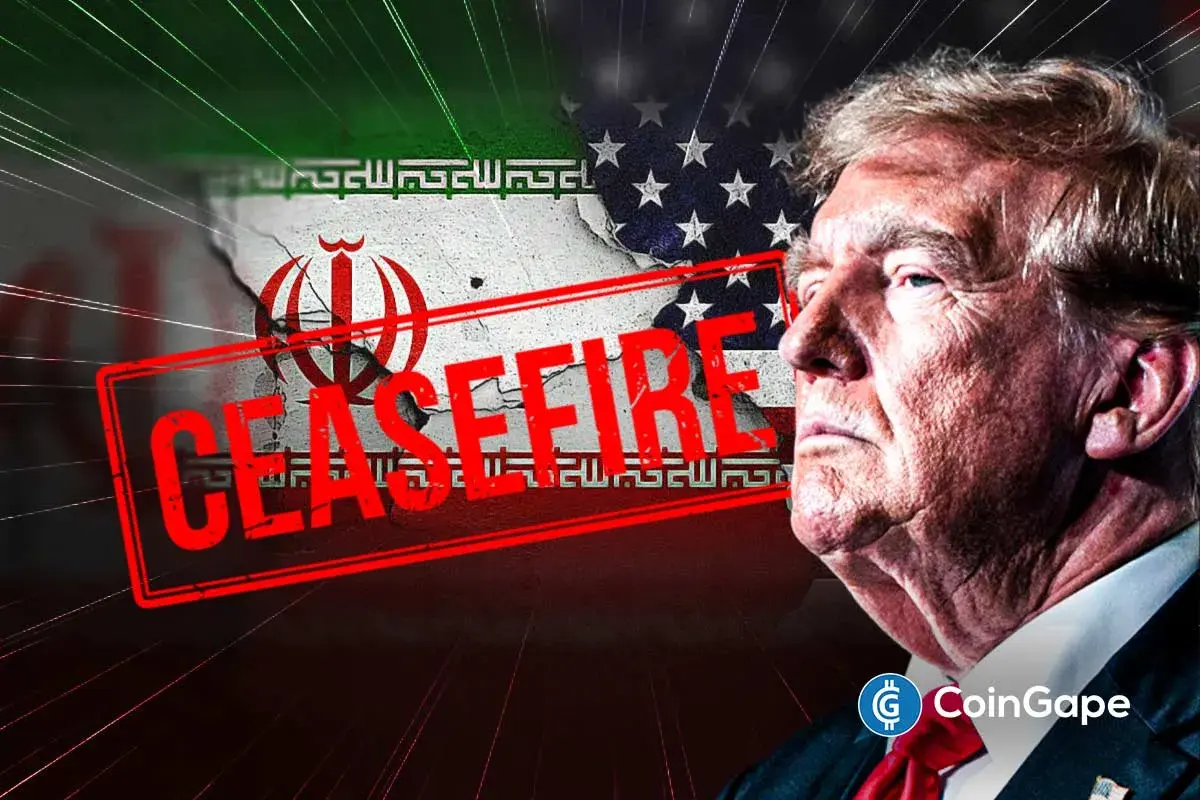
The geopolitical landscape of the Middle East has entered a period of profound instability following Iran’s formal rejection of a United States-led ceasefire proposal. The diplomatic overture, facilitated by Iraqi Prime Minister Ali al-Zaidi, was intended to de-escalate a rapidly intensifying conflict that now threatens to engulf regional power players and disrupt global energy markets. However, Tehran’s dismissal of the terms, coupled with President Donald Trump’s subsequent vow to launch a "massive attack" against Iranian infrastructure and Houthi militants, has signaled a breakdown in back-channel communications. As of July 24, the conflict has moved beyond localized skirmishes into a strategic confrontation with significant implications for global trade, domestic American politics, and the volatile cryptocurrency markets.
The Rejection of the Al-Zaidi Proposal
The ceasefire proposal, delivered to Tehran on Friday by Iraqi Prime Minister Ali al-Zaidi, was seen by many international observers as a final attempt at a diplomatic off-ramp. According to reports from the New York Times, the proposal sought a temporary cessation of hostilities to allow for humanitarian corridors and a cooling-off period. However, Iranian leadership viewed the offer as fundamentally flawed. Iranian officials stated unequivocally that they are not interested in any "temporary deal" that fails to address the underlying issue of maritime sovereignty, specifically regarding the control of the Strait of Hormuz.
Iranian Foreign Minister Abbas Araghchi underscored the administration’s stance, remarking that the region "already had enough mediators." Araghchi’s rhetoric reflected a deep-seated distrust of Washington’s intentions, characterizing the American outlook as "illogical, greedy, and controlling." He argued that the primary obstacle to peace was not a lack of communication but rather the US insistence on maintaining a dominant military presence in waters that Tehran considers its sovereign domain. By rejecting the Iraqi-led initiative, Iran has effectively signaled its readiness for a prolonged confrontation, betting that its control over vital maritime chokepoints provides sufficient leverage to withstand American military pressure.
Escalation of Military Rhetoric and Contingency Plans
In response to the diplomatic impasse, President Trump has escalated his rhetoric, utilizing social media and official briefings to outline a strategy of "military punishment." The President’s focus has shifted toward a dual-pronged approach: neutralizing the Houthi rebels in Yemen—who recently targeted two Saudi oil tankers in the Red Sea—and preparing for a "massive attack" on Iranian soil should the situation deteriorate further. On Truth Social, President Trump issued a stern warning, stating that "any and all damages" inflicted upon international shipping, cargo, or infrastructure would be compensated using frozen Iranian assets.
The Iranian response to these threats has been equally aggressive. Two senior Iranian officials, speaking on the condition of anonymity, revealed that Tehran has developed a comprehensive "expansion of war" strategy. This contingency plan reportedly includes direct missile strikes on Tel Aviv, a full closure of the Bab el-Mandab Strait via Houthi proxies, and the targeting of senior advisers within the Trump administration. This "theory of leverage" rests on the assumption that by creating maximum chaos in global energy markets and threatening high-value targets, Iran can force the US to the negotiating table on more favorable terms.
Economic Fallout: Oil Surges and Stock Futures Plunge
The immediate impact of the failed ceasefire was felt most acutely in the energy markets. Crude oil prices surged to nearly $92 per barrel on Friday, marking a gain of more than 12% within a single week. The spike is a direct reflection of the "war premium" being priced in by traders who fear a total blockade of the Strait of Hormuz, through which approximately one-fifth of the world’s total oil consumption passes. Analysts warn that if the Bab el-Mandab and the Strait of Hormuz are simultaneously compromised, oil prices could easily breach the $120 mark, triggering a global inflationary shock.
This surge in energy costs has sent shockwaves through the broader financial sector. US stock futures plunged in late-week trading as investors moved away from equities in anticipation of higher operating costs for corporations and reduced consumer spending power. The prospect of a prolonged conflict in the Middle East has complicated the Federal Reserve’s efforts to manage inflation, raising the specter of a recessionary environment fueled by supply-side shocks.
Cryptocurrency Markets Under Pressure
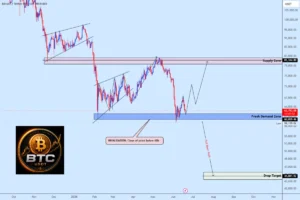
While traditionally viewed as a "digital gold" or a hedge against geopolitical instability, Bitcoin and other cryptocurrencies have faced significant headwinds as the conflict escalates. Bitcoin (BTC) was trading near $65,300 at press time, representing a modest decline of 0.50% over a 24-hour period. However, the intraday volatility told a more complex story, with the asset fluctuating between a low of $64,610 and a high of $65,776. Trading volume for Bitcoin has dropped by 15%, suggesting that many retail and institutional traders are moving to the sidelines to wait for a clearer direction in the conflict.
The lack of a significant "safe haven" rally in Bitcoin is attributed to a combination of factors. First, the introduction of new 12.5% global tariffs by the Trump administration has strengthened the US dollar, which typically puts downward pressure on BTC. Second, the threat of a "massive attack" on Iran has heightened general risk aversion, leading investors to favor cash and short-term Treasuries over high-volatility assets.
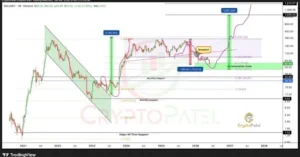
XRP, the cryptocurrency closely associated with cross-border payments, has fared worse, dropping more than 3% to trade near $1.10. The asset’s decline is directly linked to the Houthi-led disruptions in the Red Sea. Because XRP is often utilized in the liquidity backends of global trade and logistics platforms, any threat to the physical movement of goods—such as the recent strikes on Saudi tankers—negatively impacts the perceived utility and sentiment surrounding the token.
Political Implications: The 2026 Midterm Strategy
The ongoing war has introduced a volatile variable into the upcoming US Midterm elections. Jeffrey Snider, a global monetary expert, has suggested that the White House may be pursuing a high-stakes strategy that prioritizes regional containment over domestic political optics. Snider argued that the administration appears willing to "sacrifice" Republican seats in Congress if it means decisively ending Iran’s ability to project power in the Middle East.
"Iran’s entire theory of leverage was that soaring prices would break the economy and cost Trump the midterms, forcing him to the table," Snider noted during a discussion with Mario Nawfal. He suggested that the administration has already factored in a potential recession and the loss of legislative seats as the "cost of doing business." If the US government has indeed moved past the fear of electoral consequences, Iran’s primary economic weapon—the manipulation of oil prices to influence American voters—loses its effectiveness. This shift in the political calculus suggests that the US may be preparing for a much longer and more intense military engagement than previously anticipated.
Military Chronology and CENTCOM Operations
The failure of the ceasefire proposal comes on the heels of a sustained American military campaign. According to reports from U.S. Central Command (CENTCOM), American forces have completed their 13th consecutive night of precision strikes against Iranian and Houthi targets. The mission objectives have focused on degrading the "infrastructure of escalation."
The timeline of recent strikes includes:
- Command and Control: Destruction of Iranian military command centers used to coordinate proxy movements in Iraq and Syria.
- Drone Capabilities: Strikes on drone storage facilities and assembly plants in Western Iran and Houthi-controlled territories in Yemen.
- Maritime Surveillance: Neutralization of coastal surveillance sites used to track and target commercial tankers in the Red Sea and the Gulf of Oman.
- Communication Networks: Electronic warfare and physical strikes on hardened communication nodes used by the Islamic Revolutionary Guard Corps (IRGC).
Despite these strikes, the Houthis have demonstrated a resilient "asymmetric" capability, continuing to launch anti-ship ballistic missiles and sea-based suicide drones. The persistence of these attacks, despite nearly two weeks of American bombardment, highlights the difficulty of achieving a purely military solution in the region.
Historical Context and the Strategic Importance of Hormuz
To understand the current impasse, one must look at the historical significance of the Strait of Hormuz. Measuring only 21 miles wide at its narrowest point, the Strait is the most sensitive chokepoint in global energy security. Iran has historically used the threat of closing the Strait as its "ultimate deterrent" against Western intervention. This tactic was famously utilized during the "Tanker War" phase of the Iran-Iraq War in the 1980s, which led to Operation Praying Mantis, the largest US surface-to-surface naval engagement since World War II.
The current rejection of the ceasefire over the issue of "Hormuz control" suggests that Tehran is no longer willing to accept the status quo of US naval dominance. By demanding a resolution to the control of the Strait as a prerequisite for peace, Iran is essentially asking for a fundamental realignment of power in the Persian Gulf—a demand that the Trump administration has characterized as "illogical and greedy."
Analysis of Future Implications
The rejection of the Al-Zaidi proposal marks a pivot point from diplomacy to active containment. For the global economy, the implications are stark. If the conflict remains at its current intensity, the "new normal" for oil prices may settle in the $90-$100 range, acting as a permanent tax on global growth. For the cryptocurrency sector, the narrative of Bitcoin as a geopolitical hedge is being tested; the asset must now compete with the gravity of high interest rates and a strong dollar.
Furthermore, the decision to use frozen Iranian funds to pay for shipping damages marks a significant escalation in financial warfare. This move could lead other nations to reconsider their reliance on the US-centric financial system, potentially accelerating the trend of de-dollarization in non-Western blocs.
As the US military prepares for what the President calls a "massive attack," the world remains on edge. The failure of the Iraqi mediation effort suggests that the window for a negotiated settlement has closed, leaving the trajectory of the Middle East to be decided not in the halls of diplomacy, but on the waters of the Red Sea and the skies over Tehran. In this climate of heightened risk, market participants are increasingly turning to leverage platforms and hedging strategies to navigate what appears to be an inevitable period of macroeconomic shock and regional realignment.