The market for artificial intelligence compute hardware has reached a critical stage of maturity characterized by extreme opacity, mirroring the nascent days of the Bitcoin mining industry. For years, major industry players—ranging from enterprise data center operators to individual AI researchers—have struggled to identify the fair market value of high-performance computing (HPC) nodes. Unlike consumer electronics or traditional enterprise servers, which often feature public MSRPs and established retail channels, the market for 8-GPU NVIDIA HGX nodes is defined by private, request-based quoting, shifting reseller asks, and a fragmented secondary market. This lack of centralized price discovery has hindered efficient capital allocation across the sector.
To address these systemic information gaps, Hashrate Index has officially launched the AI Hardware Price Index. By aggregating publicly available asking prices from dozens of vendors, this initiative seeks to provide a baseline for market participants, offering the first consistent, data-driven look at the valuation of core AI infrastructure.
The Chronology of Compute Scarcity
The current landscape of GPU availability is a direct result of the unprecedented surge in generative AI development that began in late 2022. As organizations globally scrambled to secure H100 and subsequent B300-series hardware, the traditional supply chain buckled.
In 2023, the industry saw the emergence of the "compute broker" model, where hardware prices fluctuated daily based on lead times, geographic availability, and secondary market demand. Throughout 2024 and 2025, as Blackwell-architecture chips began to circulate, the market bifurcation between "new" and "refurbished" hardware intensified. During this period, procurement teams were forced to operate in a vacuum, relying on anecdotal evidence and private relationships rather than standardized market metrics. The launch of the AI Hardware Price Index serves as a historical inflection point, marking the transition from an era of anecdotal pricing to one of systematic observation.
Methodology and Data Aggregation
Establishing a reliable index in a non-standardized market requires rigorous selection criteria. The index focuses exclusively on the air-cooled 8-GPU NVIDIA HGX node—a specific, high-demand configuration that acts as a bellwether for the broader industry. By excluding liquid-cooled variants, chassis-only builds, and bare baseboards, the index maintains a "like-for-like" comparison that prevents statistical bias caused by differing cooling infrastructures or peripheral configurations.
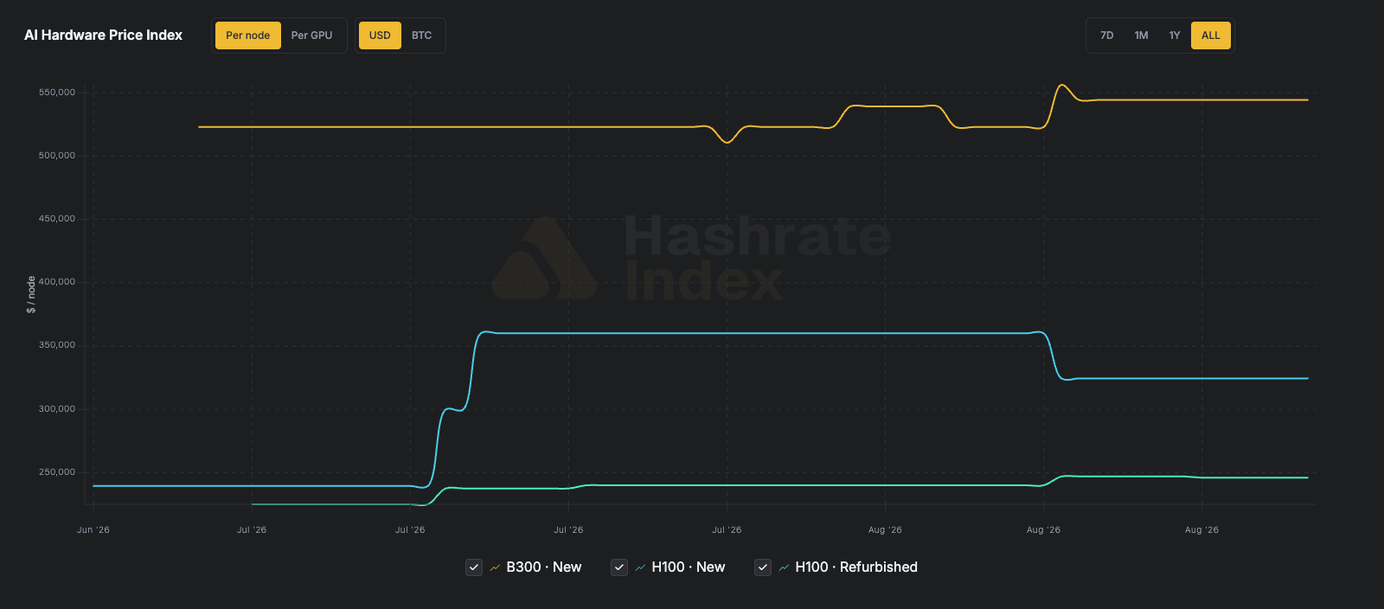
Data collection involves monitoring the live, publicly posted asking prices of vendors. Each entry represents a last-observed ask, held in the index until the vendor provides a price update. The resulting data points reflect the median of these active listings. It is essential to note that this index tracks "asking prices"—what sellers are requesting—rather than "transaction prices," which are often subject to non-disclosure agreements and volume-based discounting. This distinction is critical for users to understand: the index provides a ceiling and a reference point for current market sentiment rather than a definitive clearing price for large-scale enterprise contracts.
Analyzing the Current Price Dispersion
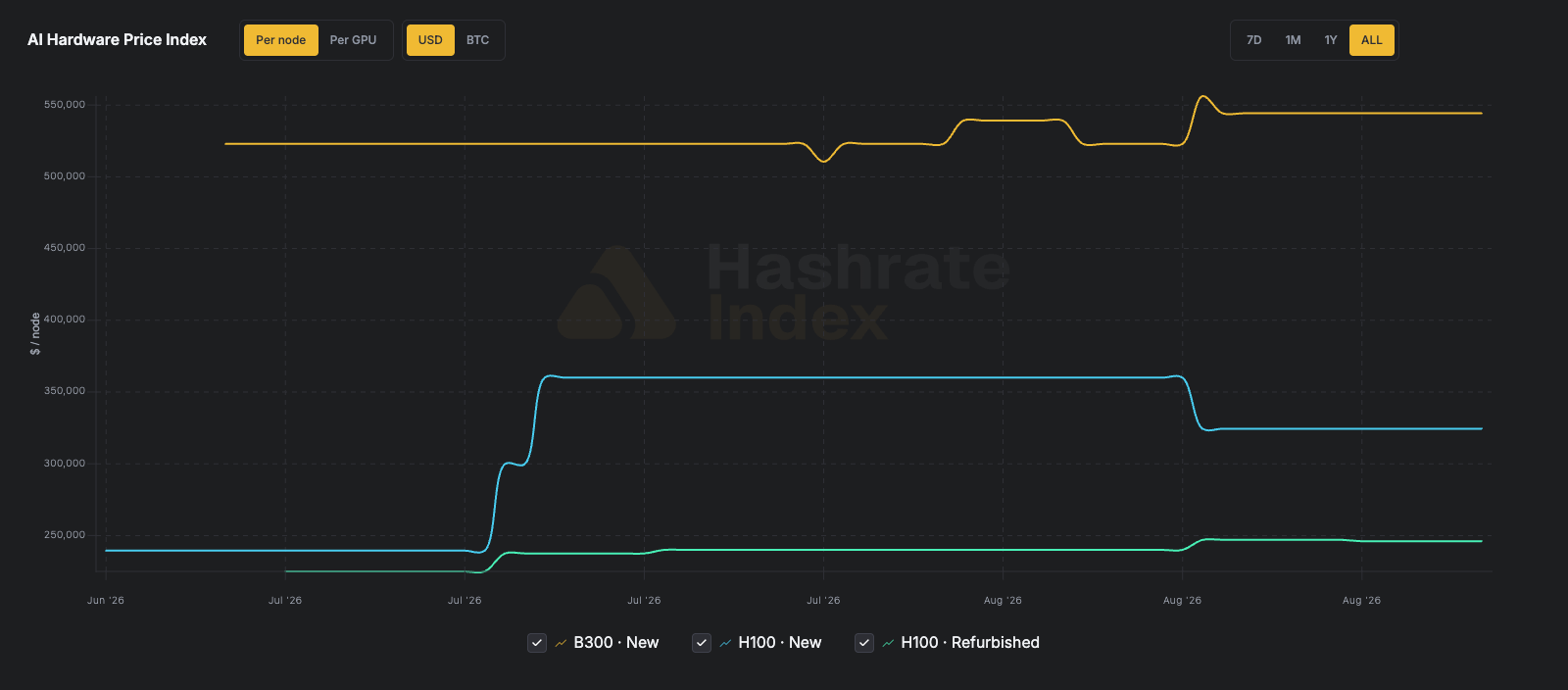
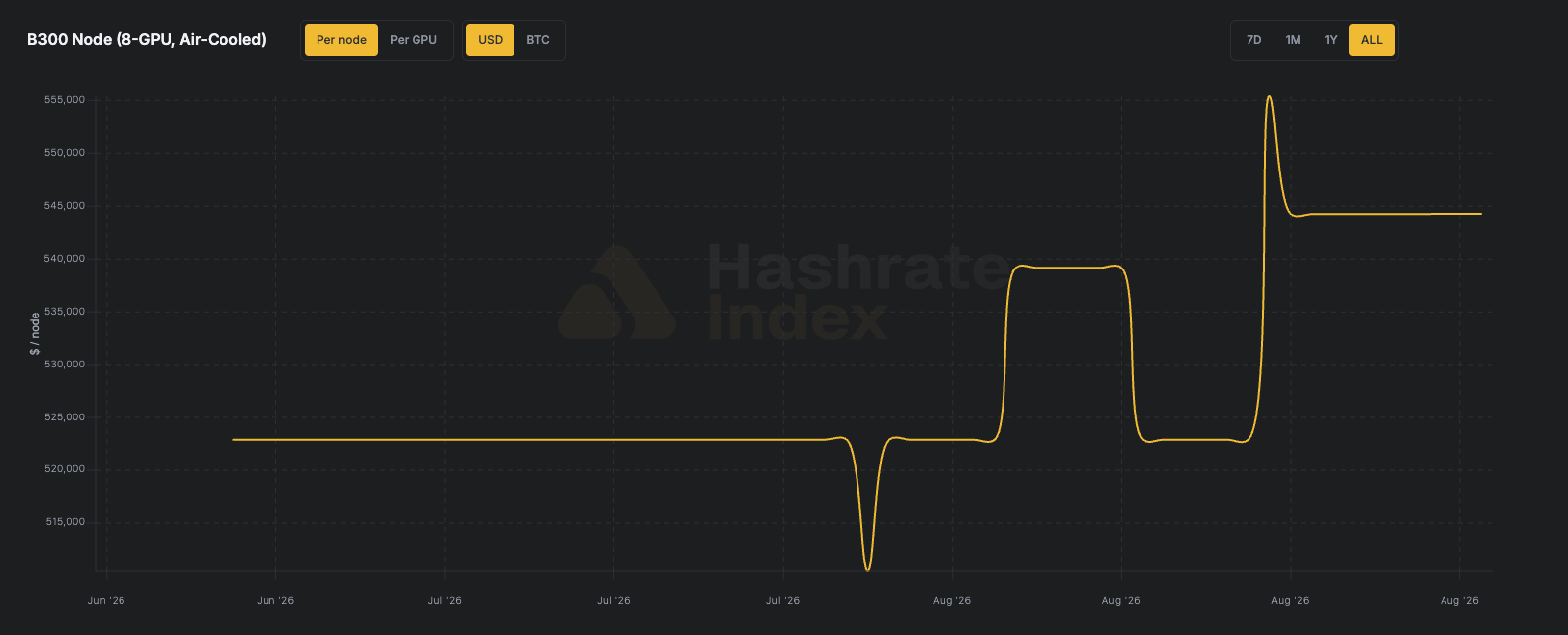
The initial data released by the index reveals a striking degree of market inefficiency. Currently, the price spread for an 8-GPU B300 node ranges between $399,999 and $682,000. This represents a 1.71x dispersion, highlighting the extreme variance in how different vendors price their inventory based on inventory turnover, supply chain relationships, and regional tax or logistical considerations.
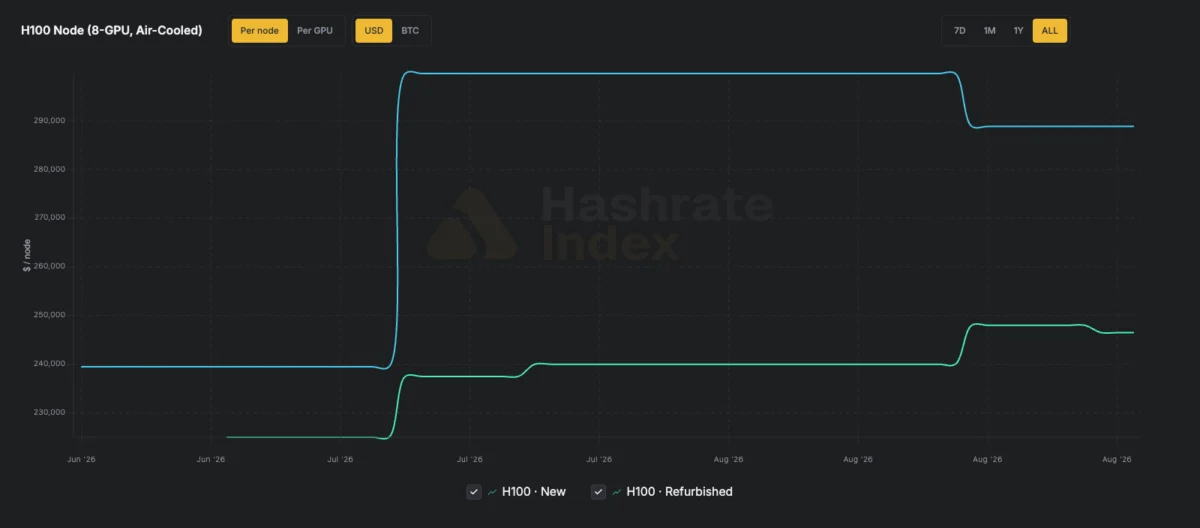
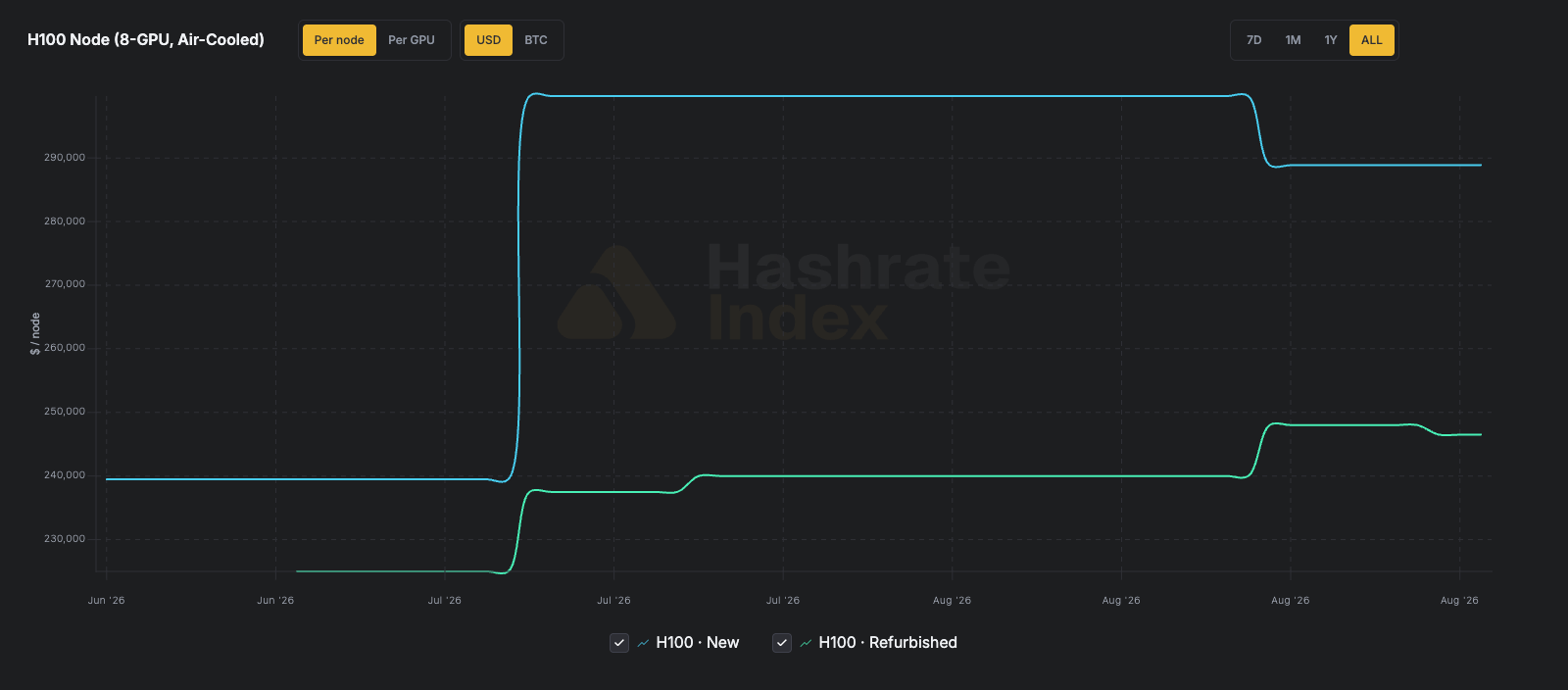
This volatility is mirrored in the Hopper (H100) segment, where the spread for new nodes remains at 1.70x, and refurbished nodes sit at 1.73x. When examining the premium associated with the latest hardware, Blackwell Ultra currently commands approximately 1.68x the price of a new Hopper-based node on a per-GPU basis. While significant, industry analysts note that this premium is narrower than the actual performance differential between the two platforms. This narrowing gap suggests that the market is still absorbing the transition to Blackwell, as H100 units remain readily available and continue to offer a reliable, albeit older, performance baseline.
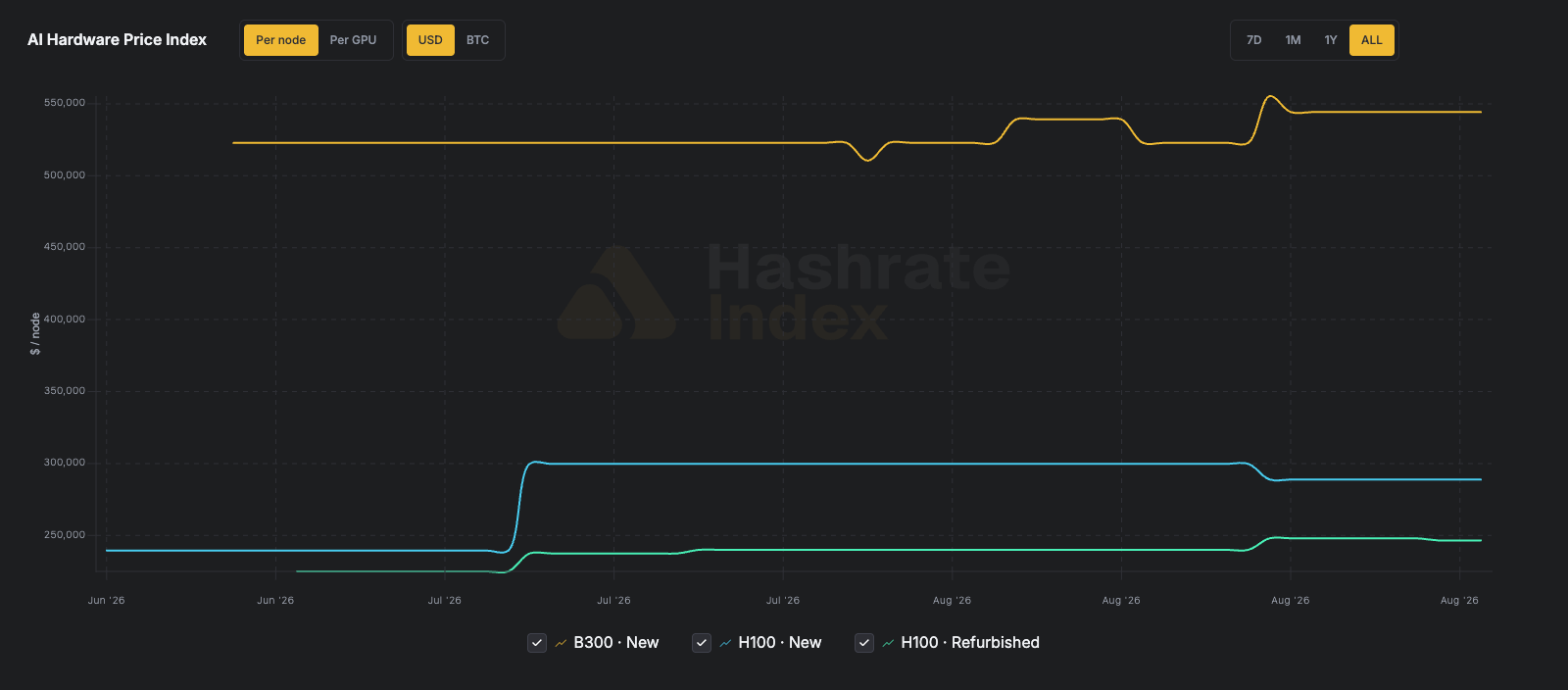
Furthermore, the relationship between new and refurbished nodes provides a "floor" for the industry. Currently, refurbished H100 nodes are trading at roughly 76% of the asking price for new units. When this is compared to the $179,000 asking price for a bare new HGX H100 8-GPU baseboard—which sits at 73% of the refurbished node price—it becomes clear that the hardware ecosystem is approaching a threshold of "build-versus-buy" efficiency. If the price of a complete, refurbished system continues to drop toward the price of the baseboard, buyers are likely to shift toward component-level procurement to lower their total cost of ownership.
Implications for Data Center Operators and Investors
The lack of price transparency has historically penalized smaller AI startups and independent cloud providers who lacked the scale to negotiate favorable rates directly with OEMs. By democratizing this information, the index empowers these smaller players to perform better due diligence before committing millions of dollars in capital expenditure.
For the investment community, the ability to track the depreciation curve of AI hardware is a transformative development. Just as investors in Bitcoin mining once had to rely on guesstimates to calculate the return on investment for ASIC miners, those funding AI compute infrastructure can now model depreciation and hardware cycles with greater precision. The inclusion of USD/BTC toggles within the index is particularly relevant for entities that operate at the intersection of energy, mining, and AI. As Bitcoin miners increasingly pivot their operations to host AI workloads, the ability to value hardware in terms of both fiat currency and mining revenue allows for a more comprehensive assessment of infrastructure risk.
Broader Impact on the AI Ecosystem
The introduction of this index is not merely a tool for price monitoring; it is a signal of the maturation of the AI hardware market. As the sector evolves from a "gold rush" phase to a more structured utility model, the demand for financial-grade data will only increase.
The industry is currently facing a period of intense scrutiny regarding the ROI of large language model (LLM) training. If compute costs continue to be obscured by inefficient procurement processes, the overall financial health of the AI industry becomes harder to quantify. By shining a light on the cost of the most fundamental unit of AI production—the GPU node—the index provides a mechanism for the market to self-correct.
Future iterations of these datasets are expected to expand beyond SHA-256 (Bitcoin) compute and NVIDIA-based AI hardware. As the market for alternative compute architectures and specialized AI silicon grows, the need for standardized reporting will expand accordingly. The work undertaken by entities like Luxor Technology Corporation represents a necessary step toward the "commoditization of compute," a process that will eventually see high-performance hardware treated with the same financial transparency as other industrial commodities like natural gas or electricity.
Conclusion: Toward a Transparent Future
While the AI Hardware Price Index currently offers a limited view of the total market, it provides a vital anchor for a previously unanchored asset class. As more vendors provide data and more market participants utilize these metrics to guide their procurement strategies, the spread between asking prices is expected to narrow. This convergence will ultimately lead to a more efficient, liquid, and competitive market for the hardware that serves as the backbone of the modern digital economy. For now, the index serves as a reminder that even in the age of advanced artificial intelligence, the most basic principles of supply, demand, and price discovery remain the ultimate arbiters of value. As the industry moves into the next phase of development, this data will likely become a standard tool for every CTO, CFO, and infrastructure architect in the technology sector.