The landscape of Zcash (ZEC) mining is undergoing a significant technical shift as Luxor Technology Corporation announces the launch of its LuxOS firmware for the Antminer Z15 Pro. This development marks the first time the company has extended its proprietary optimization stack to an Equihash-based machine, transitioning the Antminer Z15 Pro from a rigid, manufacturer-locked unit into a flexible, tuneable asset. With the Zcash network currently sustaining a hashrate of approximately 31 GSol/s and ZEC trading near $1,200, the introduction of this firmware provides operators with a sophisticated tool to enhance profitability amidst shifting market dynamics. Public installations are scheduled to commence on October 1, 2026.
The Evolution of Mining Efficiency
Historically, the Antminer Z15 Pro has operated under strict factory constraints, limited to a fixed output of 840 KSol/s. Unlike modular or high-performance computing systems, the stock firmware provided by the manufacturer offered no granular control over frequency or voltage. Furthermore, the lack of per-chip monitoring or comprehensive health diagnostics meant that operators were largely blind to the specific performance metrics of individual components within their mining fleets.
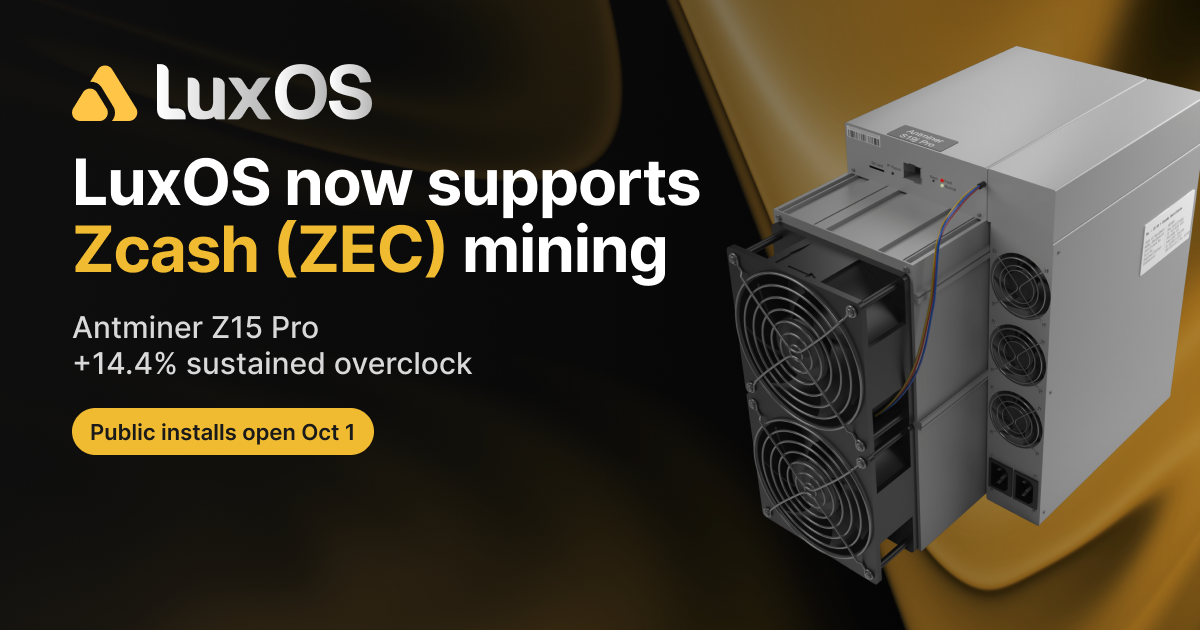
LuxOS fundamentally alters this dynamic. By integrating the same tuning and monitoring architecture currently employed by large-scale Bitcoin mining operations, LuxOS allows operators to calibrate their hardware based on local electricity costs and thermal management capabilities. This transition reflects a broader industry trend toward "intelligent mining," where software optimization is prioritized to extend the lifecycle of hardware and maximize margins during periods of high network difficulty.
Performance Benchmarks and Data Analysis
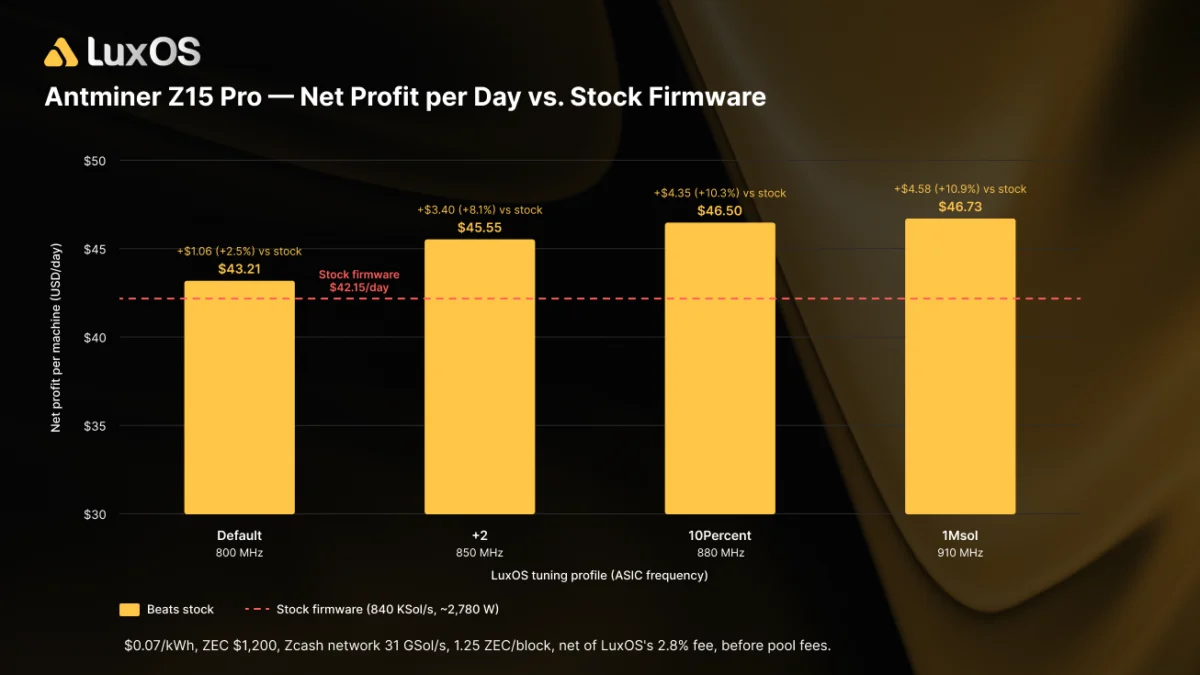
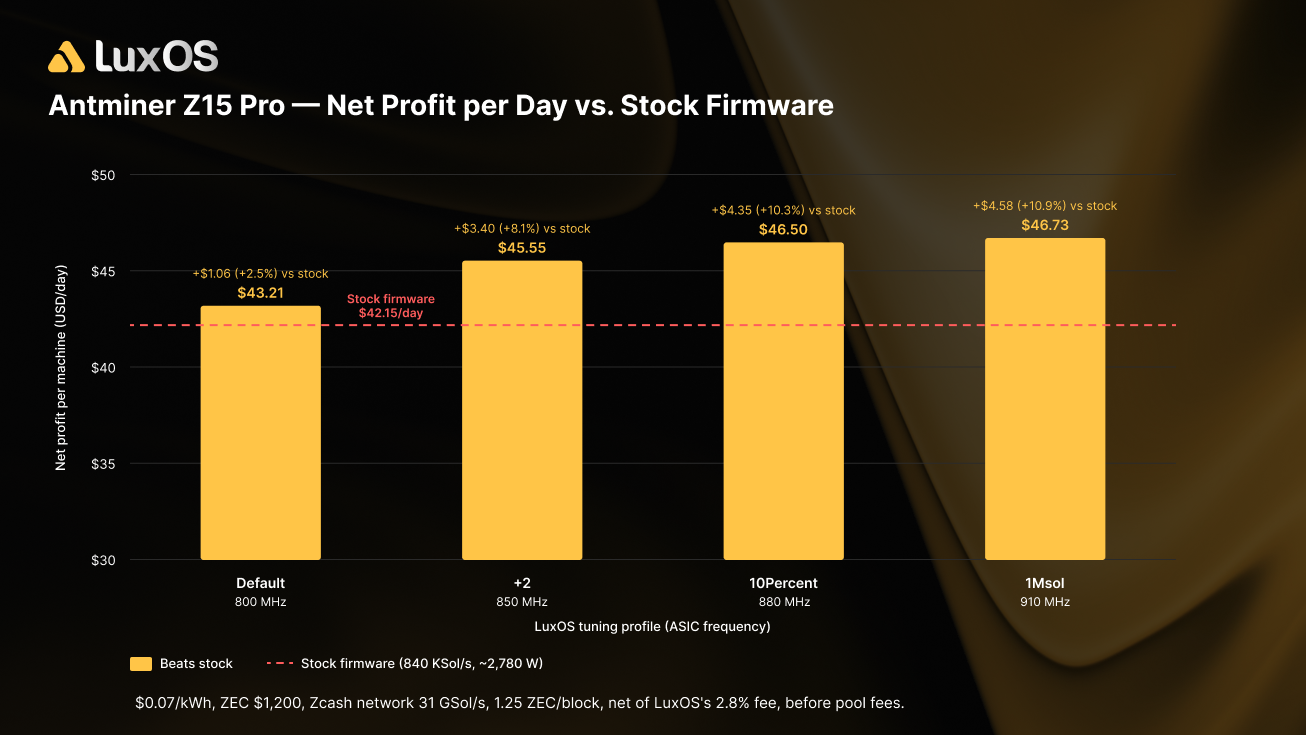
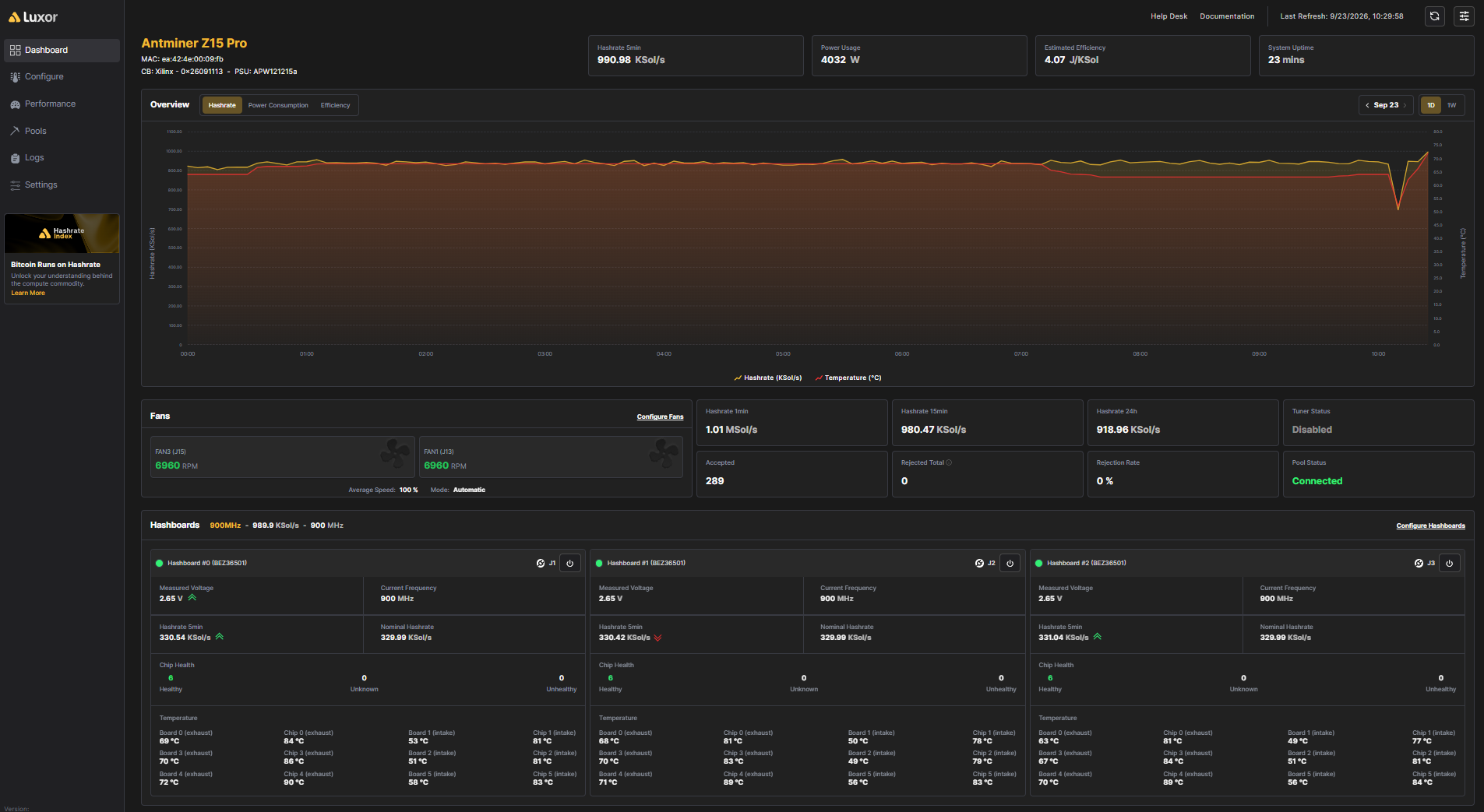
Technical testing conducted on September 23, 2026, demonstrated a clear performance divergence between stock firmware and the LuxOS-optimized unit. While the stock Z15 Pro operates at a power consumption of approximately 2,780 W to produce 840 KSol/s, the LuxOS-tuned unit reached a sustained output of 961 KSol/s, representing an increase of approximately 121 KSol/s. This performance jump requires a higher power draw, measured at approximately 4,032 W under the tested profile.
The efficiency trade-off—higher hashrate against increased energy consumption—is the central calculation for any operator. According to data derived from the Luxor test environment, the net gain per machine at a $0.07/kWh energy rate is approximately $47 per day, even after accounting for the 2.8% firmware fee. When extrapolated over a 90-day period, this creates a revenue gap of $429 per machine compared to stock firmware. At an acquisition cost of $7,475 per unit—based on January-February 2027 futures pricing—this efficiency gain reduces the capital payback period from 177 days to roughly 159 days.
Financial Sensitivity and Operational Impact
The profitability of the LuxOS upgrade is highly sensitive to two primary variables: electricity costs and the market price of ZEC.
-
Power Cost Elasticity: The overclocking profile remains gross-margin positive for the vast majority of grid-connected operators. At an electricity cost of $0.04/kWh, the daily net gain is approximately $5.67 per machine. As power costs climb to $0.10/kWh, the gain settles at $3.87 per day. The break-even point for the overclocking profile is reached at approximately $0.23/kWh, suggesting that the firmware is economically viable for most industrial-scale mining facilities, regardless of their specific energy procurement contracts.
-
ZEC Price Volatility: The market value of ZEC dictates the absolute dollar value of the extra hashrate generated by the firmware. At a $600 ZEC price point, the net daily gain is approximately $1.33. This figure scales linearly with the market, reaching $6.48 at a $1,500 valuation. Below the $370 threshold, however, the energy cost of the additional 1,252 W required for the overclock exceeds the value of the incremental ZEC earned, rendering the standard tuning profile net-negative.
Technical Implementation and Monitoring
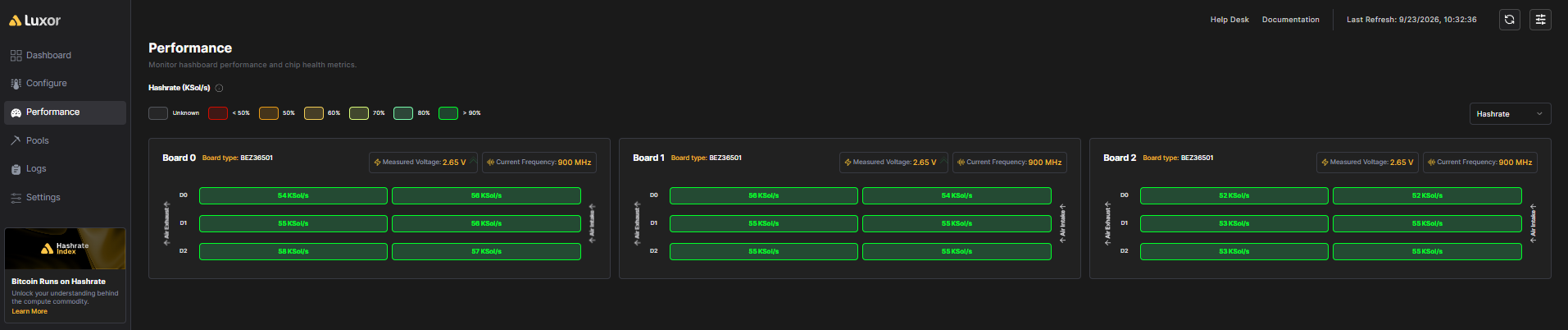
Beyond raw hashrate, LuxOS introduces a suite of operational improvements that were previously unavailable to Z15 Pro users. The dashboard provides real-time, per-chip visibility, allowing operators to identify and mitigate performance degradation at the board level. During the testing phase, the system maintained a 0% rejection rate, with all 18 chips across three hashboards operating within optimal health parameters.
For operators, the setup process is designed to be seamless. The firmware is pool-agnostic, meaning that owners do not need to switch their existing mining pool to utilize the software. By integrating with established monitoring protocols, the firmware allows for a unified management experience across heterogeneous mining fleets, reducing the administrative burden on facility managers who may be balancing both Bitcoin (SHA-256) and Zcash (Equihash) hardware.
Broader Industry Implications
The entry of LuxOS into the Equihash market is a significant signal for the future of ASIC management. As the mining industry matures, the focus has shifted from mere hardware acquisition to software-defined efficiency. The ability to "unlock" latent power in existing hardware provides a necessary hedge against network difficulty increases. If the Zcash network hashrate were to climb from 31 GSol/s to 40 GSol/s, the total revenue for all miners would decrease by approximately 22.5%; however, the relative advantage provided by the LuxOS firmware—a 14.7% increase in net hashrate—would remain constant.
This relative stability is critical for long-term planning. By standardizing the management stack across different algorithms, Luxor is positioning itself as an infrastructure layer for the compute industry. This approach mirrors the broader movement in the data center industry, where firmware optimization is treated as a core component of operational expenditure (OpEx) management.
Conclusion and Future Outlook
The release of LuxOS for the Antminer Z15 Pro represents a strategic advancement for Zcash miners looking to optimize their balance sheets in an increasingly competitive environment. While the gains are subject to the inherent volatility of cryptocurrency markets and regional energy costs, the data suggests that for most professional operators, the transition to custom firmware is a net-positive investment.
As public installations open on October 1, the industry will closely monitor the adoption rates of this firmware. Luxor Technology has indicated that it is currently taking inquiries for early installation, further underscoring the demand for high-performance management tools in the Equihash ecosystem. As energy costs remain a primary constraint for the global mining industry, the shift toward software-led efficiency is likely to become a permanent fixture of mining operations, separating the most optimized fleets from those relying on standard factory settings.
For operators, the imperative is clear: in an era of fluctuating network difficulty and market prices, the ability to tune, monitor, and optimize hardware is not merely a competitive advantage—it is a requirement for sustained operational viability. Those interested in the technical specifications or deployment logistics are encouraged to reach out to the development team directly, as the transition to tuned Equihash mining begins in earnest.