The landscape of digital asset investigation and forensic technology achieved a significant legal milestone when a U.S. federal appellate court officially upheld the admissibility of Chainalysis Reactor as reliable evidence in court. This decision marks the first time a blockchain analytics platform has successfully navigated the stringent requirements of the Daubert standard across both district and appellate levels of the U.S. federal court system. The ruling stems from the high-profile criminal case United States v. Sterlingov, wherein Roman Sterlingov, a dual Swedish-Russian national, was convicted of operating "Bitcoin Fog," a notorious cryptocurrency mixing service that processed hundreds of millions of dollars in illicit transactions over a decade.
As decentralized finance continues to evolve and law enforcement agencies increasingly rely on digital ledger forensics to combat cybercrime, the appellate court’s validation of blockchain attribution methodologies carries profound implications. The decision not only solidifies the legal standing of Chainalysis tools in future judicial proceedings but also sets a benchmark for how technological evidence is evaluated in complex financial crimes cases where artificial intelligence and big data intersect with constitutional due process.
The Legal Battleground: United States v. Sterlingov and the Daubert Standard
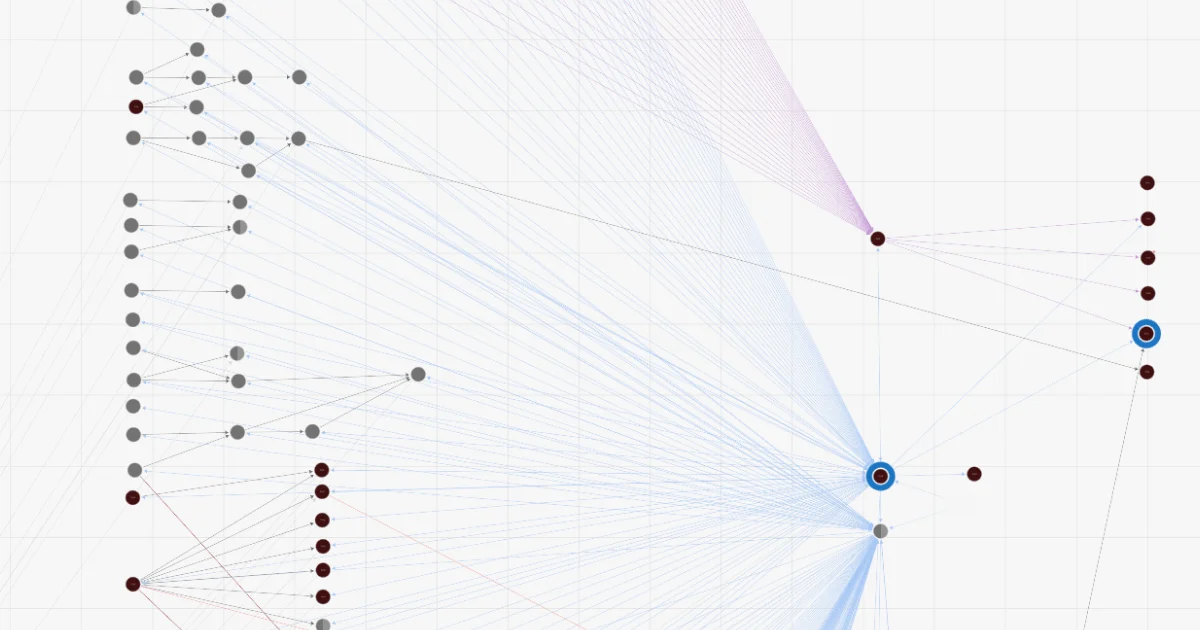
The origin of this legal precedent lies in the prosecution of Roman Sterlingov, who faced federal charges for laundering tens of millions of dollars in criminal proceeds through Bitcoin Fog between 2011 and 2021. During the subsequent trial in the U.S. District Court for the District of Columbia, prosecutors utilized Chainalysis Reactor to trace financial flows between Bitcoin Fog and various darknet marketplaces. Through this analysis, investigators attributed more than 900,000 Bitcoin addresses to the illegal mixing service.
To establish the credibility of this evidence, the government presented expert testimony from FBI Special Agent Luke Scholl and Chainalysis Director of Strategic Engagements Elizabeth Bisbee. These experts detailed Reactor’s underlying methodologies, data validation processes, and practical applications in major federal investigations.
Anticipating the damaging nature of this digital trail, the defense mounted a vigorous challenge to exclude the software and its associated testimony. Sterlingov’s legal team argued that blockchain analytics tools were unverified, lacked a known error rate, and failed to meet the criteria for admissibility governing expert testimony under the Daubert standard. Established by the Supreme Court in Daubert v. Merrell Dow Pharmaceuticals, Inc., this framework requires trial judges to act as gatekeepers, ensuring that any scientific or technical evidence admitted is not only relevant but reliable. Factors evaluated under the Daubert test include whether a method can be tested, its peer-review status, known or potential error rates, and general acceptance within the relevant scientific or technical community.
The district court rejected Sterlingov’s challenges, ruling that Chainalysis Reactor satisfied the Daubert requirements. Following a jury trial, Sterlingov was convicted and subsequently sentenced to over 12 years in federal prison. Undeterred by the verdict, Sterlingov appealed his conviction to the U.S. Court of Appeals for the D.C. Circuit, once again placing the scientific validity of blockchain clustering technology at the center of his legal strategy.
Appellate Review and the Rejection of Sterlingov’s Claims
In September, the U.S. Court of Appeals for the D.C. Circuit issued a decisive ruling upholding the lower court’s decision. The appellate panel comprehensively reviewed the methodologies employed by Chainalysis and dismissed the defense’s arguments regarding the unreliability of blockchain analytics.
Central to the appellate court’s reasoning was an evaluation of Reactor’s clustering attribution methodology. This proprietary technique combines change address analysis with digital fingerprinting to identify groups of cryptocurrency addresses controlled by the same entity or service. The court took note of the extensive empirical support presented by the government, including the software’s widespread, routine adoption across federal law enforcement agencies, international regulatory bodies, and private-sector financial institutions. Furthermore, the court weighed the testimony of Scholl and Bisbee, both of whom stated under oath that they could not recall a single instance where a verified Chainalysis attribution had subsequently been proven false.
Addressing the defense’s contention that Reactor was unreliable because it lacked formal academic peer review and possessed no quantified error rate, the appellate court exhibited a pragmatic understanding of emerging technologies. The panel observed that formal peer review is not a strict prerequisite for admitting technical evidence, particularly within specialized, fast-evolving fields such as blockchain forensics. The court underscored that demanding traditional academic peer review for proprietary commercial software operating in novel technological ecosystems would create an unreasonable barrier to justice.
Moreover, the appellate judges commended Reactor’s deliberately conservative approach to attribution. Rather than attempting to establish speculative links between every transaction, the software prioritizes defensible, high-confidence connections. The court recognized that maintaining an underinclusive methodology—where data is only linked when strong behavioral and transactional markers align—enhances the overall reliability and credibility of the investigative output.
Chronology of Key Legal and Technological Milestones
To fully grasp the weight of this appellate decision, it is essential to examine the timeline of events that brought blockchain analytics to the forefront of federal jurisprudence:
- 2011–2021: Roman Sterlingov operates Bitcoin Fog, facilitating the laundering of over 900,000 Bitcoin originating from various darknet narcotics and illicit service markets.
- 2021: Federal law enforcement arrests Sterlingov, initiating a multi-year investigation heavily reliant on blockchain tracing tools.
- 2024: During the trial in United States v. Sterlingov, the defense challenges the admissibility of Chainalysis Reactor under the Daubert standard. The U.S. District Court rules in favor of admissibility, leading to Sterlingov’s conviction and subsequent 12-year prison sentence.
- 2025: Independent academic researchers publish a comprehensive, granular evaluation of blockchain analytics platforms, confirming that Chainalysis data exhibits the highest accuracy, lowest false-positive rate, and most extensive coverage in the industry.
- September 2026: The U.S. Court of Appeals for the D.C. Circuit formally upholds the district court’s admissibility ruling, marking the first time a blockchain forensics platform has successfully defended its methodology through an appellate court review under the Daubert standard.
Broader Implications for Compliance, Law Enforcement, and Emerging AI
The confirmation of Reactor’s evidentiary reliability by a federal appellate court carries significant ramifications extending far beyond the confines of the Bitcoin Fog prosecution. As digital assets become deeply integrated into the global financial architecture, financial institutions, cryptocurrency exchanges, and regulatory compliance officers increasingly depend on automated attribution data to meet Bank Secrecy Act (BSA) and Anti-Money Laundering (AML) obligations.
In high-stakes compliance environments, a false positive or an incorrect attribution can freeze legitimate user accounts, disrupt international trade, or falsely implicate innocent parties in transnational financial crimes. Conversely, a failure to detect illicit fund flows can expose institutions to severe regulatory penalties and criminal prosecution. The judicial validation of Chainalysis’s methodological rigor provides compliance officers and risk management professionals with heightened confidence that their internal tools rest on a legally sound and empirically robust foundation.
Furthermore, the ruling arrives at a critical juncture in the evolution of financial technology, particularly regarding the rapid integration of artificial intelligence into investigative workflows. As machine learning algorithms and generative AI models are deployed to accelerate data processing and uncover complex money laundering networks, the underlying data integrity becomes paramount. Industry experts frequently emphasize that artificial intelligence can rapidly scale an analytical workflow, but it cannot fix a fundamentally flawed database. If the foundational blockchain attribution data is unreliable, automation will merely magnify errors at an unprecedented speed and scale.
The successful defense of Reactor across two tiers of the federal judiciary demonstrates that Chainalysis’s foundational data architecture can withstand rigorous adversarial scrutiny in a court of law. This validation is especially timely as investigative teams leverage advanced analytics and AI to untangle sophisticated hacks and thefts, such as the high-profile $387 million Bitget security breach investigated earlier in the year.
Expert and Institutional Perspectives
While legal analysts note that the Daubert standard is applied on a case-by-case basis and does not grant blanket immunity to digital forensics tools in all future trials, the Sterlingov appellate decision establishes a formidable persuasive precedent. Defense attorneys challenging blockchain evidence in future federal or state prosecutions will face a steep judicial hurdle, as they must now overcome established appellate case law affirming the core reliability of clustering attribution methodologies.
Legal scholars point out that the court’s willingness to look beyond the absence of traditional academic peer review signals a maturing judicial approach to digital evidence. Courts are increasingly recognizing that proprietary software used in commercial and governmental compliance operations relies on rigorous empirical validation, internal testing, and widespread market adoption—metrics that, when combined, satisfy the statutory criteria for reliability.
For Chainalysis, the ruling represents both a vindication of its engineering practices and a strategic asset as it develops the next generation of investigative software. As decentralized mixing protocols, privacy-enhancing coins, and cross-chain bridge exploits continue to challenge traditional investigative paradigms, the intersection of advanced technology and judicial oversight will remain a critical battleground for financial integrity.
Conclusion
The U.S. Court of Appeals for the D.C. Circuit’s decision to uphold the admissibility of Chainalysis Reactor in United States v. Sterlingov closes a chapter on one of the most significant cryptographic forensic challenges in legal history. By validating the platform’s clustering methodology, conservative attribution approach, and real-world reliability, the judiciary has provided a clear signal regarding the acceptable standards of digital asset investigation. As blockchain analytics and artificial intelligence continue to reshape the contours of global financial crime fighting, the establishment of this legal benchmark ensures that technological innovation and legal accountability will advance hand in hand.