The Bitcoin mining sector experienced a period of relative stagnation during the week ending September 14, 2026, as key network metrics, including hashrate and profitability indicators, remained largely unchanged. Data from the latest industry performance reports reveals that the market is currently navigating a period of consolidation, with miners contending with tighter margins and an upcoming adjustment in network difficulty that signals potential headwinds for operational efficiency.
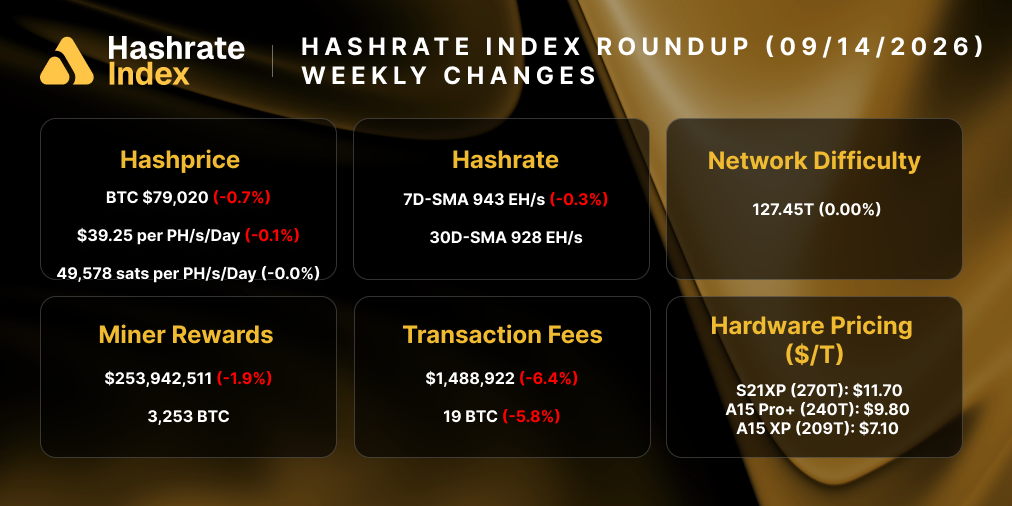
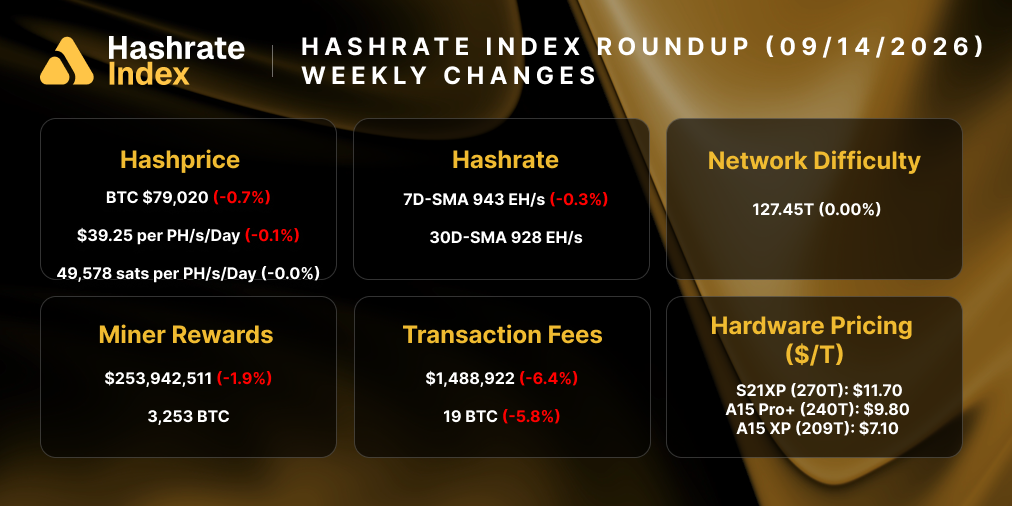
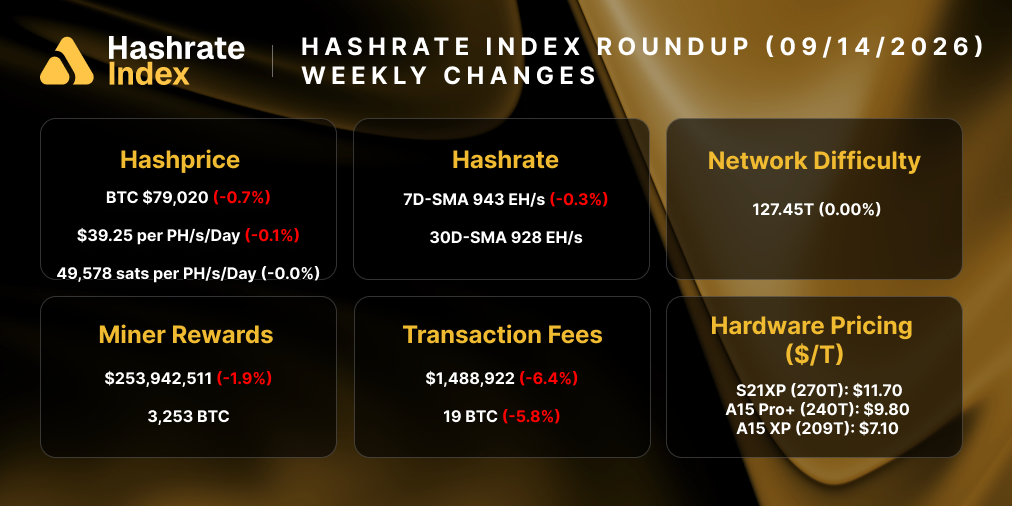
Over the past seven-day cycle, Bitcoin miners successfully secured a total of 3,253 BTC in block rewards, representing an approximate value of $253 million at the prevailing market rates. Of this total, transaction fees accounted for a marginal 19 BTC, or roughly $1.49 million. This figure highlights the continued reliance of the mining industry on block subsidies rather than on-chain activity for revenue generation, a trend that has persisted throughout the third quarter of 2026.
Market Price Performance and Financial Context
Bitcoin’s spot price displayed a modest decline of 0.7% over the week, moving from $79,581 to approximately $79,020. This shift marks a continuation of a broader downward trend for the year, with year-to-date performance now standing at -9.6%. The lackluster price action has directly influenced the economic viability of mining operations, which are sensitive to both the absolute price of the asset and the total network hashrate.
Institutional and speculative sentiment, as observed through CME Bitcoin futures, remains cautious. While the September contracts show a slight premium at $79,300, the November contracts have dipped to $77,610, reflecting a degree of bearish sentiment regarding the asset’s medium-term trajectory. For mining firms, which rely on forward planning to manage energy procurement and capital expenditure, these futures prices serve as a critical barometer for hedging strategies.
Hashprice Stability and Profitability Metrics
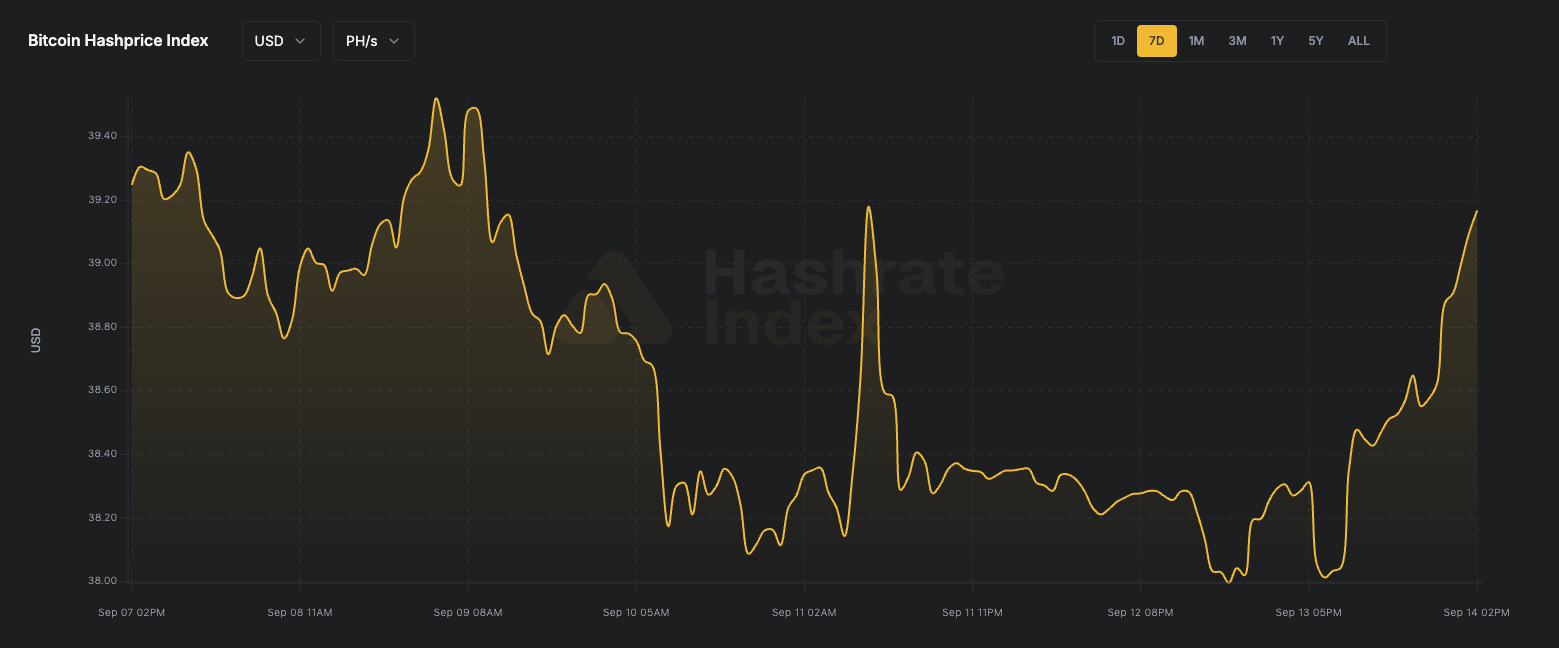
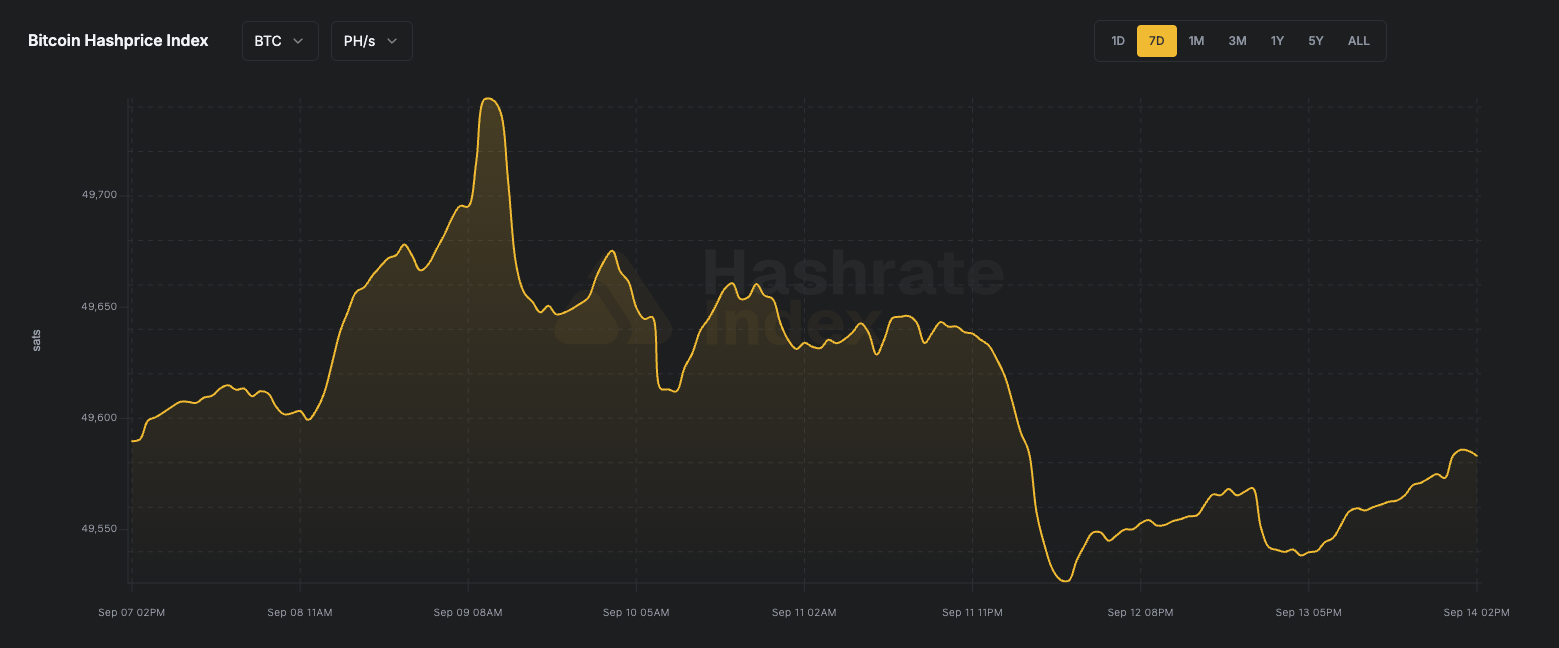
The "hashprice"—a metric representing the expected revenue for a specific amount of hashrate—remained nearly flat, recording a marginal -0.1% change. The spot hashprice closed the week at $39.25 per PH/s per day. When measured in BTC terms, the hashprice remained virtually unchanged at 0.00049578 BTC per PH/s per day.
This stagnation in hashprice indicates a delicate equilibrium between the total computational power securing the network and the amount of BTC being issued to participants. Because hashprice is a function of both Bitcoin’s price and the network’s total hashrate, the stability of this metric suggests that neither factor saw significant volatility this week. However, the 30-day average hashprice of $38.04 suggests that the industry has been operating under sustained pressure, necessitating a high degree of fleet efficiency for operators to remain profitable.
Network Hashrate and Impending Difficulty Adjustments
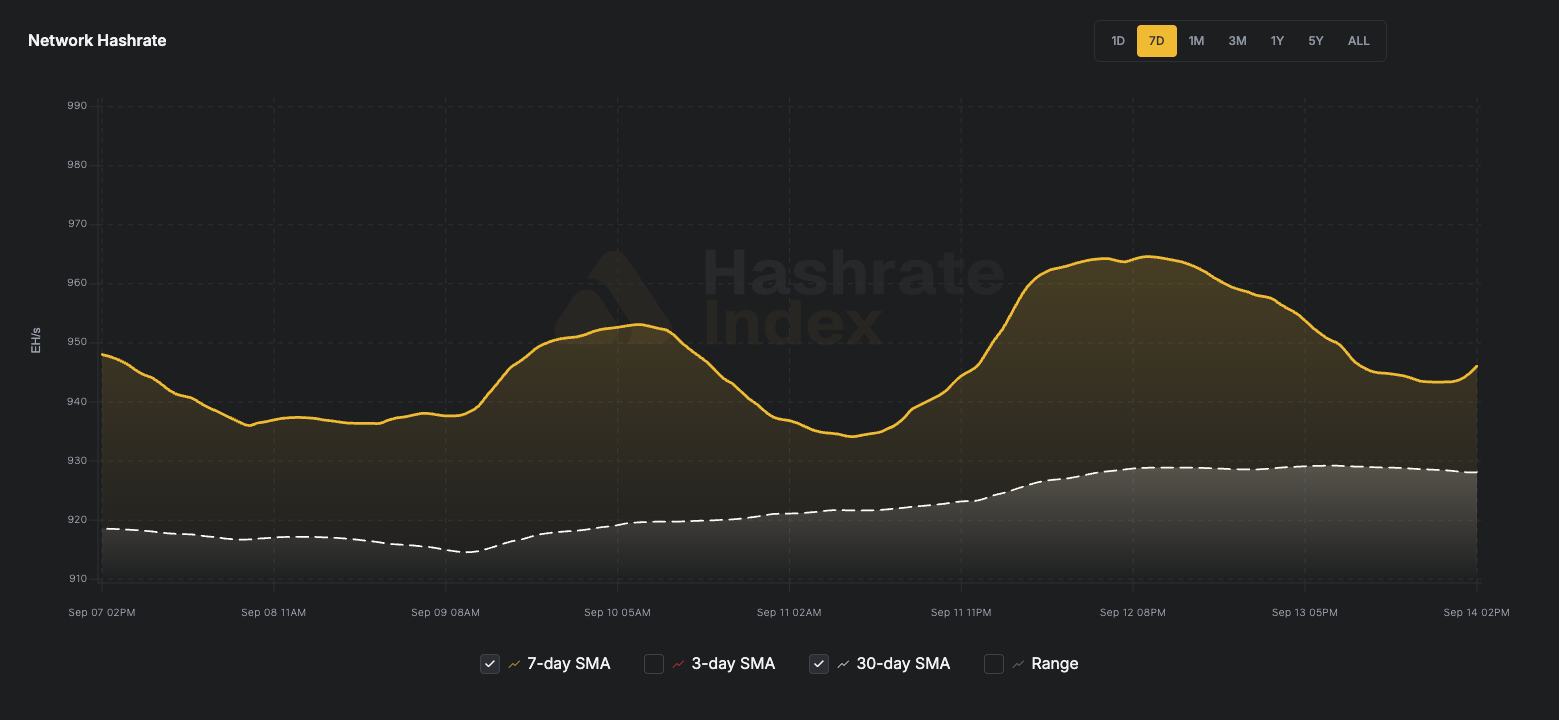
The Bitcoin network hashrate saw a slight contraction, with the 7-day simple moving average (SMA) sliding from 946 EH/s to 943 EH/s. While this represents a decrease of only 0.3%, it is notable given the consistent growth trajectory the network has maintained throughout the year. The 30-day SMA, which currently sits at 928 EH/s, provides a broader perspective on the sustained investment in hardware and infrastructure.
The network’s mining difficulty, which was last adjusted on September 5, 2026, currently stands at 127.45T. Following the current block production cadence, which has averaged roughly 9 minutes and 30 seconds per block over the last 24 hours, the next difficulty adjustment is projected for September 19. Analysts are currently forecasting an increase of 5.26%. Should this materialize, it will represent a significant hurdle for miners, as it increases the computational effort required to solve each block without a corresponding increase in the block subsidy, effectively tightening profit margins for those with less efficient hardware.
Transaction Fee Dynamics
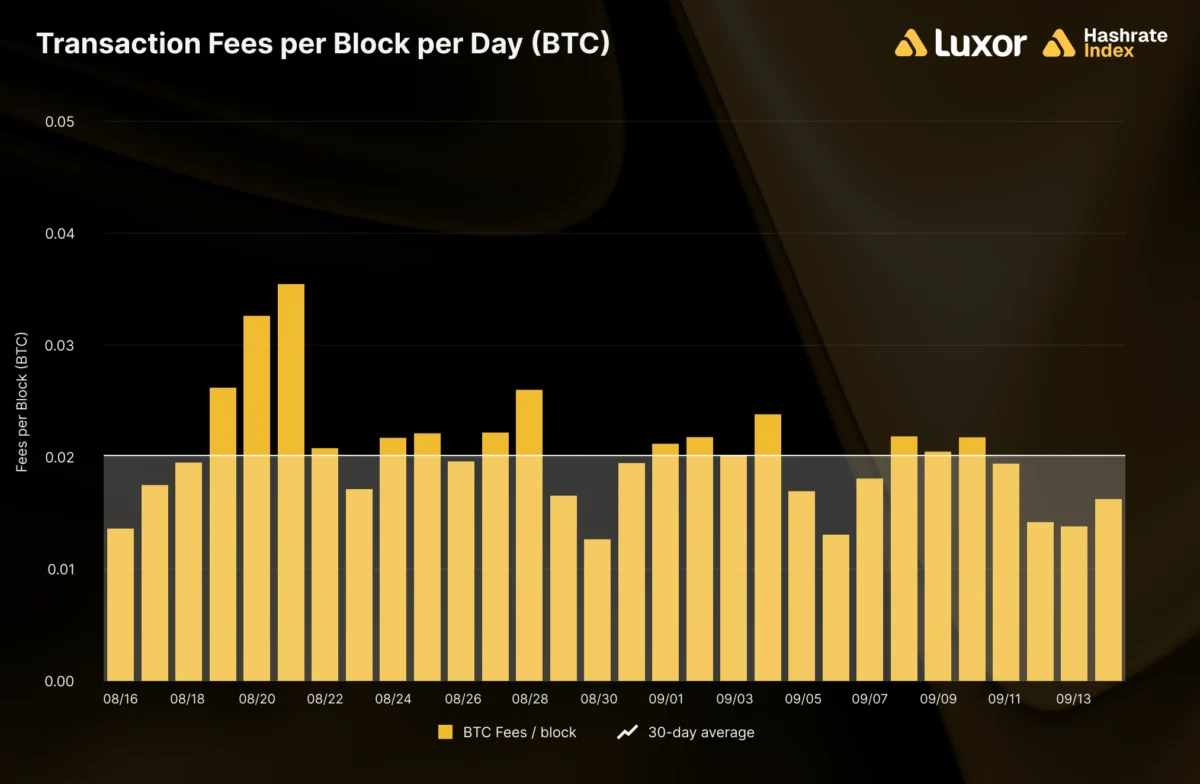
Transaction fee revenue remains a point of concern for long-term network security and miner sustainability. The past week saw an average of 0.0183 BTC collected in fees per block per day, a 5% decline compared to the previous week’s 0.0193 BTC. Over the past 30 days, this average has drifted down to 0.0202 BTC, reflecting lower congestion on the Bitcoin blockchain.
For mining operations, which are increasingly diversifying their energy strategies and hardware portfolios, the decline in fee revenue places more importance on the base block reward. In the context of the 2026 mining landscape, where firms are heavily leveraged in specialized hardware, the lack of robust transaction fee spikes limits the ability of operators to buffer against the volatility of the Bitcoin spot price.
Broader Implications for Mining Stocks
Publicly traded Bitcoin mining companies faced a difficult week as market sentiment turned negative across the sector. Many major players saw their share prices retreat, with companies like CIFR (-14.0%), WULF (-12.4%), and AIBZ (-9.5%) recording significant losses over the five-day trading period ending September 14.
This decline in equity value can be attributed to a confluence of factors: the lack of upward momentum in the price of Bitcoin, the rising network difficulty, and the general cooling of investor interest in high-beta assets. While some firms, such as ANY (+18.0%) and CAN (+6.3%), bucked the trend, the general downward pressure on mining stocks underscores the market’s current focus on operational cost control and capital preservation.
Forward Market Outlook
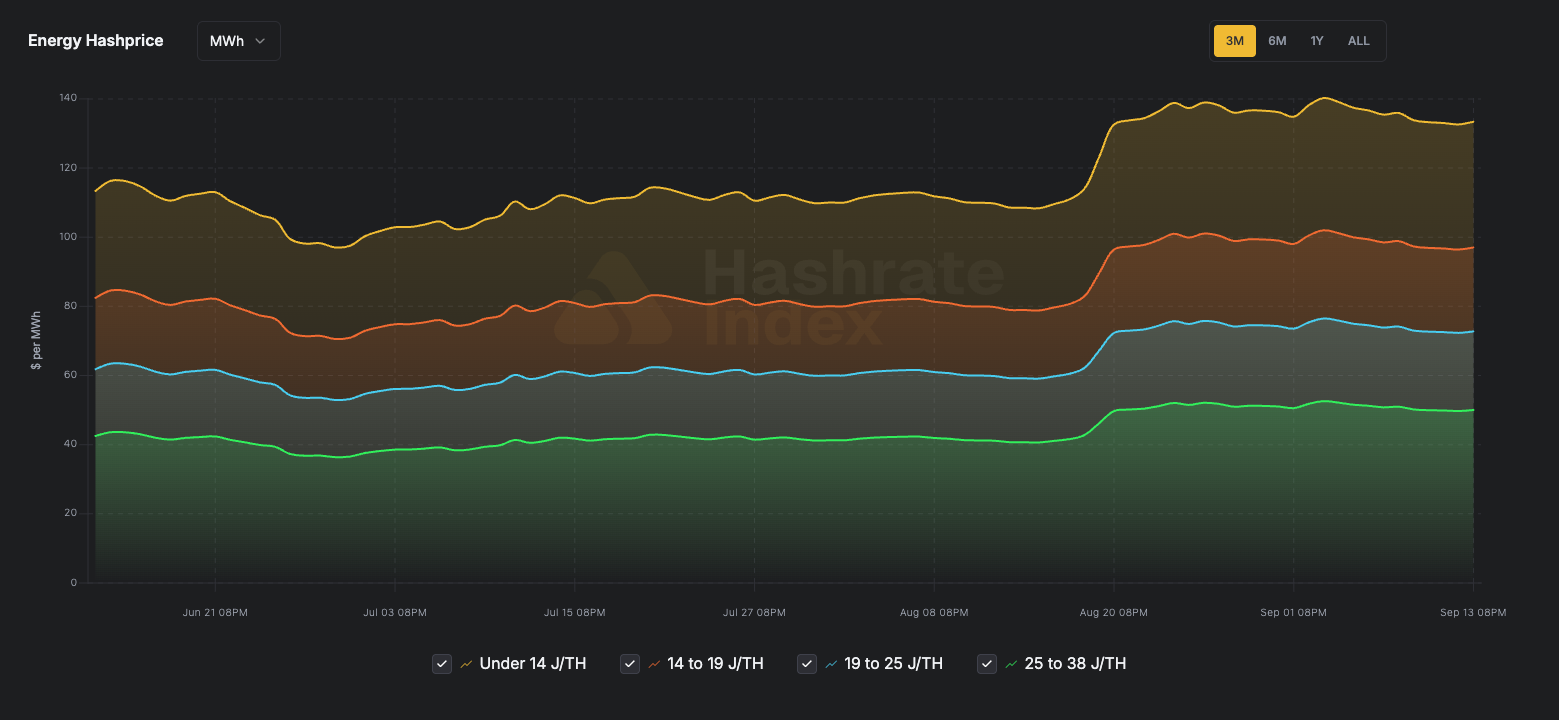
Looking toward the next six months, the Hashrate Forward Market is currently pricing in an average hashprice of $36.92 or 0.00047 BTC. This forward curve serves as a predictive tool for the industry, suggesting that market participants do not anticipate a significant recovery in mining profitability in the immediate future.
The mining industry remains in a "wait-and-see" phase. As hardware efficiency becomes the primary differentiator between surviving and thriving, firms are increasingly turning to proprietary firmware, such as LuxOS, to optimize energy consumption and maximize the output of their existing fleets. Furthermore, the industry is seeing a shift toward more sophisticated risk management, with more miners utilizing forward contracts to lock in future revenue against the uncertainty of network difficulty increases.
Summary of Industry Status
The week ending September 14, 2026, serves as a microcosm of the current state of Bitcoin mining: a sector that is increasingly industrialized, highly sensitive to macroeconomic variables, and facing a continuous squeeze on margins through algorithmic difficulty adjustments. As the network prepares for the upcoming 5.26% difficulty hike, the emphasis for mining operators will undoubtedly shift toward optimizing power costs and fleet efficiency.

The relative stability in hashrate and hashprice provides a moment of calm, but the underlying data suggests that the environment remains challenging. For miners, the task ahead is clear: maintaining profitability in a post-halving world requires not just raw computing power, but a rigorous, data-driven approach to energy management and operational expense control. As the sector moves into the latter half of September, all eyes will remain on the network difficulty adjustment and whether the price of Bitcoin can find the support needed to lift the broader mining industry out of its current period of stagnant profitability.