Blockchain intelligence firm Chainalysis has announced comprehensive analytical and compliance support for Arc, a newly launched Ethereum Virtual Machine (EVM)-compatible Layer 1 blockchain specifically engineered for stablecoin-based financial systems. Designed to integrate directly into fintech giant Circle’s comprehensive full-stack platform, Arc utilizes digital currencies—beginning with USD Coin (USDC)—to pay for network gas fees. The network boasts high-performance technical specifications, including sub-second transaction finality and a processing capacity exceeding 3,000 transactions per second, tailored to support rapid, highly scalable global payments and advanced financial activity.
The integration brings immediate, automated coverage for all newly issued fungible and non-fungible tokens deployed on the Arc network that conform to established Ethereum standards, namely ERC-20 and ERC-721. As developers and institutions mint new digital assets on the ledger daily, these tokens are incorporated into the Chainalysis data infrastructure without requiring manual intervention from system administrators or clients. Consequently, financial institutions, cryptocurrency exchanges, and compliance officers utilizing Chainalysis products can immediately monitor, trace, and evaluate asset movements across the nascent blockchain ecosystem.
Main Facts and Technological Architecture of the Integration
The incorporation of Arc into the Chainalysis ecosystem spans several core compliance and investigative solutions. Users of Chainalysis KYT (Know Your Transaction) can now monitor Arc-based tokens in real time, receiving actionable alerts and maintaining continuous surveillance of transaction streams. Furthermore, the integration extends to the firm’s entity-screening products and its flagship investigative software, Chainalysis Reactor.
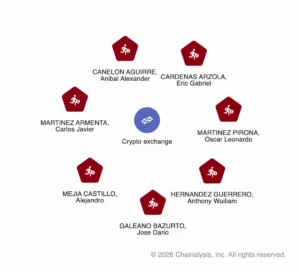
Through Reactor, investigators can map fund flows across the Arc network, analyze complex transaction paths, visualize the movement of capital between addresses and entities, and pinpoint potential illicit financial activity. By bridging the gap between high-speed stablecoin infrastructure and regulatory compliance, the collaboration aims to provide a secure environment for institutional adoption. Arc’s unique architectural choice of utilizing stablecoins directly for gas fees eliminates the friction of acquiring native volatile cryptocurrencies for transaction execution, a feature that industry analysts expect will drive substantial transaction volume from traditional financial institutions moving into decentralized networks.
Chronology and Background Context
The convergence of institutional-grade compliance tools and specialized stablecoin infrastructure represents the latest milestone in the evolution of digital asset regulation. Over the past several years, the stablecoin market has expanded from a niche trading pair mechanism on decentralized exchanges into a foundational pillar of global cross-border payments, corporate treasury management, and decentralized finance (DeFi). Circle, the issuer of USDC and a principal architect behind financial infrastructure integration, has consistently sought to embed its digital dollar into high-throughput environments.
The development of Arc as a dedicated Layer 1 network stems from the growing demand for dedicated financial rails that can bypass the congestion and unpredictable fee structures traditionally associated with general-purpose blockchains. As Circle and its partners advanced the technical specifications of Arc—focusing on sub-second finality and throughput exceeding 3,000 transactions per second—the imperative for robust, automated compliance infrastructure grew correspondingly. Regulators worldwide have increasingly demanded that high-speed payment networks maintain the same rigorous anti-money laundering (AML) and counter-terrorist financing (CTF) standards traditional banking systems enforce.
In response to these regulatory pressures, compliance providers like Chainalysis have accelerated their integration timelines for emerging Layer 1 and Layer 2 networks. Traditionally, adding support for a new blockchain required manual indexing, custom parsing of smart contracts, and individual token onboarding. The automated ingestion model deployed for Arc—which captures ERC-20 and ERC-721 standards natively upon deployment—marks a significant shift toward proactive, scale-ready compliance infrastructure designed to match the rapid deployment cadence of modern blockchain development.
Supporting Data and Ecosystem Metrics
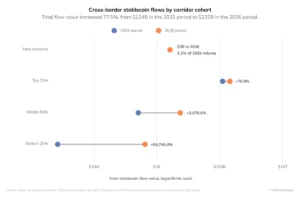
The launch of compliance support for Arc aligns with broader macroeconomic and industry trends highlighting the exponential growth of stablecoin transaction volumes. According to industry metrics compiled across major public ledgers, stablecoin settlements surpassed traditional payment networks in annual transaction volume during recent fiscal cycles, routinely handling trillions of dollars in global transfer value.
Networks optimized specifically for stablecoin utility, such as Arc, aim to capture a significant share of this expanding market by offering operational efficiencies superior to legacy financial rails like SWIFT, as well as general-purpose blockchains like Ethereum mainnet, where gas fees can spike during periods of high network congestion. By capping transaction times at sub-second finality and maintaining a baseline throughput of over 3,000 transactions per second, Arc positions itself to handle enterprise-grade payment volumes—ranging from microtransactions to multi-million-dollar corporate settlements.
However, the velocity and scale of these networks also present heightened challenges for compliance officers. Without automated surveillance tools, tracking illicit funds across thousands of transactions per second becomes practically unfeasible. The integration of Chainalysis KYT and Reactor addresses this vulnerability by deploying machine learning algorithms and heuristic clustering to flag suspicious wallet behaviors, sanction-listed addresses, and mixing services in real time, ensuring that the velocity of innovation does not outpace regulatory oversight.
Industry Implications and Strategic Analysis
The integration of Chainalysis tools into the Arc ecosystem carries profound implications for the broader fintech and cryptocurrency sectors. For institutional participants, the primary barrier to entering new blockchain networks has historically been regulatory uncertainty and the lack of robust risk management tools. When a new Layer 1 network launches without immediate compliance support, institutional funds—such as those managed by registered investment advisors, commercial banks, and publicly traded fintech firms—are typically restricted from interacting with the chain due to internal compliance mandates and external regulatory obligations.
By ensuring day-one compliance readiness through automated token ingestion and advanced tracing via Reactor, Chainalysis and Circle are effectively lowering the institutional barrier to entry. This pre-packaged compliance framework allows regulated entities to experiment with and deploy capital on high-speed stablecoin rails without incurring unacceptable regulatory exposure.
Furthermore, the model established by this integration may serve as a blueprint for future collaborations between specialized blockchain networks and analytics firms. As the multi-chain ecosystem continues to fragment into application-specific chains and modular architectures, the manual approach to blockchain intelligence is becoming obsolete. The automated parsing of ERC-20 and ERC-721 standards demonstrated in the Arc integration points toward a future where compliance infrastructure is natively embedded into the deployment lifecycle of decentralized applications and networks.
Broader Economic and Regulatory Outlook
From a macroeconomic perspective, the convergence of stablecoin-focused infrastructure like Arc and comprehensive analytics like Chainalysis reflects the ongoing maturation of the digital asset class. Regulators in major jurisdictions—including the United States, the European Union, and the United Kingdom—have signaled a clear preference for transparency, traceability, and accountability within digital financial markets. Frameworks such as the European Union’s Markets in Crypto-Assets (MiCA) regulation and evolving guidance from the Financial Action Task Force (FATF) place heavy emphasis on the ability of virtual asset service providers (VASPs) to monitor cross-border capital movements and enforce travel rule requirements.
The ability to monitor real-time token creation and transaction flows on a high-throughput network like Arc directly supports these regulatory objectives. By embedding automated surveillance into the fabric of the network’s token standards, stakeholders can demonstrate that high-speed, borderless stablecoin payments can operate securely within established legal frameworks. This capability is expected to accelerate discussions regarding the integration of stablecoins into traditional banking back-offices, corporate payroll systems, and international trade finance.
Ultimately, the integration announced by Chainalysis underscores a fundamental reality of the modern financial technology landscape: speed and security must scale in tandem. As Arc provides the high-performance plumbing required for the next generation of stablecoin finance, Chainalysis supplies the regulatory visibility necessary to ensure that these rails remain secure, compliant, and trusted by global financial institutions.