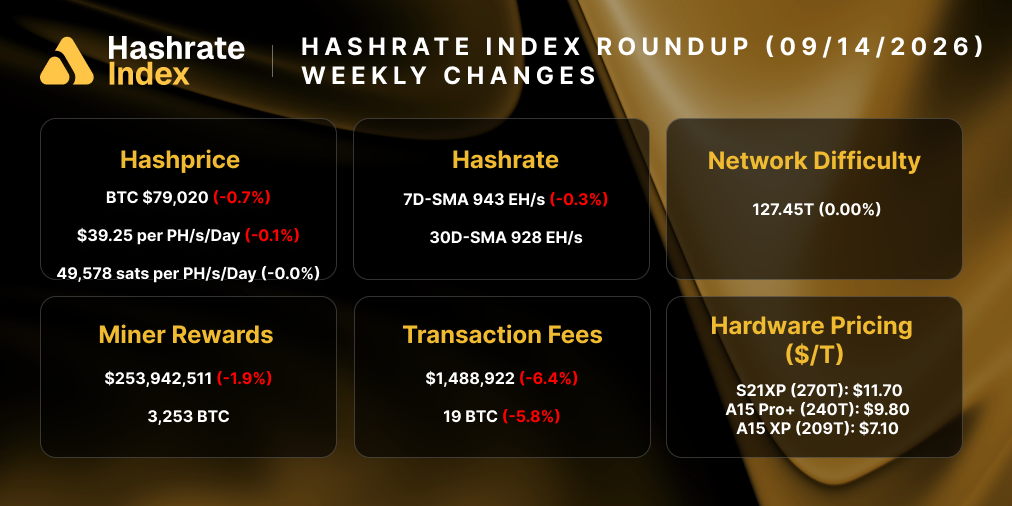
The Bitcoin mining sector experienced a period of pronounced consolidation throughout the second week of September 2026, characterized by flatlined revenue metrics and a marginal decrease in network hashrate. As of September 14, 2026, the industry continues to navigate a challenging macroeconomic environment, with hashprice—the primary metric for miner profitability—hovering near historic lows. Miners generated a total of approximately 3,253 BTC in block rewards over the past seven days, translating to a nominal value of roughly $253 million. Of this total, transaction fees accounted for a negligible 0.59%, or 19 BTC ($1.49 million), highlighting the ongoing reliance on block subsidies rather than on-chain activity to sustain operational viability.
Market Performance and Price Volatility
Bitcoin’s spot price concluded the week at $79,020, representing a minor decline of 0.7% from the previous week’s benchmark of $79,581. The asset remains under pressure on a year-to-date basis, reflecting a 9.6% decline since the start of 2026. This price stagnation has created a difficult climate for mining firms, which rely heavily on the appreciation of the underlying asset to offset the rising energy costs and hardware overheads associated with large-scale operations.
CME futures markets offer a glimpse into institutional sentiment, with October contracts pricing Bitcoin at $79,700, suggesting a slight expectation of bullish momentum in the short term. However, the November contracts, trading at $77,610, indicate a more cautious outlook, with traders pricing in a potential 1.8% dip as the market grapples with lingering macroeconomic uncertainty and fluctuating interest rate expectations.
Hashprice Dynamics and Profitability Metrics
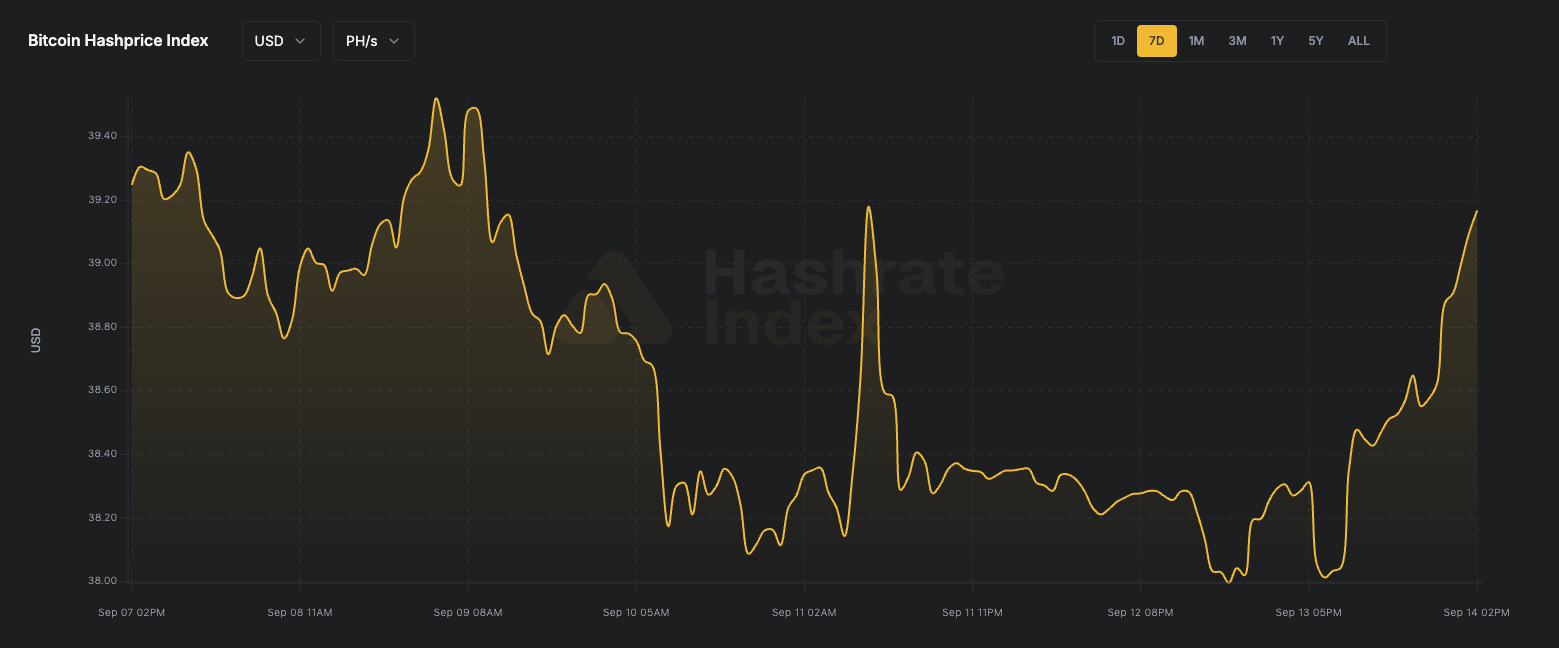
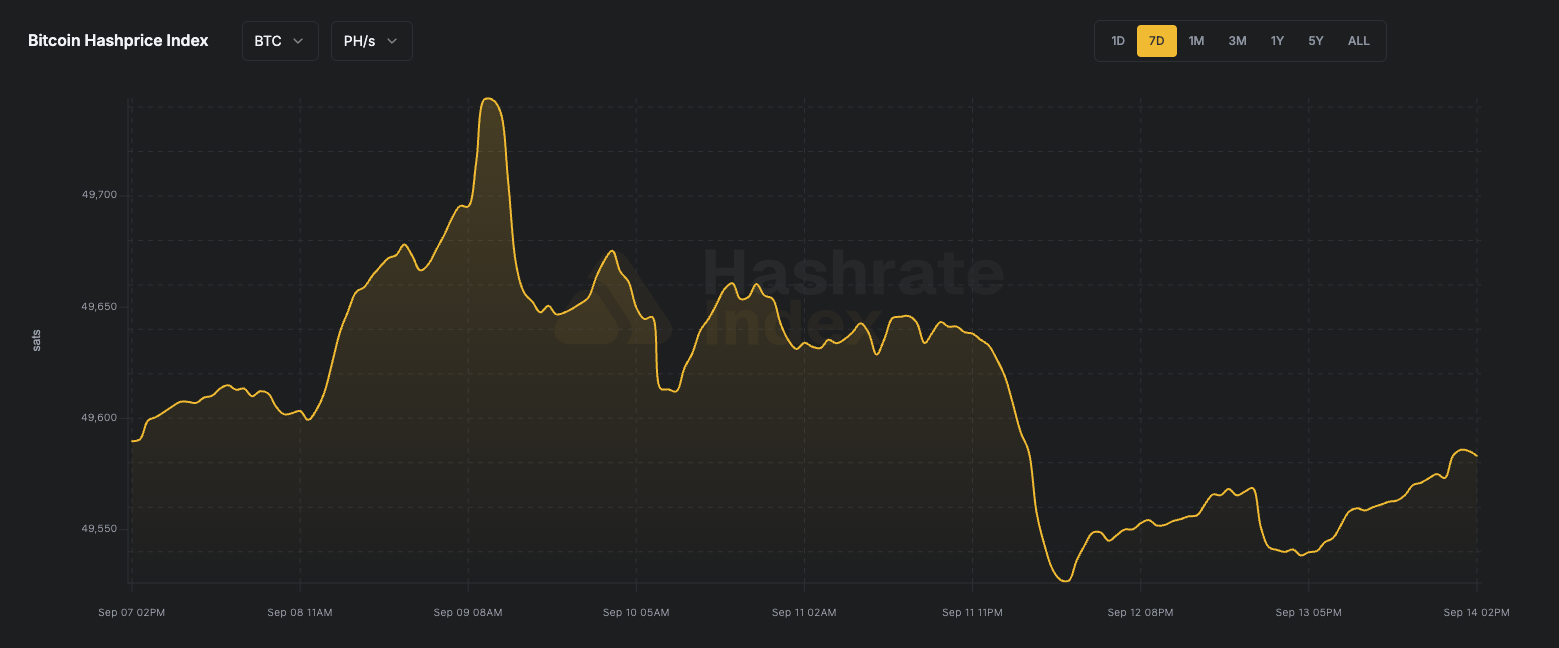
The USD-denominated hashprice, which measures the expected daily revenue per petahash per second (PH/s), remained effectively unchanged, moving from $39.29 to $39.25 per PH/s per day—a marginal drop of 0.1%. This stability, while seemingly positive, underscores a lack of growth in revenue-per-unit-of-compute. On a BTC-denominated basis, the hashprice remained equally static, holding at 0.00049578 BTC per PH/s.
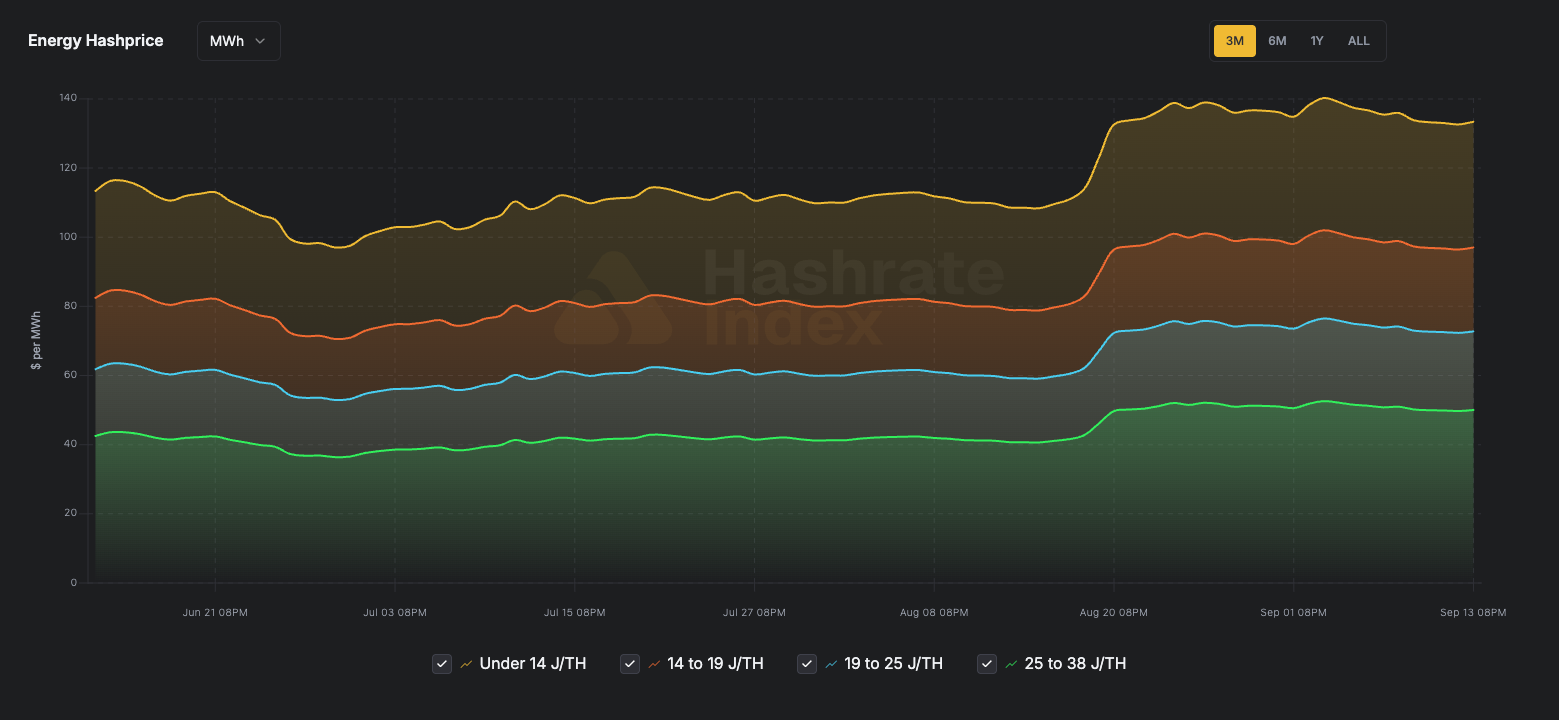
The 30-day average hashprice of $38.04 suggests that the industry is currently operating in a narrow margin environment. For firms with higher operational expenses or older, less efficient hardware, these levels approach the "breakeven" point where electricity costs begin to exceed potential revenue. Consequently, many operators are doubling down on fleet upgrades, transitioning to next-generation SHA-256 ASIC miners that offer superior joules-per-terahash efficiency to remain competitive in a landscape defined by thin margins.
Network Hashrate and Difficulty Adjustments
The Bitcoin network’s total computational power saw a slight contraction, with the 7-day simple moving average (SMA) of the network hashrate dipping from 946 EH/s to 943 EH/s, a 0.3% decrease. While this represents a minor cooling of competition, the 30-day SMA of 928 EH/s indicates that the long-term trend remains one of high network participation and intense competition.
The network is currently in the midst of its latest difficulty epoch, with the last adjustment occurring on September 5, 2026, which saw a 1.31% increase to 127.45T. Current data suggests an upcoming adjustment around September 19, 2026, with estimates pointing toward an additional 5.26% increase in difficulty. If realized, this will further heighten the competitive pressure on miners, as the cost of securing the network will rise while block rewards remain fixed. The average block time has remained relatively consistent at 9 minutes and 30 seconds, signaling that the network is maintaining stability despite the fluctuations in hashrate.
Transaction Fee Trends
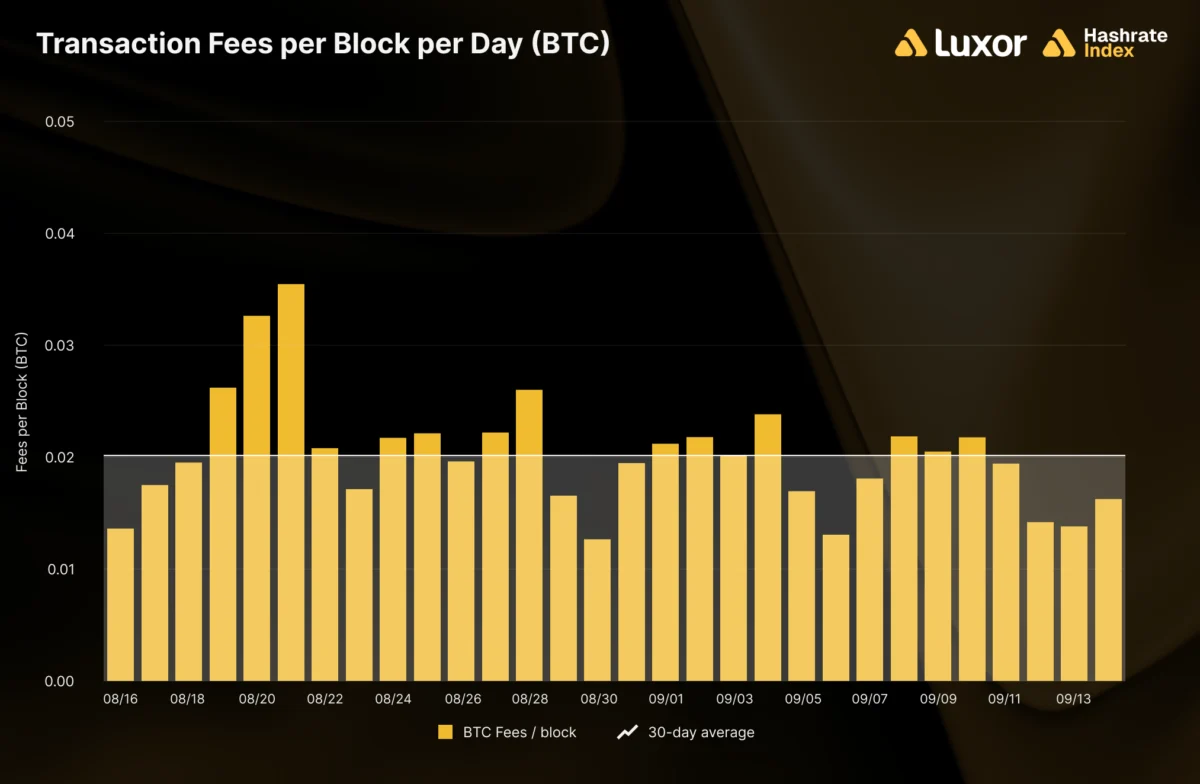
Transaction fees, which serve as a critical secondary revenue stream for miners, showed signs of weakness this week. Miners collected an average of 0.0183 BTC per block, representing a 5% decrease compared to the prior week’s average of 0.0193 BTC. The 30-day average for transaction fees, standing at 0.0202 BTC, indicates a broader downward trend of 9.6%. This decline is likely attributable to a relative lull in on-chain activity, as lower transaction volume reduces the urgency for users to pay premium fees to ensure block inclusion. For miners, this places an even greater premium on the efficiency of their mining rigs, as the reliance on subsidy-heavy revenue models becomes increasingly precarious in the face of future halving events.
Institutional Mining Stocks Performance
The public equity markets for Bitcoin miners faced significant headwinds over the last five trading days. Nearly all major industry players recorded negative weekly growth, reflecting investor skepticism toward the current profitability of large-scale mining operations. Notable declines included Cipher Mining (CIFR), which fell 14.0%, and TeraWulf (WULF), which saw a 12.4% correction. Iris Energy (IREN), despite maintaining a massive market capitalization of $17.19 billion, saw its stock price slip by 7.0%.
Only a few outliers managed to secure gains, such as Canaan Inc. (CAN), which rose 6.3% following recent hardware announcements, and Applied Digital (ANY), which posted a notable 18.0% gain. The overall downward pressure on mining equities suggests that Wall Street is increasingly scrutinizing the balance sheets of mining firms, favoring those with lower debt-to-equity ratios and greater access to cheap, sustainable power.
Future Outlook and Strategic Implications
As the industry looks toward the next six months, the Hashrate Forward Market is pricing in an average hashprice of approximately $36.92. This conservative outlook suggests that the market expects continued pressure on margins throughout the remainder of 2026. The shift toward more efficient energy consumption and the deployment of advanced cooling technologies are no longer optional for mining firms—they are existential requirements.
The broader implications of these trends point to a period of consolidation. Larger firms with access to institutional capital and diversified energy portfolios are better positioned to weather the current stagnation than smaller, leveraged operators. Furthermore, the reliance on transaction fees will likely become the primary focus of development within the ecosystem; if the network cannot sustain higher transaction volumes, the long-term security model of Bitcoin will depend heavily on the ability of mining firms to optimize for efficiency rather than raw scale.
As of mid-September 2026, the Bitcoin mining industry remains a battleground of optimization. With difficulty trending upward and revenue metrics remaining flat, the coming months will likely see a sharper divide between high-efficiency operations and those struggling to remain profitable in a maturing, highly competitive global market. Miners continue to monitor these developments closely, with the expectation that upcoming network adjustments and market shifts will provide the next catalyst for industry-wide movement.