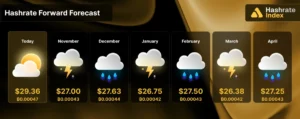
The Evolution of Bitcoin Mining Intelligence
The history of Bitcoin mining has transitioned from a hobbyist endeavor conducted on personal computers to a sophisticated, multi-billion-dollar industrial sector. In the early years of the network, mining was decentralized and accessible; however, as the Bitcoin protocol’s difficulty adjustment mechanism responded to increased participation, the requirement for specialized hardware—specifically Application-Specific Integrated Circuits (ASICs)—became the industry standard. This shift necessitated a new level of analytical rigor. Investors and operators alike began to require granular data on power consumption, geographic distribution of nodes, and the efficiency of various ASIC models.
The Hashrate Index emerged to bridge this information gap, providing a structured repository of data that allows market participants to track the "health" of the mining ecosystem. The newsletter serves as the synthesis of this data, distilling complex technical metrics into actionable insights. By monitoring the fluctuations in the global hashrate, which hit historical highs throughout the last calendar year, the newsletter provides subscribers with early indicators of network security trends and shifts in mining profitability, commonly referred to as the "hashprice."
Chronology of Market Shifts and Data Demand
To understand the necessity of specialized reporting, one must examine the timeline of significant mining events that have reshaped the global landscape. In 2021, the industry experienced a tectonic shift when the Chinese government implemented a comprehensive ban on cryptocurrency mining activities. This event, which saw roughly 50% of the global hashrate go offline overnight, served as a catalyst for the geographic decentralization of mining. North America, Central Asia, and parts of Europe quickly became the new epicenters for industrial-scale mining operations.
Following the 2021 migration, the industry faced the "crypto winter" of 2022. As the price of Bitcoin plummeted from its all-time highs, many mining firms—particularly those that had taken on significant debt during the bull market—found themselves in precarious financial positions. The Hashrate Index played a pivotal role during this period by documenting the deleveraging process, tracking the liquidation of mining rigs, and reporting on the consolidation of smaller firms by larger, more capitalized entities.
By 2023 and into 2024, the focus shifted toward the "halving" event—the quadrennial reduction in block subsidies that fundamentally alters the economics of mining. The anticipation of this event spurred an unprecedented arms race in hardware efficiency, as miners sought to replace aging rigs with the latest generation of power-efficient machines to remain profitable in a post-halving environment.
Data-Driven Analysis of the Mining Ecosystem
The utility of the Hashrate Index newsletter lies in its reliance on empirical evidence. Data points typically featured include:
- Hashprice Trends: The revenue potential per unit of hashrate, typically denominated in USD per terahash per day (TH/s/day). This metric is the primary indicator of miner profitability.
- Difficulty Adjustments: The network’s automated response to changing hashrate, occurring approximately every two weeks. This dictates the competitive environment for miners.
- Hardware Efficiency Metrics: Comparative analyses of ASIC performance, measuring joules per terahash (J/TH), which dictates the break-even point for operators in different energy-cost environments.
- Power Price Dynamics: Real-time monitoring of energy costs, as power remains the single largest operational expenditure (OPEX) for mining facilities.
Statistical analysis suggests that the industry is becoming increasingly tethered to broader energy markets. Mining facilities are no longer just consumers of electricity; they are increasingly acting as grid-balancing agents. By utilizing demand-response programs, miners can throttle their operations during periods of peak grid stress, providing a service that utility companies find increasingly valuable.
Official Responses and Industry Sentiment
Industry leaders have frequently noted that transparency is the key to institutional adoption. Executives from major publicly traded mining firms often cite the Hashrate Index as a benchmark for their own operational assessments. In recent commentary, analysts have emphasized that the integration of ESG (Environmental, Social, and Governance) metrics into mining reporting is no longer optional. The newsletter has reflected this shift by incorporating data on the renewable energy mix utilized by the mining sector, a topic that has drawn significant interest from regulators and environmental advocates alike.
While mining companies emphasize the efficiency gains of modern hardware, they also acknowledge the regulatory headwinds facing the industry. Concerns regarding carbon footprints and local environmental impact have prompted a push for increased transparency in reporting. The newsletter provides a platform for disseminating these industry-wide efforts, allowing stakeholders to communicate their progress toward sustainable mining practices to a broader audience.
Broader Impact and Future Implications
The implications of robust data reporting in the mining sector are significant. As Bitcoin continues to gain traction as a global asset class, the infrastructure supporting its security must remain resilient. The Hashrate Index newsletter acts as a stabilizer in this regard, ensuring that information asymmetry does not lead to panic or irrational market movements.
Looking forward, the mining industry is expected to face continued pressure from both the hardware efficiency race and the shifting regulatory environment. As the block subsidy continues to diminish over the coming decades, transaction fees will eventually become the primary source of revenue for miners. The transition to a fee-dominated revenue model will require a high level of sophistication in how miners manage their capital, energy procurement, and hardware cycles.
Furthermore, the integration of artificial intelligence (AI) and high-performance computing (HPC) with Bitcoin mining infrastructure is emerging as a potential trend. Some firms are pivoting to offer their facilities as colocation centers for AI companies, leveraging their existing power infrastructure to diversify revenue streams. This evolution is precisely the type of market development that the Hashrate Index monitors, providing its readership with the foresight necessary to navigate a rapidly changing landscape.
Conclusion: The Role of Information in Market Maturity
In conclusion, the Hashrate Index newsletter represents more than just a summary of technical data; it is an essential tool for the professionalization of the Bitcoin mining industry. By providing consistent, objective, and detailed reporting, the publication helps to mitigate the risks inherent in a nascent and highly volatile market. As the sector continues to integrate with traditional energy and financial markets, the role of such newsletters will only grow in importance.
For investors, policy makers, and industry operators, maintaining access to high-quality information is the foundation of sound decision-making. The commitment to data integrity and analytical depth ensures that the Hashrate Index remains a critical node in the information network that supports the Bitcoin ecosystem. As the industry enters its next phase of growth, marked by increased regulatory scrutiny and technological integration, the insights provided by the Hashrate Index will continue to serve as a vital resource for those looking to understand the future of digital asset infrastructure.
The growth of the newsletter subscriber base itself is a reflection of the increasing appetite for professional-grade mining intelligence. As more participants enter the space, the demand for transparency and deep-dive analysis will drive further innovation in reporting standards, ensuring that the global mining community remains informed, connected, and equipped to handle the challenges of a decentralized future. Through meticulous data collection and clear communication, the Hashrate Index remains committed to its mission of shedding light on the complex, essential, and ever-evolving machinery of the Bitcoin network.