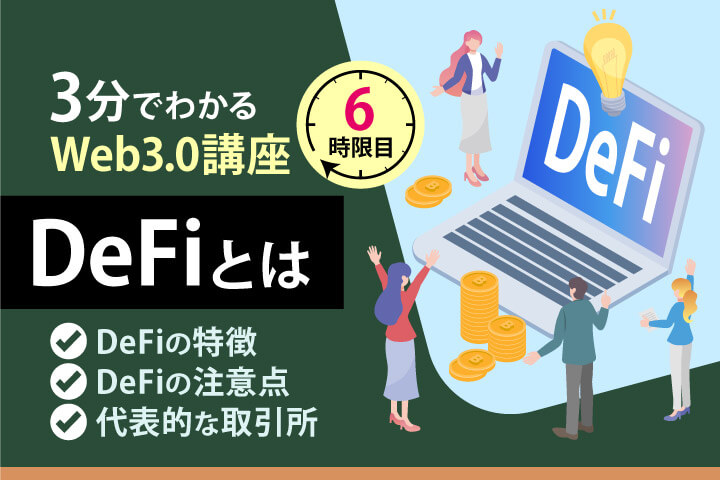
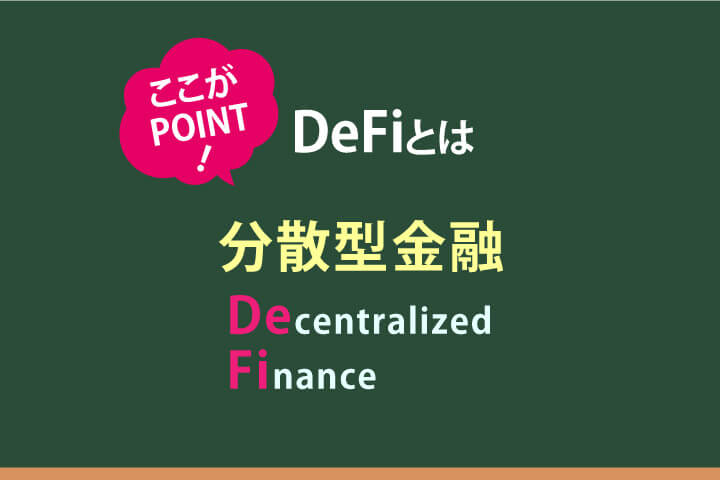
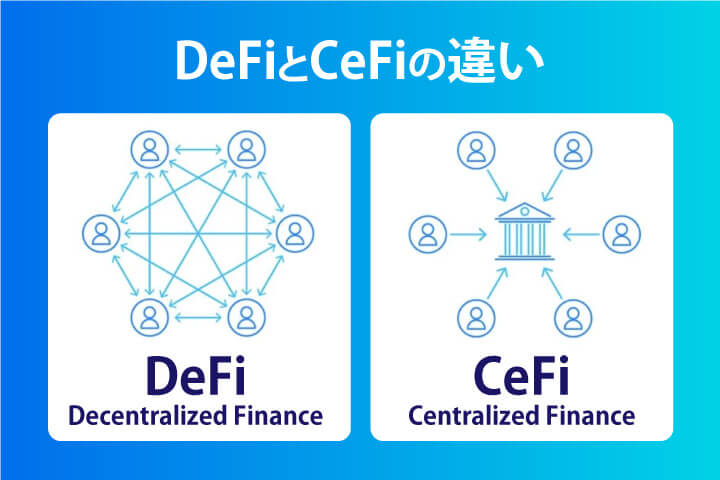
Decentralized Finance, commonly referred to as DeFi, represents a fundamental shift in the global financial landscape by leveraging blockchain technology to remove intermediaries from financial transactions. Often described as the "banking system of Web3," DeFi aims to reconstruct traditional financial services—such as lending, borrowing, and asset trading—on top of decentralized networks, primarily the Ethereum blockchain. Unlike traditional finance (CeFi), which relies on centralized institutions like banks and brokerages to manage and verify transactions, DeFi utilizes smart contracts to automate these processes. This technological evolution offers the promise of a more inclusive, transparent, and efficient financial ecosystem, though it brings with it a unique set of risks and regulatory challenges that participants must navigate.
The Core Mechanisms of the DeFi Ecosystem
At its heart, DeFi is powered by smart contracts—self-executing agreements with the terms of the contract directly written into lines of code. These contracts operate on a blockchain, ensuring that once the conditions of an agreement are met, the transaction is executed automatically without the need for a third-party guarantor. This disintermediation is what separates DeFi from the legacy financial system. In a traditional bank, a customer must provide personal identification, undergo credit checks, and rely on the bank’s internal ledger to verify their balance. In the DeFi space, the ledger is public and immutable, and the "trust" is placed in the mathematics of the code rather than a corporate entity.
The infrastructure of DeFi is often compared to "Money Legos" due to its composability. Because most DeFi protocols are open-source, developers can build new applications on top of existing ones. For instance, a user might use one protocol to swap an asset, another to lend that asset for interest, and a third to use that interest-bearing position as collateral for a loan. This interconnectedness has led to rapid innovation, allowing the sector to grow from a niche experiment into a multi-billion-dollar industry within a few short years.

Comparative Analysis: DeFi vs. Centralized Finance (CeFi)
The distinction between Decentralized Finance and Centralized Finance is best understood through the lens of control and accessibility. In the CeFi model, institutions act as custodians of user funds. While this provides a safety net in the form of customer support and fraud protection, it also introduces "gatekeeping." Banks can freeze accounts, deny service based on geographical location, and require extensive documentation. Furthermore, traditional financial markets operate on limited schedules, typically closing on weekends and holidays.
Conversely, DeFi is permissionless and operates 24/7. Anyone with an internet connection and a digital wallet can access DeFi protocols, regardless of their credit history or physical location. This is particularly impactful for the "unbanked" population in developing regions, where traditional banking infrastructure may be corrupt or non-existent. However, the absence of a central authority means there is no "undo" button. If a user loses their private keys or sends funds to the wrong address, those assets are typically unrecoverable. The responsibility for security and due diligence shifts entirely from the institution to the individual.
Key Features and Economic Benefits
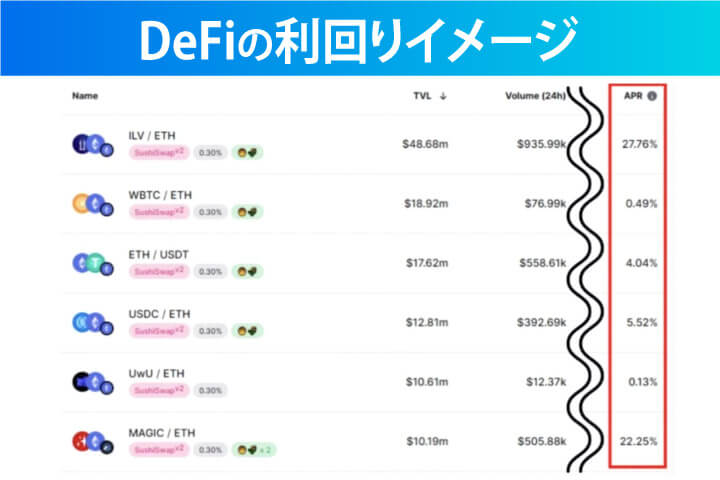
The rise of DeFi is driven by several unique advantages that traditional systems struggle to replicate. These features have attracted billions of dollars in Total Value Locked (TVL), a key metric used to measure the total amount of assets currently staked or deposited in DeFi protocols.
1. High-Speed Global Remittances
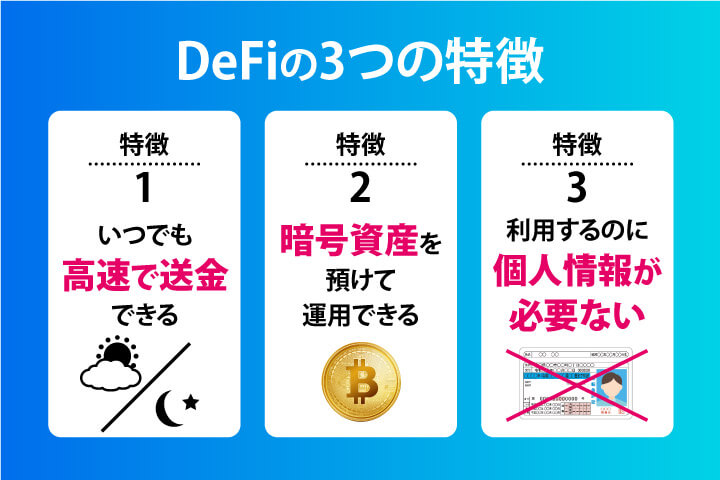
Traditional international wire transfers are notoriously slow and expensive, often taking three to five business days and incurring fees from multiple correspondent banks. DeFi streamlines this process by using stablecoins—cryptocurrencies pegged to the value of a fiat currency like the U.S. Dollar. Transactions can be settled in minutes, regardless of the distance between the sender and the recipient. Because the system operates 365 days a year, the friction of bank holidays and time zone differences is eliminated.
2. Yield Generation and Liquidity Provision
In a low-interest-rate environment, DeFi offers alternative ways to earn a return on assets. Through a process known as "yield farming" or liquidity mining, users can provide their assets to a decentralized exchange (DEX) to facilitate trades for others. In exchange for providing this liquidity, users receive a portion of the transaction fees and, in some cases, governance tokens. Lending protocols also allow users to deposit their crypto-assets to earn interest paid by borrowers, often at rates significantly higher than those offered by traditional savings accounts.
3. Privacy and Permissionless Access
One of the most revolutionary aspects of DeFi is that it does not require a "Know Your Customer" (KYC) process for most protocols. Users do not need to submit identity documents or proof of address to participate. While this has raised concerns among regulators regarding anti-money laundering (AML) compliance, it provides an essential layer of privacy for users who wish to keep their financial activities confidential. It also ensures that the financial system remains neutral, treating every wallet address equally.

A Chronology of the DeFi Movement
The trajectory of DeFi can be traced back to the launch of Bitcoin in 2009, which introduced the concept of decentralized peer-to-peer electronic cash. However, the modern DeFi era truly began with the launch of Ethereum in 2015, which introduced programmable smart contracts.
- 2017 – The Foundation: The launch of MakerDAO and its stablecoin, DAI, provided the first decentralized method for collateralized debt positions. This proved that a stable asset could exist on the blockchain without being backed by a centralized bank account.
- 2018-2019 – The Quiet Growth: Protocols like Uniswap and Compound were launched, introducing Automated Market Makers (AMMs) and decentralized lending markets.
- 2020 – "DeFi Summer": This period marked an explosion in TVL. The introduction of liquidity mining by Compound triggered a massive influx of capital as users chased high yields. TVL surged from less than $1 billion in early 2020 to over $15 billion by the end of the year.
- 2021-2022 – Institutional Interest and Stress Tests: DeFi reached its peak TVL of over $170 billion in late 2021. However, 2022 brought significant challenges, including the collapse of the Terra (LUNA) ecosystem and several high-profile bridge hacks, which forced a market correction and a renewed focus on security.
- 2023-Present – Maturation and Regulation: The industry is currently in a phase of "building," with a focus on Layer 2 scaling solutions to reduce transaction costs and the integration of Real-World Assets (RWA), such as tokenized treasury bonds.
Understanding the Risks: Volatility and Security
While the potential rewards of DeFi are high, the risks are equally significant. Market participants must be aware that the DeFi space is still largely experimental and lacks the consumer protections found in regulated markets.
Smart Contract Vulnerabilities: Since DeFi protocols are based on code, any bug or "exploit" in that code can be targeted by hackers. In 2022 alone, billions of dollars were lost to DeFi hacks. Unlike a bank robbery, where funds might be insured by the FDIC, DeFi losses are usually permanent.
Price Volatility and Impermanent Loss: The value of cryptocurrencies can fluctuate wildly. For liquidity providers, a phenomenon known as "impermanent loss" can occur when the price of the deposited assets changes significantly compared to when they were deposited, potentially resulting in less value than if the user had simply held the assets in a private wallet.

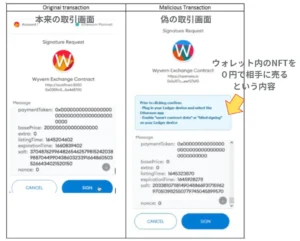
Scams and "Rug Pulls": The permissionless nature of DeFi means anyone can create a token and a project. "Rug pulls" occur when developers create a project, attract investment, and then suddenly withdraw all the liquidity, leaving investors with worthless tokens.
Representative Projects and Market Leaders
To navigate the DeFi landscape, it is essential to recognize the established protocols that have demonstrated longevity and high TVL. These projects are often considered the "blue chips" of the decentralized world.
- Uniswap: As the leading decentralized exchange on Ethereum, Uniswap pioneered the AMM model. It allows users to swap any ERC-20 token directly from their wallets. Its TVL and trading volume often rival those of major centralized exchanges.
- Curve Finance: Curve is a DEX specifically optimized for stablecoins. By focusing on assets with similar values, it offers extremely low slippage and lower fees, making it a cornerstone of the DeFi ecosystem for conservative investors.
- PancakeSwap: Operating primarily on the BNB Smart Chain (BSC), PancakeSwap offers a similar experience to Uniswap but with significantly lower transaction fees. It has become a hub for users who find Ethereum’s "gas fees" prohibitive.
The reliability of these platforms is often judged by their TVL and the length of time they have operated without a major security breach. Investors are generally advised to start with these well-audited protocols before exploring newer, more speculative projects.
Regulatory Outlook and Global Implications
The rapid growth of DeFi has not gone unnoticed by global regulators. Organizations such as the Securities and Exchange Commission (SEC) in the United States and the European Union through its Markets in Crypto-Assets (MiCA) regulation are actively seeking ways to bring DeFi under the umbrella of financial oversight. The primary challenge for regulators is the "decentralized" nature of the protocols; without a central company or individual to hold accountable, traditional enforcement mechanisms are difficult to apply.

The broader impact of DeFi extends beyond just trading and lending. It is increasingly intersecting with GameFi (the integration of finance into gaming) and SocialFi (decentralized social media). In these models, DeFi serves as the underlying economic engine, allowing players to truly own their in-game assets and earn real-world value for their time and skill.
As the technology matures, the industry is moving toward a "hybrid" model where DeFi protocols may offer optional KYC features to attract institutional capital while maintaining decentralized cores for retail users. The integration of Real-World Assets (RWAs)—bringing traditional assets like real estate, gold, and bonds onto the blockchain—is expected to be the next major growth driver, potentially onboarding trillions of dollars into the DeFi ecosystem.
In conclusion, Decentralized Finance is more than just a technological trend; it is a reimagining of how humanity interacts with value. By prioritizing code over corporations and transparency over secrecy, DeFi offers a glimpse into a more equitable financial future. However, the path forward requires a balance between innovation and security, as well as a sophisticated understanding of the risks involved in this digital frontier. Participants are encouraged to utilize secure tools like MetaMask wallets, perform rigorous research, and never invest more than they can afford to lose in this high-stakes, high-reward environment.