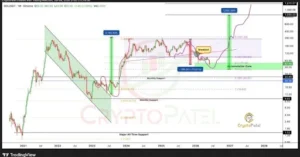
The digital asset landscape is currently grappling with a period of intense volatility as altcoin headwinds intensify, characterized by significant bearish on-chain movements over the past 30 days. This downward pressure has been exacerbated by the stagnant performance of Bitcoin (BTC), which has failed to provide the necessary sentiment boost to the broader market. As Bitcoin continues to trade below the psychologically significant $60,000 threshold, major altcoins including Ethereum (ETH), Solana (SOL), and XRP remain firmly entrenched in the red zone, struggling to find a support floor amidst a sea of retail panic and institutional caution.
The Technical Breakdown: Altcoins Below the 200-Day Moving Average
A recent comprehensive analysis from CryptoQuant suggests that the altcoin sector has borne the brunt of the current market correction. According to their researchers, approximately 84% of altcoins are currently trading below their 200-day Daily Moving Average (DMA). In technical analysis, the 200-day DMA is often regarded as a definitive "line in the sand" that separates long-term bullish trends from bearish ones. When an asset falls below this level, it typically indicates that the long-term momentum has shifted to the downside, often leading to a prolonged period of consolidation or further decline.
The magnitude of this slide is particularly evident when compared to previous market cycles. While Bitcoin’s decline from its recent peak fluctuates around the 50% mark, several prominent altcoins have posted losses nearing 65% since the fourth quarter of 2023. This disparity highlights a growing trend of "Bitcoin dominance," where investors flee riskier assets in favor of the relatively "safer" haven of the original cryptocurrency during times of macroeconomic uncertainty.
Analyzing the Total 3 Index and Market Capitalization
To understand the health of the altcoin market, analysts frequently point to the "Total 3" metric. This index tracks the total market capitalization of all cryptocurrencies, excluding Bitcoin and Ethereum. Recent data shows that the Total 3 index has plunged significantly below its own 200-day DMA, signaling a systemic withdrawal of capital from the mid-cap and small-cap sectors.
The broader crypto market capitalization recently dipped by 2.07%, settling at approximately $2.04 trillion. This contraction is a direct reflection of the low sentiment pervading the industry. For many traders, the Total 3’s inability to reclaim its moving average serves as a warning that the "altseason"—a period where altcoins outperform Bitcoin—remains a distant prospect.
Exchange Dynamics: Retail Panic and Whale Exits on Binance
Centralized exchanges, particularly Binance, serve as a bellwether for market sentiment due to their massive trading volumes and diverse user bases. Recent trading activity on Binance indicates a predominantly bearish sentiment, with consistent inflows of assets onto the exchange. In the world of crypto-analytics, high exchange inflows are often interpreted as a precursor to selling pressure, as investors move assets from private wallets to exchanges to execute trades.

The current sell-off appears to be a two-pronged movement. On one side, retail traders are reportedly dumping their holdings in an attempt to prevent further mounting losses, a phenomenon often described as "capitulation." On the other side, data suggests that "whales"—large-scale investors who accumulated significant positions during the first quarter of the year—are also gradually exiting their positions. The convergence of retail panic and institutional-grade profit-taking has created a liquidity vacuum, making it difficult for prices to sustain any upward momentum.
Macroeconomic Pressures and the US Reserve Ratio
The struggle of the altcoin market cannot be viewed in isolation from the global financial environment. The United States Reserve Ratio is currently flashing risk signals to crypto traders as liquidity in the financial system continues to tighten. When the supply of money shrinks and the cost of borrowing remains high, high-risk assets like cryptocurrencies are often the first to be liquidated.
Macroeconomic pressures, including persistent inflation concerns and uncertainty regarding the Federal Reserve’s interest rate trajectory, have led to a "risk-off" environment. This shift is also responsible for the notable decline in spot ETF (Exchange-Traded Fund) volumes. Despite the initial excitement surrounding the approval of crypto ETFs, institutional funds have shown a marked slowdown in the last 30 days.
Ethereum’s Performance and the ETF Factor
Ethereum, the world’s leading altcoin, has experienced a particularly challenging month. After stretching sideways for several weeks, ETH suffered a 5.2% weekly slide, bringing its total monthly slump to over 22%. At the time of reporting, Ethereum is trading around the $2,500 range, though some bearish projections have seen it dip toward support levels near $2,300 and lower.
The launch of spot Ethereum ETFs was initially expected to be a major bullish catalyst. However, the reality has been more somber. In the second day of trading alone, spot Ethereum ETFs posted $133 million in outflows. This suggests that while the institutional infrastructure is now in place, the immediate demand is being offset by investors exiting older products, such as the Grayscale Ethereum Trust (ETHE), or simply waiting for a more stable macroeconomic entry point. Despite the current slump, some bulls remain optimistic, pricing in a recovery once the market finds its definitive cycle bottom.
Solana and XRP: A Study in Divergence
While the general market trend is downward, Solana (SOL) has shown signs of relative resilience. Although it plummeted 1.5% in a single day, it managed to maintain a positive weekly inflow, with gains up approximately 4% within that seven-day window. Solana’s ability to outperform its peers is often attributed to its robust ecosystem of decentralized applications (dApps) and its popularity among retail users for meme coin trading and NFT transactions.
In contrast, XRP has faced a tougher road, dropping 6% over the same period. The asset continues to be sensitive to developments regarding the legal landscape in the United States and the broader regulatory sentiment toward "utility tokens." The 6% decline reflects a broader lack of confidence among holders who are weary of the prolonged stagnation that has plagued the asset compared to the explosive growth seen in other ecosystems during the early months of the year.

Historical Context: Comparing the Current Slump to 2020
Market analysts have noted that the current period of stagnation is one of the longest underperformance streaks for altcoins since 2020. "This marks the second-longest underperformance streak since 2020," one analyst noted. "The only comparable episode occurred during the last bear market, where this dynamic lasted approximately ten months."
During the 2020-2021 cycle, altcoins suffered through a grueling period of sideways movement before Bitcoin’s breakout eventually led to a massive liquidity overflow into the rest of the market. If historical patterns hold true, the current "pain" felt by investors may be a necessary phase of market cleansing, where "weak hands" are shaken out before a more sustainable bull run can begin.
Institutional Flows and Future Implications
The decline in institutional interest, as evidenced by the slowing ETF volumes, suggests that the "smart money" is currently in a wait-and-see mode. Institutional investors typically prioritize capital preservation during periods of high volatility. For altcoins to regain their luster, they will likely need to see a stabilization in Bitcoin’s price and a shift in the Federal Reserve’s monetary policy toward a more "dovish" or accommodative stance.
Furthermore, the shrinking supply of capital, as indicated by the US Reserve Ratio, suggests that the market is currently in a "liquidity crunch." Until there is a meaningful injection of liquidity into the global financial system, altcoins may continue to suffer from an extended period of low volume and high volatility.
Conclusion: The Path Forward for Altcoins
The current state of the altcoin market is one of transition and trial. With 84% of assets trading below their 200-day DMA and major players like Ethereum and XRP facing double-digit monthly losses, the road to recovery appears steep. However, the resilience shown by assets like Solana suggests that there are still pockets of strength within the industry.
For investors, the coming months will be a test of patience. The market is currently navigating a complex web of technical breakdowns, retail panic, and macroeconomic headwinds. Whether this period of stagnation lasts for a few more weeks or several more months, the eventual rebound will likely depend on a combination of Bitcoin finding its footing and a more favorable global economic backdrop. Until then, the "promising" nature of these altcoins remains a long-term prospect, contingent on their ability to survive the current bearish winter.