The cryptocurrency market is currently witnessing a notable concentration of XRP activity centered on South Korea’s Upbit exchange, a development that has captured the attention of institutional analysts and retail traders alike. As XRP approaches the psychologically significant $1.20 resistance level, recent data from analytics firm CryptoQuant highlights a pronounced shift in net wallet flow dominance. This concentration of volume, particularly on a platform known for its high retail participation, serves as a focal point for market observers attempting to gauge the next leg of price action.
The Anatomy of the Upbit Flow Surge
According to data tracked by CryptoQuant, Upbit’s XRP Net Wallet Flow Dominance underwent a significant expansion over the course of a single week. Starting at 13% on June 7, the dominance figure climbed to 31% by June 14, marking the highest level of concentration since May 2024. This rapid influx indicates that a disproportionate amount of global XRP exchange activity is currently being funneled through the South Korean exchange, effectively displacing the previous distribution of liquidity across global platforms.
In the context of cryptocurrency markets, "Net Wallet Flow Dominance" refers to the share of total exchange inflows and outflows attributed to a specific platform. When one exchange sees such a sharp, sudden increase in dominance, it often suggests that a specific regional cohort—in this case, South Korean investors—is driving market sentiment. South Korea has historically maintained a unique relationship with XRP, with the asset frequently trading at a premium on local exchanges due to high retail demand and the country’s robust digital asset infrastructure.
Chronology of Recent Market Activity
The current setup follows a period of consolidation for XRP, which has struggled to sustain momentum above the $1.20 threshold for several months. Throughout early June, XRP prices remained within a tight range, reflecting a broader stagnation in the altcoin sector as Bitcoin navigated its own regulatory and macroeconomic challenges.
The surge in Upbit activity coincides with a period of increased volatility in the broader digital asset market. As the market entered mid-June, traders began repositioning their portfolios, anticipating a potential breakout for assets that had lagged behind during previous cycles. The uptick in wallet flow began on June 7, signaling the start of a trend that saw market participants moving assets onto the exchange, presumably to facilitate faster execution or to capitalize on anticipated price movements. By June 14, the concentration had reached a local peak, aligning with a renewed push toward the $1.20 resistance level.
Understanding the $1.20 Resistance Barrier
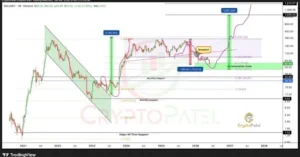
For market technicians, the $1.20 level represents more than just a price point; it is a structural barrier that has defined the upper bounds of XRP’s recent trading range. Resistance levels are formed where selling pressure historically overwhelms buying pressure, causing a pullback. When an asset approaches such a level, the market typically enters a phase of "price discovery," where traders look for signals—such as volume spikes or shifts in exchange flow—to determine if the asset has the momentum to break through.
A clean break above $1.20 would require significant buying pressure to absorb existing sell orders. Analysts emphasize that a "wick" above the level, followed by a quick retreat, would be considered a failed breakout or a "liquidity sweep." In this scenario, market makers often push price into a zone of high order density to trigger stop-loss orders or entice traders to buy, only to reverse the trend. Conversely, a sustained close above $1.20, supported by the high exchange activity currently observed on Upbit, would provide the necessary confirmation for a potential trend reversal.

Interpretation of Exchange Flow Data
While the surge in Upbit activity is a compelling data point, market analysts urge caution regarding the interpretation of wallet flows. It is a common misconception that all exchange inflows are indicative of immediate selling pressure. While high inflows can suggest that traders are preparing to sell their holdings, they can also represent:
- Market Maker Positioning: Liquidity providers often move assets between wallets and exchanges to maintain tight spreads and facilitate trading.
- Institutional Rebalancing: Larger entities may be moving funds to prepare for automated trading strategies or internal ledger reconciliations.
- Regional Arbitrage: Traders may be moving XRP to Upbit to capitalize on the "Kimchi Premium," the price disparity that often exists between South Korean exchanges and international markets.
Therefore, while the 31% dominance figure is a strong indicator of regional interest, it must be viewed as part of a larger, multifaceted market puzzle. It provides the "context" for the current price movement, confirming that the current volatility is not happening in a vacuum but is supported by actual movement of capital within the ecosystem.
The Role of Broader Market Conditions
The performance of XRP cannot be decoupled from the performance of Bitcoin. Historically, XRP has shown a high correlation with the broader altcoin market, which in turn follows the general direction of Bitcoin. For a breakout above $1.20 to be successful, it is generally required that Bitcoin remains stable or experiences upward momentum. If Bitcoin experiences a sharp correction, the liquidity required to sustain an XRP breakout may evaporate, regardless of the activity level on specific exchanges like Upbit.
Moreover, the current regulatory climate surrounding digital assets continues to play a role in market sentiment. While the specific legal challenges faced by XRP’s primary stakeholders have seen significant resolution, the ongoing institutional scrutiny of the crypto sector as a whole means that any price movement is subject to rapid reversals based on macro-regulatory updates or shifts in global monetary policy.
Strategic Implications for Traders and Investors
For those monitoring the current market, the focus remains on the interplay between the $1.20 resistance and the sustained activity on Upbit. If the high flow dominance persists as the price approaches this level, it suggests a "high-conviction" environment. In technical analysis, conviction is the difference between a fleeting price spike and a sustainable trend shift.
Institutional analysts suggest that the coming week will be critical. If XRP can secure a daily close above $1.20 with accompanying volume expansion, it would validate the theory that the recent surge in activity was driven by genuine accumulation rather than short-term speculative positioning. Conversely, should the price fail to hold this level, the concentration of assets on Upbit could paradoxically turn into a headwind, as those who moved funds onto the exchange in anticipation of a breakout may decide to exit if their expectations are not met.
Conclusion: A Critical Juncture
The current state of the XRP market is characterized by a rare alignment of technical resistance and on-chain flow activity. The surge in Upbit wallet dominance to 31% acts as a spotlight on South Korean market sentiment, providing a clear indicator of where the current momentum is originating. However, the path forward remains dependent on broader market stability and the ability of bulls to convert technical interest into concrete, sustained price action above the $1.20 threshold.
As with all high-volatility assets, the current situation underscores the importance of monitoring multi-dimensional data. By balancing technical price analysis with on-chain flow metrics, market participants can better understand the forces at play, moving beyond simple price movements to appreciate the structural shifts occurring within the global XRP marketplace. The coming days will likely determine whether this shift in flow dominance marks the beginning of a sustained upward move or simply another cycle of resistance testing within the current trading range.