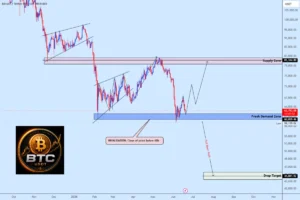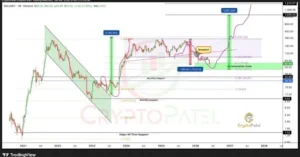
The digital asset market is currently navigating a period of profound turbulence, characterized by intensifying altcoin headwinds and significant bearish on-chain movements over the trailing thirty-day window. Amid broader macroeconomic pressures and shifting monetary policies, the pioneer cryptocurrency, Bitcoin (BTC), has failed to provide a psychological safety net or a sentiment-boosting catalyst, consistently trading below the critical $60,000 threshold. Major altcoin assets—including Ethereum (ETH), Solana (SOL), and XRP—remain entrenched in the red zone, struggling to break out of prolonged consolidation phases and multi-month downtrends.
While general market sentiment remains subdued, savvy institutional investors, quantitative researchers, and venture capitalists are closely analyzing the wreckage to identify hidden opportunities. Market participants are increasingly focusing on a select group of resilient altcoin projects that continue to display robust development metrics, active ecosystems, and high utility despite the overarching macro bearishness. Understanding why these particular digital assets are drawing attention requires a comprehensive look at current technical indicators, historical market cycles, and on-chain behaviors defining the contemporary cryptocurrency landscape.
Technical Anatomy of the Current Altcoin Slump
The ongoing correction across digital assets has hit the alternative coin sector disproportionately hard. According to recent insights published by CryptoQuant analysts, a staggering 84% of all altcoins are currently trading below their crucial 200-day moving average (DMA). This technical metric is widely monitored by institutional traders to determine long-term market trends; a sustained position below the 200 DMA typically confirms a macro-level bear market structure.
When evaluating the scale of the correction from previous cycle peaks relative to Bitcoin, the vulnerability of altcoins becomes starkly apparent. While Bitcoin’s retracement from its all-time highs fluctuates above the 50% mark, numerous altcoins have suffered devastating losses exceeding 65% since the final quarter of the previous year. This widening performance gap highlights a flight to safety among risk-averse market participants, who prefer the relative liquidity and market dominance of Bitcoin over higher-beta alternative assets.
Furthermore, broader aggregate indicators, such as the TOTAL3 index—which tracks the total market capitalization of all cryptocurrencies excluding Bitcoin and Ethereum—have plunged deeper below their respective moving averages. Order book dynamics on prominent centralized derivatives and spot exchanges, most notably Binance, reinforce this bearish narrative. Persistent exchange inflows over the past month point to an impending surge in sell-side pressure, as both retail participants and institutional entities look to trim exposure and mitigate further capital erosion.

Chronology of Market Capitulation and Whale Behavior
To fully contextualize the current market downturn, one must examine the chronological progression of capital flows throughout the year. The first quarter began with renewed optimism, driven by institutional adoption narratives and spot exchange-traded fund (ETF) approvals. During this window, deep-pocketed investors, commonly referred to as whales, accumulated substantial altcoin positions in anticipation of a sustained altcoin season.
However, as macroeconomic headwinds gathered strength in the subsequent quarters, these large holders began a systematic and gradual exit from their positions. This distribution phase created a cascading effect across order books. As support levels broke, retail traders—facing mounting portfolio losses—began panic-selling their holdings, accelerating the downward momentum.
Market historians note that the current environment represents an exceptionally grueling period of stagnation. Industry analysts point out that this is the second-longest underperformance streak for altcoins since 2020. The only comparable historical episode occurred during the severe bear market of the previous cycle, a grueling dynamic that persisted for approximately ten months before forming a macro bottom. This extended consolidation is testing the psychological limits of retail investors, many of whom entered the market near the 2024–2025 peaks.
Macroeconomic Pressures and Institutional Outflows
The struggles within the digital asset class do not exist in a vacuum; they are intrinsically tied to global macroeconomic tightening and shifting monetary policies. In the United States, the Federal Reserve’s ongoing balance sheet normalization and reserve ratio adjustments are actively draining liquidity from the broader financial system. As fiat money supply contracts, risk-on assets—traditionally led by cryptocurrencies and equities—experience severe valuation compressions.
This liquidity drain has had a direct and measurable impact on institutional investment vehicles. Over the trailing thirty days, spot exchange-traded funds tied to leading altcoins, particularly spot Ethereum ETFs, have recorded substantial net outflows. For instance, following brief periods of net positive inflows post-launch, spot Ethereum products recently logged millions in single-day redemptions, triggering an 8% correction in ETH prices within a brief trading window and pushing its monthly slump beyond 22%. At the time of reporting, Ethereum changes hands around $1,566, lingering far below the bullish projections formulated by analysts at the start of the year.
Simultaneously, alternative Layer-1 networks and cross-border payment tokens are feeling the pinch. Solana (SOL) recently experienced a localized intraday drop of 1.5%, though it has demonstrated relative resilience on a weekly timeframe with marginal net inflows of roughly 4%. Meanwhile, XRP recorded a 6% weekly decline, reflecting the broader market-wide contraction that dragged total crypto market capitalization down by approximately 2.07% to hover near $2.04 trillion.

Fact-Based Analysis of Implications and Forward Outlook
The implications of this prolonged altcoin compression are multifaceted, impacting miners, decentralized finance (DeFi) protocols, project treasuries, and retail speculators alike.
-
Ecosystem Development vs. Token Valuation: A critical divergence has emerged between fundamental network activity and token price action. While many of the top altcoin projects continue to experience record-high transaction volumes, developer commits, and total value locked (TVL) in smart contracts, their native tokens remain heavily suppressed. This disconnect suggests that market valuation is currently being driven entirely by macro liquidity constraints rather than project-specific fundamentals.
-
Capital Concentration in Bitcoin: As long as Bitcoin remains range-bound below the psychologically vital $60,000 level and macroeconomic uncertainties persist, altcoins are unlikely to mount a sustained independent recovery. Historical precedents indicate that a true altcoin season typically requires a stabilized or aggressively rising Bitcoin dominance followed by capital rotation into lower-cap assets—a sequence that has yet to materialize.
-
Regulatory and ETF Dynamics: The performance of institutional products will continue to act as a leading indicator for market recovery. A stabilization in spot ETF flows, coupled with clearer regulatory frameworks regarding digital asset classifications in major global jurisdictions, will be prerequisites for institutional capital to re-enter the altcoin ecosystem.
Why Certain Altcoins Stand Out Amid the Gloom
Despite the pervasive bearish sentiment and the technical challenges of trading below the 200 DMA, market analysts continue to spotlight specific altcoins due to their unique value propositions. The projects attracting positive evaluation typically share several common characteristics:
- Strong Tokenomics and Utility: Assets that feature deflationary burn mechanisms, robust staking participation rates, and genuine utility within decentralized applications (dApps) or enterprise solutions tend to absorb selling pressure more effectively.
- Active Developer Communities: Networks backed by well-funded foundations and consistent developer engagement are viewed as safer long-term bets, as they are equipped to survive prolonged crypto winters and emerge stronger during the subsequent expansion phase.
- Geographic and Sector Diversification: Projects addressing real-world asset (RWA) tokenization, modular blockchain scaling, and decentralized physical infrastructure networks (DePIN) are carving out independent niches that insulate them, to varying degrees, from pure speculative cycles.
As the cryptocurrency market prepares for the final quarters of the year, market participants remain hyper-vigilant. While the current environment of sub-200 DMA trading, retail capitulation, and macroeconomic tightening demands caution, historical cycles suggest that periods of extreme pessimism frequently lay the groundwork for eventual structural accumulation and long-term market maturation.