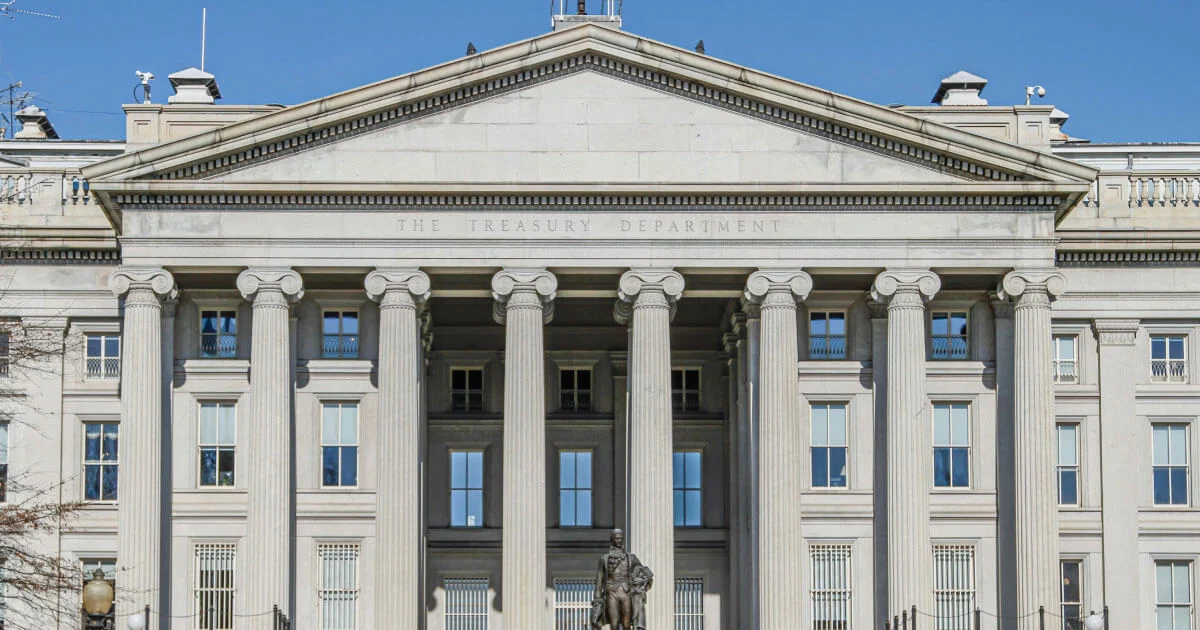
The United States Department of the Treasury has formally initiated a sweeping, high-stakes economic campaign directed at the Islamic Republic of Iran, its military apparatus, and its international enablers. Announced on August 24, 2026, and dramatically framed by Treasury Secretary Scott Bessent as an “economic D-Day,” the newly unveiled initiative—designated as Operation Economic Outcast—represents one of the most aggressive multi-agency crackdowns on Iranian state-backed financial networks in recent history. At the core of this aggressive policy shift is a historic regulatory maneuver: a first-of-its-kind sectoral determination explicitly targeting Iran’s digital asset ecosystem, alongside coordinated actions against state-sponsored cyber hackers and maritime shadow fleet oil brokers moving illicit capital through cryptocurrency.
The launch of Operation Economic Outcast follows a tense period of escalating geopolitical friction, regional airstrikes, and intensifying financial surveillance. For years, Western intelligence agencies and private blockchain analytics firms, including Chainalysis, have tracked the Iranian regime’s evolving strategies to bypass international economic isolation. As traditional banking corridors narrowed due to successive waves of Western sanctions, Tehran increasingly pivoted toward decentralized financial architecture. Cryptocurrencies, stablecoins, and peer-to-peer payment networks have served as vital lifelines for the Iranian government, allowing state-directed actors to monetize natural resources, finance regional proxies, and fund sophisticated cyber espionage campaigns against Western critical infrastructure.
Chronology of Escalation and Enforcement
The multi-pronged offensive against Iran’s financial and cyber capabilities materialized over a compressed, high-intensity window in August 2026. The groundwork for the Treasury’s sweeping administrative actions was preceded by significant law enforcement disclosures and intelligence breakthroughs.
On August 18, 2026, the U.S. Department of Justice unsealed a massive superseding indictment charging 17 Iranian nationals with orchestrating large-scale cyber-theft campaigns on behalf of the Islamic Revolutionary Guard Corps (IRGC) and the infamous Iran-based hacking-for-hire organization, the Mabna Institute. This indictment laid bare the operational intersection between state intelligence operations and illicit digital asset acquisition, highlighting how targeted individuals leveraged corporate intrusions, data extortion, and ransomware attacks to generate personal and state-affiliated wealth.
Just under a week later, on August 24, 2026, the U.S. Department of the Treasury escalated the pressure exponentially. Unveiling Operation Economic Outcast, the Treasury’s Office of Foreign Assets Control (OFAC) sanctioned nearly 60 entities, individuals, and maritime vessels. Central to this package was the issuance of five new sectoral determinations under Executive Order 13902, the most consequential of which granted the U.S. government unprecedented regulatory authority over foreign digital asset service providers intersecting with the Iranian economy.
A Historic Sectoral Determination for Digital Assets
The centerpiece of the Treasury’s latest regulatory strategy is the unprecedented application of a sectoral determination under Executive Order 13902 to Iran’s digital assets sector. Historically, OFAC has deployed sectoral determinations against traditional pillars of the Iranian economy, such as energy, shipping, construction, and manufacturing. However, this marks the first time digital assets have been classified under this specific executive authority.

The practical implications of this determination are profound for the global cryptocurrency industry. Under this authority, OFAC no longer needs to establish a direct nexus between a foreign crypto business and a specific act of terrorism, weapons proliferation, or a pre-sanctioned entity to take punitive measures. Instead, the determination authorizes OFAC to impose secondary sanctions on any foreign person, exchange, over-the-counter (OTC) broker, liquidity provider, or infrastructure business globally that is determined to operate in or provide material support to Iran’s digital asset sector.
For global compliance and legal teams, this dramatically alters the risk landscape. International cryptocurrency platforms that fail to implement rigorous geofencing, robust know-your-customer (KYC) frameworks, and advanced blockchain transaction monitoring now face severe exposure. Facilitating transactions that traverse Iran’s digital asset ecosystem can result in swift designation, effectively cutting non-U.S. crypto businesses off from the U.S. financial system and isolating them from global liquidity pools.
Targeting State-Sponsored Cyber Operations and Ransomware Networks
Beyond broad systemic measures, Operation Economic Outcast delivered targeted blows to specific cells within Iran’s primary intelligence apparatus, the Ministry of Intelligence and Security (MOIS). OFAC explicitly targeted high-profile operatives engaged in relentless cyber intrusions against U.S. critical infrastructure, corporate entities, and government offices.
Among those designated are Behzad Mesri, identified as a co-leader of an MOIS-linked hacking contingent, alongside members Keyvan Fayyaz Ghareh Blagh and Arman Kahzadian. U.S. authorities have closely tied these individuals to campaigns involving data theft, corporate extortion, and ransomware deployment. Notably, Mesri was previously indicted for his role in a 2017 cyberattack and attempted extortion campaign against media giant HBO, demanding approximately $6 million worth of Bitcoin.
Blockchain analytics underpinning the Treasury’s actions revealed intricate financial trails connecting these intelligence operatives to illicit digital economies. For instance, wallets belonging to Blagh and Kahzadian displayed incoming cryptocurrency transactions linked to Russian-speaking Initial Access Brokers, suggesting a collaborative underground economy where state-sponsored intelligence personnel monetize unauthorized access to Western networks alongside cybercriminals.
Furthermore, blockchain analysis identified Blagh depositing funds derived from ransomware and cyber intrusions into bulletproof hosting providers—specialized hosting services that ignore abuse complaints to shelter illicit digital operations. The targeting of these infrastructure providers underscores OFAC’s growing focus on the operational scaffolding that enables modern state-sponsored cybercrime.
Cryptocurrency as the Lifeline for IRGC-Qods Force Oil Sales
While cyber operations generate liquid capital and strategic data, the Iranian regime’s macroeconomic survival remains heavily dependent on energy exports. Despite comprehensive U.S. sanctions targeting its petroleum sector, Tehran has successfully maintained a sprawling "shadow fleet" of aging oil tankers to move crude to international buyers. Cryptocurrency has increasingly served as the foundational settlement rail for these illicit transactions, offering speed, discretion, and insulation from traditional correspondent banking checks.

Data from blockchain intelligence firm Chainalysis highlights the sheer scale of this phenomenon. In the final quarter of 2025 alone, addresses associated with the Islamic Revolutionary Guard Corps accounted for over 50% of the total value received within Iran’s entire domestic cryptocurrency economy, with cumulative volumes surpassing $3 billion throughout that year.
A prime illustration of this illicit financial machinery is the designation of Ivan Obukhov, a UAE-based Ukrainian national. According to the U.S. Treasury, Obukhov has operated for years as a key maritime broker facilitating oil shipments for the Iranian military and its regional proxies. Since 2023, Obukhov has processed more than $100 million in cryptocurrency payments to settle transactions for oil sales executed on behalf of the Islamic Revolutionary Guard Corps-Qods Force (IRGC-QF).
In his illicit maritime operations, Obukhov coordinated closely with Mohammad Ahmed Suhil Fattouh, a UAE-based Syrian national and fellow shadow fleet broker widely known by the moniker “Captain Hamzah.” Fattouh was similarly targeted by OFAC for procuring and managing vessels specifically designated for sanctions evasion, illustrating a transnational network of facilitators relying on digital assets to bridge the gap between sanctioned state actors and global commodities markets.
Implications for Compliance and the Global Crypto Economy
The launch of Operation Economic Outcast signals a permanent shift in how Western regulatory and law enforcement bodies approach the intersection of geopolitics, national security, and decentralized finance. By treating digital asset rails with the same regulatory severity traditionally reserved for major banking institutions, the U.S. Treasury has raised the compliance bar for virtual asset service providers worldwide.
For compliance officers, risk managers, and legal counsel across the fintech and cryptocurrency sectors, the message is unequivocal. The widening scope of secondary sanctions necessitates an immediate, comprehensive audit of counterparty exposures, particularly regarding OTC desks, peer-to-peer exchanges, and payment intermediaries operating in high-risk jurisdictions historically utilized for Iranian shadow trade, such as parts of the Middle East, Eurasia, and East Asia.
Major blockchain intelligence infrastructure providers have already integrated the newly designated cryptocurrency addresses into their compliance screening suites, allowing institutions to instantly flag and block tainted transactions. As the U.S. government accelerates the pace of enforcement under Operation Economic Outcast, the margin for error for international financial intermediaries has effectively vanished, signaling that the digital tunnels once utilized with impunity by the Iranian regime are being systematically mapped, targeted, and closed.