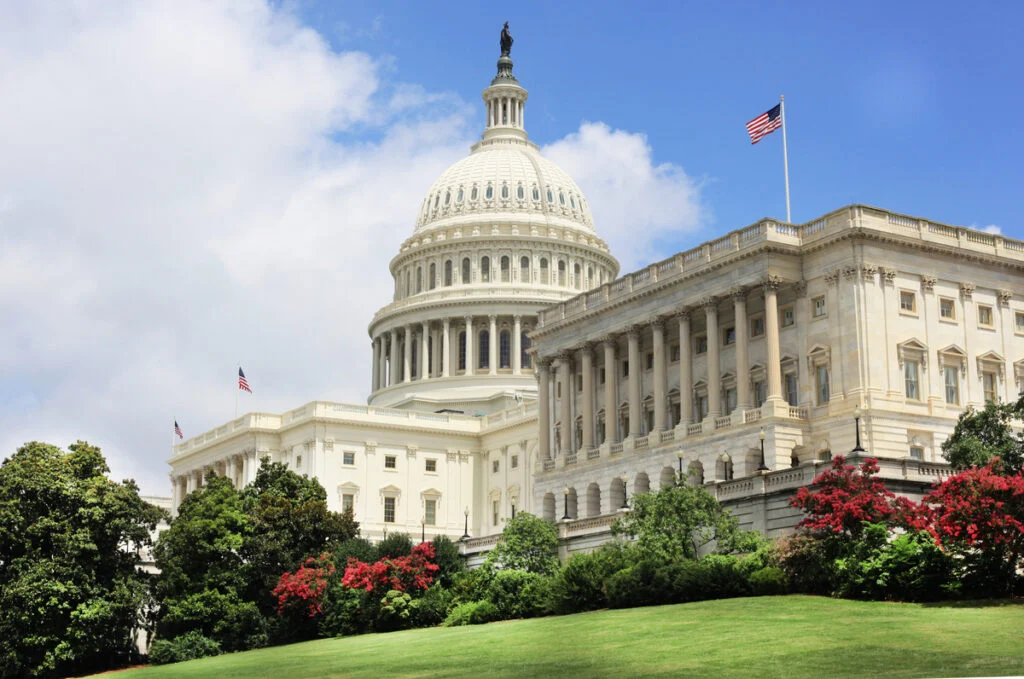
Washington, D.C. — In a significant legislative development aimed at bringing regulatory clarity to the rapidly expanding digital asset ecosystem, the United States House Ways and Means Committee, led by Chairman Jason Smith, officially introduced the "Digital Asset Tax Certainty Act" on September 14. The comprehensive bill addresses long-standing concerns among cryptocurrency investors, developers, and industry stakeholders regarding ambiguous tax reporting obligations and compliance burdens that have long plagued the sector.
The formal introduction of the bill follows days of intense anticipation within Capitol Hill and the broader financial technology sector. On September 15, preliminary draft provisions were made publicly available, culminating in a formal markup session held on September 16 at 10:00 a.m. During this high-profile session, committee members debated the nuances of the proposed legislation, ultimately advancing the tax certainty bill through a structured voting process that signaled robust bipartisan interest in resolving systemic regulatory challenges within the cryptocurrency market.
Core Objectives of the Digital Asset Tax Certainty Act
At its foundation, the Digital Asset Tax Certainty Act seeks to overhaul and modernize a framework of broker reporting requirements that critics argue were ill-suited for decentralized technologies when they were initially formulated. Under current tax statutes, the definition of a "broker" was broadened significantly under infrastructure legislation passed in recent years, casting a wide net that inadvertently included miners, validators, wallet providers, and other decentralized protocol participants who lack access to customer identifying information.
The newly proposed legislation attempts to carve out targeted exemptions for non-custodial actors, such as software developers, miners, and stakers, who do not exercise control or custody over user funds. By establishing clear statutory boundaries, the bill aims to prevent decentralized finance (DeFi) participants from being subjected to impossible reporting standards that fundamentally conflict with the operational mechanics of blockchain technology.
Industry advocates and legal scholars have long warned that without legislative intervention, stringent broker reporting rules could effectively drive crypto innovation and talent offshore, undermining the United States’ competitive edge in financial technology. The Digital Asset Tax Certainty Act directly responds to these concerns, establishing a predictable compliance pathway designed to foster domestic innovation while simultaneously safeguarding tax compliance.
Legislative Chronology and Committee Markup
The pathway to the introduction of the Digital Asset Tax Certainty Act has been marked by extensive stakeholder engagement, congressional hearings, and years of iterative drafting. The timeline of key developments leading to the September markup underscores the growing legislative urgency surrounding digital asset regulation:
- Early 2021 – Late 2022: Initial discussions regarding the taxation of digital assets intensify following the passage of broad infrastructure packages containing ambiguous broker definitions.
- Throughout 2023: Industry stakeholders, trade associations, and legal experts submit comprehensive feedback to the House Ways and Means Committee, highlighting the impracticality of applying traditional financial intermediary rules to decentralized protocols.
- 2024 – 2025: Bipartisan working groups conduct multiple roundtables and exploratory hearings to evaluate the economic impact of regulatory uncertainty on American crypto businesses.
- September 14, 2026: Chairman Jason Smith formally introduces the Digital Asset Tax Certainty Act (H.R. 10357), setting the stage for formal legislative review.
- September 15, 2026: Committee leadership releases the preliminary legislative text for public and institutional review.
- September 16, 2026: The House Ways and Means Committee convenes at 10:00 a.m. to review, debate, and advance the bill through a critical markup phase.
Supporting Data and Industry Implications
Economic analyses accompanying the legislative push suggest that the current lack of tax certainty has created a chilling effect on capital formation and entrepreneurial ventures within the United States. According to estimates from financial research groups, venture capital investment in domestic blockchain startups has faced persistent headwinds as founders navigate an uncertain compliance landscape.
Furthermore, decentralized exchanges and liquidity providers have reported operational challenges stemming from vague cost-basis tracking requirements. The Digital Asset Tax Certainty Act introduces standardized guidelines for calculating gains and losses on digital asset transactions, easing the administrative burden on everyday taxpayers while preserving the integrity of federal tax collection.
Tax professionals have particularly welcomed provisions clarifying the tax treatment of staking rewards and mining proceeds. Under previous guidelines, taxpayers frequently faced immediate income recognition upon the receipt of newly minted tokens, even prior to conversion into fiat currency or disposal. The new bill addresses these valuation complexities by aligning tax timing rules more closely with traditional property realization principles.
Official Responses and Stakeholder Reactions
Reaction from major cryptocurrency advocacy groups, financial institutions, and policy institutes has been overwhelmingly positive, though varying segments of the industry continue to push for additional refinements.
"For too long, American innovators, developers, and investors have operated under a cloud of regulatory ambiguity that threatens to push next-generation financial technologies overseas," noted representatives from a leading blockchain policy coalition following the committee’s markup. "The Digital Asset Tax Certainty Act represents a pragmatic, commonsense step toward establishing a workable tax regime that respects the unique decentralized architecture of blockchain networks."
Conversely, some consumer protection advocates and fiscal watchdogs have emphasized the ongoing need to balance innovation incentives with robust measures against tax evasion. During the September 16 committee hearings, several lawmakers raised questions regarding potential loopholes that could be exploited by bad actors seeking to leverage decentralized networks for illicit finance. In response, bill sponsors emphasized that the legislation maintains strict anti-money laundering (AML) and know-your-customer (KYC) guardrails for centralized custodians and exchanges, ensuring that illicit finance is vigorously curbed without stifling open-source software development.
Broader Economic and Geopolitical Impact
Beyond domestic compliance, the introduction and advancement of the Digital Asset Tax Certainty Act carry significant geopolitical implications. As global financial hubs—including the European Union, the United Kingdom, Singapore, and Hong Kong—actively implement comprehensive regulatory frameworks to attract digital asset enterprises, the United States faces mounting pressure to establish legal clarity.
Economic analysts point out that failure to resolve tax ambiguities could result in a permanent brain drain, with top-tier blockchain engineers, cryptographers, and venture capitalists relocating to jurisdictions offering more hospitable regulatory climates. By moving forward with structured tax reform, the House Ways and Means Committee signals that the United States remains committed to maintaining its leadership position in global financial architecture.
As the bill advances from the committee stage toward broader floor consideration in the House of Representatives, lawmakers from both sides of the aisle will likely continue refining specific statutory definitions. The legislative momentum demonstrated during the September markup indicates that digital asset policy has evolved into a substantive bipartisan priority, setting the stage for pivotal congressional debates in the months ahead.
Article by Shoko Galaviz
Photography by Shutterstock