The cryptocurrency landscape has long been defined by the absolute dominance of Bitcoin, yet recent commentary from one of the industry’s most respected architects has reignited discussions regarding a potential shift in market hierarchy. David Schwartz, the Chief Technology Officer Emeritus at Ripple, recently articulated his perspective that XRP possesses the fundamental capacity to eventually eclipse Bitcoin in market capitalization. During an interactive X (formerly Twitter) Space session, Schwartz clarified that such an eventuality would not stem from a degradation of Bitcoin’s value, but rather from the accelerated adoption and technological expansion of the XRP Ledger (XRPL).
The Mechanics of a Market Shift
Schwartz’s assertion is rooted in the belief that the digital asset sector is still in its nascent stages and is poised for exponential growth. Rather than viewing the market as a zero-sum game where one asset must perish for another to thrive, he posits a scenario of broad expansion. In this projected future, Bitcoin may continue to hold its position as a "digital gold" store of value, while the XRPL captures a larger share of the global financial utility market due to its specific architectural advantages.

The primary argument for XRP’s potential growth lies in its technical specifications. Unlike Bitcoin, which operates on a Proof-of-Work consensus mechanism optimized for decentralization and security, the XRPL is designed for high-frequency settlement, low-cost cross-border payments, and decentralized finance (DeFi) functionality. Schwartz noted that the ledger offers features that Bitcoin, by design, cannot support, such as native decentralized exchange capabilities, tokenization, and near-instant settlement times. As the global economy moves toward digitized finance, Schwartz suggests that developers and institutional users will increasingly prioritize the scalability and versatility inherent in the Ripple ecosystem.
Market Divergence and ETF Performance
The timing of Schwartz’s comments is notable, occurring amidst a broader contraction in the cryptocurrency markets. On Tuesday, September 8, 2026, the aggregate cryptocurrency market capitalization saw a decline of approximately 0.33%, shedding roughly $8.88 billion in value. Bitcoin, the industry bellwether, experienced a 0.81% drop, signaling cautious sentiment among institutional and retail investors alike.
In sharp contrast to this negative momentum, XRP-related investment vehicles displayed significant resilience. Data indicates that XRP spot ETFs recorded $1.55 million in net inflows on that day, making them the only crypto-focused exchange-traded funds to register positive growth. This divergence is particularly striking when compared to the performance of other major digital asset funds. Bitcoin spot ETFs, which had previously enjoyed a three-day streak of inflows, recorded a reversal with $46.65 million in net outflows. Similarly, Ethereum-based products saw a decline of $24.29 million, while Solana ETFs continued their trend of contraction, shedding $667,000. Other assets, including BNB and Dogecoin-based ETFs, remained stagnant with zero net flows, while HYPE-branded funds faced a significant outflow of $12.96 million.

This decoupling of XRP from the broader market trend suggests a growing institutional appetite for the asset, potentially driven by the perceived utility of the XRPL in real-world financial applications.
A Chronology of Institutional Adoption
The journey of XRP toward its current market standing has been marked by a series of legal, technological, and regulatory milestones. Following a prolonged period of legal uncertainty that began in late 2020, Ripple successfully navigated regulatory hurdles that defined the first half of the decade.
- 2020–2023: The Regulatory Crucible: The industry watched as Ripple defended its business model against the U.S. Securities and Exchange Commission. During this period, XRP development continued, with the introduction of Federated Sidechains and the Automated Market Maker (AMM) amendment to the XRPL, which bolstered its DeFi capabilities.
- 2024: Post-Litigation Expansion: With legal clarity established, Ripple intensified its efforts to integrate the XRPL into mainstream financial infrastructure, focusing on stablecoin initiatives and institutional custody solutions.
- 2025: The ETF Era: The launch of spot ETFs for various cryptocurrencies allowed institutional investors to gain exposure to XRP through traditional brokerage accounts. This shift in accessibility has been credited for the recent surge in demand, as noted in the September 2026 data.
- 2026: Maturity and Scaling: The current year has seen a shift in narrative from pure speculation to utility-driven adoption, providing the backdrop for Schwartz’s recent comments on market cap flipping.
Analysis of Implications
If XRP were to eventually overtake Bitcoin in market capitalization, it would signal a profound shift in the criteria used by the market to value digital assets. Currently, market cap is primarily driven by scarcity and speculative sentiment, particularly in the case of Bitcoin. A "flip" would imply that the market has begun to prioritize network utility, transaction throughput, and institutional adoption metrics over the "digital gold" narrative.

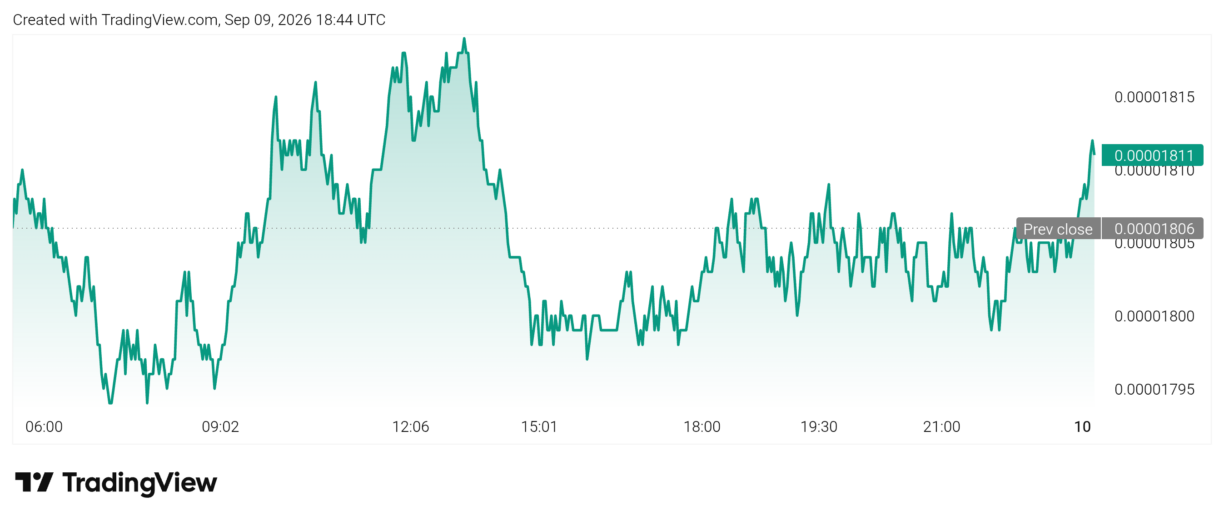
However, analysts caution that such a transition would require an immense increase in the adoption of XRPL for global payments and settlements. Currently, the XRP/BTC trading pair remains a key indicator of market sentiment. On the day of Schwartz’s remarks, the pair was trading at 0.00001811, representing a 0.28% gain. While this movement is statistically minor, it reinforces the trend of XRP outperforming Bitcoin during localized periods of market volatility.
Future Outlook and Industry Response
Industry participants have reacted to Schwartz’s comments with a mix of optimism and pragmatism. Supporters of the Ripple ecosystem point to the increasing use of the XRPL for central bank digital currency (CBDC) pilots and international remittance as evidence that the asset is positioning itself for a "utility-led" bull cycle. Critics, however, emphasize that Bitcoin’s brand equity and institutional backing as a hedge against inflation are formidable barriers to any attempt to displace its market dominance.
The broader implications of this debate extend to the regulatory environment as well. As more financial products are built on top of the XRPL, the pressure on regulators to provide consistent frameworks for interoperability and cross-border settlement increases.
Schwartz remains convinced that the market is expansive enough for both assets to reach record valuations. His perspective underscores a shift in industry philosophy: the belief that the rise of high-utility ledgers does not require the fall of the original blockchain pioneers. Instead, the maturation of the sector suggests a future where different assets serve distinct, specialized functions within the global financial architecture.
As investors continue to monitor the performance of crypto ETFs, the resilience of XRP in the face of negative market flows provides a compelling case study. Whether the asset can maintain this momentum and fulfill the long-term vision articulated by its leadership remains a focal point for institutional investors and market analysts heading into the final quarter of 2026. The data currently shows that while Bitcoin continues to command the largest share of the market, the technical and functional growth of the XRP Ledger is carving out a unique and increasingly influential niche, potentially setting the stage for a dramatic reconfiguration of the cryptocurrency market hierarchy in the years to come.