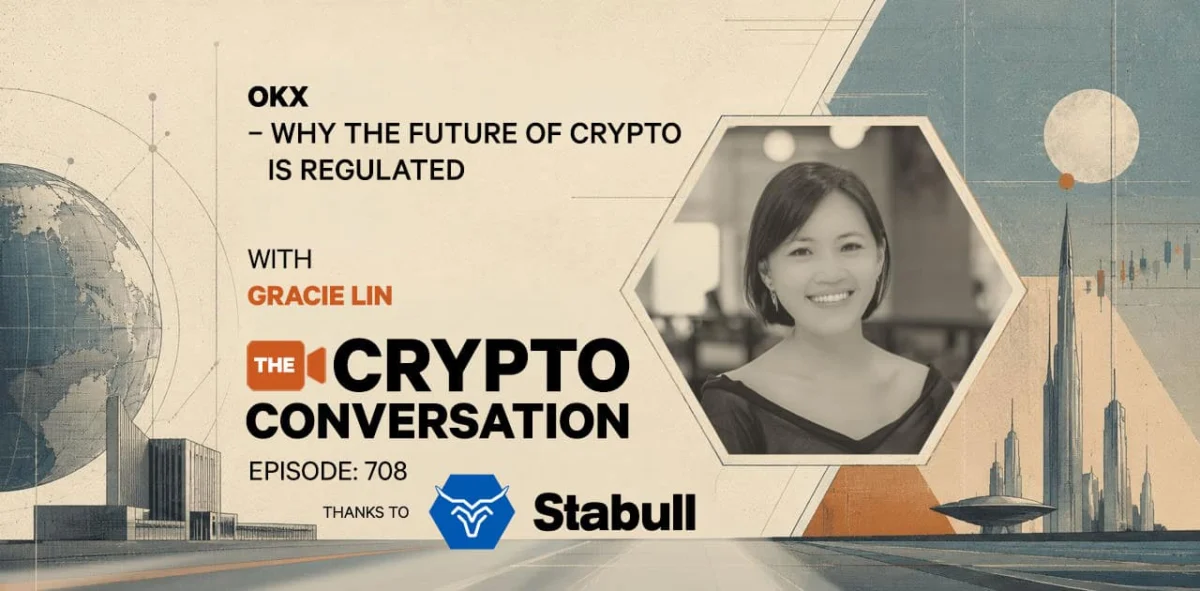
The modern cryptocurrency landscape is undergoing a profound structural metamorphosis, transitioning from a Wild West of decentralized experimentation into a heavily regulated, institutionalized global asset class. At the vanguard of this evolution is OKX, one of the world’s leading digital asset exchanges, which has systematically positioned itself to capture institutional and sophisticated retail capital through rigorous regulatory compliance. Directing this complex regional and global strategy is Gracie Lin, Regional CEO for Singapore and Australia, alongside her mandate as Head of VIP Growth.
With a career deeply entrenched in both traditional finance and high-growth technology sectors, Lin brings a uniquely pragmatic perspective to the intersection of cryptocurrency trading and governmental oversight. Her leadership at OKX coincides with a critical juncture for the exchange, characterized by the securing of critical licenses in key Asia-Pacific jurisdictions, the harmonization of global VIP services, and an industry-wide pivot toward tokenized real-world assets (RWAs) and institutional-grade risk management.
From Public Sector Supervision to Private Sector Strategy
Gracie Lin’s professional trajectory offers rare insight into how regulatory compliance and commercial ambition can successfully align within the digital asset sector. Before entering the fintech and cryptocurrency ecosystems, Lin spent the formative first decade of her career at the Monetary Authority of Singapore (MAS). During her tenure at Singapore’s central bank and integrated financial regulator, she specialized in banking supervision before transitioning into broader market operations.
Following her foundational years at the MAS, Lin expanded her operational expertise within the upper echelons of traditional finance and technology. She held significant roles at GIC, Singapore’s sovereign wealth fund, where she gained invaluable experience in managing large-scale global capital investments and risk mitigation strategies. Subsequently, she joined Southeast Asian super-app Grab, where she spearheaded regional economic strategy and execution.
This multifaceted background uniquely equipped her to navigate the complex regulatory and commercial demands of the cryptocurrency industry. When she joined OKX in 2024, her primary mandate was to oversee the establishment and expansion of the exchange’s Singapore operations just as the firm secured its coveted Major Payment Institution (MPI) license from the MAS. Following this milestone, her responsibilities rapidly expanded to encompass the Australian market and a global portfolio managing the exchange’s highest-net-worth and most sophisticated institutional clients.
The Pragmatic Defense of Regulation: A Regulatory Insider’s View
In an industry where executives frequently decry government oversight as an inhibitor of innovation, Lin’s perspective stands out for its lack of reluctance. Drawing directly from her years sitting on the regulatory side of the table at the MAS, she frames compliance not as an arbitrary barrier, but as a series of calculated and necessary trade-offs.
According to Lin, financial supervisors operate under immense pressure, balancing the competing mandates of fostering financial innovation while simultaneously protecting retail consumers, safeguarding the broader financial system, maintaining a level playing field among competitors, and monitoring global regulatory arbitrage across international jurisdictions. She notes that the systemic consequences of a regulatory misstep are exponentially more catastrophic for a national economy than the commercial friction experienced by any single enterprise.
This foundational philosophy underpins her core thesis: a regulated future for cryptocurrency is not a constraint on growth, but rather the ultimate catalyst for it. In Lin’s view, mainstream institutional adoption and sustainable capital inflows are inextricably linked to consumer trust, which can only be established and maintained through robust regulatory frameworks.
Navigating Commercial Realities in Strict Regulatory Hubs
While the long-term outlook for a regulated crypto economy is undeniably positive, Lin is transparent about the immediate commercial friction and costs incurred on the ground. Singapore, renowned for its exceptionally stringent financial regulations, enforces strict marketing and advertising guidelines for digital payment token service providers. These rules fundamentally restrict the ability of exchanges to market their services to a broad retail consumer base and can decelerate the time-to-market for innovative financial products.
However, rather than viewing these restrictions as a competitive disadvantage, OKX has leveraged them to structurally reinforce its business model. Because every licensed player operating within Singapore is subject to the exact same regulatory constraints, OKX pivoted its strategy to focus heavily on accredited and sophisticated investors. Lin notes that the exchange’s business in Singapore has grown meaningfully since securing its license, anchored by a high-value clientele that demands institutional-grade security, transparency, and compliance.

A parallel trajectory is currently unfolding in Australia, where OKX officially launched operations in 2024 backed by a derivatives license. As the Australian government advances its comprehensive Digital Assets Framework, Lin confirms that OKX is actively pursuing the additional regulatory authorizations required to roll out a complete suite of financial products to Australian users. This methodical, jurisdiction-by-jurisdiction expansion highlights OKX’s long-term commitment to compliance over short-term speculative gains.
Harmonizing Global VIP Growth and Institutional Demands
Beyond her regional leadership in Singapore and Australia, Lin directs OKX’s global VIP growth strategy. This involves the complex task of harmonizing how the exchange defines, onboarding, and services its highest-value clients across disparate international markets.
Despite cultural and geographical differences among high-net-worth traders, institutional funds, and family offices, Lin observes a remarkable uniformity in their core demands. Regardless of their geographic location, sophisticated traders consistently prioritize three fundamental pillars:
- Advanced collateral management capabilities across multiple trading positions and asset classes.
- Robust risk isolation frameworks that strictly separate trading risk from custody risk.
- High-performance execution infrastructure capable of handling extreme market volatility without latency or liquidity bottlenecks.
By addressing these institutional requirements uniformly across its global platform, OKX has positioned itself as a preferred venue for sophisticated capital, differentiating itself from exchanges that cater primarily to high-frequency retail speculators.
The Rise of Tokenized Real-World Assets and Strategic Partnerships
The broader cryptocurrency market is experiencing a structural shift in user preferences, moving away from purely speculative meme tokens toward yield-generating and utility-driven digital instruments. Lin highlights a surging global demand for tokenized real-world assets (RWAs), a sector that bridges traditional capital markets with blockchain efficiency.
OKX has responded to this market evolution by offering tokenized exposure to equity derivatives and pre-IPO shares of high-growth sectors, such as artificial intelligence enterprises. While these advanced financial products are currently available in select international markets, they are not yet offered in Singapore or Australia due to ongoing regulatory reviews.
To further bridge the gap between traditional finance and decentralized infrastructure, OKX has forged strategic partnerships with major legacy financial institutions. Most notably, the exchange’s ongoing collaboration with the Intercontinental Exchange (ICE)—the parent company of the New York Stock Exchange—represents a convergence of traditional market structure and digital asset innovation, leveraging the unique strengths of both ecosystems.
As a tangible example of these technological integrations already deployed in the market, Lin points to the OKX Card. Operating in markets such as Singapore, the card enables users to seamlessly spend stablecoins anywhere Visa is accepted worldwide, automatically converting the digital assets into local fiat currency for the merchant at the point of sale.
Broader Market Implications and Future Outlook
The strategic path charted by executives like Gracie Lin illustrates a broader evolution within the cryptocurrency industry. As regulatory frameworks crystallize across major global financial centers—from the European Union’s Markets in Crypto-Assets (MiCA) regulation to tightening oversight in Singapore, Australia, and the United States—the era of regulatory arbitrage is rapidly drawing to a close.
Exchanges that successfully adapt to this high-compliance paradigm are discovering that institutional capital is not repelled by regulation, but is instead unlocked by it. By trading short-term speculative velocity for long-term legal certainty, platforms like OKX are laying the groundwork for the next trillion-dollar wave of digital asset adoption.
For the broader digital economy, this institutionalization signals a permanent maturation. As tokenized assets, institutional custody solutions, and compliant payment rails become standard components of global finance, the boundary between traditional financial systems and decentralized networks will continue to dissolve. Through pragmatic leadership and a constructive engagement with regulators, OKX and its regional leadership are actively defining the operational blueprint for how global cryptocurrency exchanges will function in the decades to come.