In a striking inversion of traditional market behavior, the global financial landscape is currently witnessing a rare divergence: the notoriously volatile cryptocurrency market is trading with uncharacteristic serenity, while the U.S. Treasury market is experiencing a surge in turbulence. Over the past week, U.S. Treasury volatility has climbed sharply, reflecting deep-seated anxieties among fixed-income investors regarding persistent inflation, escalating energy prices, and the future trajectory of central bank interest rates. Meanwhile, digital asset derivatives traders are pricing in historically subdued levels of turbulence for Bitcoin, defying long-held assumptions about the digital asset’s place in the macro risk hierarchy.
This unusual dynamic has drawn the attention of quantitative analysts and macroeconomic strategists alike. Government bonds, traditionally viewed as the bedrock of global financial liquidity and safety, are currently exhibiting erratic price action. In stark contrast, Bitcoin—an asset class frequently categorized by regulators and traditional financiers as a high-risk, hyper-volatile speculative instrument—is resting near its lowest implied volatility levels of the year. As institutional capital increasingly bridges traditional finance and decentralized markets, this decoupling of bond market stress from digital asset options pricing offers a fascinating window into shifting market psychology.
The Anatomy of Treasury Turmoil: Analyzing the MOVE Index Spike
The epicenter of the current macroeconomic anxiety lies within the fixed-income sector. The MOVE index—formally known as the ICE BofA MOVE Index, which measures U.S. Treasury market volatility by tracking options pricing on 2-year, 5-year, 10-year, and 30-year Treasuries—has risen dramatically. Earlier in the week, the index hovered around the 80 mark, a relatively benign baseline. However, heavy selling pressure and shifting rate expectations pushed the gauge to approximately 104, marking its highest reading since March.
This spike in Treasury volatility is underpinned by a complex cocktail of macroeconomic headwinds. Central banks globally are navigating a delicate balancing act. In the United States, persistent inflationary pressures, stubborn consumer price indices, and fluctuating labor market data have forced investors to continually revise their forecasts regarding Federal Reserve monetary policy. Furthermore, lingering concerns over expanding sovereign debt issuance and global energy price volatility have injected a heavy dose of uncertainty into sovereign debt portfolios.
During this recent bond market rout, the benchmark U.S. 10-year Treasury yield briefly touched approximately 5.2% before experiencing a modest pullback. Such rapid adjustments in benchmark yields typically tighten broader financial conditions. Historically, surging yields act as a gravitational pull, draining liquidity from risk-on sectors, increasing borrowing costs for corporations and consumers, and triggering widespread repricing across equities and digital assets alike.
Subdued Expectations: Bitcoin Volatility Nears Yearly Lows
While fixed-income investors scramble to hedge against erratic swings in government debt, the options market for the world’s largest cryptocurrency tells a completely different story. Volmex’s 30-day Bitcoin implied volatility index, commonly tracked as BVIV, has been oscillating around 37. This metric places current expectations remarkably close to the asset’s low for the year, which sits near 35.
To provide further context, broader equity market volatility remains similarly muted. The Cboe Volatility Index (VIX), which measures expected 30-day volatility for the S&P 500, continues to hug its yearly lows at approximately 14.
This creates an extraordinary divergence in cross-asset volatility pricing. Traditionally, investors expect a clear risk hierarchy: government bonds at the low end of the volatility spectrum, equities in the middle, and cryptocurrencies occupying the high-octane extreme. At present, however, market participants are paying a significantly higher premium to protect against fluctuations in U.S. government debt than they are for anticipated price swings in Bitcoin.
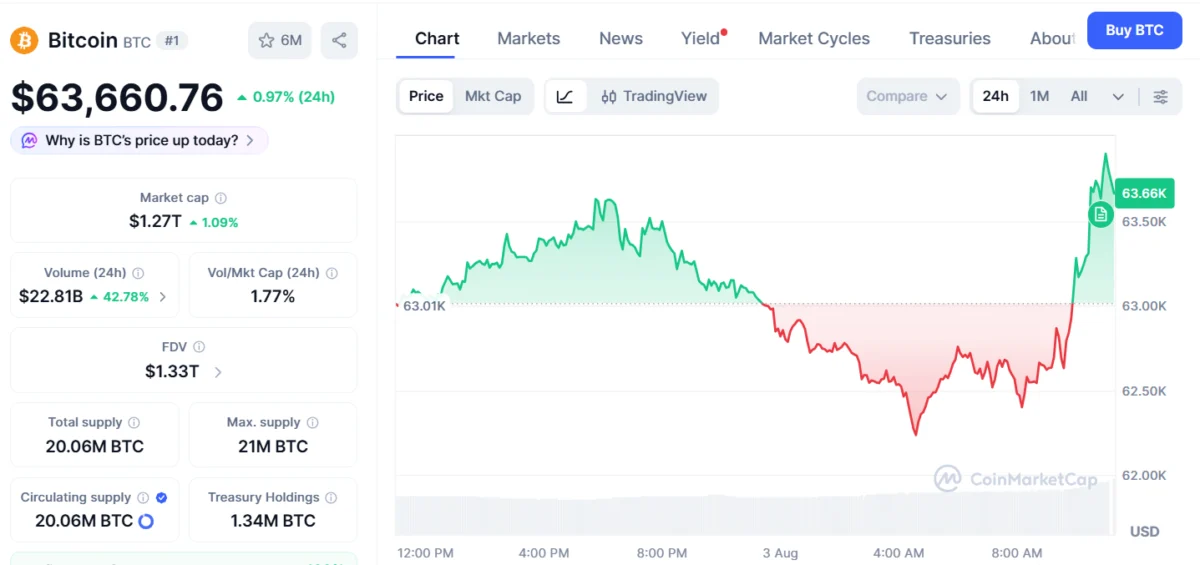
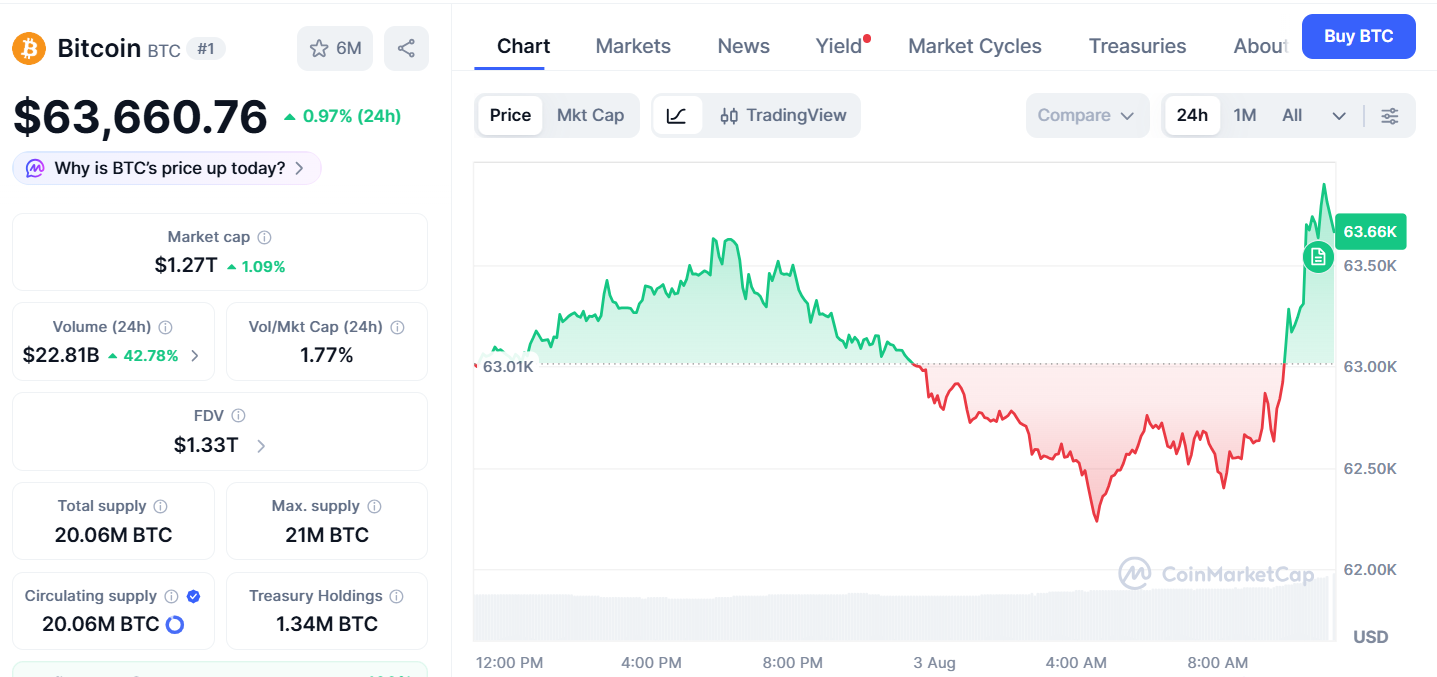
The compression of Bitcoin’s implied volatility suggests that options traders are not currently anticipating any catastrophic near-term disruptions, despite the broader macroeconomic tremors. While Bitcoin’s recent spot price rally did stall out as 10-year yields pushed higher—proving that the cryptocurrency is not entirely immune to shifts in the cost of capital—the derivatives market has steadfastly refused to price in the violent corrective swings that have historically accompanied such macro shocks.
Chronology of the Divergence
The unfolding disconnect between fixed-income turbulence and digital asset stability did not happen in a vacuum. It is the product of a multi-week evolution in macroeconomic data releases and market positioning.
Early in the month, preliminary economic reports hinted at persistent inflationary stickiness, prompting initial whispers of "higher-for-longer" interest rates among institutional bond desks. As energy commodities experienced spot-price rallies due to geopolitical tensions and supply chain adjustments, fixed-income traders began aggressively repricing risk. This sentiment shift catalyzed the initial upward tick in the MOVE index from the 80 baseline.
As the week progressed, the U.S. 10-year Treasury yield breached the psychologically significant 5.2% threshold. This movement immediately impacted equity futures and temporarily halted Bitcoin’s upward momentum, causing spot prices to consolidate rather than rally. Analysts across Wall Street anticipated that this sudden tightening of financial conditions would naturally trigger a cascade of liquidations or panic hedging in the crypto derivatives space.
However, options order books demonstrated remarkable resilience. Rather than bidding up out-of-the-money puts to protect against a severe downside breakout, Bitcoin options traders maintained relatively balanced books. Implied volatility drifted downward toward the 37 handle, defying the upward trajectory of the MOVE index. By mid-week, quantitative metrics revealed that the historical positive correlation between Treasury volatility and crypto volatility had broken down, dipping into negative or near-zero territory.
Market Implications and Expert Analysis
The decoupling of bond market stress from digital asset volatility carries profound implications for institutional portfolio managers, macro strategists, and retail participants alike.
First, it challenges the simplistic narrative that Bitcoin is merely a high-beta proxy for speculative tech stocks or a direct casualty of every tightening cycle in traditional finance. While macroeconomic gravity will always exert influence over liquidity-driven assets, the localized composure of the crypto derivatives market indicates a maturing investor base. Many institutional market makers and long-term holders appear increasingly desensitized to standard macroeconomic noise, choosing to focus on internal network fundamentals, spot Exchange-Traded Fund (ETF) flows, and structural supply dynamics rather than day-to-day fluctuations in sovereign debt yields.
Second, the divergence highlights a potential structural vulnerability within traditional financial markets. When government bonds—traditionally categorized as risk-free assets—exhibit volatility levels that rival historical risk assets, it signals a deeper structural anxiety regarding fiscal policy, sovereign debt sustainability, and monetary credibility. Fixed-income portfolio managers are currently forced to deploy complex hedging strategies simply to navigate routine treasury auctions and rate announcements, reflecting a crisis of confidence in the predictability of sovereign debt.
Nonetheless, financial analysts urge caution against misinterpreting this divergence. A low-volatility environment in Bitcoin does not equate to immunity from macroeconomic shocks. If bond market stress eventually triggers broader systemic liquidity crunches, margin calls across prime brokerages, or severe contractions in traditional equity indices, cryptocurrency markets will almost certainly feel the repercussions. Contagion in modern, highly interconnected financial markets rarely respects asset class boundaries.
Furthermore, periods of exceptionally low implied volatility in options markets have historically served as precursors to explosive directional moves. When options are underpriced, a sudden catalyst can catch complacent market participants off guard, leading to rapid repricing and sharp spikes in realized volatility.
Broader Outlook: A New Paradigm or Temporary Calm?
As the financial system digests the implications of a 5.2% 10-year Treasury yield and a MOVE index lingering near 104, all eyes remain on central bank communications and incoming economic data. The juxtaposition of a nervous bond market and a calm digital asset sector underscores a period of profound transition in global finance.
Whether this unusual low-volatility regime in Bitcoin represents a permanent structural shift toward asset class maturation or merely a temporary lull before the next macro storm remains to be seen. For the time being, however, the script has flipped: the traditional safe havens are displaying the jitters, while the pioneer cryptocurrency is quietly holding its ground.