
March 2026 emerged as one of the most volatile and economically challenging periods for the Bitcoin mining industry in recent history, characterized by a convergence of geopolitical instability, legislative shifts, and technical milestones. According to the latest data from Luxor’s Monthly Lookback Series, the month saw the average USD hashprice collapse to a new all-time low, while the network experienced one of the largest difficulty drops in the modern ASIC era. These shifts occurred against a backdrop of a flat yet volatile Bitcoin price and a significant reshuffling of global hashrate due to the ongoing conflict in the Middle East.
The Record Low of USD Hashprice
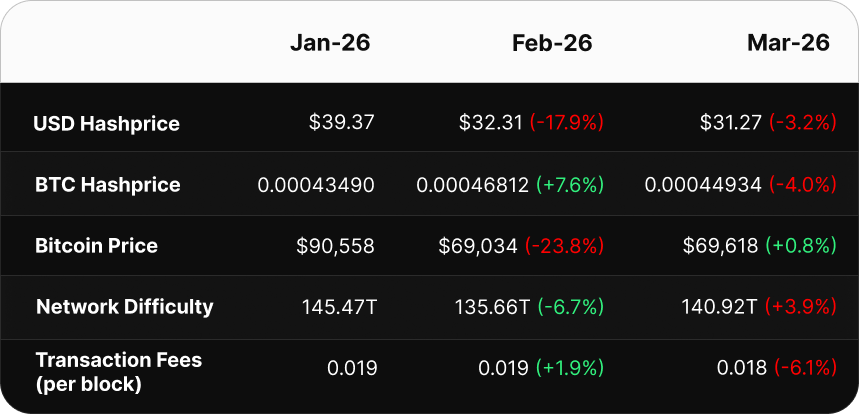
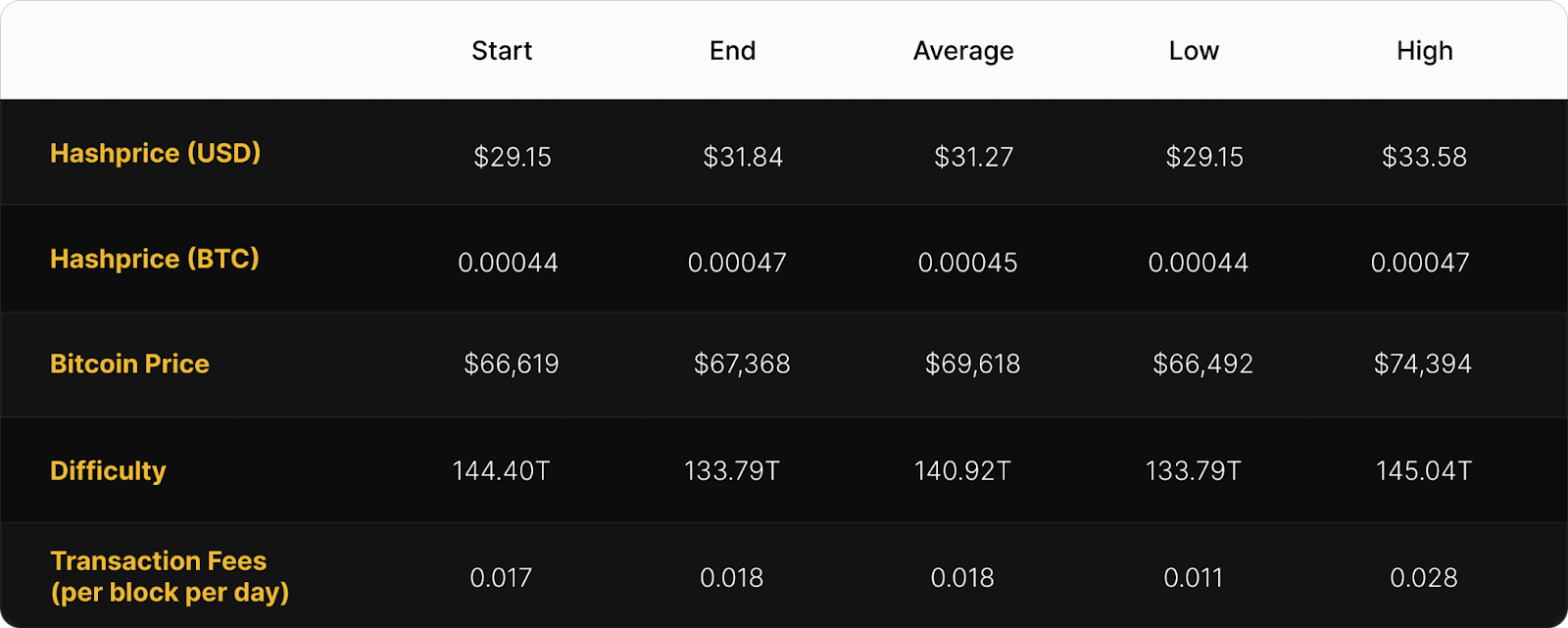
The primary headline of March 2026 was the continued erosion of mining profitability. The monthly average USD hashprice—a measure of the expected value of 1 petahash of hashing power per day—fell by 3.2%, dropping from $32.31 in February to $31.27 in March. This represents a new historic floor for the industry. Although Bitcoin’s price remained relatively stable on a month-over-month basis, increasing by a marginal 0.8%, the combination of high network difficulty early in the month and a lack of transaction fee growth compressed margins to their breaking point for many operators.
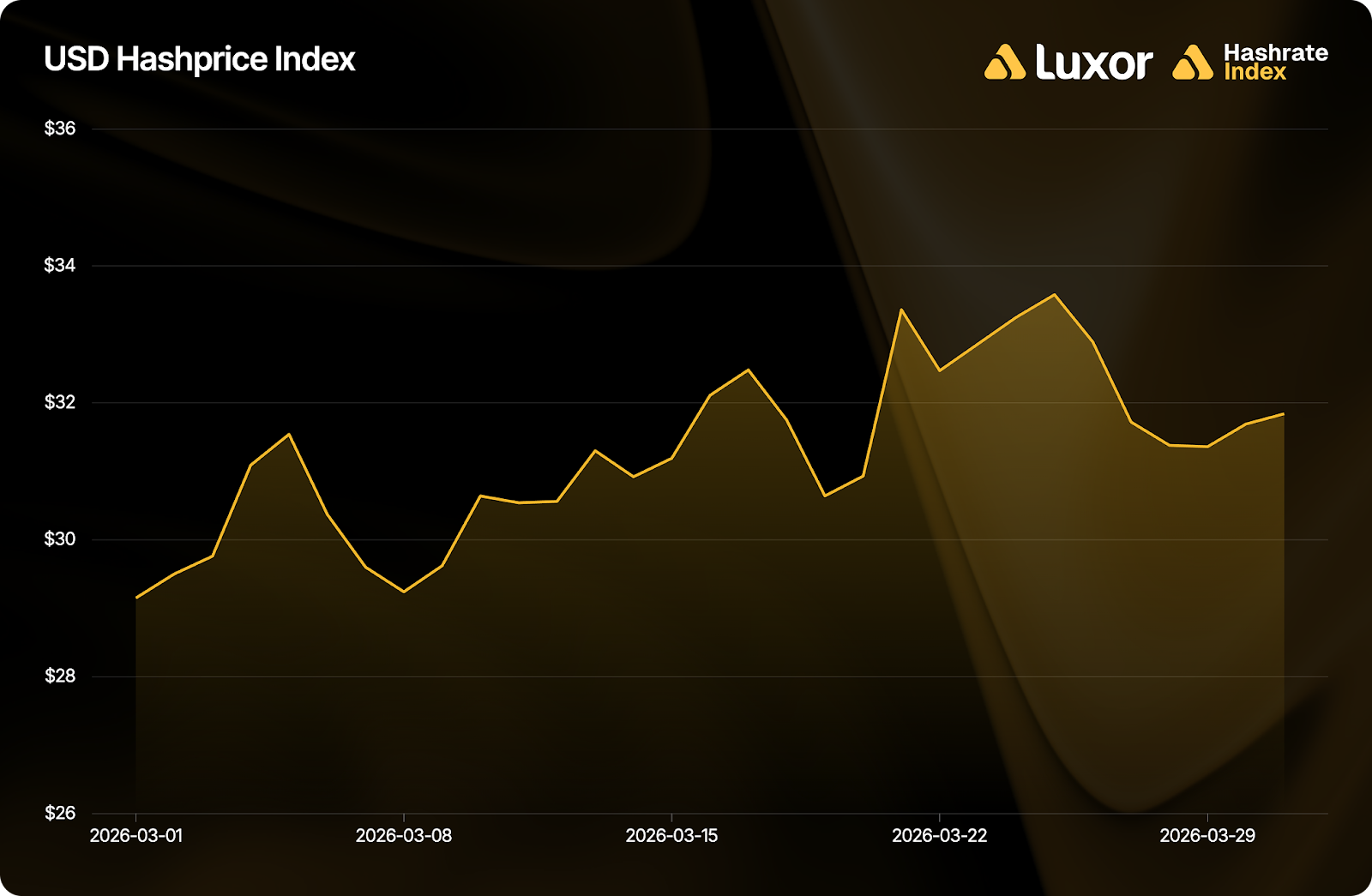
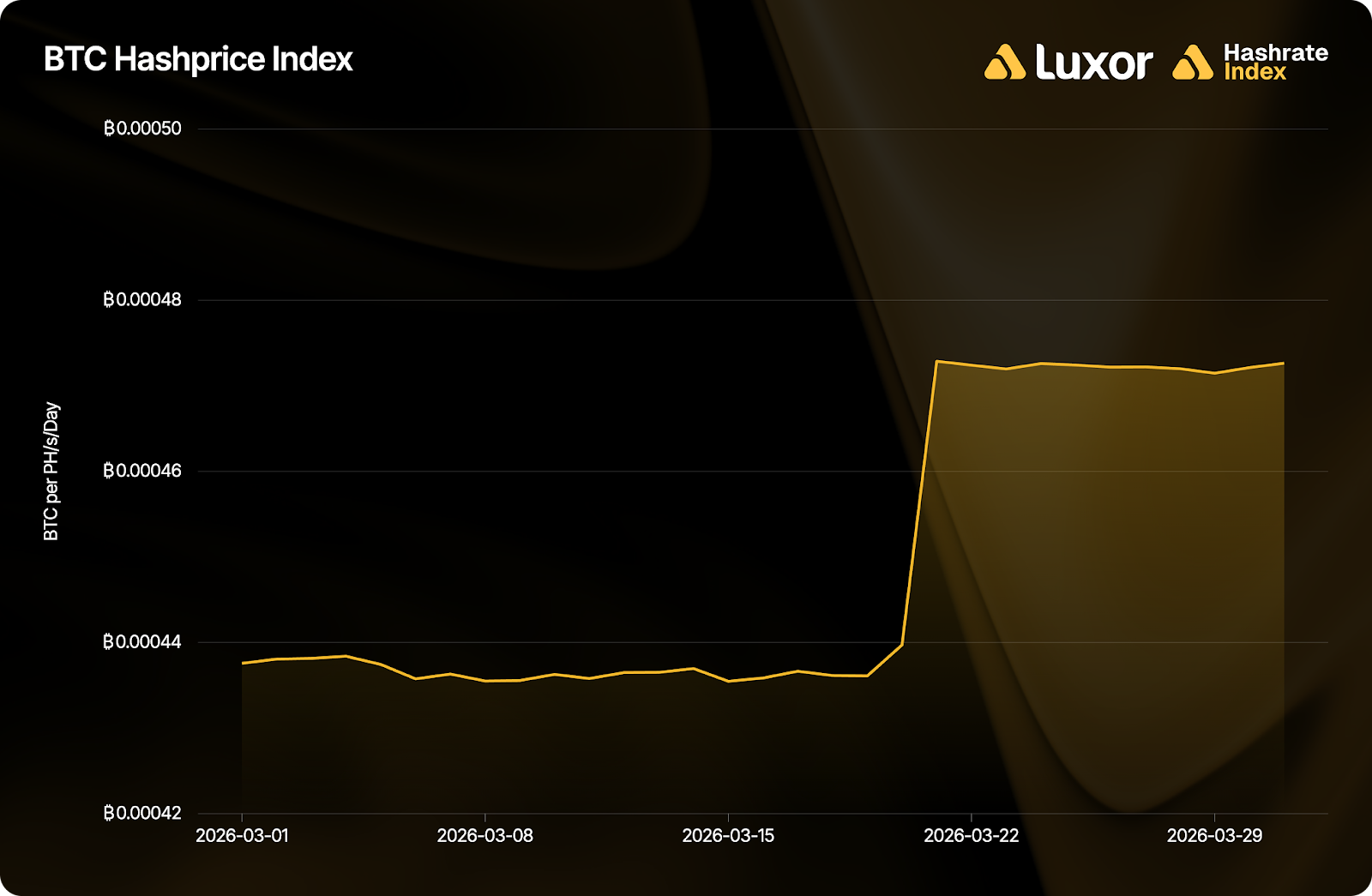
The month opened with the USD hashprice at $29.15, a figure that reflected the market’s deep pessimism amid regional warfare and high energy costs. However, a steady recovery took place in the latter half of the month. This rebound was not driven by a sudden surge in Bitcoin’s value, but rather by a massive downward difficulty adjustment on March 20, which allowed remaining miners to capture a larger share of the block rewards. By the close of March, the USD hashprice had climbed back to $31.84.
Bitcoin Price Dynamics: Volatility Amid Geopolitical Conflict
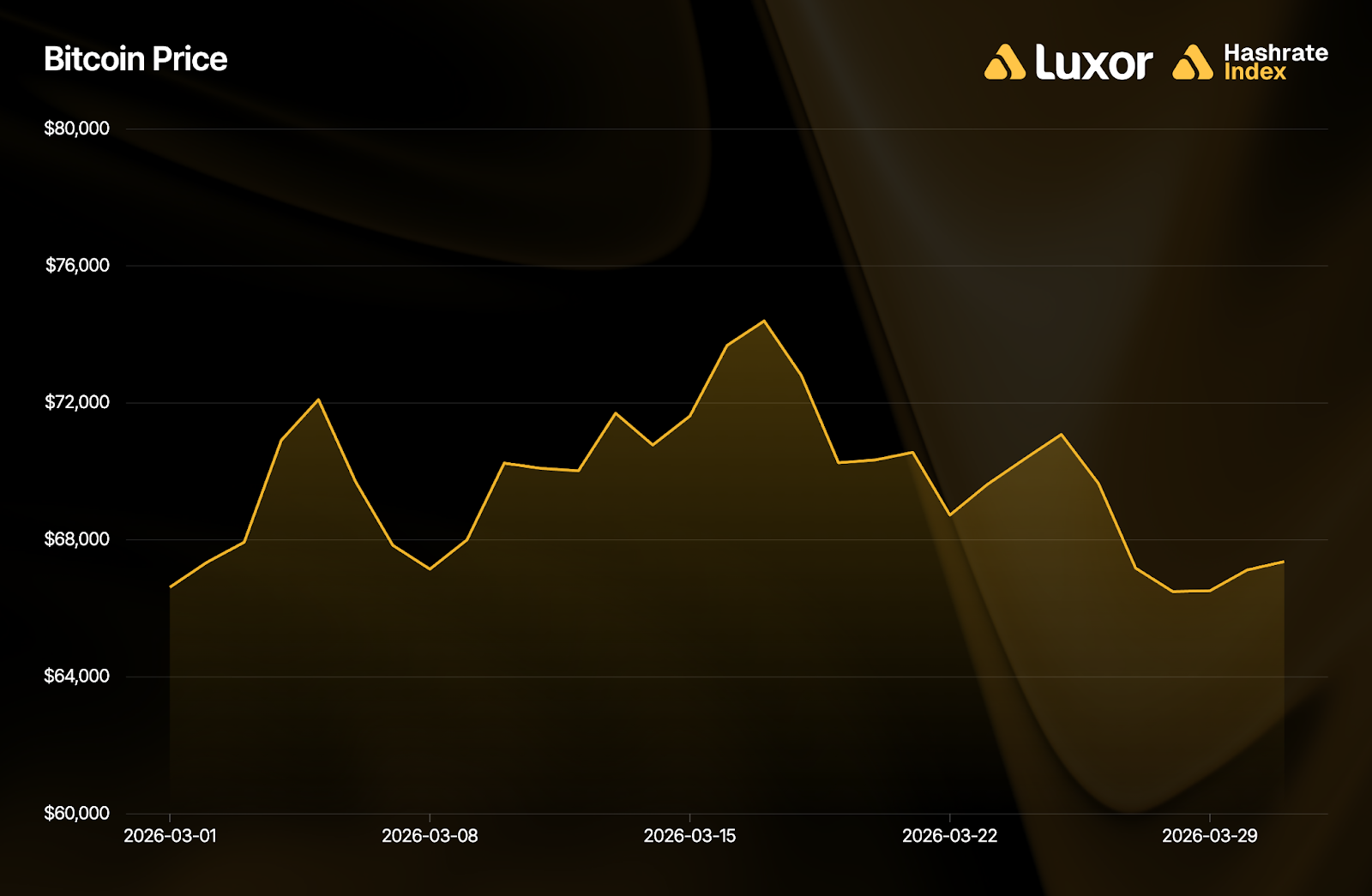
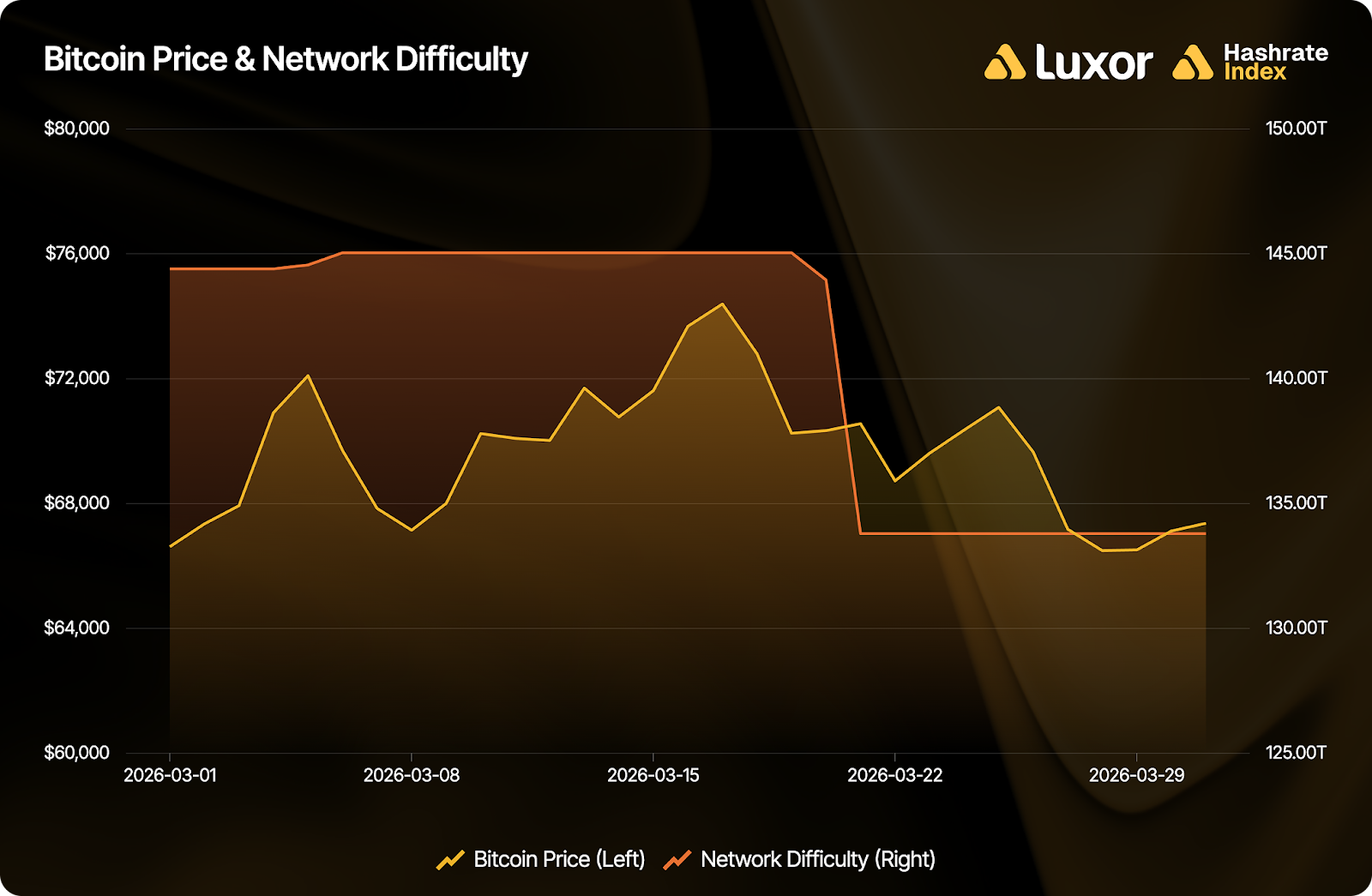
Bitcoin began the month trading at $66,619 and ended at $67,368, maintaining a monthly average of $69,618. While the average suggests a period of stagnation, the intra-month reality was defined by sharp spikes and rapid drawdowns. These price movements were largely dictated by Bitcoin’s complex relationship with global macro events, specifically the escalation of the Iran War.
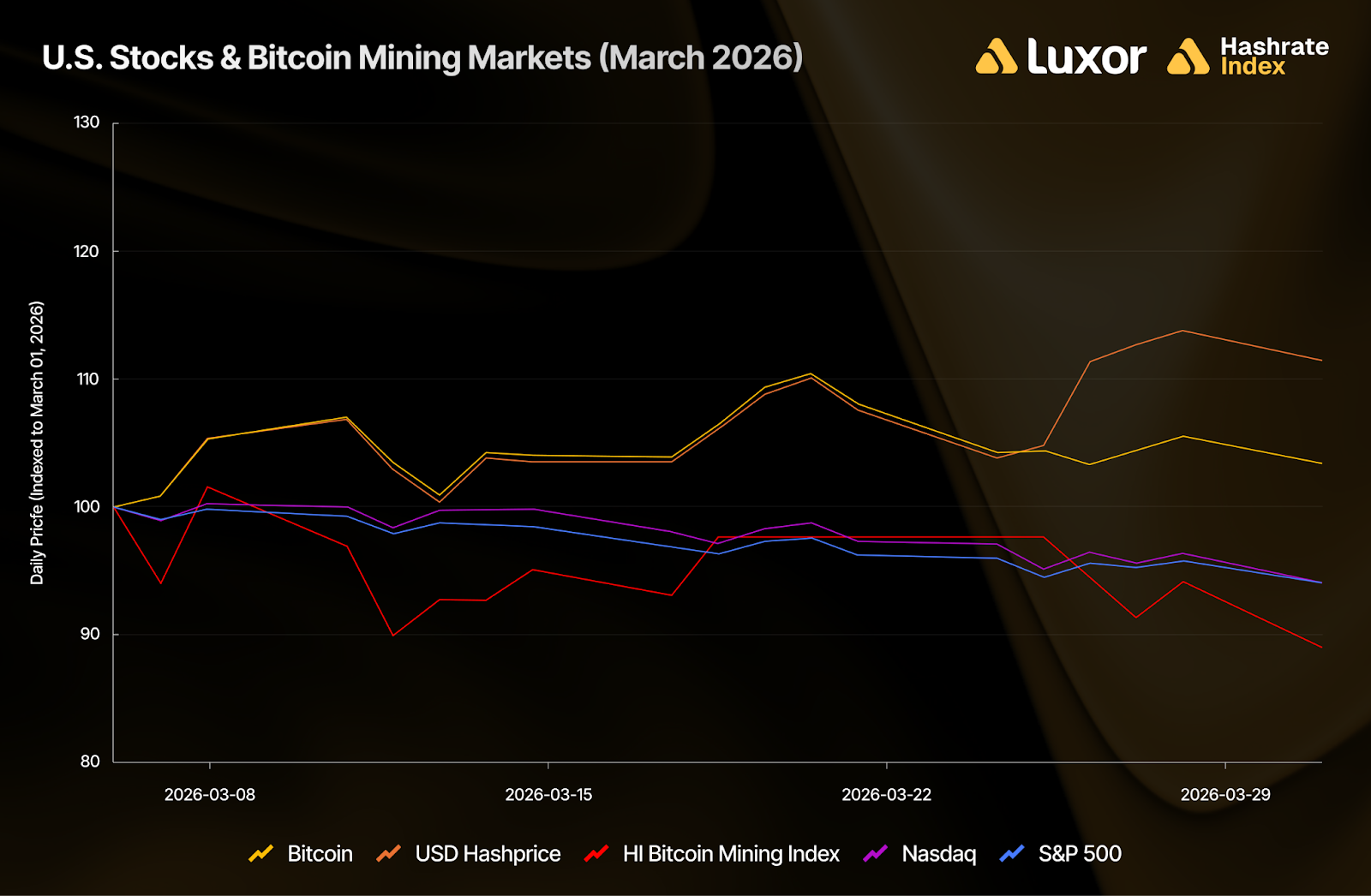
On March 4, 10, and 16, Bitcoin experienced significant rallies. Analysts point to a "short squeeze" on March 4, where crowded bearish positions were liquidated as the price surged 4.4%. This was bolstered by $1.7 billion in spot ETF inflows, marking the first sustained streak of institutional buying in several months. Mid-month gains were further supported by progress on the U.S. Clarity Act. On March 10, U.S. Senators announced a compromise regarding stablecoin yields, a move that provided much-needed regulatory clarity and lifted sentiment across the digital asset sector.
However, the "Iran War" factor introduced a "fiat-like" risk correlation. When U.S. strikes on Iran intensified, global equity markets felt the shock, with the S&P 500 and Nasdaq both sliding 5.1% from their March 2 levels. While Bitcoin showed independence during its upside spikes, it proved unable to decouple during the sharpest equity sell-offs on March 26 and 27. This suggests that while Bitcoin is increasingly viewed as an independent asset class, it remains susceptible to "risk-off" liquidity drains during periods of extreme geopolitical tension.
The Historic Difficulty Drop of March 20
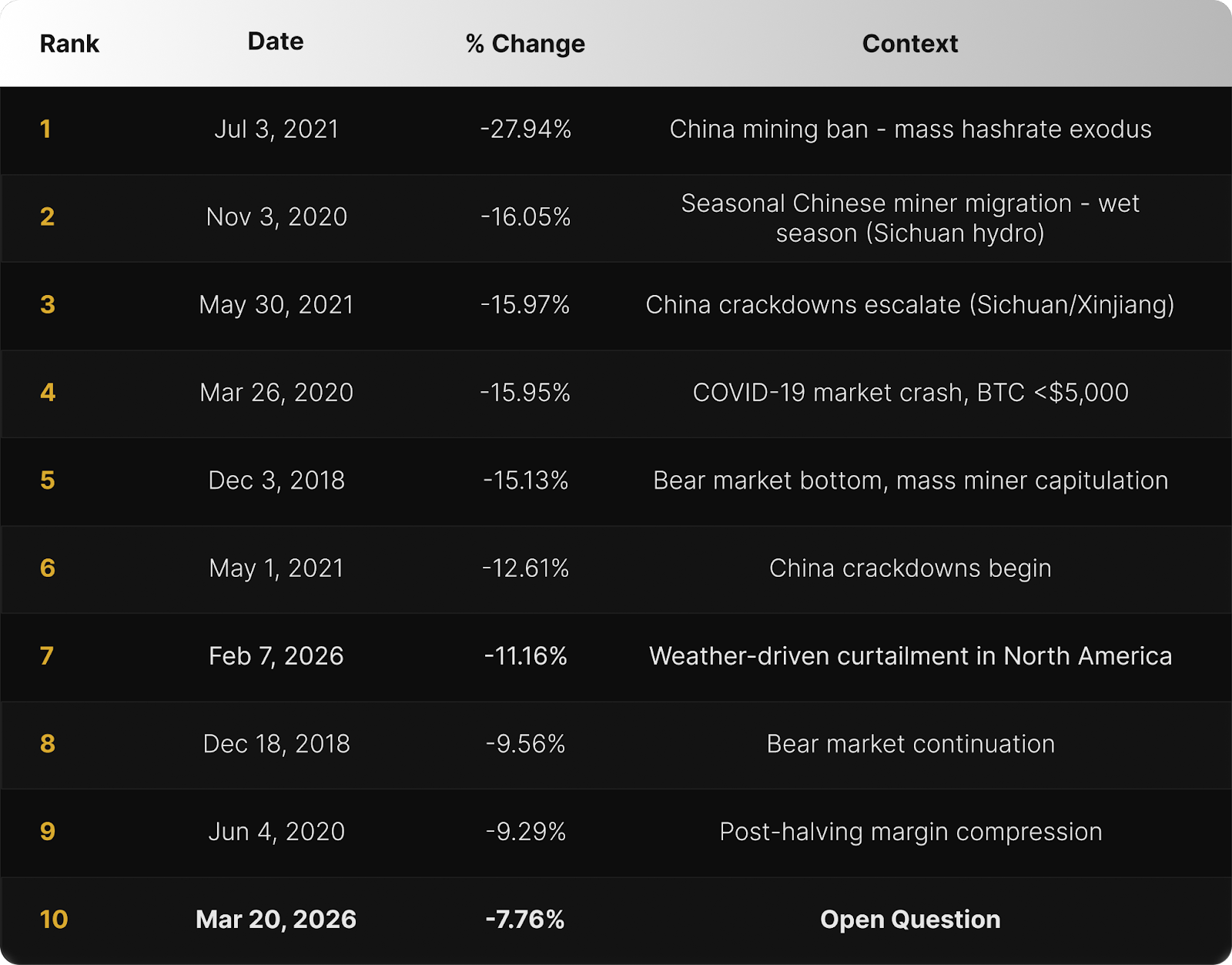
The technical highlight of the month was the network difficulty adjustment on March 20. The Bitcoin network underwent a -7.76% downward adjustment, moving from 145.04T (1,038 EH/s) to 133.79T (958 EH/s). This event ranks as the 10th-largest difficulty decrease in the "modern ASIC era"—the period beginning in 2016 when specialized hardware became the industry standard.
This drop followed an even more severe -11.16% adjustment in February, making the first quarter of 2026 the most turbulent period for Bitcoin’s hashrate since the 2021 China mining ban. The causes for such a significant retreat in hashrate are multifaceted:
- Regional Disruptions: The conflict in Iran directly impacted approximately 8% to 10% of global hashrate located in the Gulf states. Physical infrastructure damage and power grid instability in the region forced a significant amount of capacity offline.
- Energy Prices: While global oil prices spiked above $100, the more critical factor for miners was the surge in natural gas prices in Europe and Asia, which squeezed the margins of grid-exposed operators.
- Economic Curtailment: With hashprice at all-time lows, many miners running older hardware, such as the S19 series, found themselves operating at a loss.
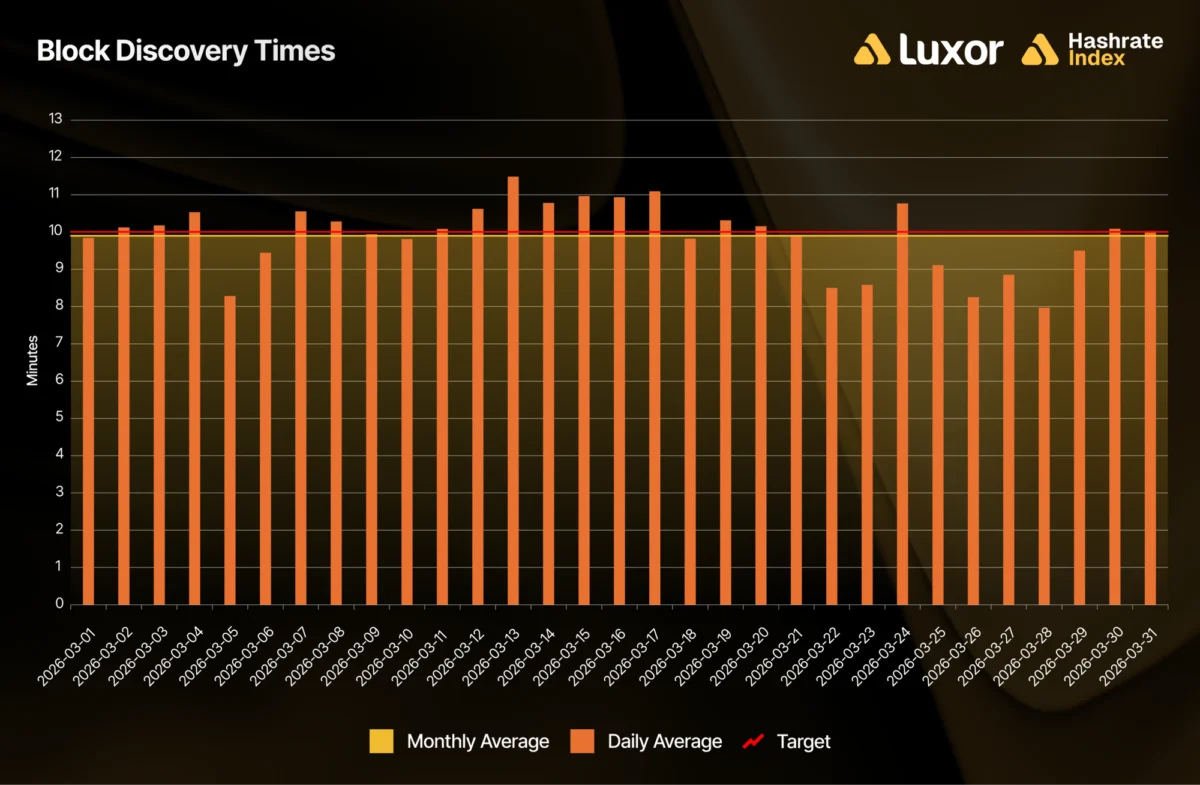
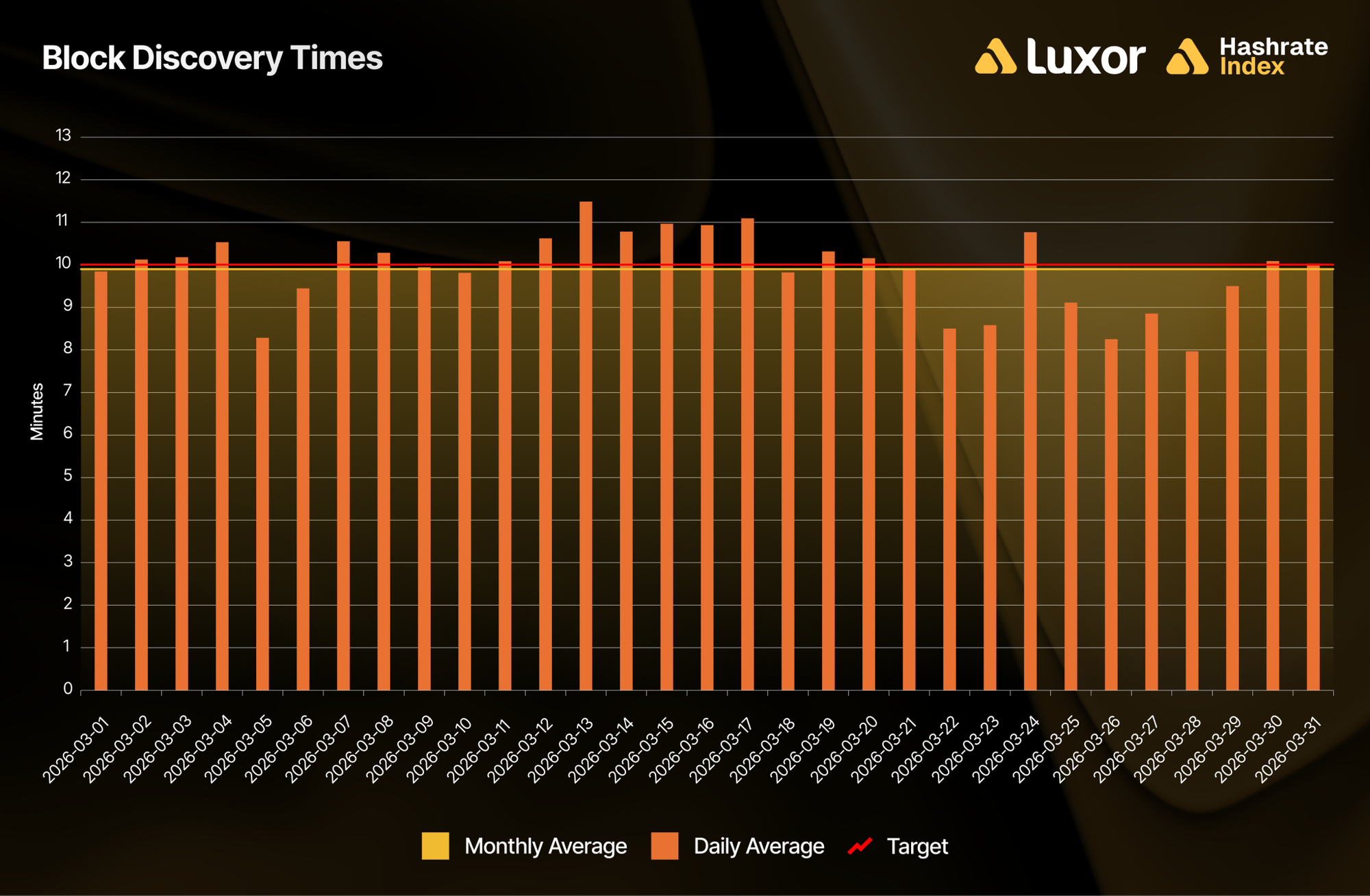
Data suggests that the March 20 drop was a "curtailment" event rather than a permanent "capitulation." Following the adjustment, block times—which had slowed to nearly 11 minutes—immediately accelerated to an average of 9.23 minutes. This rapid snap-back indicates that miners did not sell their machines, but rather "toggled" them back on as soon as the lower difficulty made their operations profitable again.
Mining Efficiency and the Energy Threshold
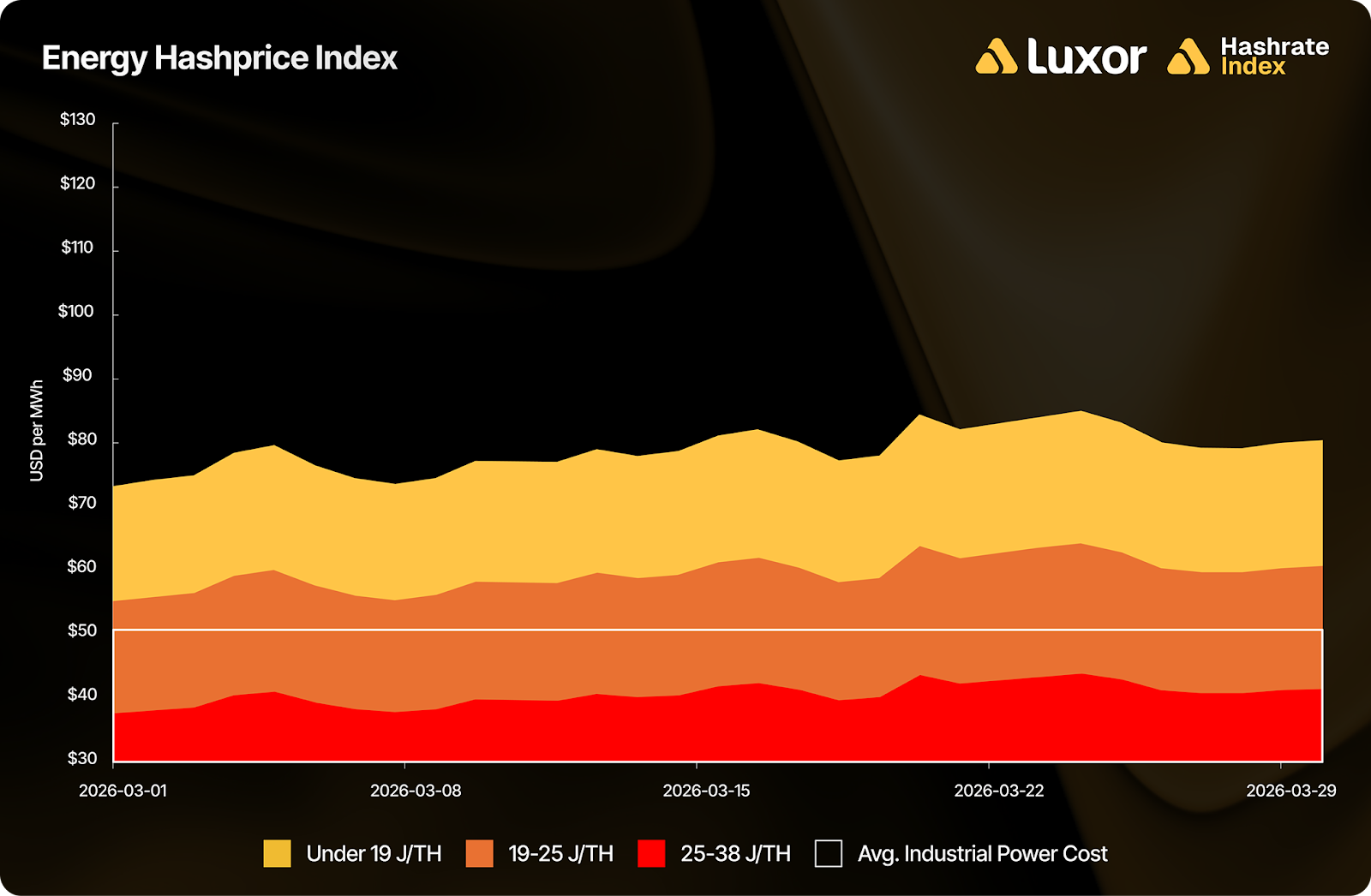
The economic pressure of March 2026 highlighted the widening gap between efficient and legacy mining fleets. Luxor’s Energy Hashprice Index revealed that at an average network power cost of $50/MWh, only the most efficient machines remained comfortably in the black.
- Under 19 J/TH (e.g., S21 series): Implied revenue of $77/MWh.
- 19–25 J/TH (e.g., S19 XP): Implied revenue of $59/MWh.
- 25–38 J/TH (e.g., S19j Pro): Implied revenue of $41/MWh.
For operators using S19-era hardware at standard power costs, March was a month of net losses. This has accelerated the industry-wide transition toward more efficient hardware, with many public miners utilizing forward contracts to finance fleet upgrades to the S21 and beyond.
Transaction Fees and Revenue Composition
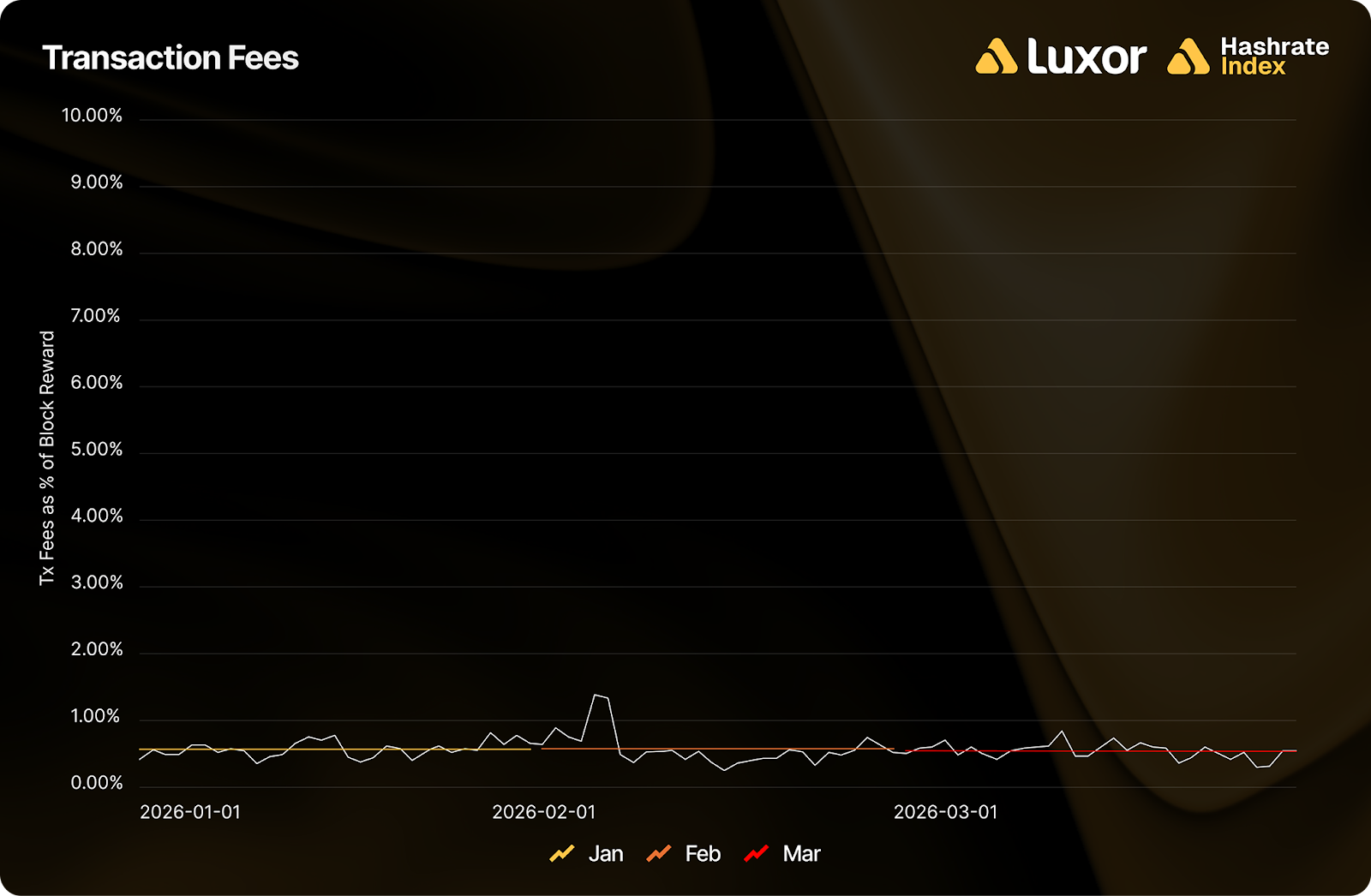
Transaction fees remained a negligible component of miner revenue in March, continuing a trend of "quiet" on-chain activity that began in late 2025. Average fee collection stood at 0.0183 BTC per block, representing just 0.58% of the total block reward. In USD terms, this amounted to approximately $1,279 per block. The lack of a "fee spike" meant that miners were almost entirely dependent on the subsidy and the BTC price, leaving them highly exposed to the -4.0% decline in monthly average BTC hashprice.
Hashrate Forward Markets: A Tale of Two Denominations
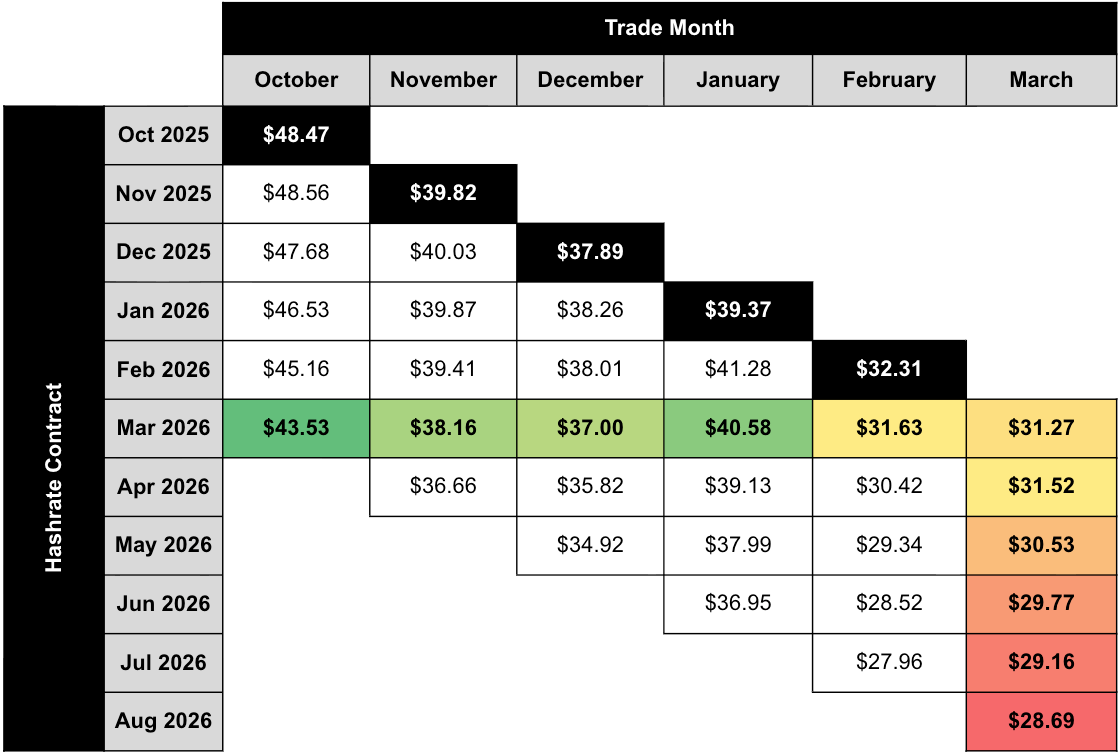
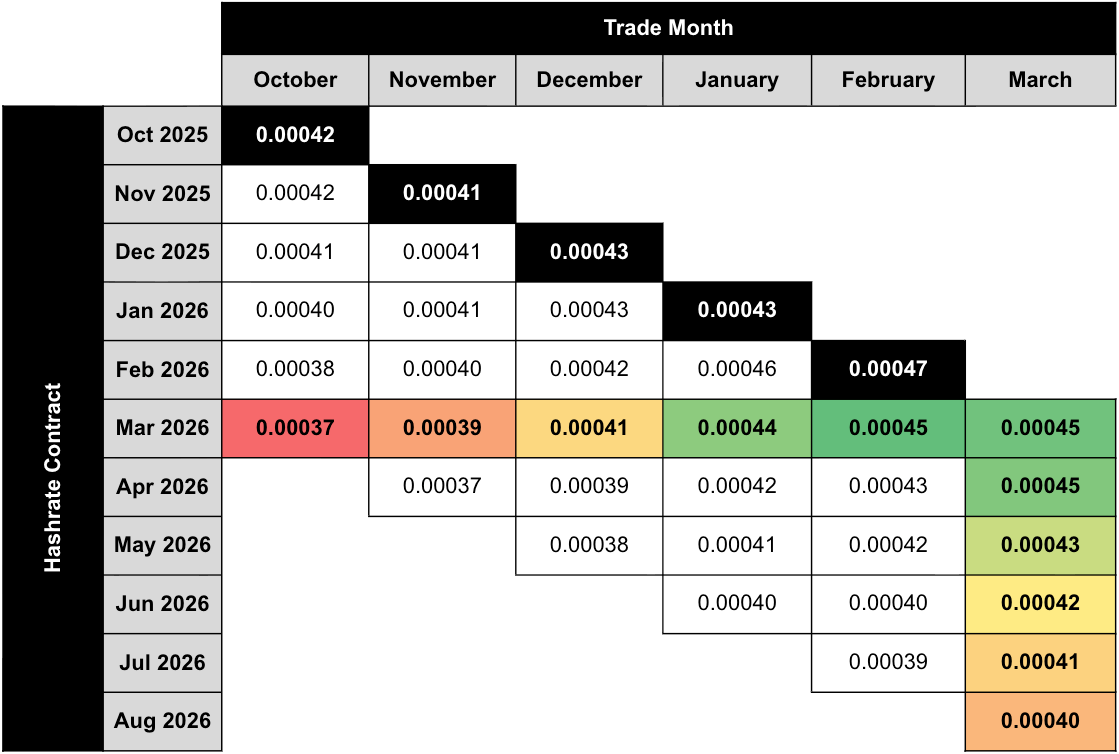
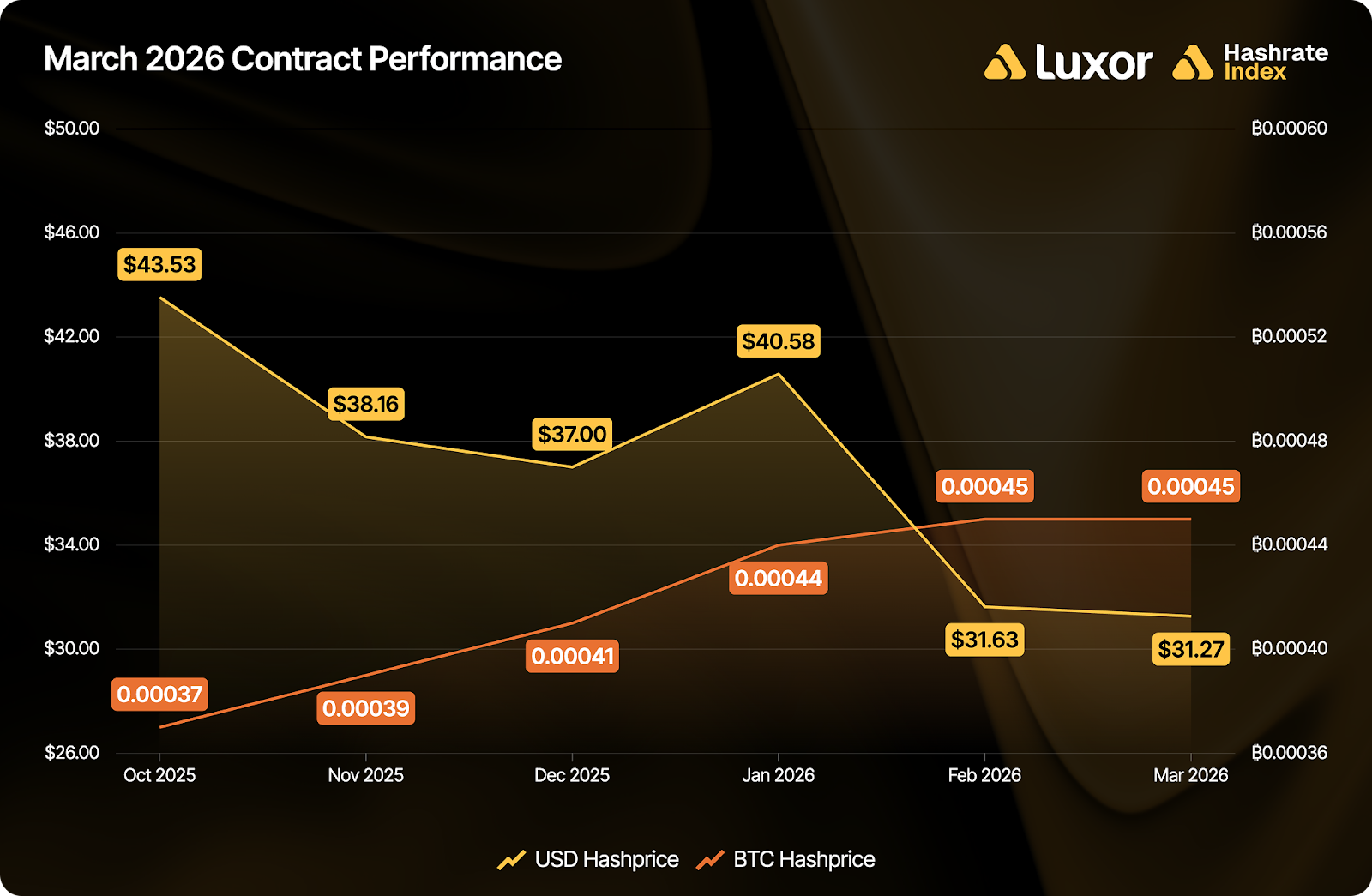
The Luxor hashrate forward market provided a vital tool for risk management during this volatile period. The performance of these contracts in March was described as a "fiat fork."
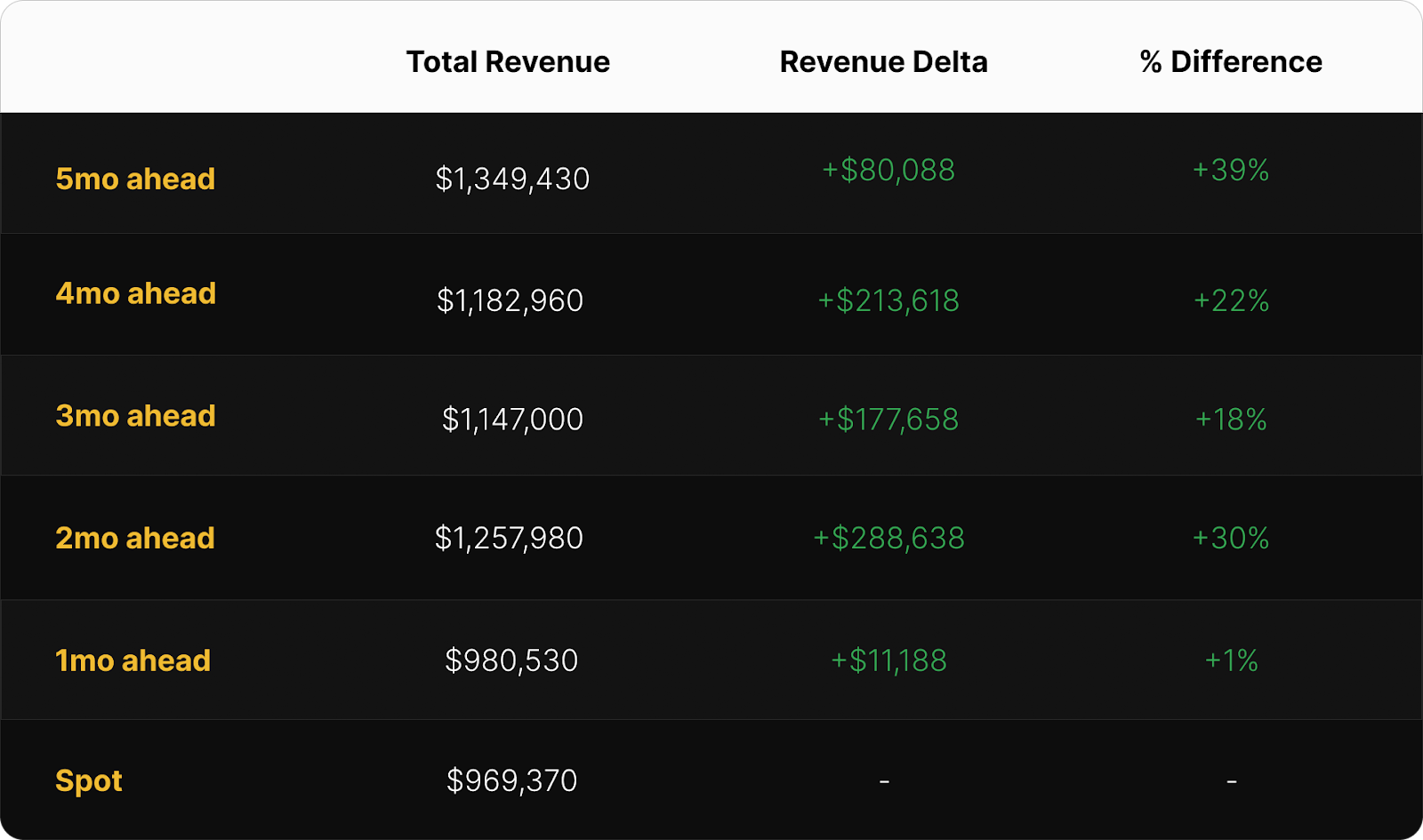
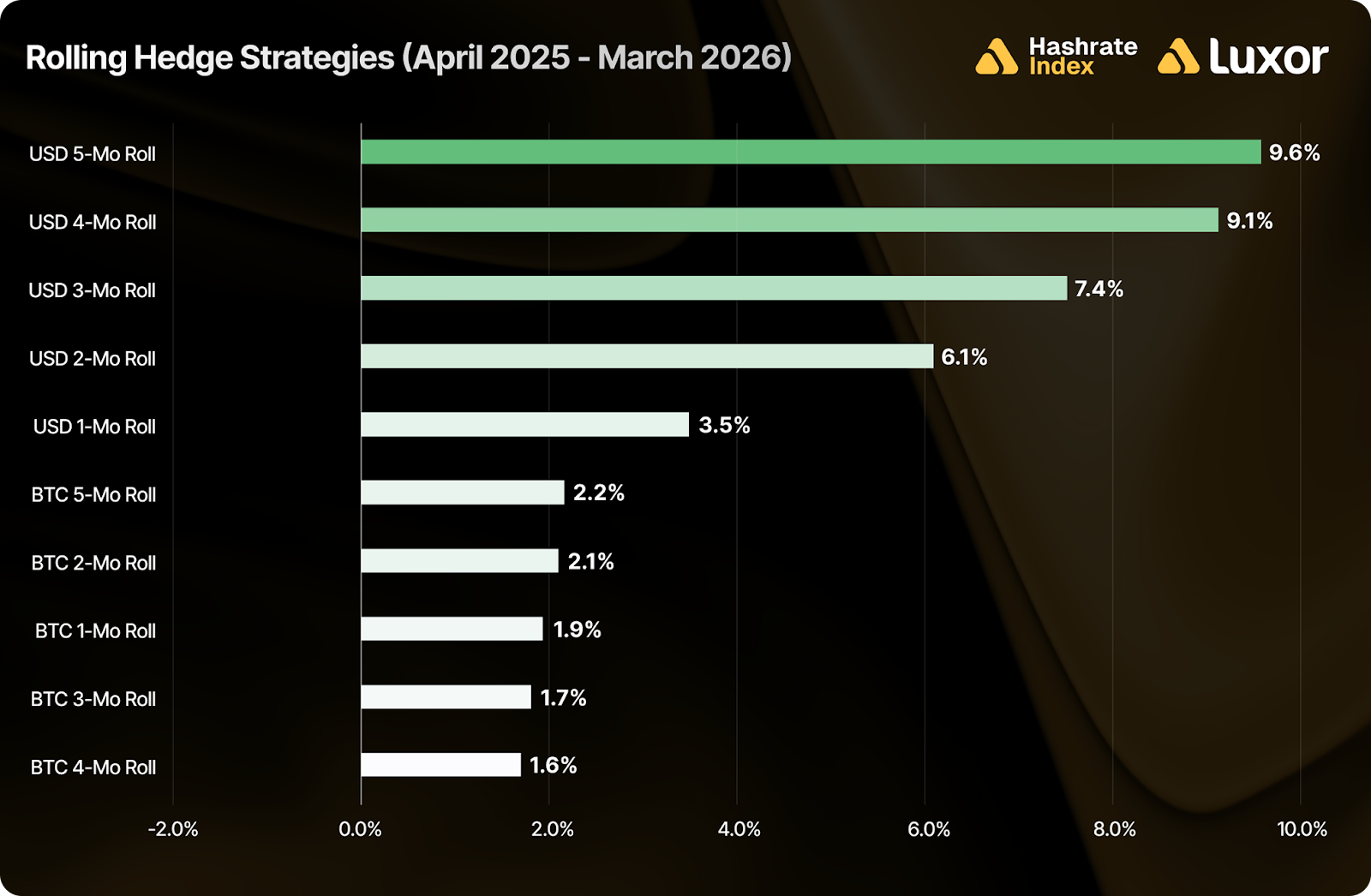
Sellers of USD-denominated contracts emerged as the clear winners. By locking in prices as high as $43.53 per PH/s/day back in October 2025, these hedgers outperformed spot mining by up to 39%. This strategy allowed them to bypass the record-low spot settlements of $31.27.
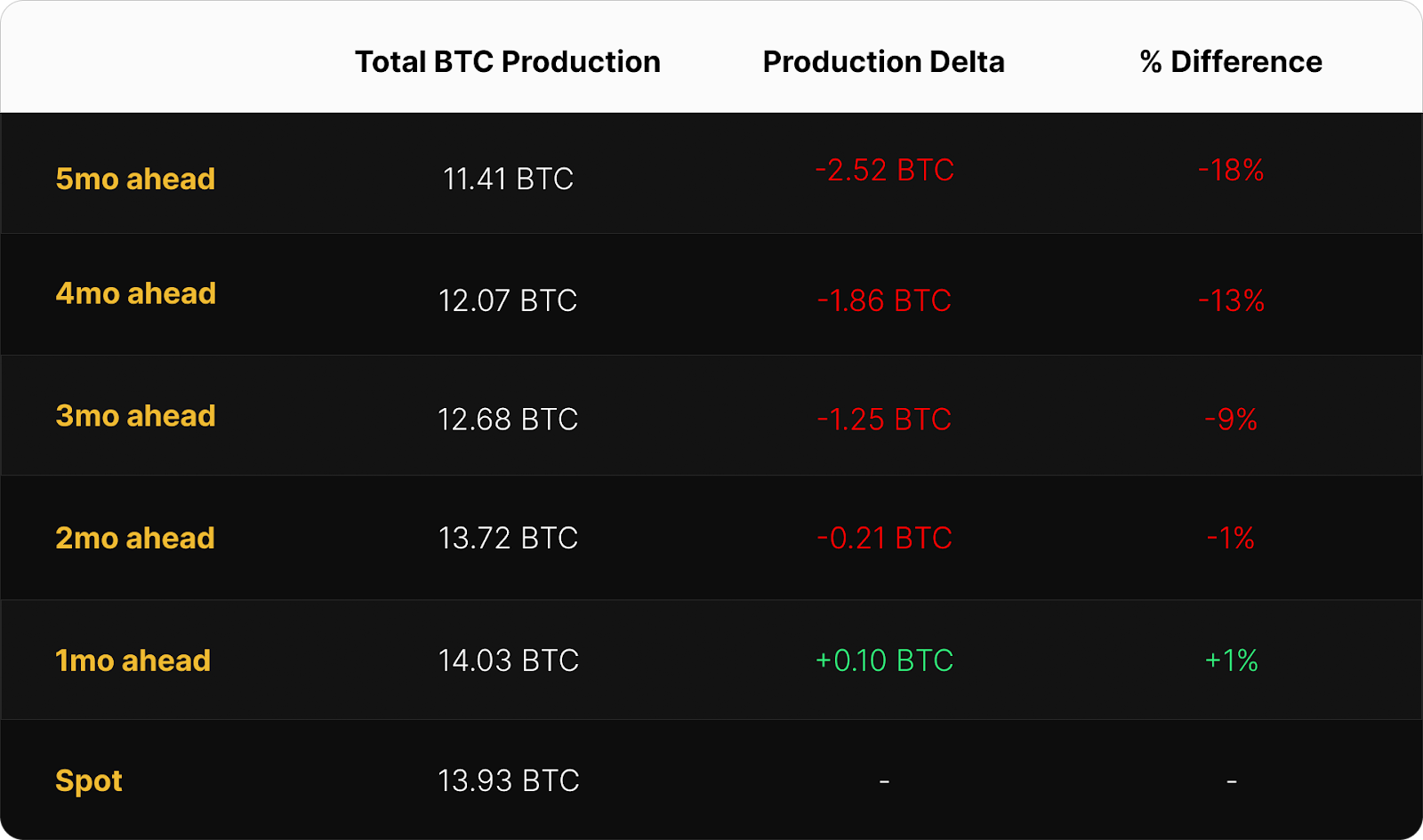
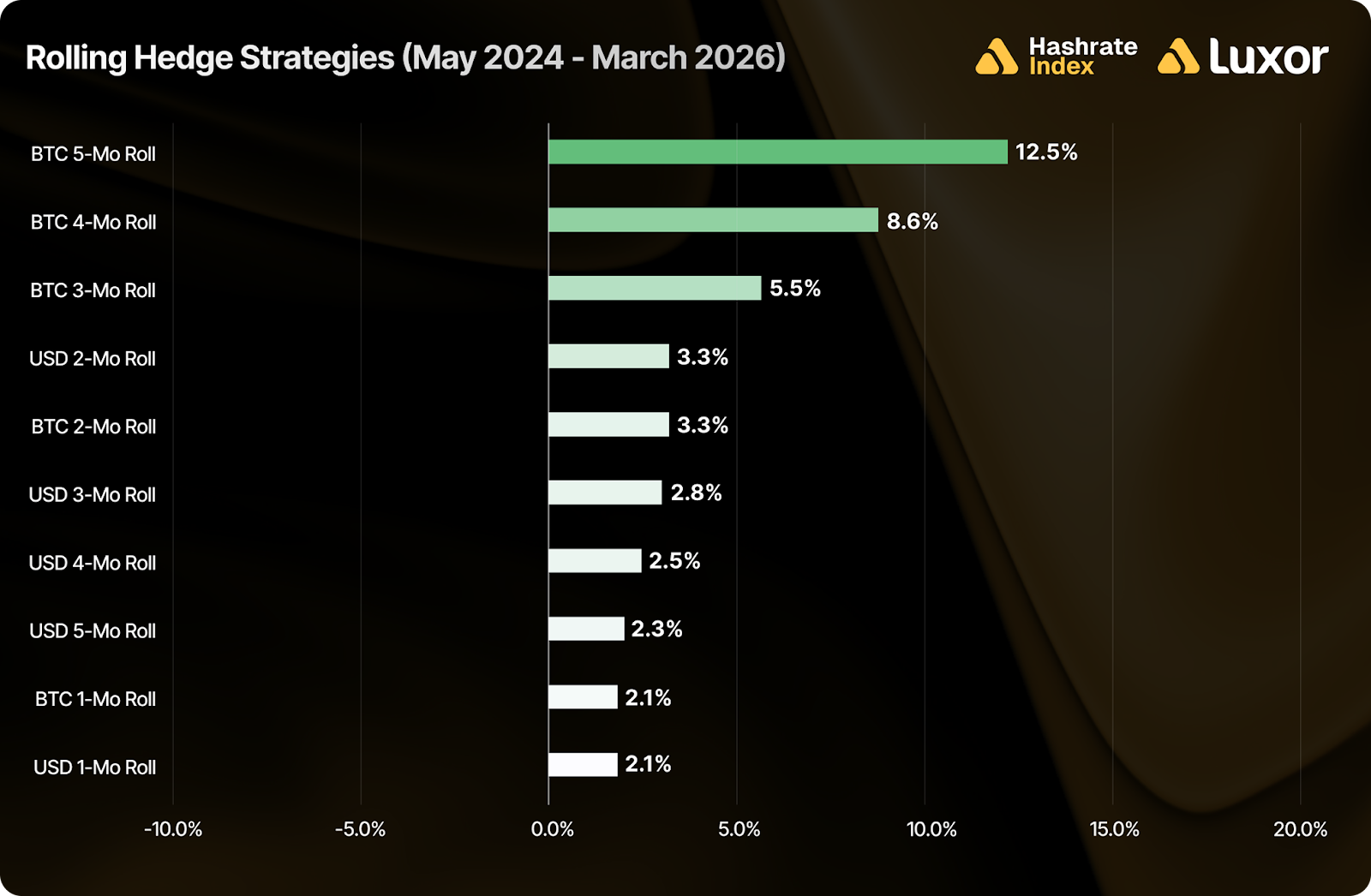
Conversely, buyers of BTC-denominated contracts saw better results than sellers. Because the -7.76% difficulty drop was more severe than the forward market had anticipated, the "yield" in BTC terms was higher than expected. This highlights the fundamental choice miners face: hedging against a drop in Bitcoin’s price (USD contracts) or hedging against an increase in network difficulty (BTC contracts).
Institutional Participation and Financing
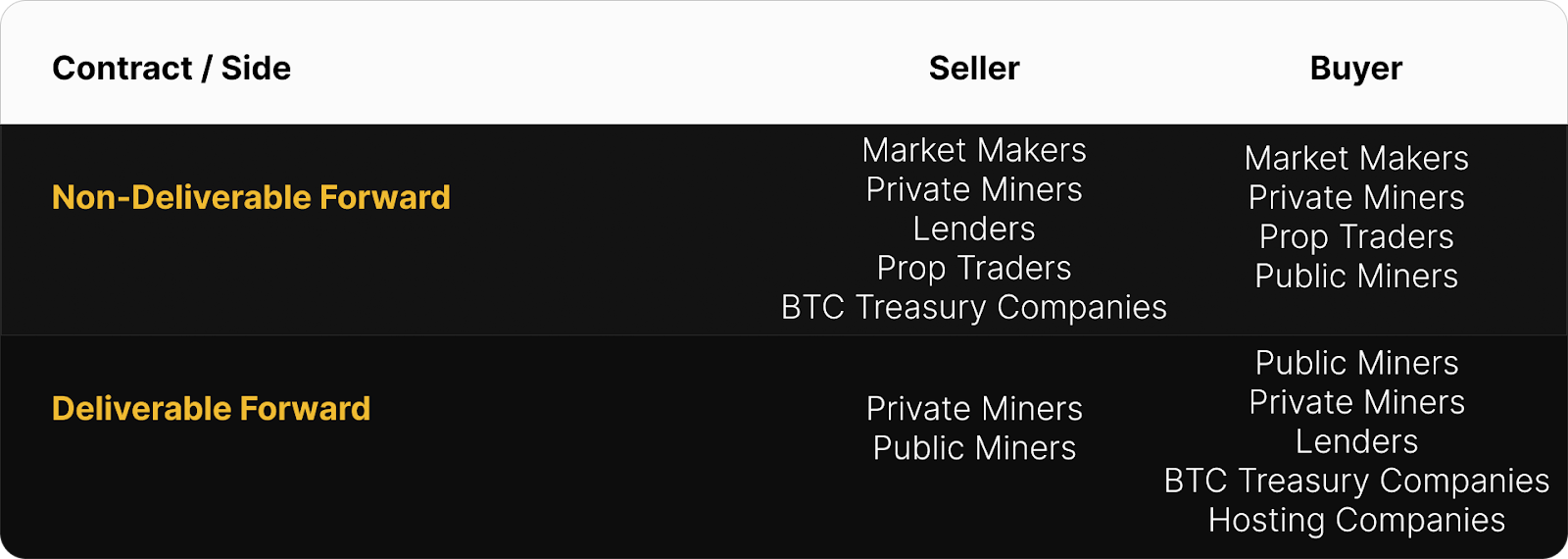
March saw robust activity from lenders and Bitcoin treasury companies. In the Deliverable Forward (DF) market, where miners sell hashrate for upfront payment, the cost of capital hovered between 6% and 13% annualized. Public and private miners increasingly used these instruments as a form of non-dilutive financing. By selling future hashrate, companies were able to fund capital expenditures—specifically fleet upgrades—without issuing new equity in a depressed market.
For example, an operator upgrading from an S19j Pro to an S21 could reduce their "hashcost" from $35.40 to $21.00 per PH/s/day. In the current environment, where the forward curve is pricing hashrate at ~$32, such an upgrade is the difference between insolvency and a sustainable margin.
Broader Implications and Outlook
As the industry moves into April 2026, the landscape remains precarious but stabilizing. A two-week ceasefire in the Iran conflict has offered a temporary reprieve for regional miners, though the long-term stability of Gulf-based hashrate remains an open question. The network difficulty saw a modest +3.87% increase on April 3, with a further downward adjustment estimated for mid-April.
The primary takeaway from March 2026 is the maturation of the mining financial ecosystem. Despite the "hashprice depression," the availability of sophisticated derivatives and the entry of institutional lenders have provided a buffer that did not exist in previous cycles. For Bitcoin treasury companies and forward buyers, the current market represents one of the most attractive entry points since the 2024 halving. Buying forward hashrate at $32 per PH/s/day is currently more economical than self-mining for any operator with a hashcost above that threshold.
Ultimately, March 2026 will be remembered as the month the "Modern ASIC Era" was truly tested. The network’s ability to shed nearly 8% of its difficulty and then rapidly re-absorb hashrate demonstrates the incredible resilience of the decentralized protocol. While the economic "floor" has been lowered, the tools available to miners to navigate these depths have never been more advanced.
