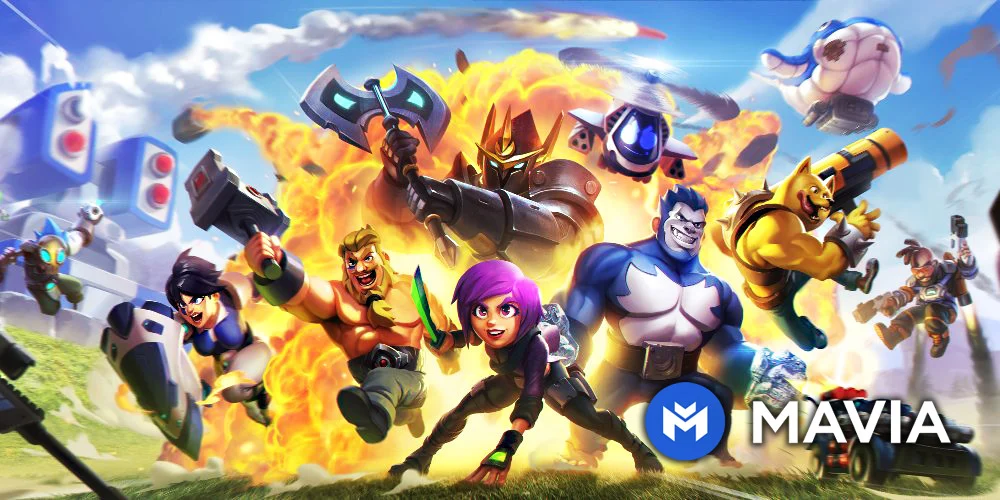
Heroes of Mavia, developed by Skrice Studios, has emerged as a cornerstone of the burgeoning Web3 mobile gaming sector, blending traditional Massively Multiplayer Online (MMO) strategy mechanics with a sophisticated blockchain-based economy. Often compared to the mobile gaming titan Clash of Clans, Heroes of Mavia represents a strategic pivot in the GameFi industry, moving toward "Play-to-Own" models that prioritize high-quality gameplay and sustainable tokenomics over the inflationary reward systems seen in early blockchain titles. Built on the Ethereum network and utilizing the Arbitrum Layer-2 scaling solution, the game allows players to build bases, train armies, and compete against others globally while maintaining true ownership of their in-game assets through Non-Fungible Tokens (NFTs).

Core Gameplay Mechanics and Strategic Depth
The primary appeal of Heroes of Mavia lies in its accessible yet deep strategy gameplay. Players are tasked with managing a base on the island of Mavia, where they must balance resource generation, defensive fortification, and offensive military expansion. The gameplay loop is divided into three fundamental pillars: base construction, tactical defense, and strategic raiding.
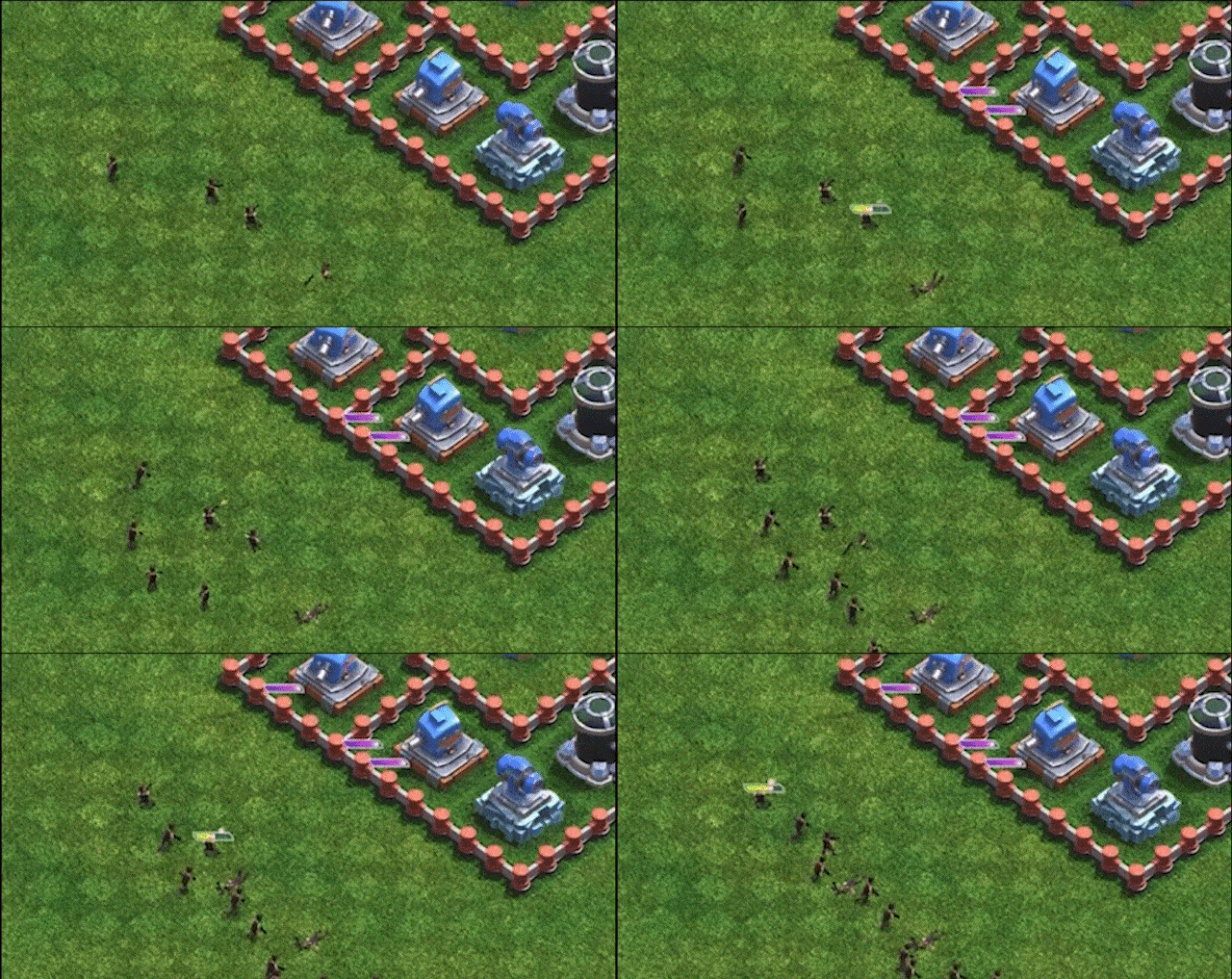
Base construction revolves around the Headquarters (HQ), which serves as the heart of a player’s territory. Upgrading the HQ unlocks advanced buildings, more potent troops, and enhanced resource collectors. To protect these assets, players must strategically place defensive structures, including walls, sniper towers, and intricate traps. Unlike traditional strategy games, the placement of these defenses in Mavia requires a high degree of tactical foresight, as players must anticipate the pathing and priorities of various enemy unit types.
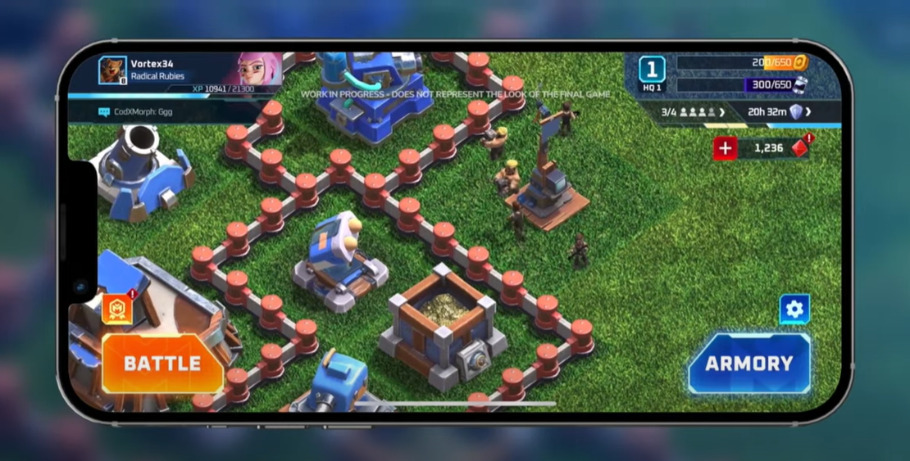
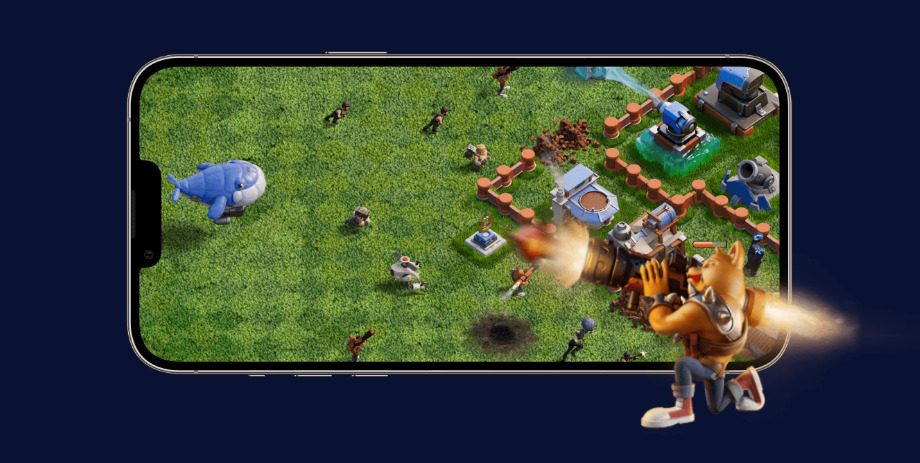
On the offensive side, players assemble armies consisting of diverse units, including infantry, aerial vehicles, and specialized heroes. Each unit has specific strengths and weaknesses; for instance, some units are designed to target defensive structures first, while others focus on resource silos. The objective of an attack is to bypass the opponent’s defenses, destroy the HQ, and loot resources such as Gold and Oil, which are essential for further development.
The Dual-Token Economy: $MAVIA and Ruby
Heroes of Mavia utilizes a sophisticated dual-asset system designed to separate governance and external market value from internal gameplay progression. This model is intended to prevent the hyperinflation that plagued earlier "Play-to-Earn" games.
The $MAVIA Governance Token
The $MAVIA token serves as the ecosystem’s primary governance and utility asset. It is used for high-level transactions, including the purchase and sale of NFTs on the official marketplace. Holders of $MAVIA can participate in the governance of the Mavia DAO, voting on key developmental decisions and ecosystem treasury allocations. Furthermore, the token is integrated into the game’s staking rewards program, allowing long-term supporters to earn passive yield or unique in-game benefits.
The Ruby In-Game Currency
Ruby is the primary reward currency earned through active gameplay. Players acquire Ruby by winning offensive battles, successfully defending their bases from invaders, completing daily challenges, and participating in special events. Unlike $MAVIA, Ruby is designed to be a "play-and-earn" asset. It is utilized for essential in-game functions such as upgrading NFTs, accelerating construction times, and purchasing "Legendary" skins and items. By requiring Ruby for progression-critical tasks, the developers have created a continuous "sink" for the currency, helping to maintain its internal value.
The Role of NFTs: Land, Heroes, and Statues
The ownership model of Heroes of Mavia is anchored by three distinct types of NFTs, each providing specific utility within the ecosystem.
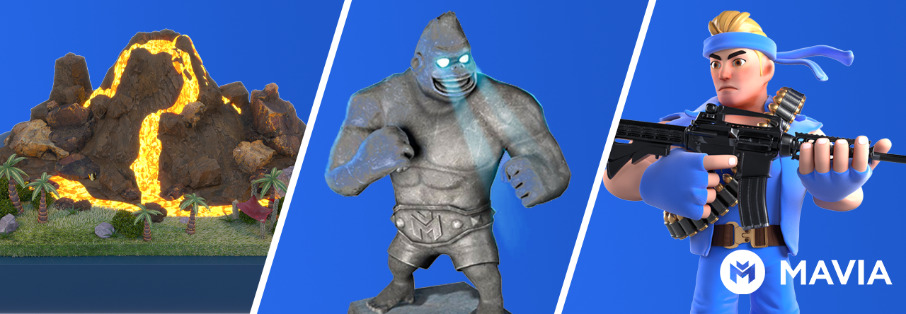
- Land NFTs: Land is the most critical asset in the game, as a player must own or rent a plot of land to build a base and earn Ruby. Land is divided into three rarities: Common, Rare, and Legendary. Higher rarity land features improved aesthetic qualities and provides a significant boost to the generation of "luck" factors, which can lead to higher resource yields and better rewards from obstacles. There are only 100,000 plots of Land in the Mavia ecosystem, ensuring a degree of scarcity.
- Hero NFTs: Heroes are elite units that can be deployed in both attack and defense. Each Hero possesses unique special abilities that can turn the tide of a battle. These assets can be upgraded using Ruby, increasing their stats and market value.
- Statue NFTs: Statues are placed within a base to provide passive buffs to the player’s economy or military. For example, a statue might increase the production rate of Gold or reduce the training time for specific troops.
Chronology of Development and Market Entry
The journey of Heroes of Mavia began in 2021, when Skrice Studios identified a gap in the market for a high-fidelity mobile strategy game integrated with blockchain technology.

- Late 2021 – Early 2022: Skrice Studios successfully closed an $8 million seed funding round. The round was led by Binance Labs and featured participation from prominent venture capital firms including Crypto.com Capital, Genblock Capital, Delphi Digital, and Animoca Brands.
- February 2022: The initial Land NFT sale took place, generating significant market interest. The "soft staking" program was introduced shortly thereafter, allowing Land owners to earn rewards without moving their assets from their private wallets.
- 2023: The game underwent extensive Alpha and Beta testing phases, focusing on balancing the combat mechanics and stress-testing the server infrastructure for a global mobile audience.
- February 2024: Heroes of Mavia officially launched on iOS and Android platforms. The launch was accompanied by a massive "Airdrop Program," which rewarded early community members and active players with $MAVIA tokens, catapulting the game to the top of the app store charts in several regions.
- May 2024: The Ruby Marketplace was officially inaugurated. This decentralized platform allowed players to trade Legendary items and skins using Ruby and $MAVIA. According to official reports, thousands of items were minted within the first few hours, with some legendary assets seeing a tenfold increase in value shortly after their release.
Strategic Partnerships and Institutional Backing
One of the defining factors of Heroes of Mavia’s success is its robust network of institutional partners. The backing of Binance Labs provided the project with immediate credibility within the crypto space, while the involvement of Animoca Brands—a leader in the metaverse and gaming sector—offered strategic guidance on NFT utility and player retention.
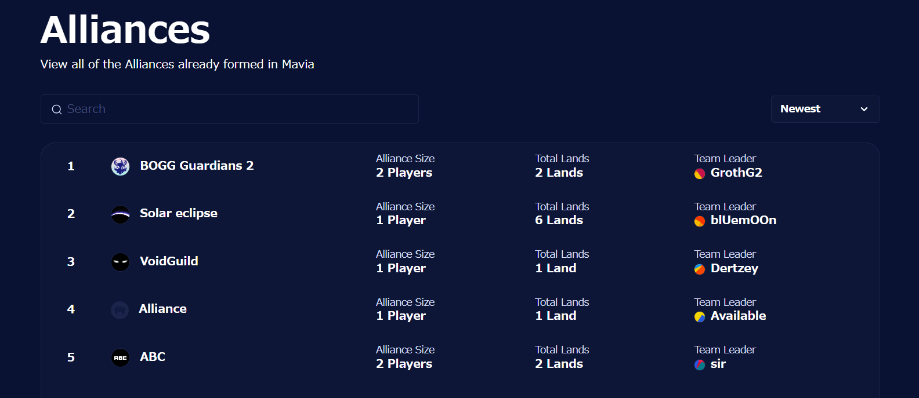
Additionally, Skrice Studios has actively collaborated with major eSports organizations and gaming guilds. These partnerships are designed to foster a competitive scene around Mavia, with organized tournaments and guild-vs-guild wars. By integrating social features such as guilds, Mavia encourages collective gameplay, where players can share resources, strategies, and participate in large-scale cooperative missions.
Impact on the Web3 Gaming Landscape
Heroes of Mavia serves as a case study for the transition of blockchain gaming from niche experimental projects to mainstream-ready applications. By focusing on a "mobile-first" strategy, the developers have lowered the barrier to entry for non-crypto native players. The game’s integration with the Arbitrum network ensures that transaction fees (gas fees) are negligible, a common hurdle that deterred players in previous Ethereum-based games.
Furthermore, the "Play-to-Own" philosophy represents a more sustainable economic outlook. Rather than promising players a full-time income—a model that led to the collapse of several early GameFi projects—Mavia emphasizes that players truly own the digital items they work hard to acquire or upgrade. This sense of ownership, combined with high-quality graphics and addictive gameplay, positions Heroes of Mavia as a leader in the next generation of digital entertainment.
Broader Implications and Future Outlook
As Heroes of Mavia continues to expand its feature set, including the upcoming introduction of "Nexira" and the integration of the $NEXI utility token via the Nexira DAEP, the ecosystem is set to become even more complex. The ability for players to exchange $MAVIA and Ruby through various exchanges, such as MEXC, provides a bridge between the virtual world and the real-world economy.
The success of the project suggests that the future of mobile gaming may increasingly rely on decentralized ownership. If Heroes of Mavia can maintain its player base and continue to balance its economy, it could pave the way for other traditional gaming studios to integrate blockchain elements. For now, it remains a flagship title, demonstrating that with the right combination of strategic gameplay, institutional support, and sustainable tokenomics, Web3 games can compete directly with the giants of the traditional gaming industry.