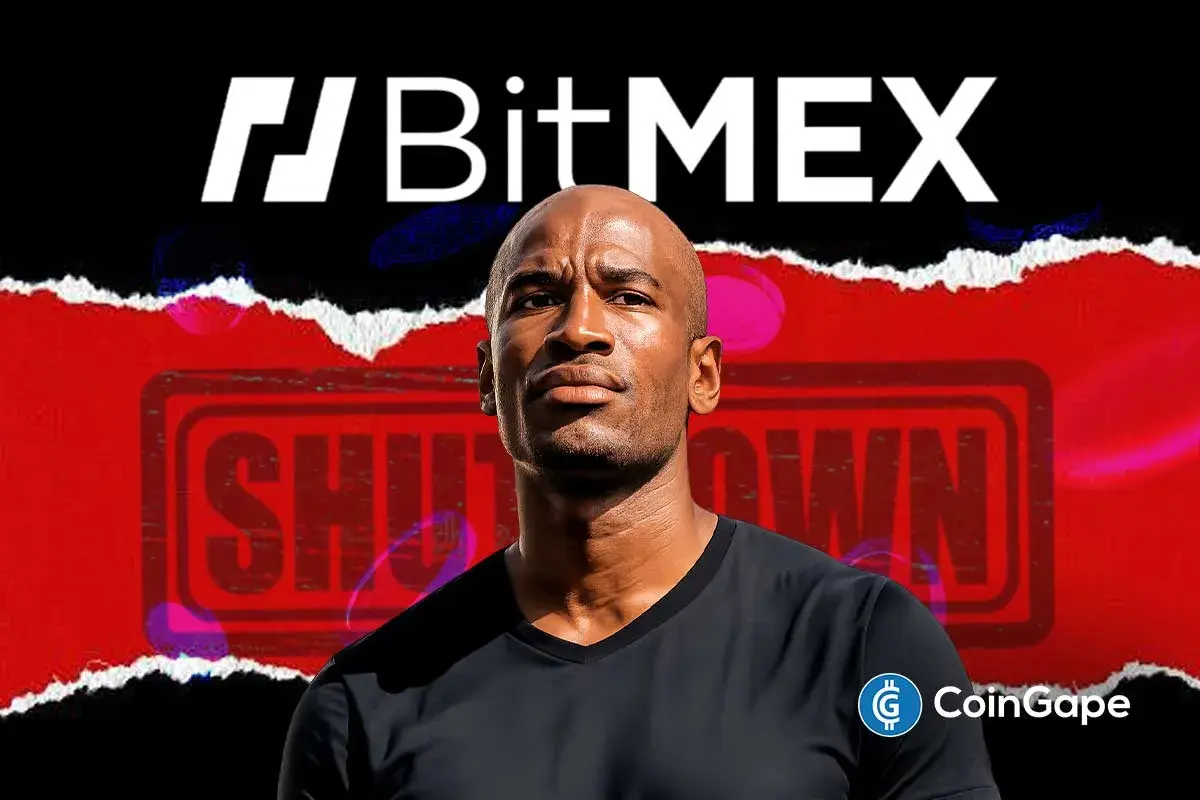
The global cryptocurrency landscape is set to lose one of its most influential pioneers as BitMEX, the exchange that revolutionized digital asset trading through the invention of the perpetual swap, prepares to shutter its exchange operations. On September 23, 2024, at precisely 04:00 UTC, the platform will officially cease its exchange services, marking the end of an 11-year journey that saw the firm rise from a niche startup to a dominant force in the high-stakes world of crypto derivatives. The decision follows a comprehensive strategic review conducted by its parent company, HDR Global Trading Limited, which cited shifting business objectives and evolving conditions within the broader cryptocurrency industry as the primary drivers behind the closure.
The wind-down process has already commenced, with the exchange halting all new user registrations effective immediately. To ensure an orderly exit, BitMEX has implemented a strict timeline for the cessation of trading activities. Beginning August 26, the platform will activate enhanced risk limits, a move designed to encourage traders to reduce their exposure ahead of the final deadline. Any positions remaining open at the time of the September 23 closure will be subject to forced liquidation at the prevailing market price. While the exchange will stop providing active trading services, it has committed to holding user assets in secure custody until all funds are successfully withdrawn, though it has urged its global user base to act swiftly to avoid administrative complications.
The Genesis and Legacy of a Derivatives Pioneer
To understand the weight of BitMEX’s departure, one must look back to its founding in 2014 by Arthur Hayes, Ben Delo, and Samuel Reed. At a time when the cryptocurrency market was largely defined by spot trading on platforms like Mt. Gox and Bitstamp, BitMEX introduced a level of financial sophistication previously unseen in the space. The exchange’s crowning achievement was the introduction of the "Perpetual Inventory Complex Swap," or perpetual swap, in 2016. Unlike traditional futures contracts, which have a set expiry date, the perpetual swap allowed traders to hold leveraged positions indefinitely, using a funding rate mechanism to keep the contract price tethered to the underlying spot price.
This innovation transformed the industry, enabling retail and institutional traders to access up to 100x leverage on Bitcoin. For several years, BitMEX was the undisputed king of the derivatives market, often accounting for a significant portion of global Bitcoin trading volume. Its "trollbox" chat feature and the high-profile liquidation "rekt" bots became cultural staples of the crypto community. However, the very features that made BitMEX successful—high leverage and a relatively permissive onboarding process—eventually drew the scrutiny of global regulators.
A Chronology of Challenges and Leadership Shifts
The path toward the 2024 shutdown was paved with significant legal and structural hurdles. The most pivotal moment in the exchange’s history occurred in October 2020, when the U.S. Commodity Futures Trading Commission (CFTC) and the Department of Justice (DOJ) filed criminal and civil charges against the founders and the entity itself. The allegations centered on violations of the Bank Secrecy Act and a failure to implement adequate anti-money laundering (AML) and know-your-customer (KYC) procedures.
Following the charges, Arthur Hayes and his co-founders stepped down from their executive roles. In 2022, Hayes and Delo pleaded guilty to violating the Bank Secrecy Act and were sentenced to probation and house arrest, respectively, alongside significant individual fines. The exchange itself reached a $100 million settlement with U.S. authorities. While BitMEX attempted to pivot under new leadership, including former Boerse Stuttgart CEO Alexander Höptner, the platform struggled to regain its lost market share. During the period of legal uncertainty, rivals such as Binance, Bybit, and OKX aggressively expanded their derivatives offerings, eventually surpassing BitMEX in both liquidity and user base.
Efforts to revitalize the brand included a failed attempt to acquire the German bank Bankhaus von der Heydt in 2022, a move intended to provide a regulated foothold in the European market. By 2024, after a decade of operation, the parent company concluded that the competitive landscape and the cost of regulatory compliance no longer supported the continued operation of the exchange in its current form.
Financial Stability and the Proof of Reserves Framework
Despite the decision to close, BitMEX has emphasized its commitment to financial integrity and security. In its official announcement, the exchange highlighted a notable achievement: in over 11 years of operation, it has never lost user funds to a security breach or hack. This record stands in stark contrast to many of its contemporaries that suffered catastrophic losses during the various "crypto winters."
To reassure users during the transition, BitMEX pointed to its most recent Proof of Reserves (PoR) report. The data indicates that the exchange maintains a healthy capital cushion. As of the latest audit, BitMEX holds approximately $1.037 billion in cryptocurrency assets in its reserves. Against these assets, it carries liabilities of $1.016 billion, which represent user balances and insurance funds held in custody. This surplus ensures that every user has the ability to withdraw their full balance, provided they do so within the prescribed timeframe.
However, the exchange has introduced a fee structure for accounts that remain dormant after the shutdown. A maintenance fee of $50 or 1% of the remaining balance (whichever is greater) will be charged annually on accounts that fail to withdraw their funds. This policy is designed to offset the administrative and security costs of maintaining "orphan" assets indefinitely.
Technical Transition and Guidance for Traders
The closure of a major derivatives hub necessitates a complex technical wind-down. BitMEX has outlined a clear path for users to mitigate risk. Traders are encouraged to manually close their positions to maintain control over their exit prices. The "force-close" mechanism scheduled for September 23 is a last-resort measure, and the exchange has explicitly stated it will not be held liable for any trading losses incurred through automated liquidations.
For high-volume and high-leverage traders, the migration process is already underway. Many are moving their portfolios to alternative platforms that offer comparable margin options and deep liquidity. Analysts suggest that this migration could lead to short-term volatility in the "funding rates" of other exchanges as thousands of positions are re-established elsewhere. BitMEX has assured users that their assets remain "fully safe and under their control" during this transition, emphasizing that the month-long lead time is intended to facilitate a smooth exit for all participants.
Market Reaction and Broader Industry Implications
The announcement of the BitMEX shutdown sent ripples through the cryptocurrency market, contributing to a period of heightened volatility. At the time of the news, Bitcoin (BTC) was trading around the $65,500 mark, having dipped to a 24-hour low of $65,327. While the closure of a single exchange rarely dictates the long-term price action of Bitcoin, the psychological impact of a "legacy" firm exiting the space cannot be ignored.
Market analysts point to several factors contributing to the current climate of uncertainty. Beyond the BitMEX news, elevated global oil prices and geopolitical tensions—specifically involving U.S.-Iran relations and conflict in the Red Sea—have dampened investor appetite for riskier assets. Furthermore, the closure of BitMEX is seen by some as a harbinger of a broader consolidation within the exchange industry. As regulatory requirements become more stringent and capital-intensive, smaller or older platforms that cannot achieve massive scale may find it increasingly difficult to compete with "super-exchanges" like Binance or Coinbase.
The disappearance of BitMEX also marks a shift in the philosophy of crypto trading. The "Wild West" era of 100x leverage with minimal oversight is rapidly being replaced by a more institutionalized, regulated environment. While this transition is generally viewed as positive for long-term stability and mainstream adoption, it signals the end of the high-alpha, low-barrier-to-entry era that BitMEX helped create.
Strategic Outlook for HDR Global Trading
While the exchange operations are ending, the parent company, HDR Global Trading Limited, has not indicated a total withdrawal from the blockchain space. Strategic reviews of this nature often precede a pivot toward business-to-business (B2B) services, infrastructure development, or investment management. Arthur Hayes, though no longer at the helm, remains a prominent figure in the industry as a macro-economic commentator and venture investor through his family office, Maelstrom.
The closure of BitMEX serves as a case study in the lifecycle of a disruptive fintech company. It rose on the back of a singular, brilliant product innovation, struggled under the weight of regulatory catch-up, and ultimately chose an orderly exit over a slow decline. For the thousands of traders who cut their teeth on the BitMEX platform, the September 23 deadline represents more than just a logistical hurdle; it is the final chapter of a defining era in digital asset history.
As the deadline approaches, the industry’s focus remains on the orderly transfer of the $1 billion in assets currently held by the exchange. The successful execution of this withdrawal process will be the final test of BitMEX’s vaunted security and operational protocols. For the broader market, the vacancy left by BitMEX will likely be filled by decentralized exchanges (DEXs) and more heavily regulated centralized platforms, continuing the perpetual evolution of the crypto derivatives landscape.