The Bitcoin mining sector experienced a period of renewed financial optimism during the week ending September 21, 2026, as a significant rally in the price of Bitcoin bolstered mining revenues despite a slight contraction in network hashrate. This surge in asset value provided a necessary reprieve for mining operations that had been grappling with the compressed margins characteristic of the previous fiscal quarter. Throughout the week, the industry observed a notable uptick in hashprice—a critical metric representing the expected daily revenue for a unit of computing power—as spot prices surged past the $86,000 threshold.
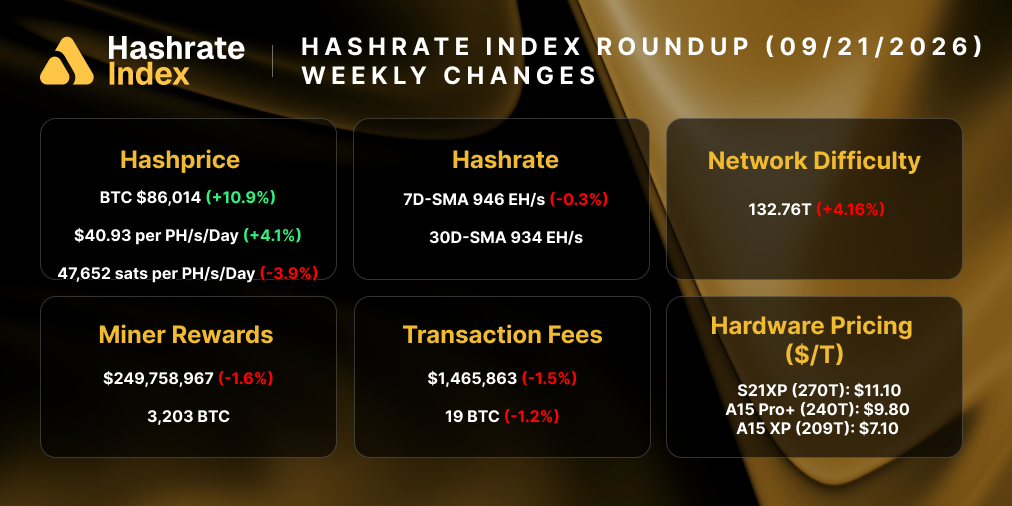
Market data for the seven-day period indicates that Bitcoin climbed approximately 10.9%, moving from roughly $77,567 to $86,003. This upward momentum, while failing to fully reverse the year-to-date performance—which remains at a modest -1.6%—has nonetheless shifted the sentiment among institutional miners. The total production for the week reached approximately 3,203 BTC, valued at roughly $249 million. Within this revenue stream, transaction fees accounted for 19 BTC, or roughly $1.47 million, representing 0.59% of the total block rewards. While fee dominance remains relatively low, the stability of these rewards provides a foundational layer of income that complements the block subsidy.
Shifts in Network Hashrate and Difficulty
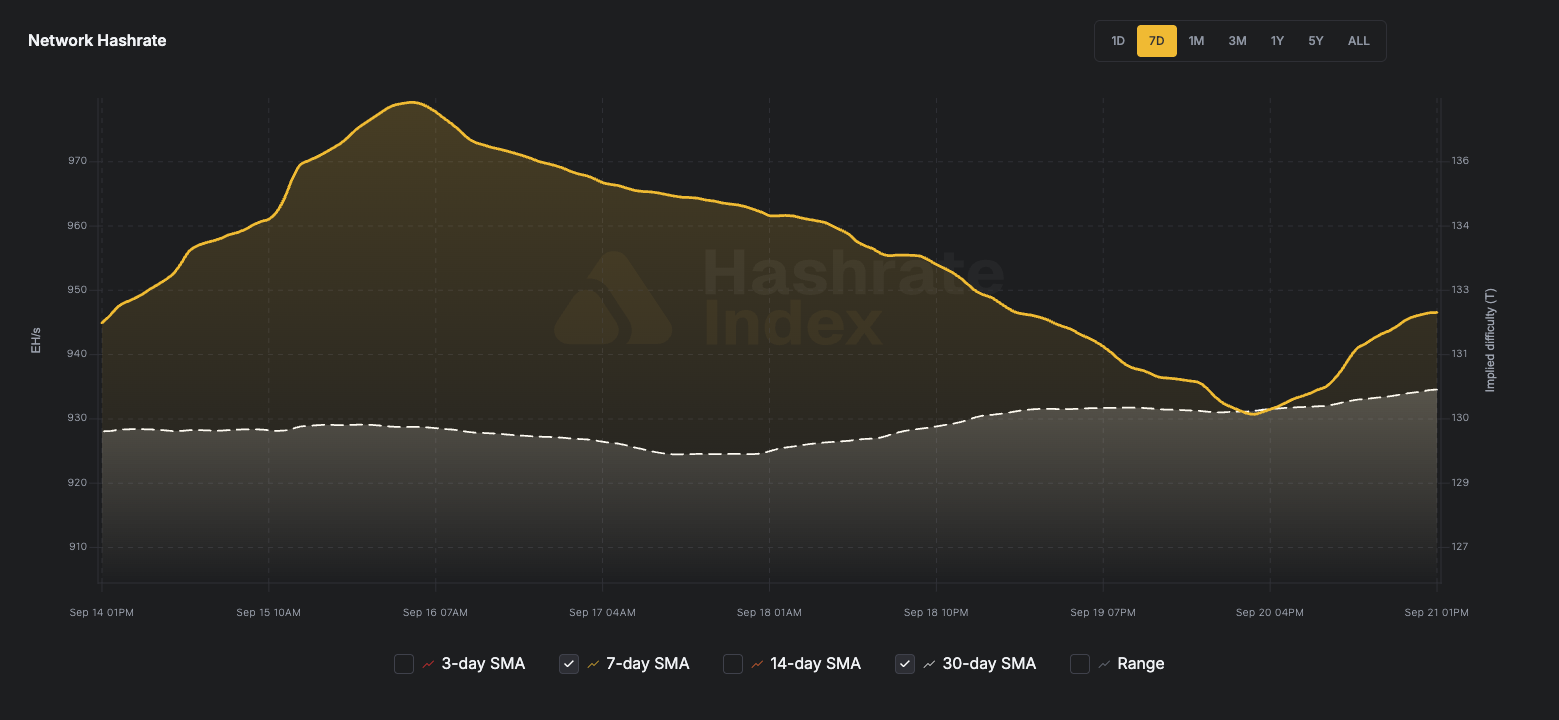
The Bitcoin network’s security infrastructure, measured by the collective hashrate of all participating miners, saw a marginal decline of 0.3%. The seven-day simple moving average (SMA) for network hashrate drifted from 949 EH/s to 946 EH/s, while the 30-day SMA remained slightly lower at 934 EH/s. This minor cooling in hashrate is often attributed to the dynamic nature of equipment deployment and the recalibration of mining fleets in response to energy costs.
Complementing this, the network underwent a significant difficulty adjustment on September 19, 2026, which saw a +4.16% increase, bringing the difficulty level to 132.76T. This adjustment serves as the protocol’s internal mechanism to ensure that, regardless of changes in total computational power, block production maintains an average interval of ten minutes. Currently, the network is observing an average block time of 10 minutes and 11 seconds. Analysts are already looking toward the next epoch, with early estimates suggesting a -1.80% adjustment in early October, though these figures remain subject to volatility as the current epoch progresses.
The Economics of Hashprice and Profitability
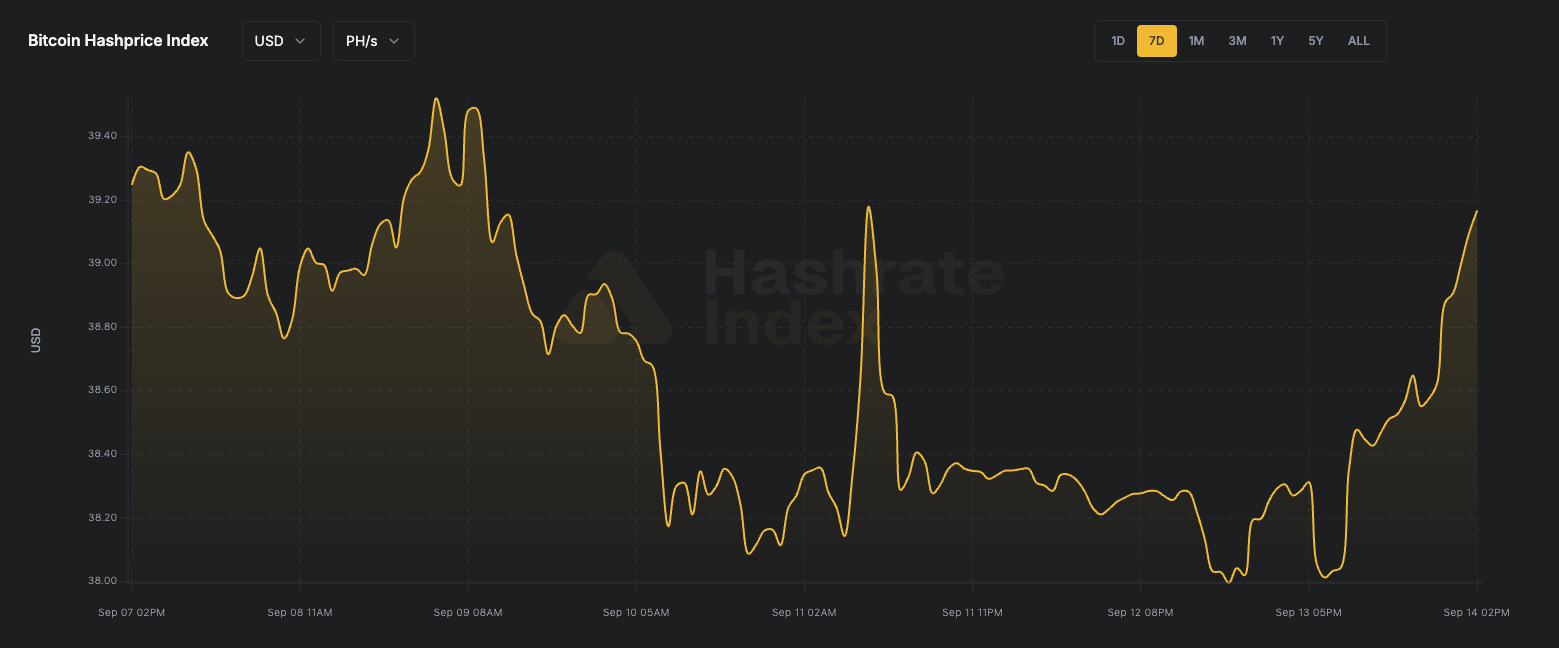
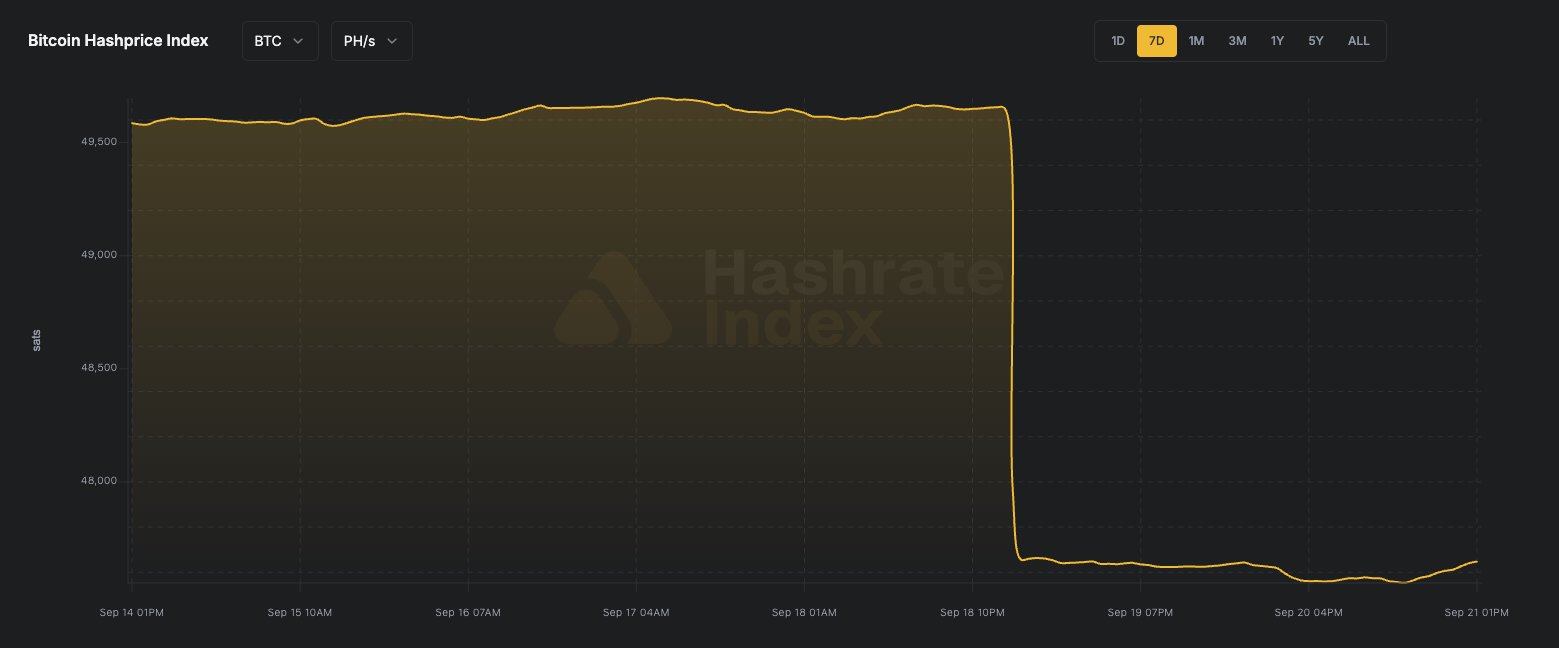
For the individual operator, the most consequential metric remains the hashprice. During this reporting period, the USD-denominated hashprice increased by 4.1%, rising from $39.31 per PH/s/Day to $40.93 per PH/s/Day. This growth in USD revenue is largely a function of the underlying Bitcoin price appreciation, which successfully outpaced the increased difficulty of the network. Conversely, when measured in native BTC terms, the hashprice saw a 3.9% decline, dropping to 0.00047652 BTC per PH/s/Day, reflecting the ongoing competition for limited block space and rewards.
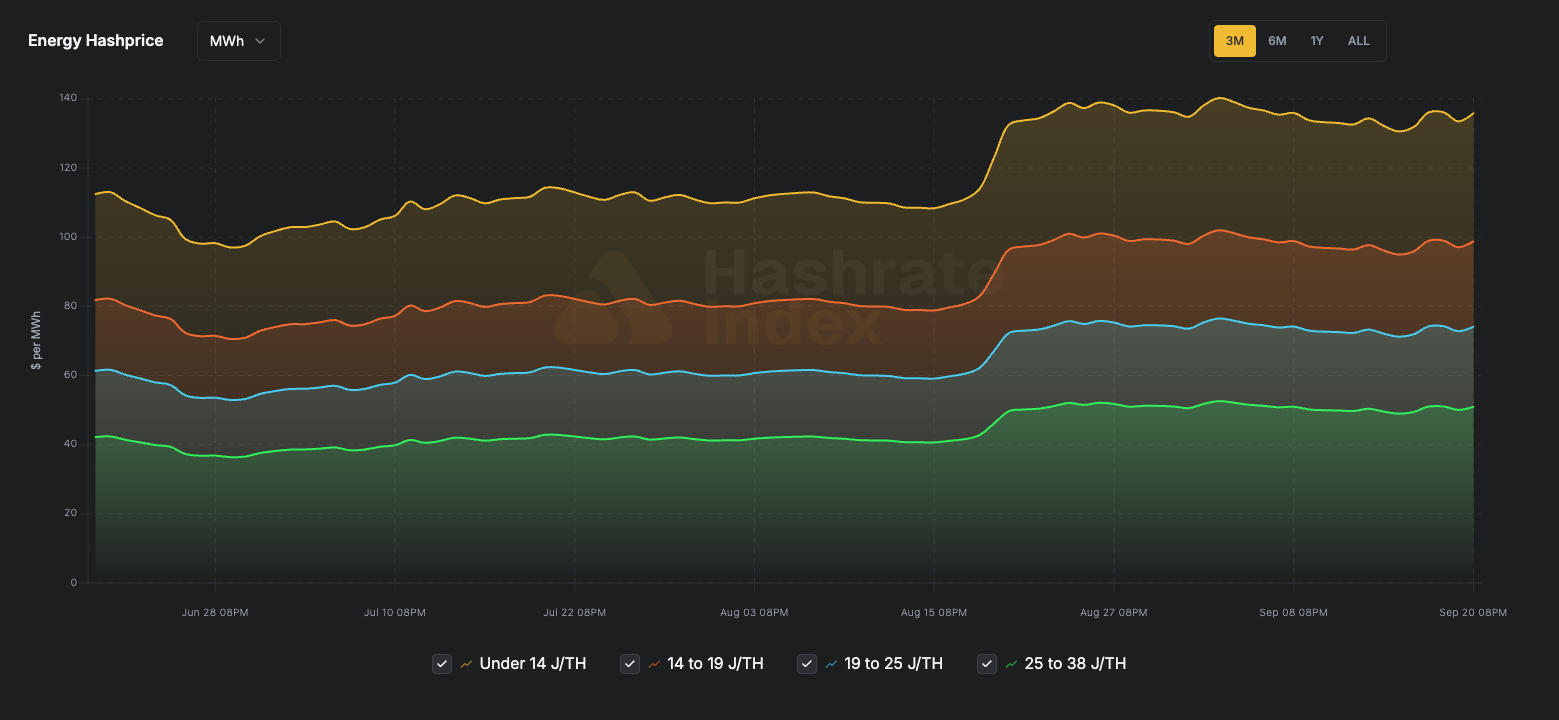
This environment presents a distinct challenge for operators managing aging hardware. At the $40 per PH/s/Day threshold, many mining facilities are operating at or near their breakeven point. The efficiency of a fleet—measured in Joules per Terahash (J/TH)—has become the primary determinant of long-term survival. Companies utilizing older S19 series rigs are finding it increasingly difficult to compete with newer, high-efficiency models like the S21 series without the integration of custom, performance-optimizing firmware. Industry experts suggest that firms unable to upgrade their hardware or secure low-cost, long-term power purchase agreements (PPAs) may face significant operational strain in the coming months.
Institutional Performance and Mining Equities
The equity markets echoed the optimism seen in the spot price of Bitcoin, with major publicly traded mining companies seeing substantial gains over the five-day trading week. The sector-wide performance was broadly positive, with many firms posting double-digit growth. Companies such as IREN, which maintains a significant market capitalization, saw its stock price rise by 11.6%, while Riot Platforms (RIOT) and Marathon Digital (MARA) posted gains of 17.3% and 17.4%, respectively.
This market-wide rally in mining stocks suggests that investors are once again pricing in the potential for higher profitability as Bitcoin’s price appreciation provides a hedge against the rising cost of network difficulty. The broader list of mining equities, including CleanSpark (CLSK) and Core Scientific (CORZ), also saw steady growth, with increases of 13.9% and 9.7% respectively. This positive correlation between BTC price and mining stock valuations indicates a high degree of market confidence in the long-term viability of industrial-scale mining operations, provided they maintain fiscal discipline and energy efficiency.
Forward Market Outlook
Looking toward the horizon, the Luxor Hashrate Forward Market provides a window into the expectations of professional market participants. The forward market is currently pricing in an average hashprice of approximately $38.96, or 0.00045 BTC, over the next six months. This forward-looking data point suggests that while the current week has been favorable, the market anticipates a period of relative stability or potential compression in the medium term.
These forward curves are critical for miners looking to hedge their future revenue streams. By locking in future hashprice rates, operators can mitigate the risks associated with Bitcoin price volatility and network difficulty fluctuations. The consistency of these forward expectations reflects a maturing market where miners are shifting from pure speculation to more sophisticated financial risk management.
Strategic Implications for the Mining Industry
The events of this week highlight the cyclical nature of Bitcoin mining, where the interplay between Bitcoin’s price and network difficulty dictates the lifecycle of hardware and the solvency of mining firms. The recent rise in Bitcoin to the $86,000 range has effectively raised the floor for profitability, allowing miners to sustain operations that might have been threatened just weeks prior.
However, the slight decline in hashrate serves as a reminder that the mining industry is not a monolith. It is a collection of thousands of individual actors constantly evaluating the cost of electricity against the revenue potential of their hardware. As the industry moves into the final quarter of 2026, the focus will likely remain on three core pillars: energy efficiency, access to capital, and the strategic deployment of next-generation hardware.
The fact that transaction fees remain a small fraction of total rewards—less than 1%—underscores that the security of the network is still heavily reliant on the block subsidy. As the block subsidy continues to diminish over time through the halving process, the industry will eventually need to see a more robust fee market to sustain current security levels. For now, however, the combination of high asset prices and a resilient network suggests that the Bitcoin mining sector remains robust, adaptive, and essential to the global decentralized financial architecture.
In summary, the week of September 21, 2026, served as a demonstration of the resilience inherent in the Bitcoin mining ecosystem. Despite the headwinds of increased network difficulty and the ongoing search for operational efficiency, the sector has leveraged the broader market recovery to stabilize revenues and maintain confidence among investors. As the year approaches its final phase, the industry’s ability to maintain these gains will depend on its continued capacity to innovate in the face of ever-increasing computational competition.