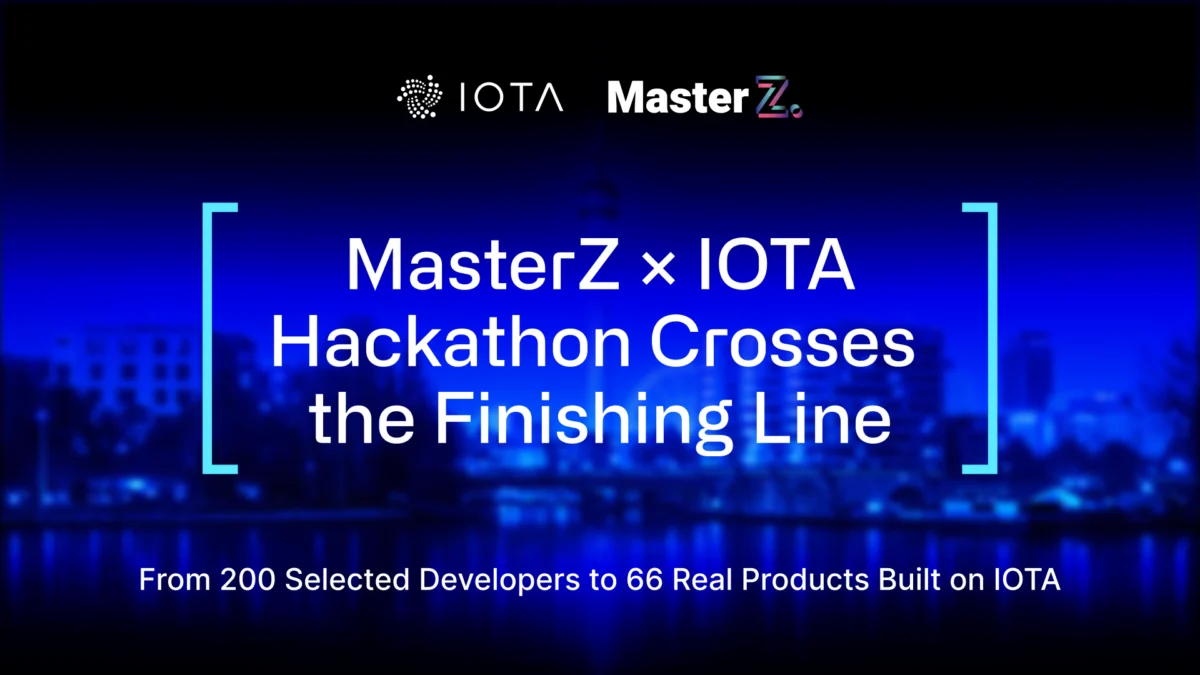
The European Blockchain Hackathon, a high-profile collaborative initiative powered by MasterZ and the IOTA Foundation, officially concluded at the end of March, marking a significant milestone in the adoption and practical deployment of decentralized ledger technologies across the continent. Designed to transition participants from theoretical learners to active creators, the rigorous multi-month program successfully cultivated an environment where raw ideas evolved into functioning, market-ready products. Out of an initial pool of 200 rigorously vetted developers hailing from all corners of Europe, an impressive total of 66 fully realized applications were successfully built utilizing IOTA’s advanced technology stack by the final submission deadline.
The successful completion of this initiative highlights the maturing landscape of European Web3 development. Rather than focusing solely on conceptual prototypes or speculative financial tokens, the hackathon prioritized utility, scalability, and real-world application. As the blockchain industry increasingly shifts its focus toward regulatory compliance, institutional integration, and genuine consumer utility, events like the MasterZ and IOTA collaboration serve as vital nurseries for the next generation of digital infrastructure.
From Selection to Execution: A Structured Journey
The path to the March finale was structured as an intensive, methodical journey divided into distinct phases to ensure maximum productivity and skill development. The initiative officially commenced in January 2026 with a highly competitive selection process. Organizers sifted through hundreds of applications to handpick 200 elite developers representing a deeply international and diverse talent pool. The chosen participants crossed borders, bringing varied perspectives from nations including Spain, Portugal, Austria, Italy, Germany, the United Kingdom, Cyprus, the Netherlands, Belgium, and France.
Following the initial curation, February served as an immersive educational and training period. Selected builders participated in a comprehensive series of live training sessions led by industry experts. These workshops were meticulously engineered to equip participants with deep technical competence regarding IOTA’s unique decentralized architecture, data integrity protocols, and smart contract capabilities.
By March, the hackathon transitioned into its high-stakes execution phase. Working both individually and in collaborative multidisciplinary teams, the developers spent four weeks designing, coding, and testing practical use cases. When the final code repository closed on March 31, the participants had collectively brought 66 distinct, functional products to life on the IOTA network. Each submission was subjected to rigorous evaluation criteria, measuring technical execution, adherence to security standards, innovation, and, most importantly, potential real-world economic and social impact.
Standout Innovations: The Top 5 Projects
While all 66 products demonstrated remarkable technical ingenuity, a select group of five projects rose above the rest, showcasing exceptional execution and clear pathways to commercial viability.
At the forefront of sustainable technology was Textile Tracer, a project designed to resolve one of the most persistent environmental accountability issues in modern commerce: transparency within the global textile supply chain. By implementing a fully verifiable digital product passport powered by IOTA, Textile Tracer allows consumers and regulators to cryptographically track a garment’s lifecycle from the initial factory floor, through retail distribution, and finally into the recycling phase. This immutable audit trail ensures compliance with emerging environmental regulations and combats rampant corporate greenwashing.
In the realm of financial technology, Nplex addressed the notoriously illiquid market of non-performing loans (NPLs). Traditionally, NPLs have been restricted to large institutional buyers with vast capital reserves due to high transaction barriers and complex administrative overhead. Nplex leverages blockchain-based tokenization and fractionalization to democratize this asset class, allowing smaller entities and qualified investors to safely access and trade fractions of these financial instruments through secure, transparent smart contracts.
Addressing the cultural and economic anxieties of the digital age, IOTA Web Guardian introduced a groundbreaking paradigm for content creators operating in an environment saturated by artificial intelligence. As generative AI models increasingly scrape the internet for training data without authorization or compensation, Web Guardian requires autonomous AI systems to authenticate their identity and micropay content creators via the IOTA network in order to access proprietary intellectual property.
Document fraud remains a multi-billion-dollar global concern for businesses and legal institutions alike. To combat this, the creators of DocuNotary developed a system that brings decentralized notarization to corporate and legal documents. By registering cryptographic hashes of essential documents onto the IOTA Tangle, DocuNotary enables instant, tamper-proof verification, rendering document forgery virtually unscalable and drastically reducing administrative fraud risks.
Finally, Tangle Gate focused on the critical domain of cybersecurity and physical infrastructure. Designed to protect sensitive industrial and digital systems, Tangle Gate provides unalterable audit trails and decentralized identity-based access control. By decentralizing authentication permissions, the platform eliminates single points of failure, ensuring that critical infrastructure remains secure against unauthorized access and sophisticated cyber attacks.
Specialized Categories and Category Winners
Beyond the overall top five, the hackathon recognized excellence across several specialized categories. While hundreds of hours of coding yielded diverse applications in decentralized finance, supply chain management, digital identity, and IoT (Internet of Things) integration, judges underscored the exceptional ingenuity displayed in niche categories such as user experience optimization, community-driven governance models, and ecological sustainability. These category awards ensured that projects focusing on localized or highly specialized use cases also received the technical and professional validation necessary to pursue future development.
The Road Ahead: Acceleration and Market Entry
The conclusion of the hackathon does not signal the end of the road for these developers, but rather marks the transition from incubation to commercialization. Organizers have structured an extensive post-hackathon roadmap designed to give winning projects the resources required to scale successfully.
The top five overall projects have been granted an exclusive invitation to a private, high-level networking event in Berlin. There, founders will present their solutions directly to venture capitalists, enterprise partners, and core members of the IOTA ecosystem, facilitating vital connections for early-stage funding and strategic deployment.
Furthermore, the top ten projects will be immediately integrated into a dedicated, intensive acceleration program co-powered by MasterZ and the AIO Blockchain Lab. This curriculum is specifically tailored to refine business models, optimize codebases, navigate regulatory frameworks, and prepare startups for institutional investment rounds. Recognizing the extraordinary depth of talent and quality across the entire roster of submissions, organizers have extended structured support further down the leaderboard. Projects ranking between the top 30 and top 60 will also receive access to bespoke, tailor-made acceleration paths, ensuring that promising innovations are not lost due to a lack of guidance.
Broader Industry Implications and Future Outlook
The MasterZ and IOTA European Blockchain Hackathon serves as a compelling case study for the maturation of decentralized technology ecosystems. By shifting the paradigm from speculative trading to practical, infrastructure-level utility, initiatives of this scale demonstrate that blockchain is increasingly becoming a foundational layer for enterprise software, regulatory compliance, and digital trust.
As these 66 new products progress through their respective acceleration phases and move toward public market deployment, industry analysts will be watching closely to see how many can successfully transition from hackathon prototypes to sustainable, revenue-generating commercial enterprises. For the IOTA Foundation and its partners, the success of this event reinforces the viability of their technological framework and sets a high benchmark for future developer engagement across Europe and beyond.