
The global Bitcoin mining landscape faced a period of significant recalibration during the final week of September 2026, as miners navigated a complex environment characterized by fluctuating asset prices and softening profitability metrics. According to data tracked for the week ending September 28, 2026, the network experienced a marginal increase in computational power, yet hashprice—the revenue generated per unit of hash—remained under pressure, signaling a tightening operational environment for participants across the industry.
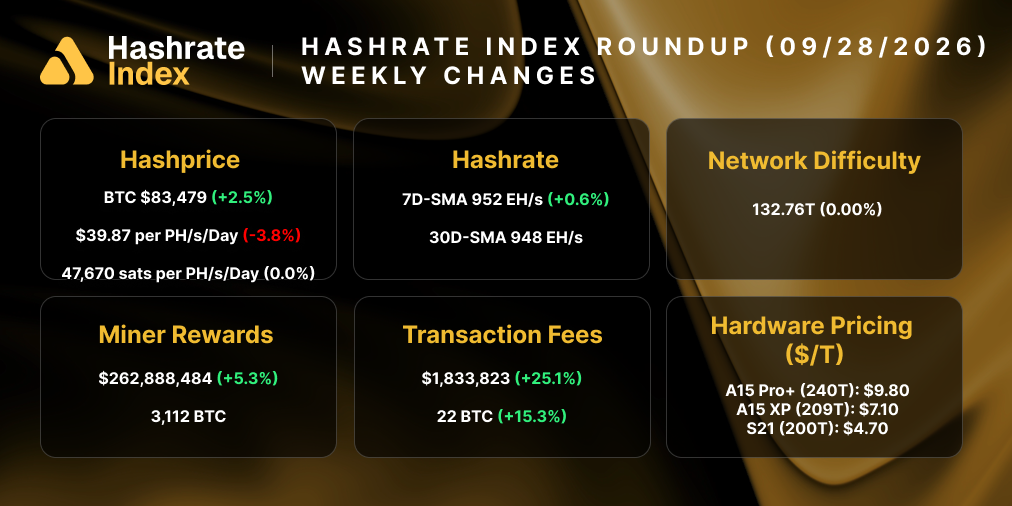
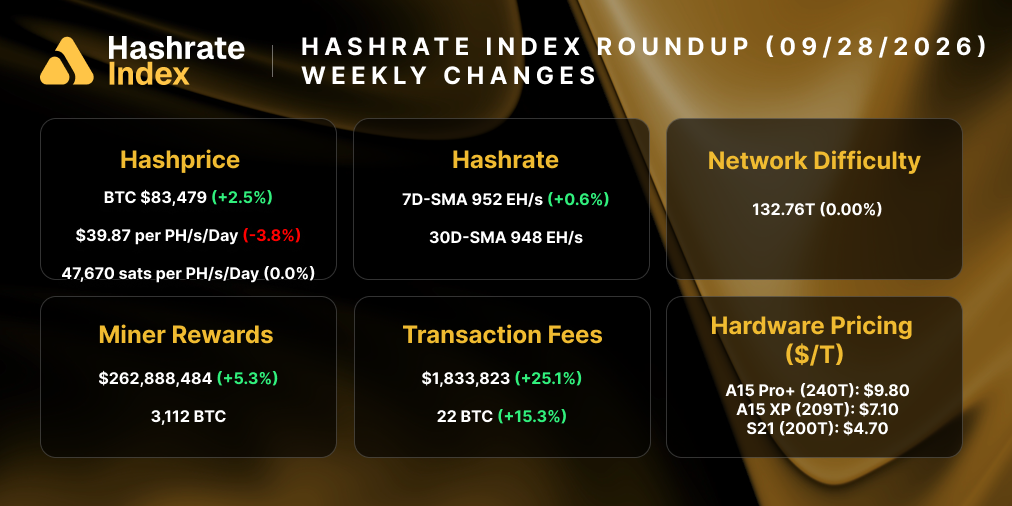
During this seven-day window, Bitcoin price action displayed moderate bullish sentiment, rising 2.5% to settle at approximately $83,479. Despite this modest recovery, the year-to-date performance remains in negative territory at -4.5%, reflecting a challenging fiscal year for many publicly traded mining enterprises. Miners collectively secured 3,112 BTC in block rewards, a haul valued at approximately $262 million, with transaction fees contributing 22 BTC—roughly $1.83 million—to the total revenue pool. While fee revenue saw a 12% week-over-week increase, it continues to represent a modest fraction of the total reward, accounting for only 0.70% of the aggregate intake.
Network Dynamics and Computational Evolution
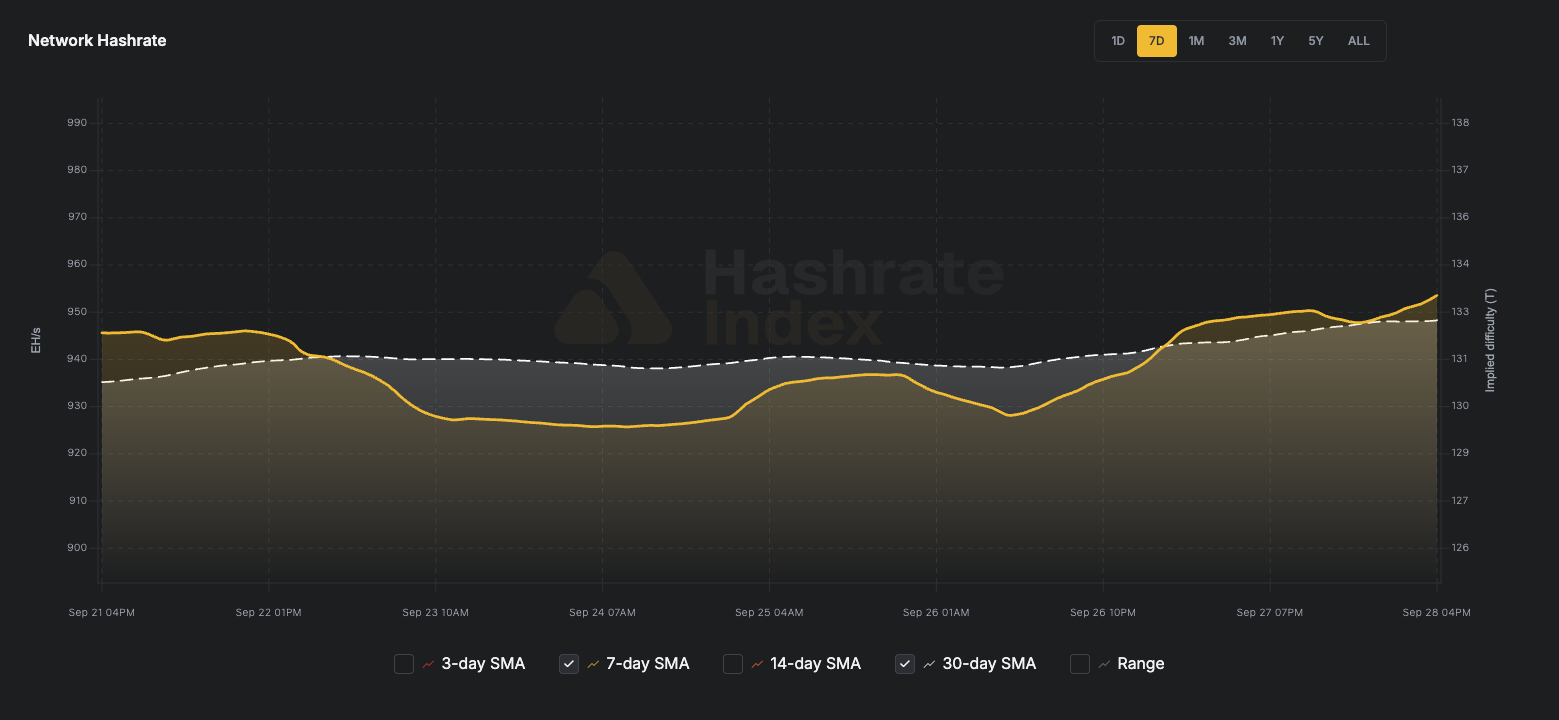
The Bitcoin network’s total hashrate, which serves as a barometer for the collective security and investment intensity of the industry, continued its upward trajectory. The 7-day simple moving average (SMA) for network hashrate climbed to 952 EH/s, up from 946 EH/s the previous week, while the 30-day SMA held steady at 948 EH/s. This sustained growth in hashrate underscores the ongoing expansion of mining infrastructure globally, as operators continue to deploy next-generation application-specific integrated circuit (ASIC) hardware to maintain competitiveness.
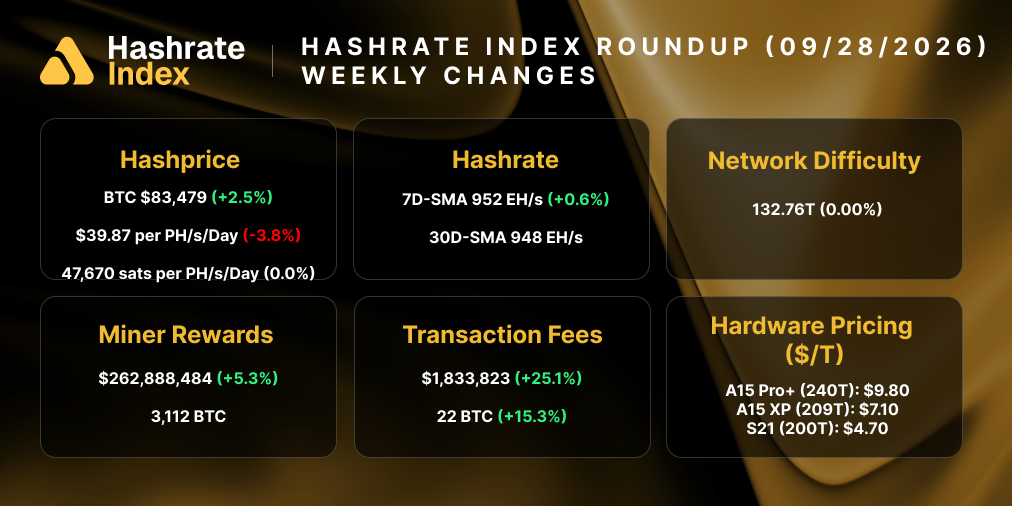
The network’s difficulty—a measure of how hard it is to find a hash below a given target—remains locked at 132.76T following the most recent adjustment on September 19, 2026. This adjustment, which saw a 4.16% increase, effectively set the baseline for mining operations for the current epoch. With the next difficulty adjustment anticipated on October 3, 2026, current estimates project a minor retrenchment of approximately -0.66%. Should this projection hold, it would offer a slight reprieve for operators facing narrowing margins, effectively reducing the computational burden required to secure the network.
The Hashprice Squeeze and Operational Efficiency
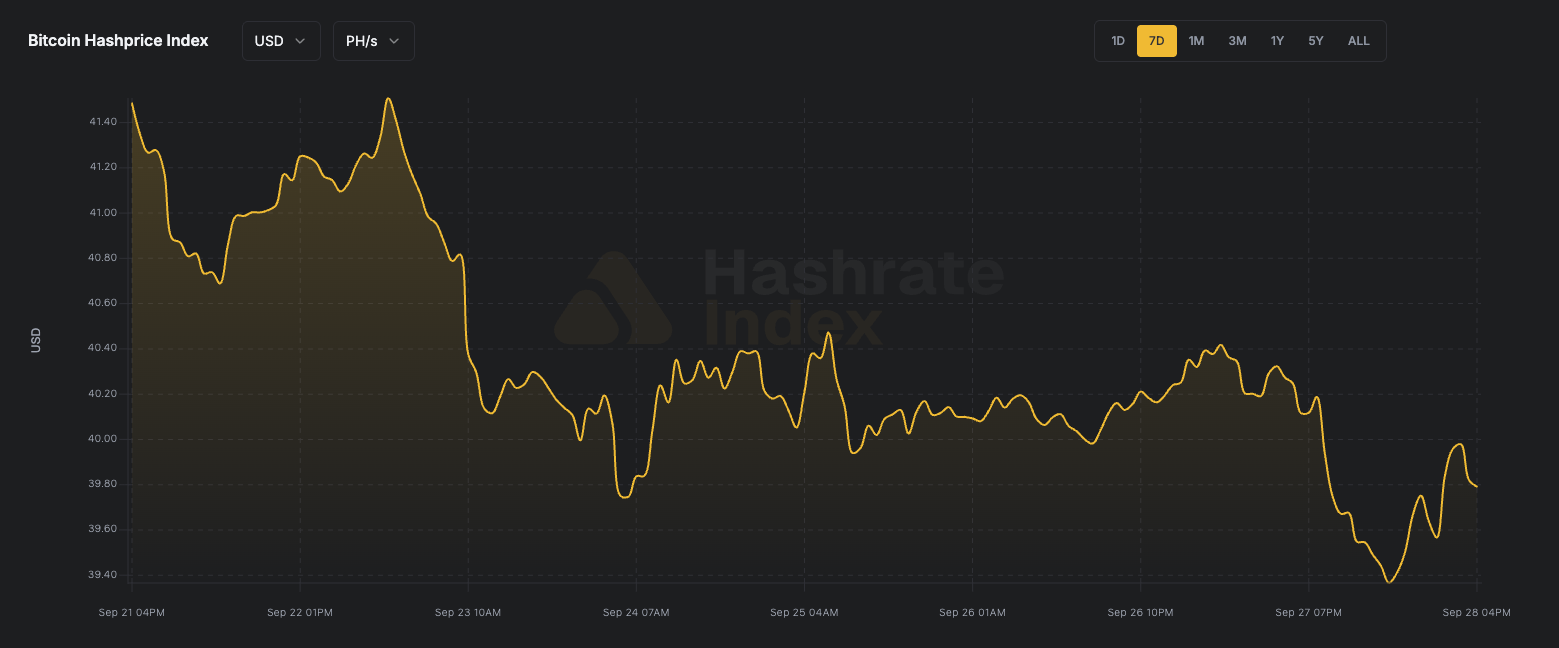
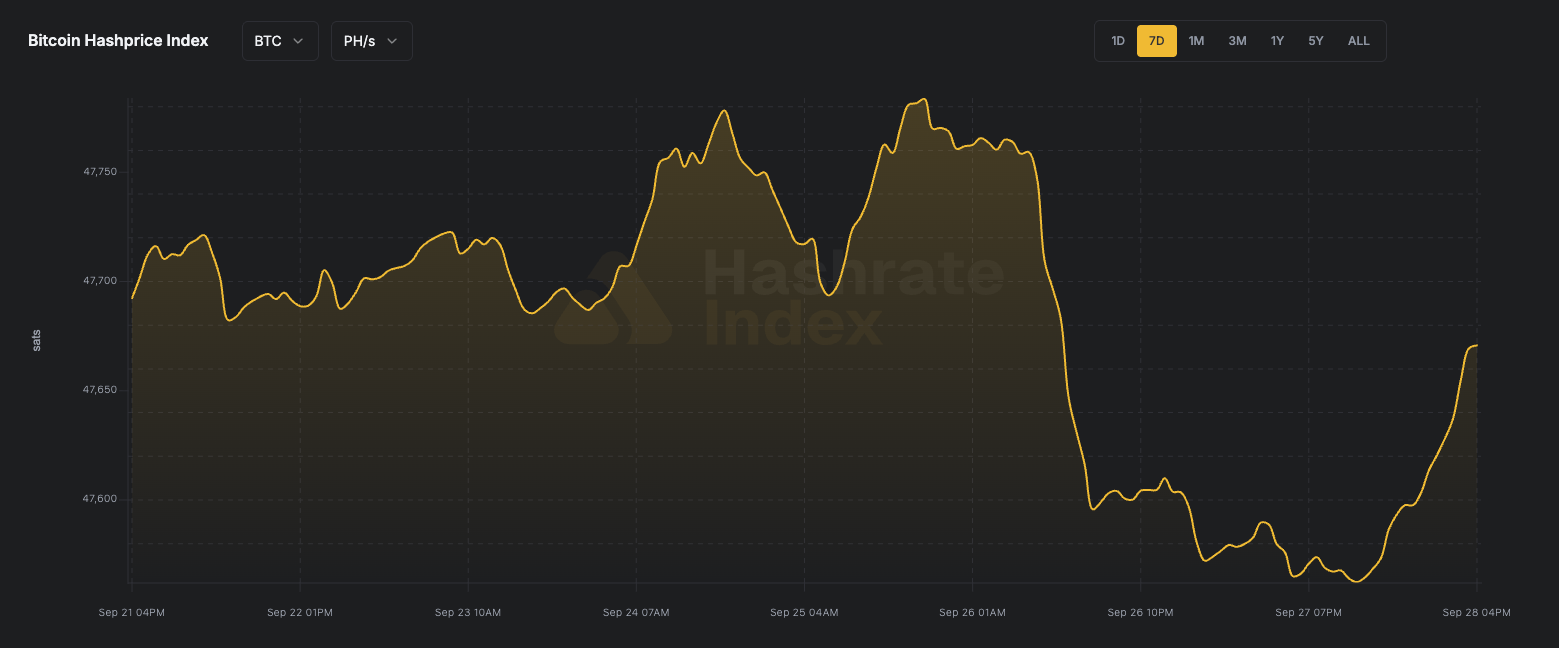
For the average mining operator, the primary metric of concern remains hashprice. The USD-denominated hashprice saw a decline of 3.8% over the week, moving from $41.45 to $39.87 per PH/s/Day. This contraction in revenue-per-hash, coupled with the capital-intensive nature of modern mining, has brought many operations to their breakeven points. The BTC-denominated hashprice remained largely stagnant, hovering around 0.00047670 BTC per PH/s/Day.
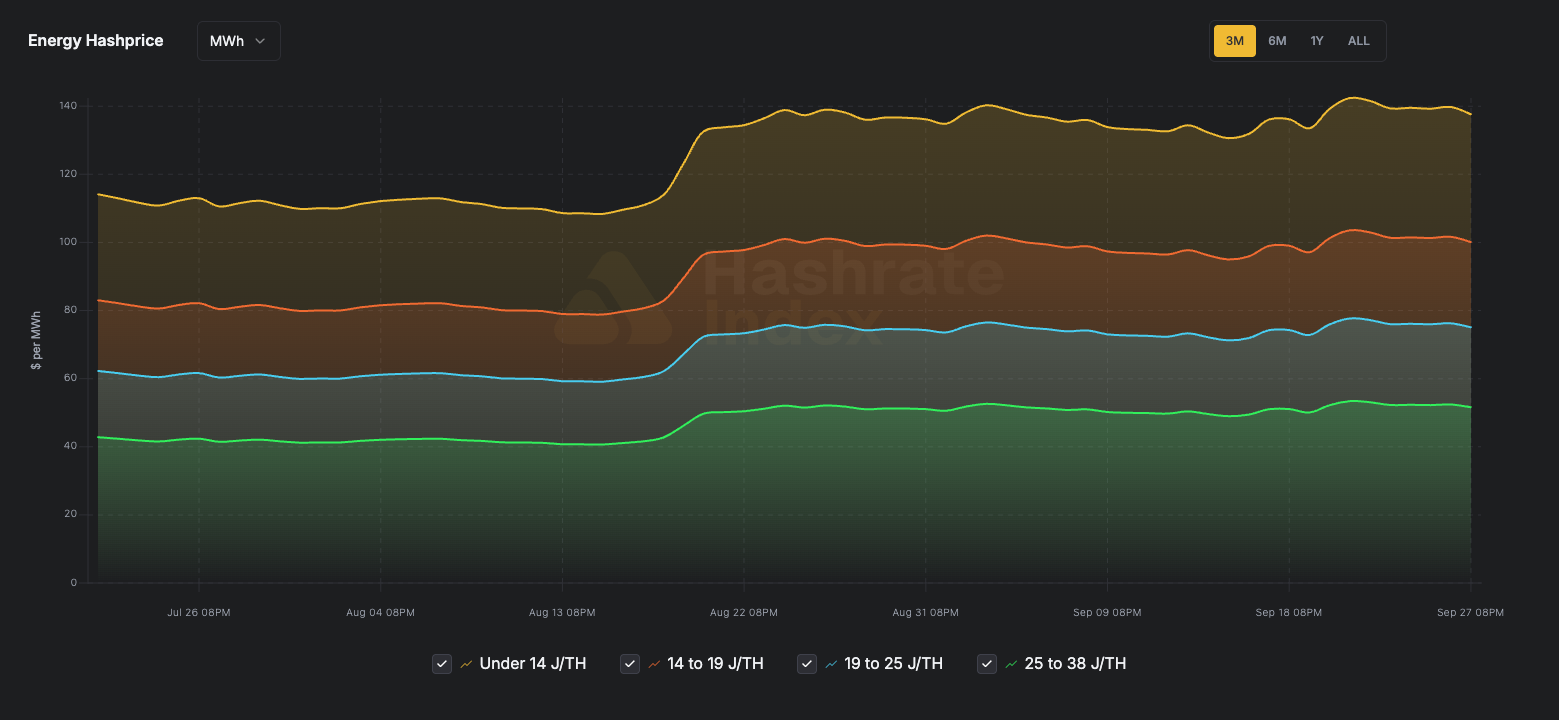
This environment necessitates a heightened focus on fleet efficiency. Large-scale mining operations are increasingly prioritizing power purchase agreements (PPAs) and firmware optimization to survive the current hashprice compression. As energy costs fluctuate, the ability to squeeze higher hash rates from existing S19 and S21 series hardware through specialized firmware has become a critical competitive advantage. Market analysts note that for firms unable to lower their electricity costs or upgrade to more efficient hardware, the current environment presents a formidable barrier to profitability.
Market Sentiment and Public Equity Performance
The broader impact of these technical and economic variables was reflected in the performance of Bitcoin mining equities throughout the week. Publicly traded miners experienced a widespread decline, with most major tickers recording significant double-digit losses. Companies such as ABTC, AIBZ, and BTDR saw drops of 14.2%, 17.6%, and 16.1% respectively, reflecting a broader investor trend of risk-off sentiment in the digital asset infrastructure space.
Industry leaders like IREN and RIOT also faced headwinds, with IREN dipping 11.7% and RIOT falling 10.6% by the close of the week. This market-wide correction suggests that while the network remains robust and secure, investors are sensitive to the tightening margins currently squeezing the industry. The correlation between mining stock prices and the broader hashprice index remains strong, indicating that equity valuation is deeply tethered to the near-term profitability of mining operations.
Forward-Looking Market Projections
Looking toward the horizon, the hashprice forward market provides a cautious outlook for the coming six months. Based on the Luxor Hashrate Forward Market, the market is currently pricing in an average hashprice of $38.34, or approximately 0.00046 BTC, through February 2027. These figures suggest that the market expects a period of relative stability, albeit at a lower revenue tier than previous peaks.
The forward curve is a vital tool for mining enterprises, allowing them to hedge their revenue streams against the volatility of both Bitcoin price and network difficulty. By locking in future prices, firms can better manage their debt obligations and capital expenditures, providing a layer of financial insulation against the inherent unpredictability of the mining sector.
Broader Implications for the Mining Ecosystem
The current state of the industry highlights a transitionary phase. As the sector matures, the era of easy profitability has given way to an environment where operational excellence is the sole differentiator. The rise in transaction fees, while still a small portion of the total reward, is a positive indicator for long-term network sustainability, as the industry eventually looks toward fee-based revenue to offset the programmed reduction in block subsidies.
The stability of the 7-day average block time, currently hovering near 10 minutes and 4 seconds, confirms that despite the fluctuations in hashprice and market sentiment, the network’s self-correcting mechanisms are functioning as designed. This reliability is the foundation upon which institutional confidence is built. However, the next few months will likely see further consolidation as smaller, less efficient players are squeezed out by larger, more capital-efficient firms capable of navigating the current $40 per PH/s/Day revenue environment.
As October begins, the focus for the industry will remain on the upcoming difficulty adjustment and the potential for a rebound in asset prices. For miners, the mandate is clear: stabilize the cost of energy, optimize hardware efficiency, and maintain a long-term view of the network’s underlying value. While the current weekly metrics show a sector under pressure, the underlying infrastructure of the Bitcoin network remains as resilient and secure as ever, continuing its role as the backbone of the global digital asset ecosystem.
In summary, the week of September 28, 2026, serves as a poignant reminder of the cyclical nature of Bitcoin mining. It is a sector that thrives on innovation and efficiency, and despite the current dip in hashprice and the resulting decline in equity valuations, the network’s sustained hashrate growth indicates that the industry remains committed to the long-term vision of a decentralized, secure, and globally distributed financial system. As the market enters the final quarter of the year, the industry’s ability to adapt to these shifting variables will determine which firms emerge as the leaders of the next cycle.