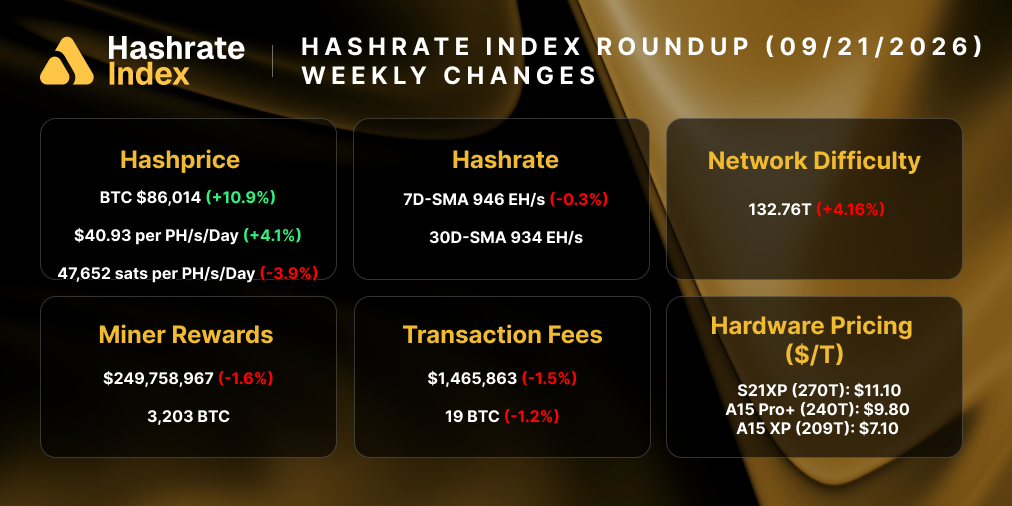
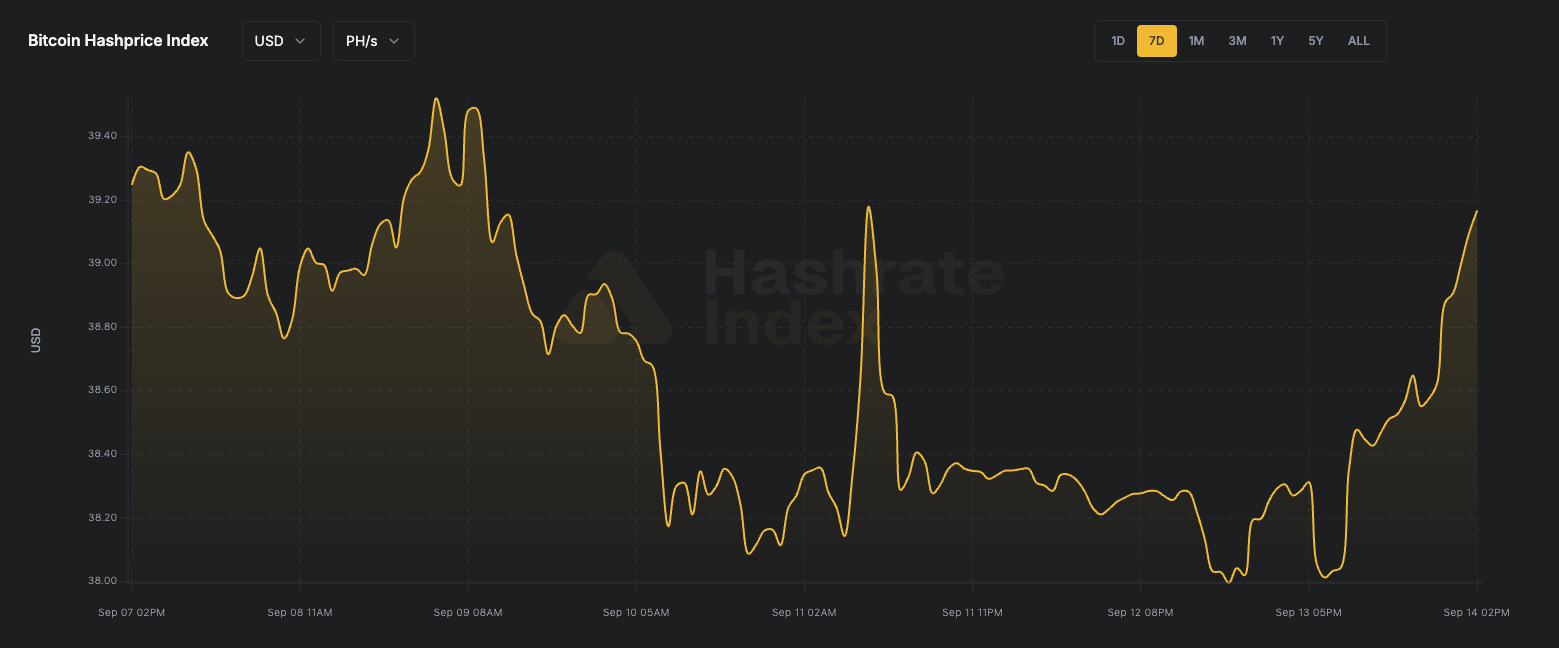
The Bitcoin mining sector experienced a week of notable bullish momentum as the price of the asset surged by 10.9%, climbing from approximately $77,567 to $86,003. This upward price trajectory provided a much-needed reprieve for miners, driving a 4.1% increase in USD-denominated hashprice, which settled at $40.93 per PH/s/day by the close of the week on September 21, 2026. While the financial performance of mining operations improved in fiat terms, the underlying network dynamics—specifically a slight contraction in hashrate and a recalibration of difficulty—suggest a complex environment for industry participants navigating the post-halving landscape.
Market Dynamics and Revenue Metrics
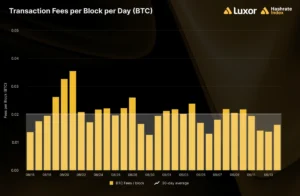
Miners collective revenue saw a significant boost this week, totaling approximately 3,203 BTC, which equates to roughly $249 million in value. Of this total, transaction fees played a relatively minor role, accounting for 19 BTC or $1.47 million, representing 0.59% of the total block rewards. The modest contribution of transaction fees highlights the continued reliance on the block subsidy, even as Bitcoin’s price appreciation bolsters the USD value of those rewards.
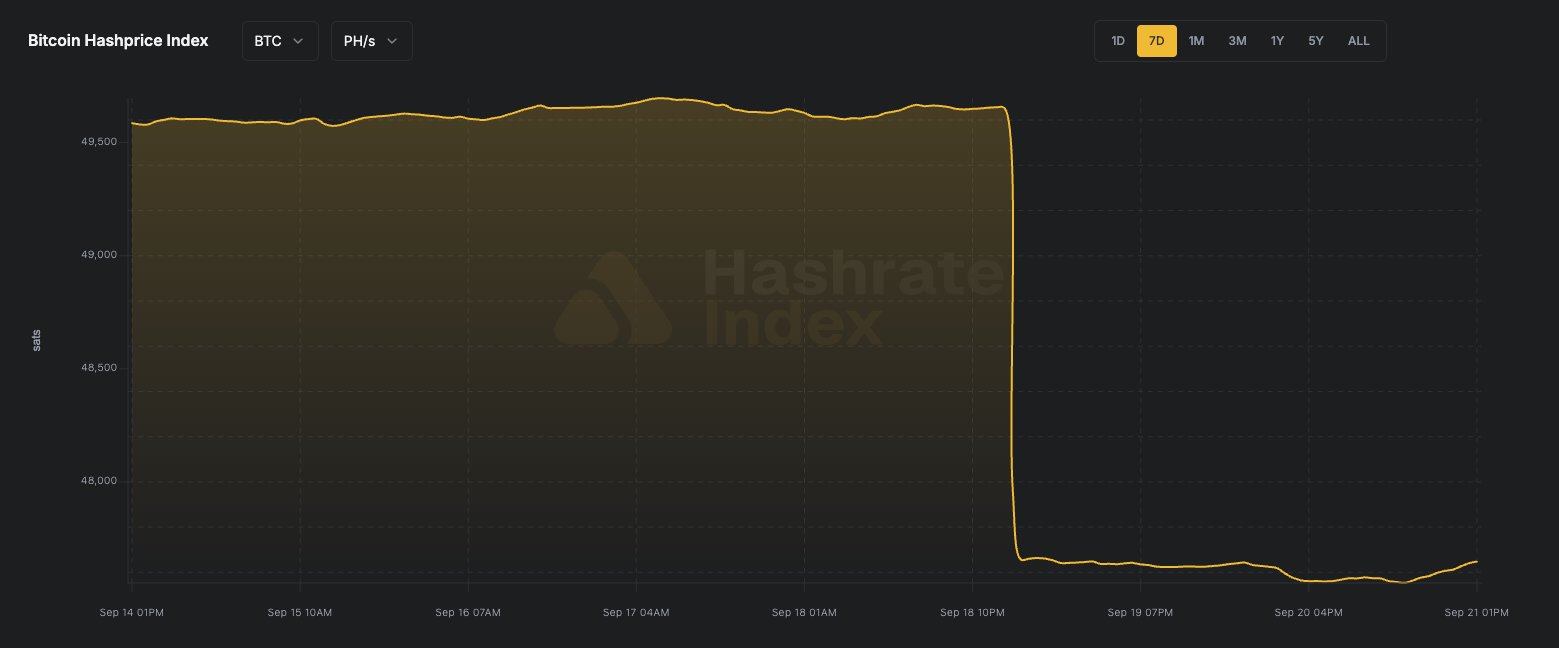
The 4.1% rise in USD hashprice is a critical metric for operators, as it directly correlates to the daily revenue potential per unit of computing power. However, when viewed through the lens of Bitcoin-denominated hashprice, the picture is more sober: it declined by 3.9% to 0.00047652 BTC per PH/s/day. This divergence between USD and BTC metrics underscores the volatility inherent in the industry; while miners are earning more in nominal fiat terms, they are technically receiving less Bitcoin per unit of hash power deployed, reflecting the competitive nature of network security.
Network Hashrate and Difficulty Adjustments
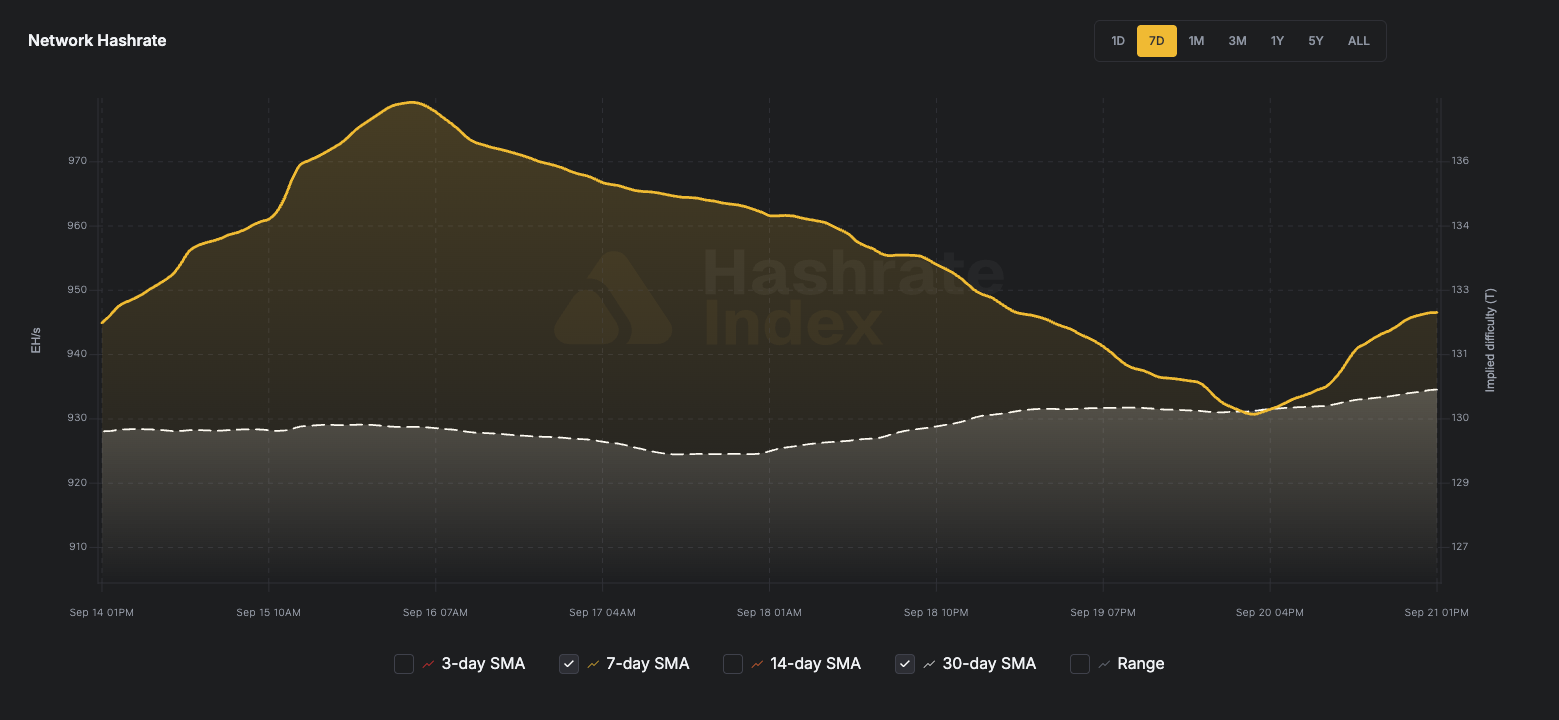
The Bitcoin network’s total hashrate, which serves as a proxy for the security and competition of the mining industry, experienced a minor decline. The seven-day simple moving average (SMA) for network hashrate moved from 949 EH/s to 946 EH/s, a reduction of 0.3%. This marginal dip occurs against the backdrop of a significant difficulty adjustment on September 19, 2026, which saw network difficulty rise by 4.16% to reach 132.76T.
The difficulty adjustment mechanism is designed to maintain a consistent block production cadence, targeting an average of 10 minutes per block. Currently, the network is averaging 10 minutes and 11 seconds, suggesting that the most recent adjustment has effectively stabilized production after a period of intense activity. Looking ahead, analysts and automated network trackers estimate an upcoming adjustment of -1.80% for October 3, 2026. While early-epoch estimates are subject to variance as short-term noise clears, a potential downward adjustment could provide a slight increase in profitability for miners if the current price levels hold.
Impact of Operational Efficiency
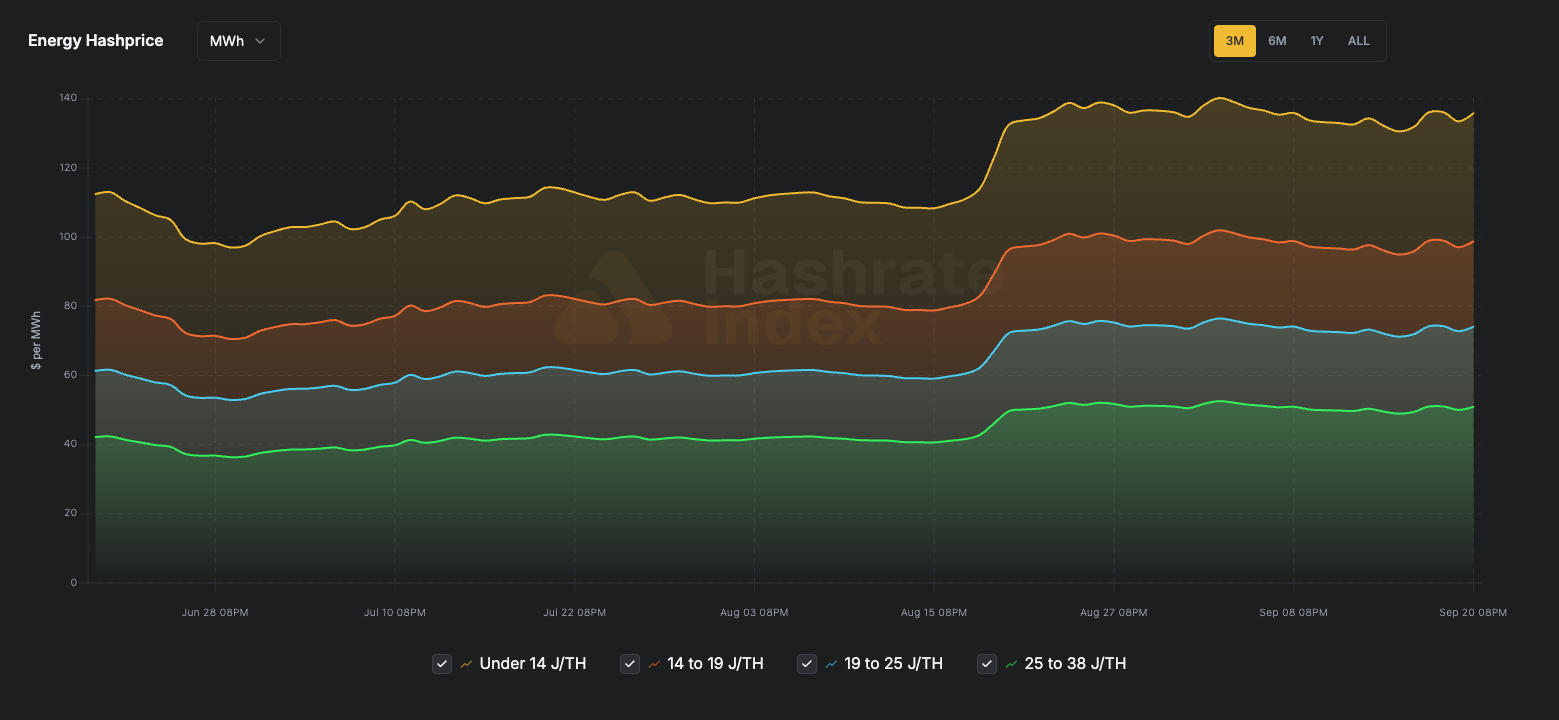
With hashprice hovering around the $40 per PH/s/day mark, the industry remains at a critical threshold where operational efficiency dictates survival. For many miners, particularly those utilizing older generation hardware, this revenue level sits at or near the breakeven point. This has forced firms to double down on fleet optimization. Technologies such as advanced custom firmware—which allows for the fine-tuning of voltage and clock speeds—have become essential tools for companies looking to squeeze extra hash power out of S19 and S21 series rigs.
The economic pressure to lower energy costs or improve output per watt-hour is driving a transition toward more efficient infrastructure. Operators who cannot achieve high levels of efficiency are increasingly finding themselves priced out, leading to a consolidation trend where more efficient, well-capitalized firms continue to acquire or inherit the market share of less efficient competitors.
Broader Market Sentiment and Mining Stocks
The equity markets reflected the optimistic sentiment surrounding Bitcoin’s price action, with almost all major publicly traded mining stocks posting double-digit gains over the last five days. Stocks like BTBT (up 23.7%), CIFR (up 20.8%), and ABTC (up 20.2%) outperformed the broader market, signaling that investors are once again pricing in a more favorable outlook for mining profitability.
This market enthusiasm is tempered by the reality of the "forward market," where the Luxor hashrate forward curve is currently pricing in an average hashprice of $38.96 (or 0.00045 BTC) over the next six months. This suggests that the market expects a period of relative stability, with traders and institutional participants hedging against the risk of further volatility in both Bitcoin price and network difficulty.
Implications for the Future
The current state of the industry reflects a delicate balance. On one hand, the recent 10.9% rise in Bitcoin’s spot price has provided a significant cushion for mining operations, allowing those with thin margins to maintain or resume operations. On the other hand, the 4.16% increase in network difficulty serves as a reminder that the network is self-correcting and highly competitive.
As we look toward the final quarter of 2026, the focus for the industry will remain on three key pillars: capital management, energy procurement, and hardware efficiency. The ability of miners to navigate these factors will be tested by the upcoming difficulty adjustment in early October and the potential for continued volatility in the broader digital asset market.
Industry analysts observe that the current consolidation phase is not necessarily indicative of a weakening network, but rather a maturation process. As the industry moves further away from the most recent halving event, the marginal miners are being replaced by more robust, energy-efficient operations. This transition strengthens the network’s long-term security by ensuring that the participating hashrate is supported by more sustainable and economically sound business models.
Contextualizing the Current Cycle
Historically, Bitcoin mining has operated in cycles of boom and bust, often dictated by the halving of block subsidies every four years. The 2026 cycle is proving to be particularly challenging, as the combination of high difficulty and a more mature regulatory and financial environment leaves little room for error. The current price level of $86,003 is a pivotal marker; if Bitcoin maintains this support, it will likely incentivize a new wave of hardware deployment, potentially pushing the hashrate back toward the 1,000 EH/s threshold.
However, should the price face downward pressure, the network’s self-regulating difficulty mechanism will once again become the primary mechanism for re-balancing the ecosystem. For now, the sentiment remains cautiously optimistic, with the industry benefiting from the dual tailwinds of price appreciation and technological advancements in mining hardware.
As the calendar turns toward October, all eyes will be on the next difficulty adjustment. If the estimated -1.80% reduction manifests, it will serve as a welcome relief for those operating at the margins, potentially extending the operational life of legacy hardware and providing a slight boost to the aggregate profitability of the global mining fleet. Whether this leads to a sustained period of growth or further consolidation remains to be seen, but the data from this week suggests that the industry is adapting effectively to the current challenges of the post-halving era.