On July 13, 2026, a coordinated international effort saw the United States, the European Union, and the United Kingdom announce a sweeping wave of sanctions targeting a sprawling network of nation-state hackers, cybercriminals, and their essential enablers. This synchronized action, representing one of the most significant cyber enforcement actions to date, underscores the critical importance of robust cross-border collaboration in the ongoing fight against ransomware and the broader landscape of cybercrime. The infrastructure and individuals targeted are collectively held responsible for inflicting billions of dollars in damages on businesses, critical infrastructure, and governmental entities worldwide.
At the forefront of this multifaceted operation is the European Union’s designation of Vitaly Nikolayevich Kovalev, widely known by his moniker "Stern." Kovalev is identified as the administrator of the notorious Trickbot criminal syndicate, a formidable organization that has been the genesis of some of the most destructive ransomware strains, including Conti. While Kovalev was previously designated by the U.S. Office of the Treasury’s Office of Foreign Assets Control (OFAC) and the U.K. Office of Financial Sanctions Implementation (OFSI) on February 9, 2023, the EU’s action marks the first time his alias "Stern" has been officially recognized as an identifier by a sanctioning body. Financial intelligence indicates that wallets associated with "Stern" have processed over $300 million in ransom payments, a figure that potentially positions him as the single most prolific ransomware operator ever identified.
"Stern": The Architect of Billions in Ransomware Extortion
The detailed designation by the EU reveals Vitaly Nikolayevich Kovalev, a Russian national, has operated under a variety of aliases, with "Stern" being his most prominent. According to EU intelligence, Kovalev holds a senior leadership position within the Trickbot Group, an entity responsible for developing and deploying devastating malware programs such as Ryuk and Conti ransomware, along with numerous associated offshoots. These programs have consistently ranked among the most destructive cyber threats in recent history. The Trickbot group itself is a sophisticated cybercriminal organization that has systematically conducted ransomware campaigns targeting essential services, including the healthcare and banking sectors, causing widespread disruption and financial loss.
While the reported $300 million in ransom payments funneled through wallets linked to "Stern" is staggering, it is crucial to understand that this figure represents his personal share of the illicit proceeds. The total financial gains accumulated by the Trickbot group over its operational history are substantially larger, a testament to the immense scale and profitability of their criminal enterprise.
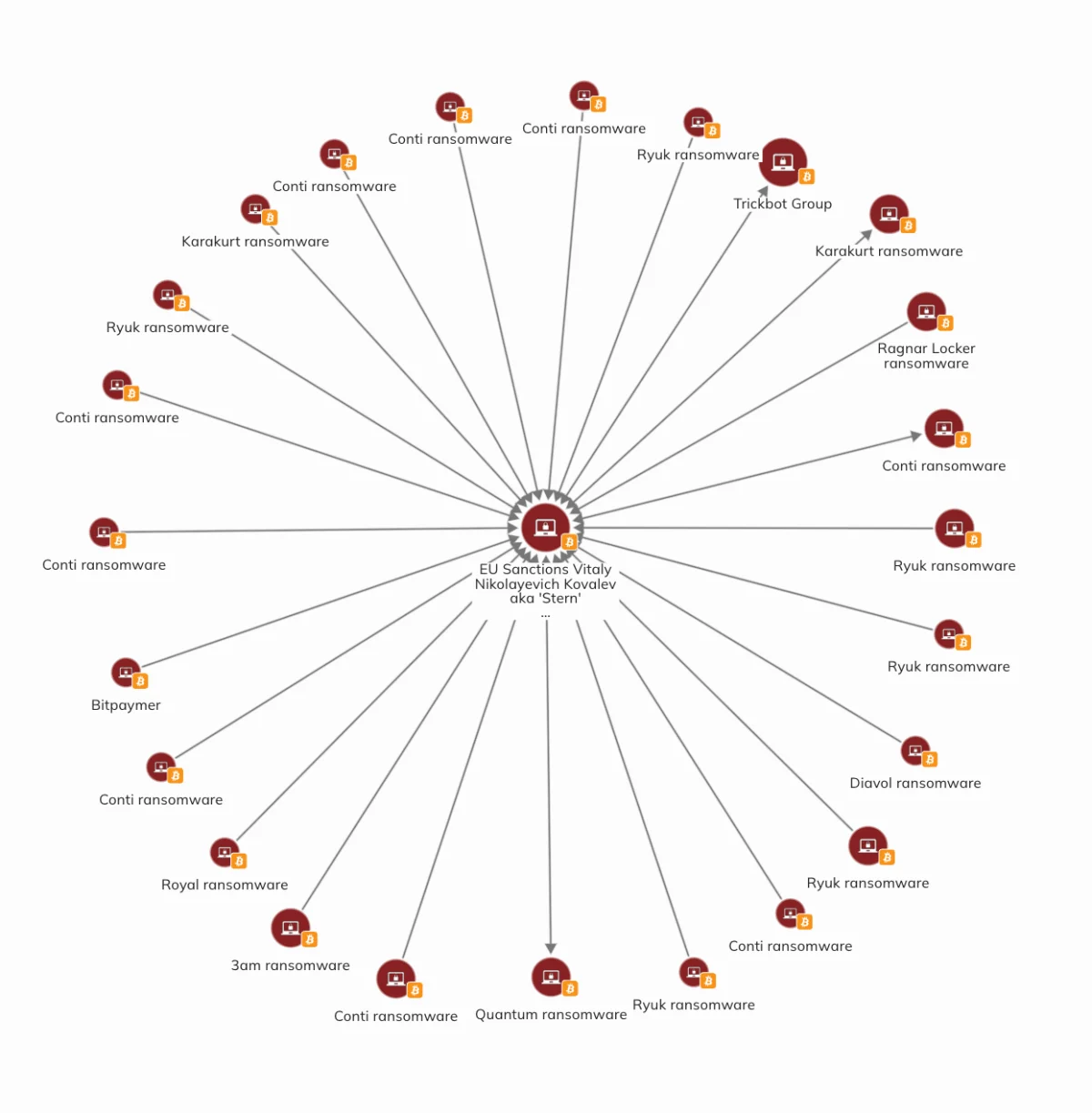
Data analyzed from blockchain forensics, visualized through tools like Chainalysis Reactor, illustrates the extensive transactional network associated with "Stern." The analysis reveals his involvement with a diverse array of ransomware strains, including Ryuk, Conti, Diavol, Karakurt, Royal, 3am, Quantum, and Bitpaymer. This broad engagement highlights "Stern’s" central role in orchestrating and profiting from multiple ransomware operations, demonstrating his deep integration within the cybercriminal ecosystem.
The designation of "Stern" follows a series of targeted actions by the U.K. and U.S. governments. In 2023, both nations designated seven and subsequently eleven members of the Trickbot organization, bringing the total number of sanctioned Trickbot operatives to nineteen. The flow of cryptocurrency payments within the Trickbot Group mirrors its internal hierarchy, underscoring "Stern’s" pivotal position. His influence extended beyond personal earnings; evidence suggests he was instrumental in distributing funds for infrastructure payments, operational services, and the general upkeep and maintenance of the group’s illicit activities. Furthermore, leaked internal documents, known as the Conti Leaks, reveal "Stern" functioned in a capacity akin to a "CEO," wielding significant authority over the syndicate’s budget, procurement processes, hiring decisions, and even the strategic planning of cyberattacks.

OFAC Targets Critical Ransomware Infrastructure Providers
In parallel to the designations targeting ransomware operators, the U.S. Department of the Treasury’s Office of Foreign Assets Control (OFAC) has taken aim at key infrastructure providers that facilitate these malicious activities. OFAC has designated First VPN Service (1VPNS), a virtual private network (VPN) provider whose principal clientele includes prominent ransomware actors. The sanctions extend to 1VPNS’s administrator, Dmytro Rashevskyi, and its cryptor provider, Yevgeniy Vladimirovich Silayev. OFAC has identified cryptocurrency wallet addresses linked to both 1VPNS and Rashevskyi across multiple blockchain networks, including Bitcoin, Ethereum, Litecoin, Zcash, Dash, TRON, Dogecoin, and Solana.
This action against 1VPNS is a direct follow-up to a significant law enforcement operation in May 2026, which saw the takedown of 1VPNS’s website and underlying infrastructure. This operation was carried out by European law enforcement authorities, with crucial support from the FBI’s Boston Field Office, demonstrating a coordinated international effort to dismantle the tools used by cybercriminals. The targeting of VPN and cryptor services highlights a strategic shift by authorities to disrupt the foundational elements that enable ransomware attacks, rather than solely focusing on the end-user operators.
EU Broadens Scope to Encompass the Wider Cybercriminal Ecosystem
The European Union’s designations have cast a wider net, encompassing a diverse array of nation-state cybercriminal actors and their crucial enablers. This expanded approach acknowledges that sophisticated cyberattacks are not the product of isolated individuals but rather intricate networks supported by a complex ecosystem of services.
Among the entities and individuals designated by the EU are:
- LummaC2: Identified as a Malware-as-a-Service (MaaS) platform, LummaC2 is utilized by cybercriminals to pilfer sensitive data, including browser credentials, cryptocurrency wallet information, and critical system data. Its availability as a service significantly lowers the barrier to entry for aspiring cybercriminals.
- Media Land LLC: This Russian entity is a designated "bullet-proof hosting" provider that has been instrumental in facilitating ransomware operations for major actors such as LockBit, EvilCorp, and BlackBasta since 2016. Its services are specifically designed to resist law enforcement takedowns, providing a secure haven for illicit cyber activities.
- Other Nation-State Cybercriminals and Enablers: The EU’s action also includes designations against other individuals and entities implicated in state-sponsored cyber operations and the provision of services that support such activities. These designations aim to disrupt the operational capabilities and financial flows of adversarial nation-state cyber actors.
A Strategic Shift: Impact on Cryptocurrency Compliance
The synchronized sanctions announced on July 13, 2026, signal a clear and strategic evolution in the global approach to combating malicious cyber activity. Authorities are increasingly prioritizing the disruption of the entire ecosystem that underpins cybercrime, moving beyond solely targeting the direct perpetrators. This expanded focus includes VPN providers, malware-as-a-service platforms, bullet-proof hosting services, cryptor developers, and a myriad of other infrastructure providers. These entities are recognized as essential components that enable a wide range of cyberattacks, including extortion, defacement, Distributed Denial of Service (DDoS) attacks, and sabotage. Consequently, they are increasingly becoming the focal points of law enforcement and sanctions authorities worldwide.
For organizations operating in the digital realm, particularly those involved with cryptocurrency transactions, this coordinated action has significant implications for compliance. Companies leveraging solutions like Chainalysis Reactor can proactively monitor and detect exposure to these newly designated cybercriminal networks. By incorporating the labeled cryptocurrency addresses associated with these sanctions into their compliance frameworks, organizations can enhance their ability to identify illicit financial flows, mitigate risks, and ensure adherence to evolving global compliance standards. This proactive approach is vital for maintaining the integrity of financial systems and preventing the illicit proceeds of cybercrime from being laundered.
The Imperative of International Coordination
The efficacy of sanctions against transnational cybercriminal organizations hinges on robust international cooperation. Cybercriminals, by their very nature, operate across multiple jurisdictions, exploiting legal loopholes and geographical boundaries to evade detection and prosecution. Coordinated sanctions, as demonstrated by this global effort, are instrumental in closing these gaps. By acting in concert, countries can simultaneously freeze assets and disrupt the financial and operational capabilities of these networks across diverse financial systems.

The timeline of designations, with prior actions against Trickbot members by the U.S. and U.K. paving the way for broader EU involvement, illustrates a growing momentum in this collaborative fight. The inclusion of infrastructure providers like 1VPNS and Media Land LLC signifies a maturing understanding of the cybercrime ecosystem, recognizing that dismantling these supporting services is as critical as apprehending the individual actors.
The implications of these sanctions extend beyond immediate financial disruption. They serve as a potent deterrent, signaling to both cybercriminals and those who facilitate their activities that the international community is united in its resolve to hold them accountable. This unified front is crucial in disrupting the profitability of ransomware and other cybercrimes, thereby diminishing their appeal and impact on global economies and critical infrastructure. As cyber threats continue to evolve, the importance of such synchronized, intelligence-driven international actions will only intensify.
Frequently Asked Questions
Who is "Stern"?
"Stern" is the alias for Vitaly Nikolayevich Kovalev, a Russian national identified as a senior figure within the Trickbot and Conti ransomware operations. He has been designated by multiple international bodies for his role in orchestrating ransomware attacks.
Which entities did OFAC designate?
OFAC designated First VPN Service (1VPNS), its administrator Dmytro Rashevskyi, and cryptor provider Yevgeniy Silayev. These designations are in response to their roles in enabling ransomware attacks.
What is LummaC2?
LummaC2 is a Malware-as-a-Service (MaaS) platform that cybercriminals utilize to steal sensitive data, including browser credentials, cryptocurrency wallet information, and system data.
What is Media Land LLC?
Media Land LLC is a Russian-based bullet-proof hosting provider that has been identified as a facilitator of ransomware operations, including those by LockBit, EvilCorp, and BlackBasta, by offering services designed to resist law enforcement intervention.
Why is international coordination crucial for combating ransomware?
Cybercriminals intentionally operate across multiple jurisdictions to evade law enforcement and prosecution. Coordinated international sanctions and law enforcement actions are essential to close these jurisdictional gaps, freeze assets simultaneously across different financial systems, and disrupt their global operations effectively.