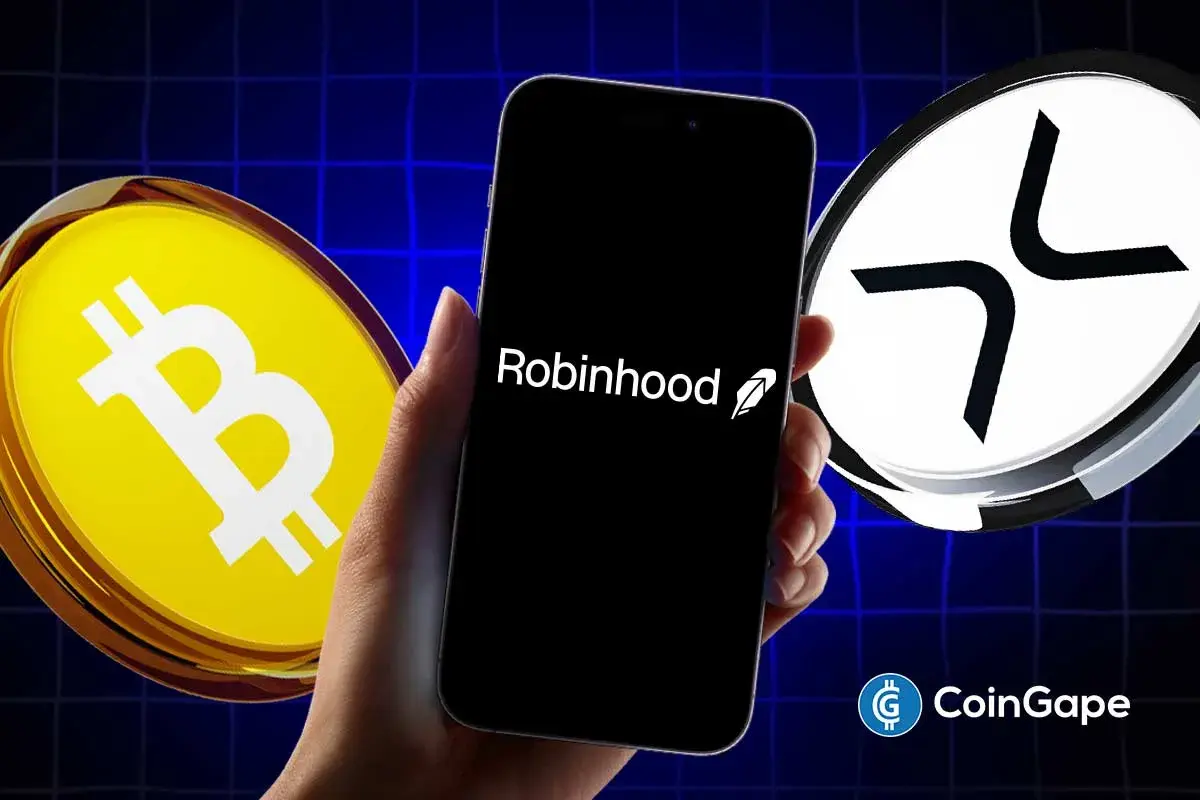
Farmers & Merchants Investments, a prominent bank holding company with approximately $4.1 billion in assets under management (AUM), has officially disclosed strategic holdings in digital asset investment products, including a spot XRP exchange-traded fund (ETF) and BlackRock’s Bitcoin ETF. According to the firm’s most recent 13F filing with the U.S. Securities and Exchange Commission (SEC), the institutional investment manager has also established a position in Robinhood Markets Inc. (HOOD), signaling a diversified approach to the burgeoning intersection of traditional finance (TradFi) and the digital asset economy. The disclosure serves as a significant marker of institutional confidence, particularly regarding XRP, which has navigated a complex regulatory landscape over the past several years.
The filing reveals that Farmers & Merchants Investments currently holds 2,374 shares of the Bitwise XRP ETF. While the market value of this specific position is approximately $30,000—a relatively modest allocation compared to the firm’s multi-billion dollar total AUM—the move is viewed by market analysts as a symbolic and strategic "toe-dip" into the XRP ecosystem. This disclosure places Farmers & Merchants among a growing cohort of institutional players seeking regulated exposure to XRP, the native token of the XRP Ledger (XRPL), following the resolution of key aspects of the SEC’s long-standing litigation against Ripple Labs.
The Rise of Institutional XRP Exposure
The inclusion of the Bitwise XRP ETF in a formal bank holding company’s portfolio highlights a shifting tide in how Wall Street perceives Ripple-affiliated assets. For years, institutional participation in XRP was hampered by legal uncertainty surrounding its classification as a security. However, following a landmark court ruling in 2023 and subsequent progress toward a definitive regulatory framework, financial institutions have begun to integrate XRP-based products into their offerings.
Farmers & Merchants is not the only major entity moving in this direction. Recent reports indicate that Bank of America (BofA), one of the largest financial institutions in the world, has disclosed holdings of 13,000 shares in the Volatility Shares XRP ETF. The entrance of these traditional banking entities suggests that XRP is increasingly viewed as a legitimate institutional asset class, particularly as Ripple continues to forge partnerships with global financial giants and as the XRPL gains traction for real-world asset (RWA) tokenization.
The demand for spot XRP ETFs has been reflected in recent market data. According to SoSoValue, spot XRP ETFs recorded net inflows of $2.49 million on a single Monday recently, contributing to a cumulative inflow total of $1.49 billion since their inception. The total assets under management for these products now exceed $1.02 billion, demonstrating a consistent, albeit measured, appetite for XRP among accredited and institutional investors.
Strategic Allocations in Bitcoin and Robinhood
Beyond its foray into XRP, Farmers & Merchants Investments has also reinforced its commitment to the broader cryptocurrency market through positions in the BlackRock iShares Bitcoin Trust (IBIT). The filing details a holding of 261 shares of IBIT. As the world’s largest asset manager, BlackRock has been a primary catalyst for institutional Bitcoin adoption, with IBIT frequently leading the market in daily inflows.
On the same day that XRP ETFs saw gains, spot Bitcoin ETFs recorded a massive $226.8 million in net inflows, marking the fifth consecutive day of positive momentum for the sector. BlackRock’s IBIT led the pack with $116.5 million in fresh capital. This institutional surge helped propel the price of Bitcoin (BTC) past the $66,300 threshold, buoyed by a general "risk-on" sentiment among professional money managers.
In addition to direct crypto-linked ETFs, Farmers & Merchants disclosed a holding of 475 shares in Robinhood Markets. Robinhood has transitioned from a retail-focused trading app into a comprehensive financial services platform that heavily integrates cryptocurrency trading and custody. This allocation aligns with a broader Wall Street trend; several top-tier analysts have recently issued "buy" recommendations for HOOD stock.
Analyzing the Institutional Chronology
The path to these disclosures can be traced back to the pivotal approval of spot Bitcoin ETFs in January 2024. This event broke the regulatory dam, allowing traditional fiduciaries to allocate capital to digital assets without the complexities of managing private keys or navigating unregulated offshore exchanges.
- January 2024: The SEC approves the first batch of spot Bitcoin ETFs, including BlackRock’s IBIT. This provides the legal template for subsequent crypto-based ETFs.
- Mid-2024: Institutional interest shifts toward secondary assets. Following the launch of Ethereum ETFs, firms like Bitwise and Canary Capital began filing for spot XRP ETFs.
- Q3-Q4 2024: 13F filings begin to reflect the first wave of diversified crypto allocations. Bank holding companies, which are traditionally conservative, start reporting "pilot" positions in XRP and Bitcoin ETFs to satisfy client demand and hedge against inflation.
- Current Period: The "Normalization Phase" where crypto assets are treated similarly to gold or commodities within a standard 60/40 or diversified portfolio.
The Robinhood Catalyst and Market Sentiment
The decision to hold Robinhood stock is particularly noteworthy given the company’s recent performance and strategic pivots. Analysts at Bernstein recently made headlines by raising their price target for HOOD stock to $160, citing several catalysts including the launch of the Robinhood Chain, the platform’s expansion into prediction markets, and its increasing market share in the crypto-to-fiat gateway sector.
On Tuesday, HOOD stock surged 2.88% in premarket trading to reach $102.14. This rally was supported by a consensus of bullish sentiment from firms including Barclays, Morgan Stanley, and Goldman Sachs. For an investment manager like Farmers & Merchants, holding HOOD provides indirect exposure to the growth of the entire retail trading sector, particularly as retail participation in crypto markets historically increases following institutional entry.
Market Implications and the Road Ahead
The disclosure by Farmers & Merchants Investments, while involving relatively small dollar amounts in the context of their $4.1 billion AUM, carries significant weight regarding the "normalization" of digital assets. When a bank holding company includes these assets in an SEC filing, it signals to other fiduciaries that the due diligence process for these assets has been completed and that the risk-reward profile is now acceptable for institutional clients.
There are several implications for the broader market:
- Liquidity and Stability: As more bank holding companies and wealth managers allocate to XRP and Bitcoin ETFs, the liquidity of the underlying assets improves. This typically leads to reduced volatility over the long term, making the assets even more attractive to conservative investors.
- Regulatory Validation: The continued acceptance of 13F filings containing XRP ETFs suggests that the SEC is moving toward a more settled relationship with the asset, despite ongoing legal nuances.
- Tokenization Potential: Institutional interest in XRP is often tied to the utility of the XRP Ledger. As banks explore the tokenization of bonds, real estate, and other traditional assets, having exposure to the native token of the primary ledger used for these activities becomes a strategic necessity.
Conclusion: A New Era of Fiduciary Duty
The financial landscape is witnessing a convergence where the barriers between "crypto" and "finance" are rapidly dissolving. Farmers & Merchants Investments’ disclosure of Bitwise XRP ETF, BlackRock Bitcoin ETF, and Robinhood holdings reflects a modern approach to portfolio construction. It acknowledges that digital assets are no longer speculative outliers but are instead integral components of a 21st-century investment strategy.
As more 13F filings are made public in the coming quarters, the industry expects to see a "snowball effect." The precedent set by firms like Farmers & Merchants and Bank of America provides the necessary "social proof" for smaller regional banks and investment advisors to follow suit. While the initial positions may be small, the infrastructure being built today—through regulated ETFs and transparent SEC disclosures—lays the groundwork for a massive migration of institutional capital into the digital asset space in the years to come.
For retail investors, these filings serve as a roadmap. The "smart money" is no longer ignoring XRP or Bitcoin; instead, it is quietly building positions through the safety and oversight of the U.S. ETF market. This transition marks the end of the "early adopter" phase and the beginning of the "institutional integration" era for the cryptocurrency market.