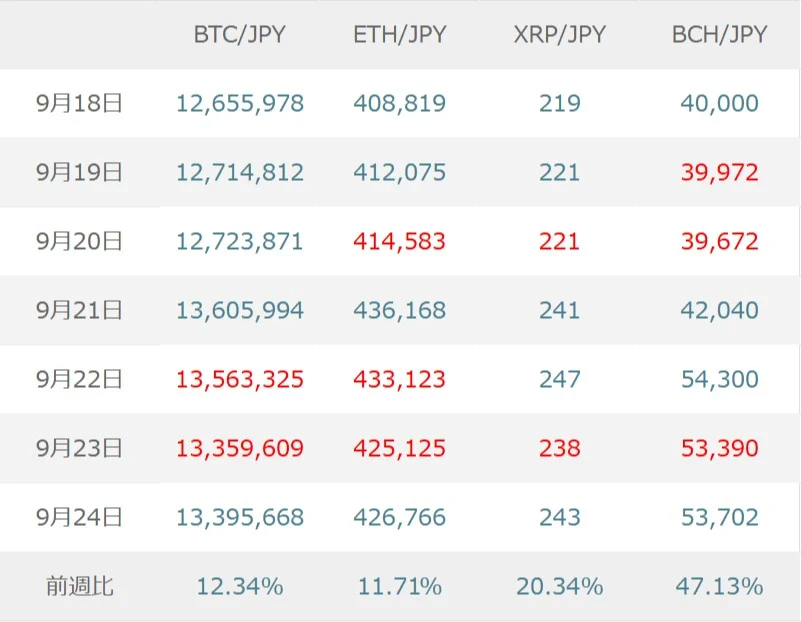
Bitcoin has officially vaulted past the crucial $87,000 threshold, marking a significant milestone for the world’s leading cryptocurrency amid a confluence of robust institutional inflows, shifting macroeconomic indicators, and a persistent artificial intelligence boom. The recent market momentum, which has seen spot exchange-traded funds (ETFs) absorb record amounts of capital, underscores a broader institutional maturation within the digital asset ecosystem. This comprehensive market overview explores the dynamic interplay between regulatory shifts, corporate treasury strategies, and technological advancements driving Bitcoin and the broader digital asset markets to new heights.
Market Overview and Recent Price Action
During the recent trading cycle, Bitcoin (BTC) demonstrated remarkable resilience, breaking through historical resistance levels to trade comfortably above $87,000, translating to approximately 13.74 million yen. Analysts and market observers attribute this upward trajectory to a combination of sustained institutional demand through spot ETFs and aggressive corporate treasury allocations.
The broader cryptocurrency market has mirrored Bitcoin’s bullish momentum, with altcoins experiencing varying degrees of capital rotation. Market projections and derivative indicators suggest that near-term support levels for Bitcoin remain robust around the $82,000 mark, while psychological resistance and upside targets are being aggressively tested toward $90,000.
The convergence of traditional financial markets and digital assets has never been more pronounced. Major stock indices, particularly the tech-heavy NASDAQ, have hit record highs driven by the relentless expansion of generative artificial intelligence technologies. Corporate giants, including Meta Platforms with its advanced AI assistant initiatives and MicroStrategy with its aggressive Bitcoin acquisition strategy, have created a symbiotic relationship between high-growth technology equities and digital store-of-value assets.
Chronology of Market Movements: September 18 to October 1
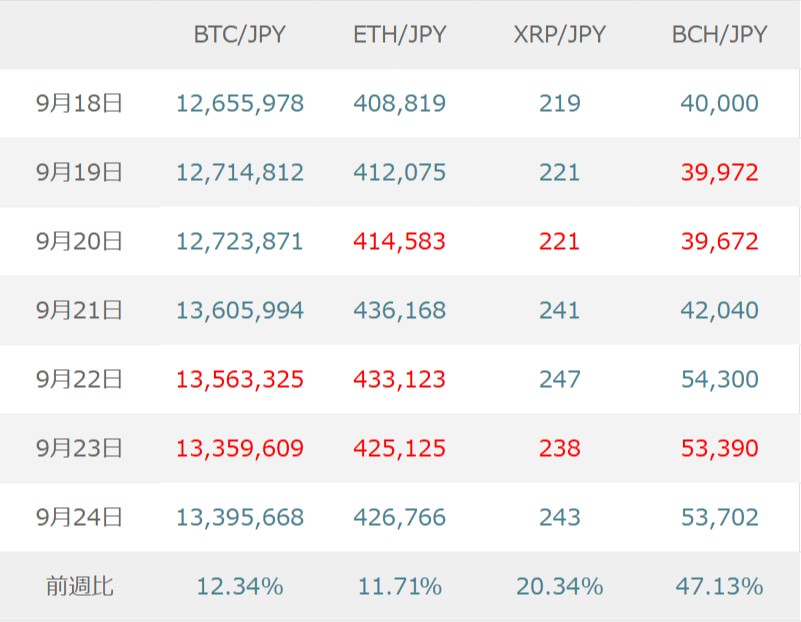
The weeks leading up to the end of September and the beginning of October were characterized by high volatility and pivotal macroeconomic catalysts.
Initial Phase (September 18 – September 24): The market entered this period following aggressive Federal Open Market Committee (FOMC) signaling regarding interest rate policy. The Federal Reserve’s pivot toward monetary easing provided immediate relief to risk-on assets, propelling Bitcoin past initial resistance. Concurrently, regulatory discussions surrounding the Clarity for Payment Stablecoins Act—a joint legislative effort involving the Securities and Exchange Commission (SEC) and the Commodity Futures Trading Commission (CFTC)—provided a clearer framework for market participants, pushing Bitcoin toward the $80,000 threshold.
Corporate developments further fueled the rally. Meta’s unveiling of advanced AI infrastructure and robust NASDAQ trading volumes reinforced investor confidence. MicroStrategy continued its relentless accumulation of Bitcoin, setting a high watermark for corporate balance sheet integration of cryptocurrencies. Despite minor macroeconomic jitters and localized profit-taking, the underlying market structure remained remarkably firm.
Secondary Phase (September 25 – October 1): As Bitcoin continued to press against historic highs, macroeconomic indicators provided further validation. Personal Consumption Expenditures (PCE) data—the Federal Reserve’s preferred inflation gauge—showed inflation cooling toward target levels, reinforcing expectations of continued monetary easing. This macroeconomic tailwind benefited both technology equities and digital assets.
During this window, regulatory bodies continued to refine their oversight frameworks. The SEC and CFTC advanced discussions regarding decentralized finance (DeFi) oversight and stablecoin regulation, providing institutional investors with the legal clarity necessary to deploy capital at scale. Consequently, spot Bitcoin ETFs saw net positive inflows, reinforcing the asset class’s institutional permanence.
Supporting Data and Market Metrics
To fully understand the current market dynamics, it is essential to examine the underlying quantitative data supporting the recent rally:
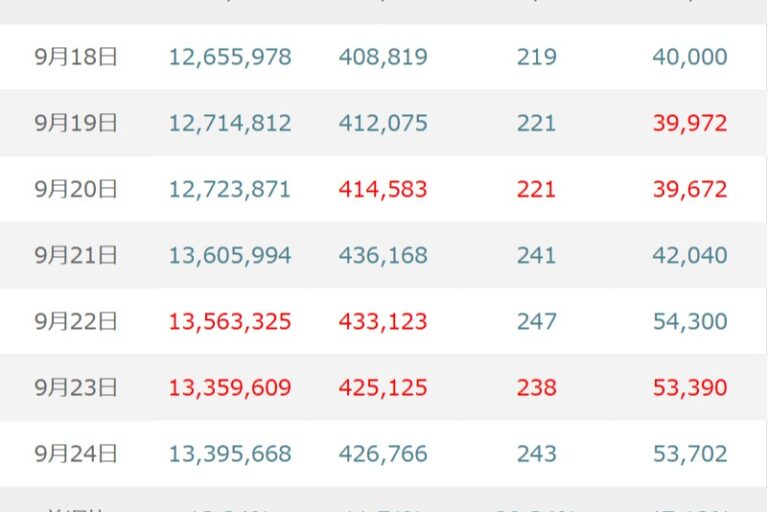
- Bitcoin Price Performance: Bitcoin successfully breached $87,000 (approx. 13.74 million yen), with intra-week highs testing $90,000 (approx. 14.22 million yen) and strong support established at $82,000 (approx. 12.95 million yen).
- Spot ETF Inflows: Spot Bitcoin ETFs recorded consecutive weeks of net positive inflows, led by institutional allocators and corporate treasury adopters like MicroStrategy.
- Macroeconomic Indicators: The Federal Reserve’s benchmark interest rate reductions, combined with cooling PCE inflation data, created an optimal liquidity environment for high-beta assets.
- Equity Market Correlation: High-growth technology stocks, particularly AI-focused enterprises and upcoming IPO pipelines, correlated positively with digital asset inflows, signaling a unified risk-on sentiment among global investors.
Regulatory Evolution and Institutional Responses
The maturation of the digital asset market is inextricably linked to regulatory developments in major global jurisdictions. In the United States, policymakers are actively working to establish comprehensive frameworks that balance consumer protection with financial innovation.
The collaborative approach between the SEC and the CFTC aims to eliminate jurisdictional ambiguity surrounding digital tokens, security-tokens, and decentralized applications (DeFi). The advancement of the Clarity for Payment Stablecoins Act has been particularly well-received by traditional financial institutions, which view stablecoins as a critical bridge between fiat monetary systems and blockchain networks.
Furthermore, institutional custody solutions have evolved significantly. Major banking institutions and prime brokerages have rolled out enterprise-grade custody services, mitigating counterparty risk and satisfying the stringent compliance requirements of pension funds, endowments, and corporate treasuries. This institutional-grade infrastructure has transformed Bitcoin from a speculative retail asset into a recognized macro-asset class.
Broader Economic Implications and Future Outlook
The intersection of artificial intelligence and digital assets represents one of the most compelling investment theses of the decade. As AI infrastructure demands unprecedented amounts of computational power and energy, decentralized networks and blockchain-based settlement layers are increasingly being explored to optimize resource allocation and micropayments.
Looking ahead, market analysts maintain a cautiously optimistic outlook. While short-term volatility remains an inherent characteristic of cryptocurrency markets, the structural shift toward institutional adoption, regulatory clarity, and macroeconomic easing suggests that the current bull market cycle has substantial runway remaining. Investors and market participants will continue to monitor central bank policies, corporate treasury announcements, and technological breakthroughs in AI and blockchain integration as the primary drivers of future price discovery.