The U.S. Department of the Treasury’s Office of Foreign Assets Control (OFAC) has significantly escalated its efforts to counter illicit financial activities by Iran, announcing on Tuesday the designation of four additional cryptocurrency addresses linked to the Central Bank of Iran. This move, detailed in an update to OFAC’s existing sanctions against the Iranian financial institution, aims to choke off channels through which the regime allegedly circumvents international sanctions, finances its operations, and supports regional proxies, including the U.S.-designated terror group Hezbollah. On-chain data analysis immediately following the announcement revealed that these newly identified wallets had collectively received approximately $165 million in stablecoins. Crucially, their issuer, Tether, acting on the designation, promptly froze balances totaling $131 million, effectively rendering a substantial portion of these funds inaccessible to the Iranian regime.
This latest action by OFAC represents a strategic expansion of the financial blockade targeting the Central Bank of Iran. The U.S. Treasury has long contended that Iran has increasingly leveraged cryptocurrency to circumvent the debilitating effects of international sanctions, a practice that enables the regime to fund its domestic and international activities. The funds are allegedly channeled to support a range of operations, including the financing of its own military and security apparatus, as well as providing financial lifelines to affiliated groups in the region. The designation of these specific cryptocurrency addresses underscores OFAC’s commitment to tracing and disrupting these illicit financial flows within the digital asset ecosystem.
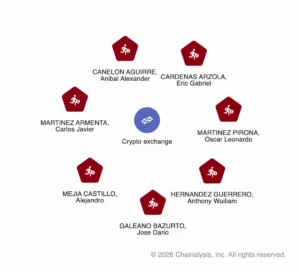
The scrutiny of the Central Bank of Iran’s cryptocurrency operations has intensified considerably in recent months, particularly in the wake of escalating regional conflicts. This heightened attention has prompted more aggressive enforcement actions. Just last month, OFAC took the significant step of sanctioning major Iranian cryptocurrency exchanges. These platforms were identified as key conduits through which the Central Bank facilitated the movement of funds into and out of stablecoins, highlighting a sophisticated, albeit illicit, financial network. The consecutive actions demonstrate a multi-pronged strategy by the U.S. government to dismantle Iran’s ability to utilize digital assets for sanctioned purposes.
Further compounding the challenges for Iran’s financial maneuvering, reports emerged during the height of regional tensions of proposals by Iranian actors to implement a cryptocurrency-based toll system for vessels transiting the Strait of Hormuz. Chainalysis, a blockchain analysis firm that has been instrumental in identifying these illicit flows, assessed that shipping companies complying with such a toll would face severe sanctions exposure from the United States and its allies. This proposal, if implemented, would have represented another attempt by Iran to leverage digital currencies for economic gain and exert influence over critical global trade routes.
Iran’s Strategic Reliance on Stablecoins
Chainalysis’s extensive research into the cryptocurrency habits of the Iranian regime reveals a pronounced preference for stablecoins. This strategic choice is understandable from the perspective of illicit actors seeking to operate within the digital asset space. Stablecoins are designed to maintain a stable value, typically pegged to a fiat currency like the U.S. dollar, making them highly liquid and widely accepted globally. These characteristics are invaluable for any financial actor, legitimate or illicit, as they facilitate seamless transactions and reduce the volatility risks inherent in other cryptocurrencies.
However, this very stability and the centralized nature of stablecoin issuance also present a significant vulnerability for illicit actors. Unlike decentralized cryptocurrencies, stablecoin issuers, such as Tether, have the technical capability and often the legal obligation to freeze assets held in specific wallet addresses at the direction of law enforcement and regulatory agencies. This feature has become a powerful tool for OFAC in its pursuit of sanctioned entities.
Since OFAC’s initial designations and subsequent actions, Tether has demonstrated its willingness to cooperate with U.S. authorities. The company has now frozen nearly $475 million from wallet addresses previously identified by OFAC as being controlled by the Central Bank of Iran. This cumulative freezing of funds represents a substantial financial impediment to the Iranian regime, effectively rendering a significant portion of its digital asset holdings inaccessible. The mechanism of freezing a stablecoin balance on a specific address prevents the holder from initiating any outgoing transactions or spending those funds, effectively immobilizing them.
On-chain analysis, conducted using advanced tools like Chainalysis Reactor, has provided granular insights into the flow of funds into these newly designated wallets. The data indicates that the addresses added to OFAC’s sanctions list received their funds originating upstream from an institutional liquidity provider and an Asia-based payment processor. This tracing of the funds’ origin is crucial for OFAC as it allows for the identification of potential intermediaries and further avenues for sanctions enforcement. Understanding these upstream flows is critical to dismantling the entire network of financial support that the Central Bank of Iran attempts to build through digital assets.
Chronology of OFAC Actions Against Iran’s Crypto Holdings
The recent designation of four new cryptocurrency addresses by OFAC is not an isolated event but rather a continuation of a sustained campaign to curb Iran’s use of digital assets for illicit purposes. Tracing the timeline of these actions provides a clearer picture of the escalating U.S. government response:

- September 2025: OFAC first signaled its intent to target Iran’s "shadow crypto banking network" by sanctioning entities and individuals involved in facilitating illicit digital asset transactions for Iran. This marked an early recognition of the growing trend and a commitment to address it.
- June 2026: In a significant escalation, OFAC sanctioned major Iranian cryptocurrency exchanges. This action directly targeted the infrastructure that the Central Bank of Iran and other sanctioned entities were reportedly using to convert fiat currency into stablecoins and vice versa, aiming to disrupt the on-ramps and off-ramps of this illicit financial system.
- April 2026: Further refining its strategy, OFAC updated its designation of the Central Bank of Iran to specifically include cryptocurrency addresses. This indicated a move towards directly targeting the digital wallets themselves, rather than solely focusing on the exchanges facilitating the transactions.
- July 2026 (Present Action): The most recent action, announced on Tuesday, significantly broadens the scope of the Central Bank of Iran’s designation by adding four new cryptocurrency addresses. This latest move, coupled with Tether’s immediate freezing of over $131 million, underscores the ongoing and intensifying nature of OFAC’s efforts to seize and block illicitly obtained digital assets.
This chronological progression demonstrates a strategic evolution in OFAC’s approach, moving from broader sanctions against facilitators to more direct and targeted actions against the financial instruments and infrastructure themselves.
Supporting Data and Analysis
The figures released by OFAC and corroborated by on-chain analysis paint a stark picture of the scale of Iran’s alleged cryptocurrency operations. The $165 million in stablecoins received by the four newly designated wallets represent a substantial sum, indicative of the volume of transactions being processed. The immediate freezing of $131 million by Tether is a testament to the effectiveness of regulatory pressure on stablecoin issuers and the inherent traceability of blockchain transactions.
Chainalysis’s own research has provided crucial insights into the types of stablecoins used and their velocity. While the specific stablecoins involved in this latest designation have not been explicitly detailed, OFAC’s previous actions and broader investigations have often highlighted the use of USDT (Tether) and other USD-pegged stablecoins due to their liquidity and widespread acceptance.
The tracing of funds originating from an institutional liquidity provider and an Asia-based payment processor is particularly noteworthy. This suggests a degree of sophistication in Iran’s efforts to obscure the ultimate beneficial ownership of these funds. Institutional liquidity providers are often sophisticated financial entities that may facilitate large-volume trades, while payment processors can act as intermediaries in various cross-border transactions. Identifying these entities, even if they are not directly complicit, is a crucial step in understanding the broader network of financial actors involved in illicit transactions.
The implications of these actions extend beyond the immediate financial impact on Iran. For the cryptocurrency industry, it reinforces the ongoing tension between decentralization and regulatory oversight. While blockchain technology offers transparency, the ability of issuers like Tether to freeze assets highlights the centralized points of control that regulators can leverage. This also puts pressure on exchanges and other service providers to enhance their know-your-customer (KYC) and anti-money laundering (AML) procedures to avoid inadvertently facilitating sanctioned activities.
Official Responses and Broader Impact
OFAC’s actions are driven by a clear mandate to protect U.S. national security and foreign policy interests by disrupting illicit financial flows. The Treasury Department has consistently stated its commitment to preventing state and non-state actors from using the global financial system, including emerging digital asset markets, to fund terrorism, proliferation, or other destabilizing activities.
While specific statements from the Central Bank of Iran or other Iranian government entities regarding these latest designations are not immediately available in the provided text, historically, Iran has often denied allegations of using cryptocurrency to circumvent sanctions, framing such accusations as politically motivated.
The broader impact of these designations is multi-faceted. For the Iranian regime, it represents a continued tightening of the financial noose, making it more difficult and expensive to access funds necessary for its operations and support networks. This can lead to increased pressure on the regime’s domestic economy and its ability to project influence abroad.
For the international community, these actions underscore the growing importance of robust regulatory frameworks for digital assets. The ability of OFAC to effectively track and freeze these funds demonstrates the power of combining blockchain analytics with traditional financial enforcement tools. It also highlights the ongoing challenge of combating illicit finance in an increasingly interconnected and technologically advanced world. The successful freezing of these funds by Tether serves as a strong deterrent to other illicit actors and a clear signal to the broader cryptocurrency ecosystem about the consequences of facilitating sanctioned activities. The U.S. Treasury’s persistent efforts suggest that this will remain a key area of focus in its foreign policy and national security strategy.