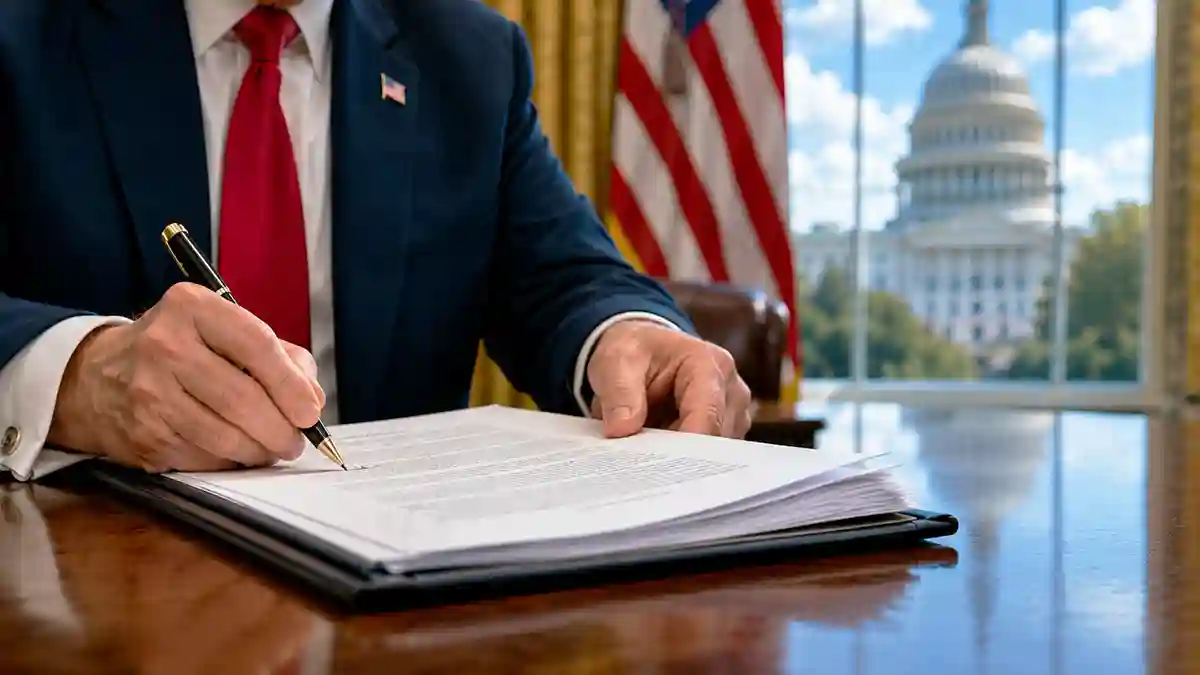
In a significant breakthrough for the American digital asset landscape, President Donald Trump has officially agreed to the inclusion of stringent ethics provisions within the CLARITY Act, a comprehensive piece of legislation designed to establish a definitive regulatory framework for the cryptocurrency market. The agreement, reached on July 20, 2026, marks the removal of what many observers considered the final major hurdle preventing the bill from reaching the Senate floor for a decisive vote. According to reports from high-level sources and corroborated by industry-focused media outlets such as The Block, this compromise follows months of intense negotiations between the White House, Congressional leaders, and federal regulatory bodies.
The CLARITY Act, an acronym for the "Clarity for Digital Assets Act," represents the most ambitious attempt to date by the United States government to categorize digital assets, define the jurisdictional boundaries between the Securities and Exchange Commission (SEC) and the Commodity Futures Trading Commission (CFTC), and provide consumer protections for millions of American investors. While much of the bill’s technical language had been finalized in early 2026, the specific ethics requirements regarding the holding and trading of digital assets by high-ranking government officials had remained a contentious sticking point, leading to a legislative stalemate that threatened to derail the initiative.
The Ethics Breakthrough: Resolving the Conflict of Interest
The core of the recent agreement centers on a series of ethics provisions that would impose strict limitations on the ability of the President, Vice President, and members of Congress to hold or profit from specific digital assets while in office. These measures were heavily championed by Senate Democrats and a subset of transparency-focused Republicans who argued that the volatile and often opaque nature of the cryptocurrency market created unprecedented opportunities for insider trading and conflicts of interest.
The tension surrounding these provisions was amplified by President Trump’s own public and financial associations with the digital asset sector. Throughout 2025 and early 2026, the President’s family became increasingly involved with "World Liberty Financial," a decentralized finance (DeFi) initiative. Furthermore, a financial disclosure report released on June 30, 2026, revealed that the President had earned substantial income from various digital asset ventures, including licensing deals for non-fungible tokens (NFTs) and holdings in specific "meme coins" that bore his likeness.
Critics argued that without robust ethics mandates, the President could theoretically influence regulatory policy or market sentiment to benefit his personal portfolio or his family’s business interests. The newly accepted provisions are expected to require high-ranking officials to either divest from specific digital assets that could be impacted by federal policy or place such assets into qualified blind trusts. Additionally, the bill is rumored to include enhanced disclosure requirements, mandating that any transaction involving digital assets by a covered official be reported within a 48-hour window.
A Timeline of the Negotiations
The path to the July 20 agreement was marked by several high-stakes meetings and shifting political alliances. The momentum for the CLARITY Act began in earnest on April 9, 2026, when Treasury Secretary Janet Yellen, alongside the chairs of the SEC and CFTC, issued a rare joint statement urging Congress to pass a unified regulatory framework to mitigate systemic risks to the U.S. financial system.
By mid-July, the pressure reached a boiling point. On July 16, 2026, a pivotal meeting took place at the White House involving President Trump, Senator Cynthia Lummis—a long-time advocate for digital asset integration—and White House crypto advisor Patrick Witt. While the meeting was described as "productive," reports from Politico suggested that several Senate Democrats remained unsatisfied with the proposed ethics language, leading to a temporary delay in the bill’s progression.
The breakthrough finally arrived on July 20, following a series of closed-door sessions where the White House legal team and ethics experts from the Office of Government Ethics (OGE) refined the text of the provisions. Industry insiders noted that the President’s willingness to concede on these points was likely driven by a desire to secure a major legislative victory before the upcoming mid-term elections and to solidify the United States’ position as a global hub for financial innovation.
Legislative Mechanics and the Path to the Senate Floor
With the ethics hurdle cleared, the focus now shifts to the legislative calendar. Congressional aides indicate that the full, revised text of the CLARITY Act will be released to the public within the coming days. Following this release, the bill is expected to undergo a final review by the Senate Banking Committee before moving to the full Senate for a vote.
Legislative analysts suggest that the bill must be passed by the first week of August to avoid being pushed into the autumn session, which is often consumed by budget negotiations. To overcome a potential filibuster, the bill will require a 60-vote supermajority in the Senate. This will necessitate significant bipartisan support, a task that has become easier now that the primary concerns of the Democratic caucus regarding government ethics have been addressed.
Journalist Brendan Pedersen of Punchbowl News reported that while the agreement is a "monumental step," the final hurdle will be ensuring that the specific wording of the ethics text satisfies the "Anti-Crypto Army" led by Senator Elizabeth Warren. Warren and her allies have consistently called for even more aggressive oversight, including strict Anti-Money Laundering (AML) and Know Your Customer (KYC) requirements that some industry advocates fear could stifle innovation.
The Broader Impact on the Digital Asset Market
The potential passage of the CLARITY Act is viewed by the financial industry as a watershed moment. For years, the U.S. crypto market has operated in a state of "regulation by enforcement," with the SEC and CFTC often clashing over which assets constitute securities versus commodities. This lack of clarity has led several major firms to move their operations to more regulatorily friendly jurisdictions like the European Union, which implemented its Markets in Crypto-Assets (MiCA) regulation in 2024, or the United Arab Emirates.
The CLARITY Act aims to rectify this by:
- Defining Jurisdictions: Clearly delineating which digital assets fall under the SEC’s purview (securities) and which fall under the CFTC’s (commodities).
- Stablecoin Regulation: Establishing a federal framework for stablecoin issuers, requiring them to maintain 1:1 reserves in high-quality liquid assets.
- Consumer Protection: Mandating that exchanges and custodians implement robust security protocols and separate customer funds from corporate assets to prevent a repeat of the 2022 FTX collapse.
- Institutional Integration: Providing the legal certainty required for large-scale institutional investors, such as pension funds and insurance companies, to allocate capital to digital assets.
Market reaction to the news of the agreement has been cautiously optimistic. Bitcoin and Ethereum saw modest gains following the reports, as traders anticipated that a clear regulatory environment would reduce the "risk premium" associated with U.S. regulatory uncertainty.
Strategic Implications for U.S. Global Leadership
Beyond the domestic market, the CLARITY Act is a strategic move in the global "financial arms race." As China continues to develop its Digital Yuan (e-CNY) and other nations explore Central Bank Digital Currencies (CBDCs), the U.S. has faced pressure to modernize its financial infrastructure without compromising the dominance of the U.S. dollar.
By fostering a regulated but innovative private-sector digital asset market, the U.S. hopes to create a "Digital Dollar" ecosystem that leverages the efficiency of blockchain technology while maintaining the stability and trust of the American financial system. The inclusion of the ethics provisions is a critical component of this trust-building exercise, signaling to the international community that the U.S. regulatory framework is built on a foundation of transparency and accountability.
Conclusion and Outlook
As the CLARITY Act moves toward a likely vote in early August, the agreement by President Trump to accept ethics restrictions marks a rare moment of compromise in an otherwise polarized political environment. While the specific details of the text remain under wraps for a few more days, the consensus among Washington insiders is that the momentum is now irreversible.
The coming weeks will determine whether the 60-vote threshold can be met and whether the House of Representatives will move with similar speed to harmonize its own version of the bill. If successful, the CLARITY Act of 2026 will stand as a cornerstone of modern financial law, ending years of ambiguity and ushering in a new era for the digital economy in the United States. For investors, developers, and policymakers alike, the focus is now squarely on the Senate floor, where the future of American finance will be debated and decided.