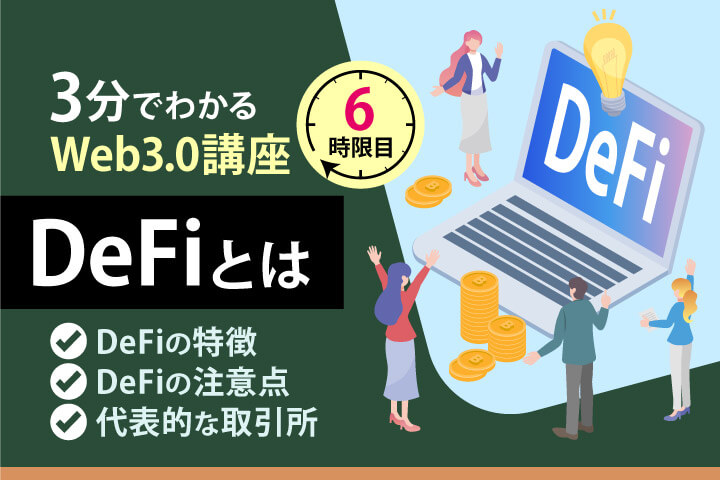
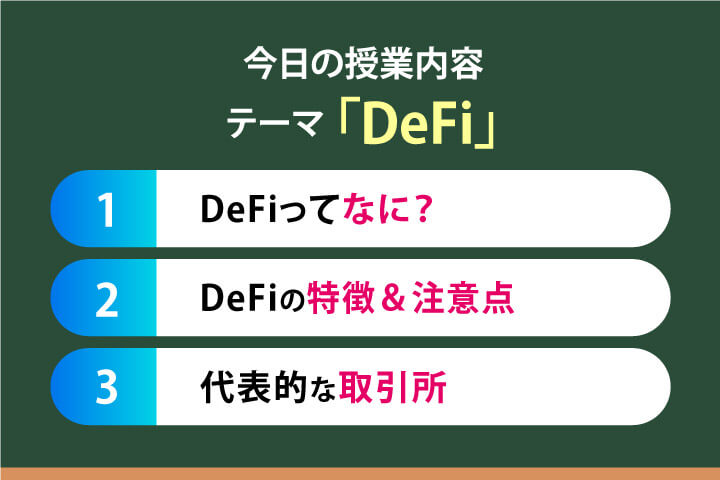
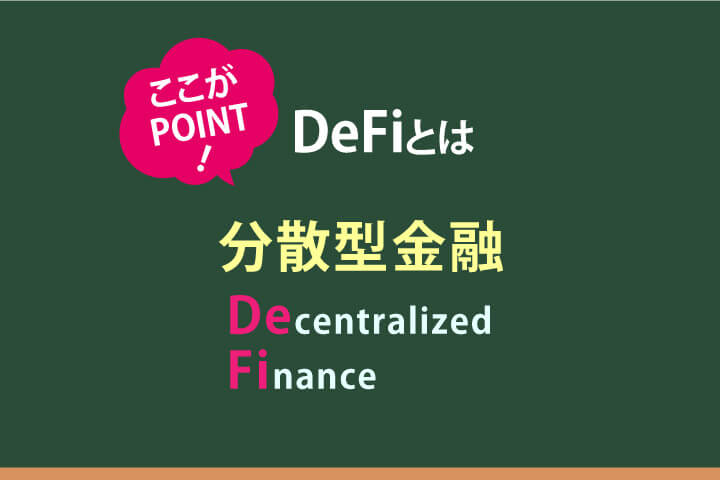
Decentralized Finance, commonly referred to as DeFi, represents a paradigm shift in the global financial landscape, moving away from traditional, centralized intermediaries toward a peer-to-peer system powered by blockchain technology. Often described as the "banking system of Web3," DeFi encompasses a broad spectrum of financial services—including lending, borrowing, and trading—that operate without the oversight of traditional institutions like commercial banks, brokerage firms, or central authorities. By utilizing smart contracts on programmable blockchains such as Ethereum, DeFi protocols automate the execution of financial agreements, ensuring transparency, security, and accessibility for a global user base. This emerging sector seeks to democratize finance by removing the gatekeepers that have historically dictated the terms of credit and capital flow, offering a permissionless alternative to the multi-trillion-dollar traditional finance (TradFi) industry.
The Technical Foundation and Conceptual Framework of DeFi
To understand the rise of DeFi, one must first examine its technical architecture. Unlike the legacy financial system, which relies on private ledgers maintained by individual banks, DeFi operates on public blockchains. These blockchains serve as immutable, transparent ledgers where every transaction is recorded and verifiable by anyone with an internet connection. The "engine" of DeFi is the smart contract—self-executing code that automatically performs a set of actions when specific conditions are met. For example, in a decentralized lending protocol, a smart contract might automatically release collateral to a lender if a borrower fails to maintain a certain debt-to-value ratio.
This automation eliminates the need for human intervention and the administrative overhead associated with traditional banking. In the traditional Centralized Finance (CeFi) model, users must place their trust in institutions to manage their funds honestly and efficiently. In contrast, DeFi is "trustless," meaning users rely on the mathematical certainty of the code rather than the reputation of a corporate entity. This shift from "trusting people" to "trusting code" is the fundamental innovation of the Web3 era.

A Comparative Analysis: DeFi versus Centralized Finance (CeFi)
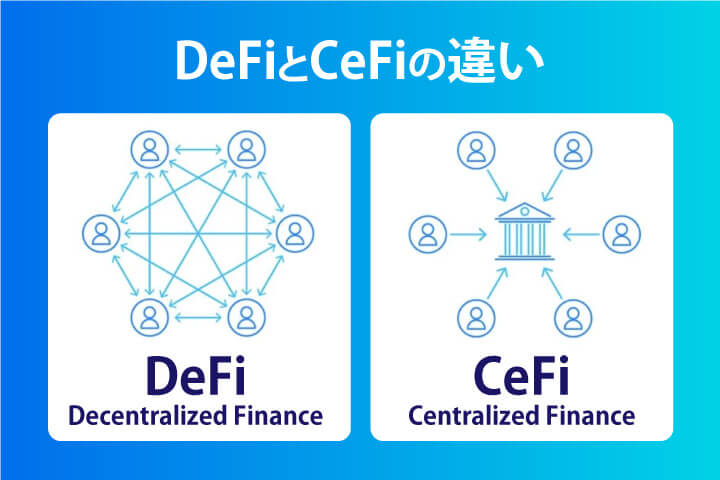
The distinction between DeFi and CeFi is best understood through the lens of custody and control. In the CeFi model, which includes both traditional banks and centralized cryptocurrency exchanges like Binance or Coinbase, the institution holds custody of the user’s assets. Users must undergo rigorous Know Your Customer (KYC) and Anti-Money Laundering (AML) checks, and the institution has the power to freeze accounts, reverse transactions, or deny service based on internal policies or government mandates.
DeFi operates on a non-custodial basis. Users interact with protocols directly through digital wallets, such as MetaMask, maintaining full control over their private keys and, by extension, their funds at all times. There is no central authority to block a transaction or close an account. Furthermore, while CeFi operates within specific business hours and is often subject to geographic restrictions, DeFi is inherently global and operational 24/7, 365 days a year. This accessibility is particularly transformative for the "unbanked" or "underbanked" populations in developing regions, where traditional banking infrastructure may be corrupt, inefficient, or non-existent.
The Three Pillars of the DeFi Value Proposition
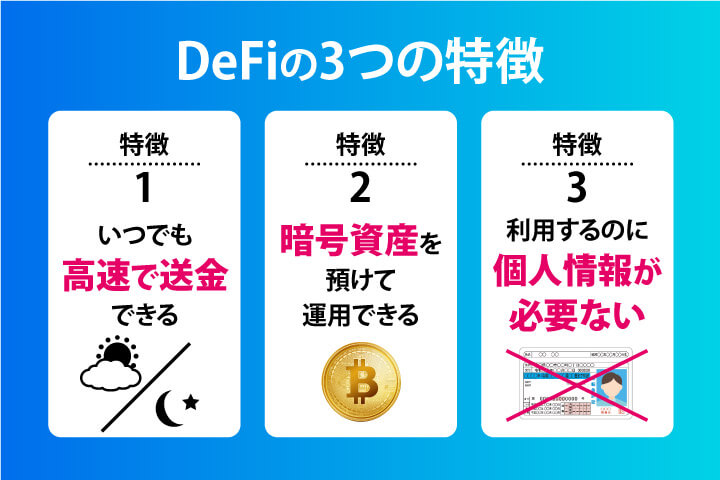
The growth of the DeFi sector is driven by three primary characteristics that offer significant advantages over the legacy financial system: efficiency in cross-border transactions, advanced yield generation, and permissionless accessibility.
1. High-Speed, Low-Cost Global Remittances
In the traditional system, sending money across borders can be a multi-day process involving several correspondent banks, each taking a fee and adding to the delay. DeFi simplifies this process into a single transaction on the blockchain. Because the network operates continuously, an individual in Tokyo can send digital assets to a recipient in Nairobi, and the transaction can be settled in minutes, if not seconds. This efficiency is a cornerstone of the DeFi value proposition, significantly reducing the friction of international trade and personal remittances.
2. Sophisticated Yield and Asset Management
DeFi has introduced novel ways for individuals to grow their wealth through "yield farming" and "liquidity providing." In a traditional savings account, a bank might offer a negligible interest rate while lending out the depositor’s money at a much higher rate, pocketing the spread. In DeFi, users can provide their assets to decentralized exchanges (DEXs) or lending pools and receive a direct share of the transaction fees or interest paid by other users. This peer-to-peer model often results in significantly higher annual percentage yields (APYs) than what is available in traditional markets, though these returns come with a different profile of risk.
3. Permissionless and Anonymous Participation
One of the most radical aspects of DeFi is its lack of entry barriers. Traditional finance requires credit scores, identity verification, and often a minimum level of wealth. DeFi protocols do not care who the user is or where they are located. As long as a user has a digital wallet and the necessary assets, they can participate in complex financial maneuvers. This "permissionless" nature is a double-edged sword; while it fosters financial inclusion, it also presents challenges for regulators attempting to curb illicit financial activities.

The Mechanics of Yield: Understanding DEXs and Liquidity Pools
The heart of the DeFi trading ecosystem is the Decentralized Exchange (DEX). Unlike centralized exchanges that use an "order book" to match buyers and sellers, most DEXs use an Automated Market Maker (AMM) model. In this system, trading occurs against a "liquidity pool"—a smart contract containing a pair of assets, such as Ethereum (ETH) and a stablecoin like USDC.
Users who deposit their assets into these pools are known as Liquidity Providers (LPs). In exchange for "staking" their tokens, they receive a portion of the trading fees generated by the pool. This mechanism ensures that there is always liquidity available for traders, even for niche or new assets. However, potential LPs must be aware of "impermanent loss," a phenomenon where the price divergence of the staked assets can lead to lower returns than if the user had simply held the tokens in their wallet.
Navigating the Risks: Security, Volatility, and User Responsibility
Despite its potential, the DeFi sector is not without significant risks. The very features that make DeFi attractive—decentralization and automation—also make it a target for malicious actors and prone to catastrophic user errors.
The Threat of Scams and Smart Contract Vulnerabilities
Because anyone can deploy a smart contract, the ecosystem is rife with "rug pulls" (where developers abandon a project and run away with investors’ funds) and "phishing" attacks. Furthermore, even well-intentioned projects can fall victim to "exploits" if their code contains bugs. Since the code is public, hackers can scrutinize it for vulnerabilities. According to industry reports, billions of dollars have been lost to DeFi hacks over the past few years, highlighting the importance of using audited protocols with a long-standing track record.

Market Volatility and Liquidation
The cryptocurrency market is famously volatile. In DeFi lending, most loans are "over-collateralized," meaning a user must deposit more value than they borrow. If the market price of the collateral drops below a certain threshold, the smart contract will automatically liquidate the collateral to ensure the lender is repaid. This can happen instantly during market crashes, leading to significant losses for borrowers who fail to manage their positions.
The Burden of Self-Custody
In DeFi, the user is their own bank. There is no "forgot password" button for a blockchain wallet. If a user loses their private keys or sends funds to an incorrect, incompatible address, those assets are typically lost forever. There is no customer support line to call to reverse a transaction. This level of responsibility requires a steep learning curve and a high degree of technical diligence.
Leading Projects in the DeFi Landscape
For those entering the space, industry experts often point toward established protocols that have survived multiple market cycles and maintained high Total Value Locked (TVL)—a metric representing the total amount of assets deposited in a protocol.
- Uniswap: The pioneer of the AMM model on Ethereum, Uniswap remains the most widely used DEX. Its governance token, UNI, allows holders to vote on the future direction of the protocol.
- Curve Finance: Specialized in stablecoin trading, Curve offers extremely low slippage and is a vital piece of infrastructure for the DeFi ecosystem’s stability.
- PancakeSwap: Operating primarily on the BNB Chain (and recently expanding to others), PancakeSwap offers a similar experience to Uniswap but often with lower transaction fees, making it popular for retail traders.
The longevity and high TVL of these platforms serve as a proxy for trust in an environment where traditional reputation is absent. They have been battle-tested by high-volume trading and various market shocks.

Broader Impact and the Future of Finance
The implications of DeFi extend far beyond simple trading. It is already the financial backbone of the "GameFi" (Gaming Finance) sector, where in-game assets are traded and staked as part of "Play-to-Earn" economies. Moreover, the integration of Real World Assets (RWAs)—such as tokenized real estate or government bonds—onto DeFi protocols is currently one of the fastest-growing trends in the industry.
As the technology matures, regulatory scrutiny is increasing. Governments around the world are grappling with how to apply existing financial laws to decentralized protocols. The outcome of these regulatory debates will likely determine whether DeFi remains a niche alternative or becomes the primary infrastructure for the global economy. Regardless of the regulatory path, the core innovations of DeFi—transparency, 24/7 operation, and programmable money—have set a new standard for what a modern financial system should look like. For the first time in history, the tools of high-finance are available to anyone with a smartphone, signaling a new era of financial sovereignty and technological empowerment.