The impending Initial Public Offering (IPO) of SpaceX, the aerospace manufacturer and space transportation services company founded by Elon Musk, has rapidly emerged as a dominant talking point across global financial markets. Scheduled to go live on June 12, this landmark event is poised to redefine capital market benchmarks and, perhaps unexpectedly, has ignited fervent discussion within the cryptocurrency sphere, particularly concerning its potential ramifications for Bitcoin. The company’s substantial holdings of Bitcoin on its balance sheet, coupled with its CEO’s vocal advocacy for the digital asset, place this IPO at a critical intersection of traditional finance and the burgeoning crypto economy.
SpaceX’s Meteoric Rise and IPO Anticipation
SpaceX, officially known as Space Exploration Technologies Corp., was founded by Elon Musk in 2002 with the audacious goal of revolutionizing space technology, with the ultimate aim of enabling human life on other planets. Over two decades, the company has achieved unprecedented milestones, including developing the Falcon family of reusable rockets, the Dragon spacecraft for cargo and crew transport to the International Space Station, and the Starlink satellite internet constellation. Its ambitious Starship program aims to facilitate missions to the Moon and Mars, cementing its status as a pioneer in commercial space exploration. This track record of innovation and disruption has propelled SpaceX to an elite valuation in the private markets, making its transition to a publicly traded entity a monumental event.
The anticipation surrounding the SpaceX IPO has been palpable, reflecting not only the company’s inherent value but also the broader market’s appetite for high-growth, technology-driven enterprises. The company formally announced its intention to issue 555,555,555 shares at a listing price of $135 per share. This pricing strategy positions SpaceX for an estimated valuation of $1.75 trillion, a figure first reported by the Wall Street Journal and confirmed through subsequent market intelligence. Should this valuation materialize, it would immediately rank SpaceX among the world’s most valuable companies, on par with tech giants and oil conglomerates.
Setting New Records: The Scale of the SpaceX IPO
If the SpaceX IPO proceeds without significant hitches and achieves its projected valuation, it is set to shatter existing records for the largest Initial Public Offering in financial market history. The company aims to raise an unprecedented $75 billion through the offering. To put this into perspective, the current record for the largest IPO is held by Saudi Aramco, which raised approximately $25 billion in its 2019 listing. SpaceX’s target capital raise would triple this historic benchmark, underscoring the immense scale and investor confidence in its future trajectory.
An unusual aspect of SpaceX’s IPO process has been its decision to announce the share price days ahead of the official listing. Typically, companies reveal their share prices a day or two before going public, often after gauging investor interest through roadshows and book-building processes. SpaceX’s proactive disclosure has, counter-intuitively, served to amplify speculation and intensify public interest, creating a unique buzz around the offering. This strategic move aligns with Elon Musk’s penchant for unconventional approaches, often leveraging public attention to maximum effect. The company is expected to officially begin trading on the Nasdaq stock index, marking its formal entry into the public domain.

The "SpaceX Effect": Capital Rotation and Bitcoin’s Recent Volatility
The lead-up to the SpaceX IPO has coincided with a notable downturn in the cryptocurrency market, particularly for Bitcoin, which experienced significant price corrections and increased volatility in the weeks prior to June 12. This correlation has fueled speculation among market analysts and crypto enthusiasts that the impending IPO might be a contributing factor to Bitcoin’s recent poor performance. The theory of "capital rotation" posits that in anticipation of a highly attractive new investment opportunity, investors often reallocate capital by selling existing holdings to free up funds for the new asset.
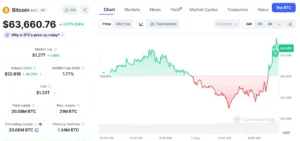
During the week preceding the IPO, Bitcoin’s price experienced a sharp decline, briefly dipping below the $60,000 mark and triggering broader market apprehension. Concurrently, the Bitcoin spot Exchange Traded Fund (ETF) market witnessed its single largest daily outflow on record, exceeding $500 million on June 2. This substantial withdrawal of capital from institutional Bitcoin investment vehicles, alongside a general downtrend in crypto prices, lends credence to the capital rotation hypothesis. While it is challenging to definitively attribute market movements to a single factor, the timing of these events, particularly the announcement of SpaceX’s share count and price, suggests a possible causal link. Investors, both institutional and retail, may have opted to liquidate portions of their crypto portfolios to secure capital for participation in what is being heralded as a generational IPO.
SpaceX’s Bitcoin Holdings: A Public Endorsement
Beyond the potential for capital rotation, SpaceX’s existing relationship with Bitcoin adds another layer of complexity and significance to its IPO. The company is set to go public with a substantial holding of over 18,700 BTC on its balance sheet, valued at approximately $1.3 billion at current market prices. This makes SpaceX one of the largest corporate holders of Bitcoin worldwide, following in the footsteps of companies like MicroStrategy (now Strategy), which has famously amassed a vast Bitcoin treasury.
Elon Musk, at the helm of SpaceX, has been a prominent and often controversial figure in the cryptocurrency space. His public statements, tweets, and company actions have demonstrably moved crypto markets in the past. While his direct influence has waned slightly from its peak, his endorsement, through corporate holdings and personal advocacy, continues to carry significant weight. With SpaceX becoming a publicly traded entity, its Bitcoin holdings will be under greater scrutiny from traditional investors and financial analysts. This increased transparency and the sheer scale of its BTC treasury could serve as a powerful, if indirect, validation of Bitcoin as a legitimate store of value and corporate asset. For many in the traditional finance sector, a company with the pedigree and ambition of SpaceX holding such a significant stake in Bitcoin could further normalize digital assets within mainstream investment portfolios.
Bridging Traditional Finance and the Crypto Market
The SpaceX IPO also highlights the accelerating convergence between traditional financial markets and the burgeoning cryptocurrency ecosystem. In anticipation of the listing, several prominent crypto exchanges, including Coinbase and Kraken, announced the availability of pre-IPO perpetual futures contracts for SpaceX shares. This innovative offering allows crypto investors to gain synthetic exposure to SpaceX stock before its official public trading, bridging a gap that has historically separated these two distinct financial worlds.

Furthermore, platforms like Binance have already begun offering crypto investors direct exposure to traditional stock markets through tokenized equities. This trend signifies a broader movement towards greater interoperability and accessibility between asset classes. The ability for crypto investors to participate, even indirectly, in a major traditional IPO like SpaceX’s through crypto-native platforms underscores a maturing financial landscape where digital assets are no longer confined to niche markets. This integration could lead to increased capital flows between the two sectors, fostering greater liquidity and potentially reducing the perception of crypto as an entirely separate and unregulated domain.
Broader Market Implications and Expert Perspectives
The implications of the SpaceX IPO extend beyond Bitcoin and the immediate crypto market. A successful listing of this magnitude could re-energize the broader IPO market, which has seen periods of muted activity in recent years. It could also provide a significant boost to investor sentiment for high-growth, innovative companies, potentially paving the way for other privately held tech giants to consider public offerings.
From a macroeconomic perspective, the injection of $75 billion into the market through this IPO represents a substantial capital event. While much of this capital will flow to existing shareholders and company coffers, its sheer scale could have ripple effects across various asset classes. Analysts will be closely watching how the market reacts to such an immense valuation and whether the initial trading performance lives up to the pre-IPO hype. A strong performance could signal robust investor confidence in future-oriented technologies, while any significant underperformance could cast a shadow over forthcoming large-scale public offerings.
For Bitcoin and the wider crypto market, the long-term implications are complex. While short-term capital rotation might exert downward pressure, the public validation of Bitcoin through SpaceX’s balance sheet holdings could offer a long-term bullish catalyst. As more publicly traded companies embrace Bitcoin as a treasury asset, it enhances the digital asset’s legitimacy and appeal to institutional investors. The narrative shifts from speculative investment to a diversified corporate treasury strategy, a crucial step for Bitcoin’s journey toward mainstream adoption.
Moreover, the increased interaction between crypto exchanges and traditional equities, exemplified by pre-IPO futures, suggests a future where investors can seamlessly allocate capital across both domains. This blurring of lines could lead to more sophisticated hedging strategies, diversified portfolios, and ultimately, a more integrated global financial system. However, it also introduces new considerations regarding regulatory oversight and market interconnectedness.
Conclusion and Future Outlook
The SpaceX IPO, with its unprecedented scale and profound implications, stands as a pivotal moment in financial history. It is not merely the public listing of another technology company; it represents the culmination of two decades of groundbreaking innovation and a bold step into a future where space exploration is increasingly commercialized. For Bitcoin and the cryptocurrency market, this event offers both challenges and opportunities. While short-term capital shifts may test market resilience, the long-term prospects of a trillion-dollar company publicly endorsing Bitcoin through its balance sheet holdings, coupled with the increasing integration of crypto platforms into traditional equity markets, could usher in a new era of mainstream acceptance and growth for digital assets. As June 12 unfolds, the world will watch intently to see how this ambitious venture reshapes not only the aerospace industry but also the intricate dance between traditional finance and the digital economy.