The global financial markets are bracing for what could be the most monumental initial public offering in corporate history as aerospace manufacturer and space transportation services company SpaceX prepares to debut on the Nasdaq stock exchange. Scheduled to go live on June 12, the highly anticipated listing has dominated financial headlines not only for its unprecedented scale and valuation targets but also for its profound and multifaceted implications for the broader cryptocurrency ecosystem. As traditional equity investors prepare to gain direct exposure to Elon Musk’s pioneering aerospace enterprise, digital asset markets are experiencing notable tremors, driven by capital rotation, shifting institutional liquidity dynamics, and the integration of crypto-native financial infrastructure.
At the center of this historic market event is a corporate valuation model that challenges previous benchmarks set by state-owned energy giants and tech behemoths alike. According to recent filings and reports from major financial institutions, SpaceX has announced plans to issue 555,555,555 shares at a targeted listing price of $135 per share. Should market demand meet these ambitious expectations upon opening, the transaction will catapult the privately held innovator into a staggering $1.75 trillion valuation bracket. This milestone effectively cements SpaceX’s status as one of the most valuable corporate entities in the world, eclipsing the debut records of numerous legacy corporations.
Furthermore, if the offering proceeds smoothly at the projected pricing structure, the SpaceX IPO will officially shatter the all-time record for capital raised during an initial public offering. The company aims to secure approximately $75 billion in gross proceeds. This figure is triple the previous historical record established by Saudi Aramco in 2019, which raised roughly $25 billion during its landmark public debut. The sheer magnitude of the capital targeted by SpaceX has created a gravitational pull across global liquidity pools, drawing intense scrutiny from institutional funds, retail brokerages, and digital asset market participants alike.
Unconventional Prequel and Market Anticipation
The trajectory leading up to the June 12 listing has diverged significantly from standard Wall Street protocols, generating heightened intrigue and speculation across financial circles. Traditionally, companies issuing new equity maintain strict confidentiality regarding their exact share price and final allocation figures until the eve of the public debut. This deliberate delay is designed to mitigate volatility and respond dynamically to final book-building indicators from institutional underwriters.
However, SpaceX elected to break with long-standing tradition by publicly announcing both its share volume and its fixed listing price days in advance of the trading bell. This unorthodox transparency strategy immediately catalyzed a wave of intense public discourse and retail speculation. Rather than dampening enthusiasm, the early disclosure served as a powerful marketing catalyst, amplifying the visibility of the IPO across both mainstream financial media and digital asset communities. Wall Street analysts have debated whether this deviation from standard procedure was an intentional maneuver to anchor retail sentiment or a unique byproduct of the immense institutional demand already demonstrated during private funding rounds.

Chronology of Events Leading to the Nasdaq Debut
To fully understand the current market dynamics surrounding the SpaceX public offering, it is essential to examine the sequence of events that culminated in the June 12 debut. The timeline reflects a rapid convergence of corporate scaling, regulatory navigation, and shifting macroeconomic conditions:
- Late Q1 2025: Speculation intensifies within institutional circles regarding a potential spin-off or public listing of SpaceX’s Starlink division or the broader parent company, driven by capital expenditure requirements for interplanetary transport development and global satellite internet expansion.
- Early May 2025: Financial advisors and lead underwriters finalize preliminary valuation assessments, positioning SpaceX for what internal memorandums describe as a landmark multi-trillion-dollar equity valuation.
- June 2, 2025: In a development that correlates with shifting liquidity patterns, the Bitcoin Exchange-Traded Fund (ETF) market registers its single largest daily net outflow on record, exceeding $500 million in a single trading session. Financial analysts note concurrent downward price pressure on major digital assets.
- June 5–8, 2025: SpaceX formally announces the issuance parameters, detailing the release of 555,555,555 shares priced at $135 each, targeting a cumulative fundraising goal of $75 billion. This early disclosure breaks conventional financial norms.
- Early June 2025: Crypto-native financial platforms, including major exchanges like Coinbase and Kraken, announce innovative pre-IPO perpetual futures and tokenized stock access products, allowing digital asset holders to speculate on the SpaceX listing ahead of the traditional market open.
- June 12, 2025 (Scheduled): SpaceX officially goes live on the Nasdaq stock index, marking the formal commencement of trading and executing the largest IPO in financial market history.
Implications for Bitcoin and the Broader Crypto Economy
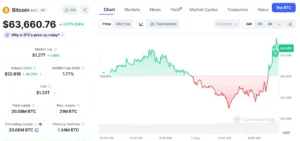
While the SpaceX IPO is fundamentally a milestone for the aerospace and technology sectors, its shockwaves have resonated deeply within the cryptocurrency markets. Over the week preceding the public debut, Bitcoin and other leading digital assets experienced notable price volatility and downward retracements. Market strategists have increasingly pointed toward capital rotation as the primary catalyst for these movements. In periods of macroeconomic shifts or historic investment opportunities, institutional and high-net-worth investors frequently reallocate capital away from volatile risk-on assets—such as cryptocurrencies—to secure allocations in high-profile, blue-chip equity offerings.
The timing of Bitcoin’s price correction alongside the finalization of the SpaceX share pricing structure has reinforced this narrative. The record-shattering $500 million daily outflow from spot Bitcoin ETFs observed on June 2 underscored a temporary retreat of institutional liquidity from digital assets. Analysts suggest that portfolio managers proactively trimmed exposure to cryptocurrencies to maintain optimal cash reserves or rebalance portfolios in anticipation of the liquidity demands presented by the SpaceX equity event.
Despite these short-term capital outflows, the structural relationship between SpaceX and the cryptocurrency ecosystem remains robust and multifaceted. Most notably, corporate balance sheet disclosures indicate that SpaceX currently holds over 18,700 Bitcoin, valued at approximately $1.3 billion. This substantial digital asset treasury positions SpaceX as one of the largest corporate holders of Bitcoin globally, placing it in an elite category alongside prominent corporate Bitcoin treasuries such as MicroStrategy (now operating as Strategy).
Furthermore, the leadership of Elon Musk—a prominent and vocal advocate for digital currencies—adds an additional layer of synergy between the aerospace giant and the crypto economy. Musk’s historical influence on market sentiment, combined with SpaceX’s direct financial exposure to Bitcoin, ensures that the company’s performance as a publicly traded entity will maintain a psychological and financial link to the digital asset class. Market observers will be closely monitoring whether SpaceX expands its digital asset holdings or integrates blockchain-based settlement mechanisms into its expansive commercial satellite and interplanetary logistics operations now that it is subject to rigorous public shareholder reporting requirements.

Bridging Traditional Finance and Decentralized Infrastructure
The build-up to the SpaceX IPO has also highlighted the accelerating convergence between traditional equity markets and crypto-native trading infrastructure. In a development that would have been unimaginable a decade ago, digital asset exchanges have actively positioned themselves as gateways for retail and institutional investors seeking exposure to the public offering.
Leading cryptocurrency exchanges, including Kraken and Coinbase, unveiled specialized pre-IPO derivative products and synthetic equity instruments ahead of the June 12 listing. Kraken’s introduction of pre-IPO perpetual futures tied to SpaceX stock exemplifies how digital asset platforms are expanding their product suites to capture demand for traditional financial assets. Similarly, platforms like Binance continue to explore or offer mechanisms that bridge crypto liquidity with mainstream equity markets.
This trend demonstrates a paradigm shift in financial market behavior. Rather than operating in isolated silos, traditional equity offerings and decentralized financial networks are increasingly interacting, as crypto platforms leverage their technological agility to offer innovative access points to legacy markets. However, traditional financial regulators continue to monitor these cross-market products closely, evaluating compliance, margin requirements, and investor protection standards as digital asset exchanges venture further into traditional securities territory.
Fact-Based Analysis of Broader Market Implications
A sober evaluation of the SpaceX IPO reveals several key takeaways for economists, equity analysts, and digital asset researchers:
- Liquidity Concentration: The successful absorption of $75 billion in capital by a single equity issuance demonstrates that substantial global liquidity remains available for high-growth technological enterprises, albeit temporarily drawing funds away from alternative risk asset classes like cryptocurrencies.
- Corporate Treasury Precedents: By maintaining over $1 billion in Bitcoin on its balance sheet while entering the public markets, SpaceX normalizes the presence of digital assets on the financial statements of trillion-dollar corporations. This corporate validation could encourage other publicly traded entities to consider Bitcoin as a viable treasury reserve asset.
- Financial Infrastructure Convergence: The utilization of crypto exchanges for pre-IPO speculation signals an irreversible trend toward the tokenization and hybridization of financial services, where traditional boundaries between stock brokerages and digital asset platforms continue to dissolve.
- Market Volatility and Sentiment: The correlation between the IPO countdown and short-term crypto market corrections serves as a reminder of the interconnected nature of global liquidity. As institutional portfolios become increasingly diversified across both digital and traditional assets, capital reallocations in one sector will inevitably generate immediate ripple effects in the other.
As the Nasdaq trading bell rings on June 12, financial markets will watch intently to see if SpaceX meets its ambitious valuation targets and successfully executes the largest initial public offering in human history. Beyond the immediate celebrations on Wall Street, the long-term reverberations of this event—spanning corporate treasury strategies, cross-market liquidity flows, and the evolving relationship between space-age technology and digital currency—will continue to shape the global financial landscape for years to come.