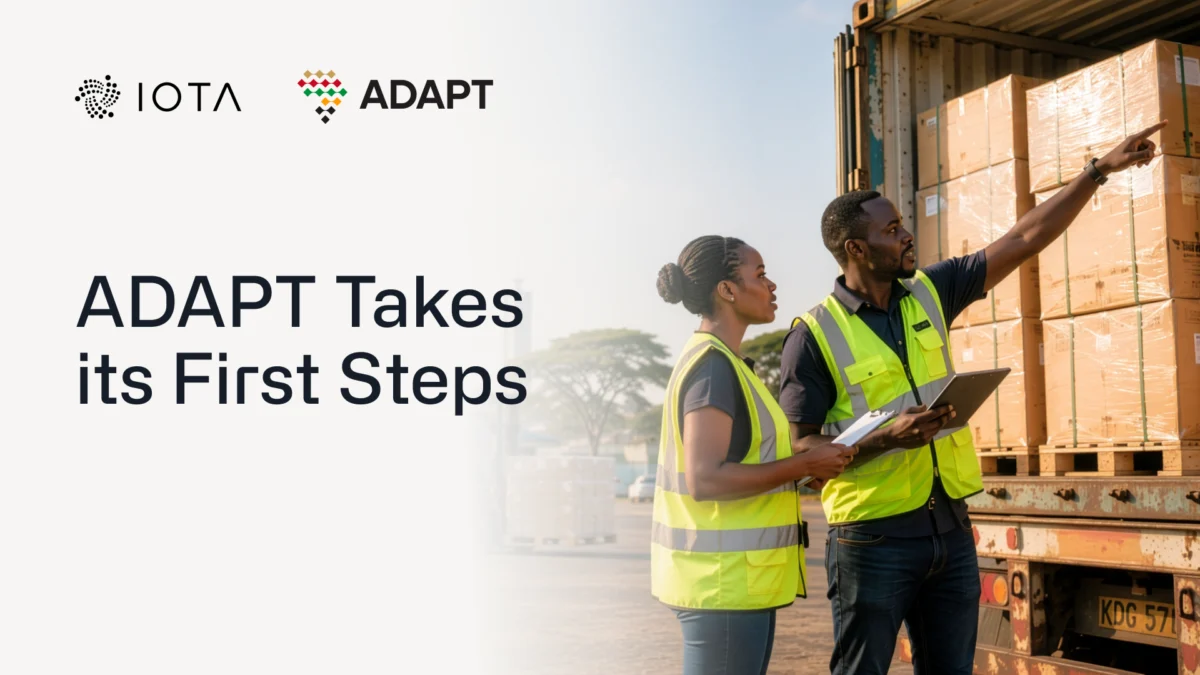
The landscape of African commerce is undergoing a profound digital transformation as Kenya, Morocco, and Nigeria step forward as the inaugural pioneer nations to implement the Africa Digital Access and Public Infrastructure for Trade (ADAPT) initiative. Officially unveiled in November of the previous year, ADAPT represents a monumental step toward establishing a trusted, open, and inclusive digital public infrastructure tailored specifically to the unique demands of continental trade. Spearheaded by the African Continental Free Trade Area (AfCFTA) Secretariat, the initiative is being developed in close collaboration with some of the world’s leading policy and technology organizations, including the Tony Blair Institute for Global Change, the World Economic Forum, and the IOTA Foundation.
By unifying digital identity management, cross-border data exchange, and interoperable payment systems into a single, cohesive foundation, ADAPT aims to turbocharge the objectives of the AfCFTA, which currently constitutes the largest free trade area in the world by the number of participating nations. The selection of Kenya, Morocco, and Nigeria as the initial implementers was not arbitrary; it was the result of a rigorous, multi-layered evaluation process that assessed each nation’s political commitment, regulatory readiness, existing digital infrastructure maturity, and the active engagement of their respective private sectors. These three regional economic powerhouses will now serve as the proving ground for a continental digital trade network designed to overcome decades of systemic friction.
The Chronology and Genesis of a Continental Vision
The journey toward ADAPT began years before its formal announcement in late 2023, driven by an urgent recognition among African policymakers that traditional, paper-based trade mechanisms were fundamentally unequipped to support a modern, interconnected continent. For generations, intra-African trade has been hamstrung by deep structural barriers that transform simple cross-border transactions into logistical marathons. Fragmented regulatory regimes across more than fifty jurisdictions have created a labyrinth of compliance hurdles, while the historical absence of standardized digital identity systems has made verifying business credentials a slow and costly endeavor.
Furthermore, traditional payment networks operating within Africa have long suffered from exorbitant transaction fees and sluggish settlement times, frequently forcing businesses to route funds through correspondent banks outside the continent. These compounding inefficiencies have consistently driven up logistics costs and cross-border payment fees, choking the flow of goods and services. Perhaps most critically, the continent faces a staggering trade finance gap officially estimated at $100 billion annually. This deficit disproportionately punishes small and medium-sized enterprises (SMEs)—which account for up to 90 percent of all African businesses—leaving them severely underserved and locked out of lucrative regional and global supply chains.
Recognizing that these challenges could not be solved piecemeal, the AfCFTA Secretariat convened global and regional stakeholders to conceptualize a unified digital backbone. The partnership with the Tony Blair Institute brought strategic governance and policy alignment expertise, the World Economic Forum provided global institutional backing and regulatory foresight, and the IOTA Foundation contributed cutting-edge distributed ledger and data-sharing technology. The culmination of this multi-year dialogue was the birth of ADAPT, moving the continent from high-level political declarations to concrete technical execution with the confirmation of the Kenya, Morocco, and Nigeria pilots.
Operationalizing ADAPT: The Technical Blueprint
With the pilot phase now officially underway, the focus has shifted swiftly from conceptual planning to operational reality. Implementing ADAPT requires building the foundational architecture of digital trade from the ground up, tailored to the specific regulatory landscapes of Kenya, Morocco, and Nigeria. To achieve this, each pilot country is establishing dedicated ADAPT Country Implementation Forums. These domestic bodies are tasked with bridging the gap between national regulatory bodies and continental standards, ensuring that local digital identity systems and payment rails can seamlessly integrate with the broader regional framework.
At the core of this technical harmonization is TWIN, an open digital trade infrastructure that serves as the technological bedrock for ADAPT. Unlike proprietary systems that lock nations into restrictive commercial arrangements, TWIN provides an open, interoperable environment where data can flow securely and transparently. The immediate operational priority for the three pioneer nations is the establishment of live, cross-border data exchange channels and the digitization of trade documentation directly at the source. This involves replacing cumbersome, paper-based bills of lading, certificates of origin, and customs declarations with verified, tamper-proof digital records that can be instantly authenticated by authorities in destination countries.
In tandem with document digitization, Kenya, Morocco, and Nigeria are spearheading the testing and implementation of forward-looking regulatory frameworks for digital currencies, including stablecoins and central bank digital currencies (CBDCs). By leveraging these advanced financial instruments, the initiative aims to bypass traditional, high-cost correspondent banking corridors, laying the groundwork for instantaneous, low-cost cross-border trade settlements. This multi-pronged approach ensures that goods, data, identity, and capital move across borders with unprecedented speed and security.
Official Perspectives and Strategic Endorsements
The launch of the implementation phase has drawn widespread praise from the leadership of the partnering organizations, who view the initiative as a watershed moment for the global digital economy. Dominik Schiener, Co-Founder and Chair of the IOTA Foundation, emphasized the unique historical opportunity presented by the project.
"Africa has a unique opportunity to leapfrog fragmented, paper-based trade systems and establish digital trust infrastructure designed for the future," Schiener stated. "ADAPT is not only digitising processes, but it is also creating a shared, interoperable foundation where trade data can be trusted, verified, and exchanged securely across borders. We are proud to contribute our technology and expertise to a milestone that advances not only digital trade, but the broader vision of a truly integrated African market."
Policy analysts and trade experts echoing these sentiments point out that ADAPT aligns perfectly with the overarching mission of the African Continental Free Trade Area. By eliminating non-tariff barriers through digital means, the initiative addresses the hidden costs that have historically kept intra-African trade hovering at a fraction of the continent’s true economic potential. While intra-regional trade in Europe and Asia often exceeds 60 percent of total trade, Africa’s intra-continental trade has traditionally lagged behind, largely due to the structural friction that ADAPT is specifically engineered to dismantle.
Broader Impact, Scalability, and Future Implications
The ultimate success of the ADAPT pilots in Kenya, Morocco, and Nigeria will resonate far beyond the borders of these three nations. As the primary testbeds for the initiative, these countries will bear the responsibility of refining the governance frameworks, technical protocols, and real-world use cases that will dictate the future of African commerce. The lessons learned, regulatory adjustments made, and technical hurdles overcome during this pilot phase will directly inform how ADAPT scales to encompass additional AfCFTA member states in the coming years.
By establishing a robust, scalable continental standard, ADAPT is poised to redefine how goods, data, identities, and payments move across Africa for decades to come. If successful, the initiative will unlock the $100 billion trade finance gap, empower millions of underserved SMEs, and integrate millions of informal traders into the formal economy. As implementation gains momentum on the ground, Africa is steadily turning the page on centuries of bureaucratic and infrastructural isolation, building a unified digital marketplace capable of competing on the global stage.