The emergence of decentralized finance and non-fungible tokens has paved the way for a new generation of digital entertainment, with Illuvium standing at the forefront of this evolution as one of the first high-budget, triple-A blockchain games. Developed on the Ethereum network, Illuvium integrates a sprawling open-world role-playing game with a high-stakes strategic auto-battler, creating a multi-faceted ecosystem that challenges the traditional boundaries between gaming and investment. By leveraging the power of Layer 2 scaling solutions, specifically Immutable X, the project aims to provide a seamless, gas-free experience that appeals to both hardcore gamers and cryptocurrency enthusiasts. This comprehensive approach to game design, often categorized under the "Play-to-Earn" (P2E) or "Play-and-Earn" umbrella, allows players to capture, trade, and battle creatures known as Illuvials, each represented as a unique NFT on the blockchain.
The Architectural Foundation of the Illuvium Ecosystem
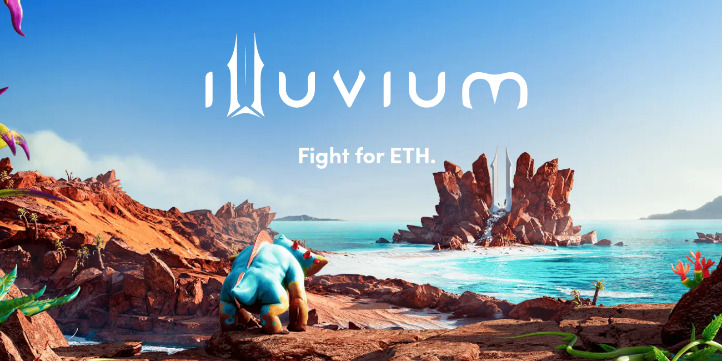
At its core, Illuvium is not a single game but a collection of interconnected experiences that share a unified economy and asset pool. The primary experience is the Overworld, a 3D open-world RPG where players take on the role of a survivor on a broken alien planet. The objective is to traverse diverse biomes, uncover the planet’s history, and track down Illuvials. This exploration is complemented by the Arena, where the strategic auto-battler mechanics come into play. Unlike traditional turn-based RPGs, Illuvium’s combat system is inspired by popular "Auto Chess" titles such as Teamfight Tactics (TFT). Players must position their Illuvials on a grid-based battlefield, where the creatures then fight autonomously based on their attributes, classes, and synergies.
The technical backbone of this ecosystem is Ethereum, but the high transaction costs and latency issues of the mainnet necessitated a more robust solution for gaming. The development team integrated Immutable X, a Layer 2 scaling solution that utilizes ZK-rollup technology. This allows for near-instant transaction finality and zero gas fees for trading NFTs, a critical requirement for a game that involves frequent minting and trading of assets. By removing the financial friction of the blockchain, Illuvium provides a user experience that rivals traditional centralized platforms while maintaining the security and decentralization of the Ethereum network.
The Illuvials: Attributes, Classes, and Evolution Mechanics
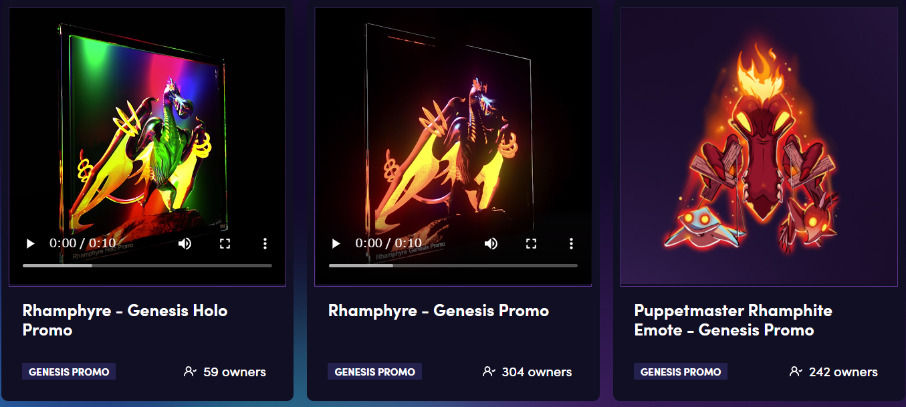
The primary assets within the game are the Illuvials, of which there are over 100 distinct species scattered across the alien landscape. Each Illuvial is defined by two primary characteristics: Affinities and Classes. These traits determine how the creatures interact with one another on the battlefield and are essential for building a competitive team.
There are five primary Affinities: Water, Fire, Earth, Air, and Nature. These operate on a "rock-paper-scissors" mechanic, where certain elements have a tactical advantage over others. However, the system is deepened by the inclusion of composite Affinities, where high-tier Illuvials may possess dual elements, such as "Frost" (Air and Water) or "Inferno" (Fire and Fire). Similarly, there are five primary Classes: Fighter, Guardian, Rogue, Psion, and Empath. These define the roles of the Illuvials, such as "tanks" that soak up damage or "assassins" that target the enemy’s backline.

The capture mechanic is central to the Overworld experience. When a player encounters a wild Illuvial, they must defeat it in battle to have a chance at capturing it using a "Shard." Shards vary in quality; a low-tier Shard may fail to capture a powerful, rare Illuvial. Once captured, these creatures become the player’s property, stored as NFTs in their digital wallet. Furthermore, Illuvium features a fusion system. By combining three identical, fully leveled Illuvials, players can "evolve" them into a more powerful form. This deflationary mechanic reduces the total supply of lower-tier Illuvials while increasing the rarity and value of the evolved versions.
Illuvium Zero and the Integration of Digital Land
To broaden the scope of the ecosystem, the developers introduced Illuvium Zero, a mobile-compatible land-building game that serves as a companion to the main RPG. In this mode, players manage industrial complexes on digital land plots, which were sold as NFTs during high-profile virtual real estate auctions. Illuvium Zero is not merely a standalone simulation; it is economically tethered to the Overworld and the Arena.
Landowners in Illuvium Zero produce "Fuel," a vital resource required for various activities in the main game, such as traveling between biomes and capturing high-tier Illuvials. This creates a circular economy where RPG players must purchase fuel from landowners, and landowners rely on the demand generated by the RPG players. Additionally, Illuvium Zero players can scan their land for "Blueprints," which are used to craft rare skins and cosmetic items for the main game. This interconnectedness ensures that different player archetypes—from casual mobile gamers to hardcore RPG explorers—contribute to a single, cohesive marketplace.
Governance and Tokenomics: The Role of $ILV
The economic engine of the project is the $ILV token, an ERC-20 token that serves multiple functions within the ecosystem. Unlike many other blockchain games that use their primary token as an in-game currency for small transactions, $ILV is primarily designed for governance and staking.
- Governance: Illuvium is governed by a Decentralized Autonomous Organization (DAO). Holders of $ILV have the right to vote on the "Illuvinati Council," a group of representatives who make decisions regarding game balance, treasury management, and future development roadmaps.
- Staking and Yield: Players can stake their $ILV tokens in the Illuvium Vault to earn rewards. These rewards are distributed from the game’s revenue and a dedicated pool of tokens set aside for yield farming.
- Revenue Distribution: One of the most unique aspects of Illuvium is its commitment to "Vault Distributions." All revenue generated by the game—including fees from the IlluviDEX (the in-game marketplace) and fuel sales—is used to buy $ILV from the open market and distribute it back to stakers. This creates a direct link between the game’s commercial success and the value provided to token holders.
To prevent immediate sell-off pressure, the game utilizes a synthetic token called $sILV2. While $ILV rewards are subject to a 12-month vesting period, players can choose to claim their rewards in $sILV2, which can be used immediately as an in-game currency for activities like shard curing and skin purchases, though it cannot be traded on external exchanges.
Chronology and Development Roadmap
The journey of Illuvium began in 2020, founded by Kieran and Aaron Warwick, the brothers of Kain Warwick, the founder of the Synthetix protocol. This pedigree in the DeFi space provided the project with significant initial credibility and capital.

- 2021-2022: The project focused on core asset creation and the successful launch of the $ILV token. During this period, the team conducted several successful funding rounds, raising millions of dollars from prominent venture capital firms such as Framework Ventures and Delphi Digital.
- 2023: This year marked the transition into private beta testing for the Arena and the Overworld. The team also conducted its first land sale, which generated over $72 million in revenue despite the broader "crypto winter" market downturn.
- 2024: The focus shifted toward the "Open Beta" phase and the refinement of the mobile-integrated Illuvium Zero. The team implemented significant updates to the combat engine to improve competitive balance for e-sports viability.
- 2025-2026: According to the most recent roadmap, this period will see the full public launch of the interconnected ecosystem. Planned updates include the introduction of "Guild Wars," expanded biomes, and the integration of third-party NFT collections into the Illuvium universe. The team is also exploring the potential for a "Creative Mode" where users can contribute to the game’s lore and asset pool.
Market Implications and Broader Impact on the Gaming Industry
Illuvium’s development represents a significant litmus test for the "Play-to-Earn" model. Early iterations of blockchain gaming, such as Axie Infinity, faced criticism for their reliance on unsustainable inflationary mechanics and repetitive gameplay. Illuvium attempts to rectify this by prioritizing "fun-first" design and high-fidelity graphics powered by Unreal Engine 5.
From a market perspective, Illuvium is positioning itself to bridge the gap between traditional Web2 gaming and the emerging Web3 space. By offering a "Free-to-Play" tier where users can experience the game without an initial investment (albeit with limited earning potential), the project lowers the barrier to entry for mainstream audiences. If successful, Illuvium could provide a blueprint for how major gaming studios can integrate digital ownership without compromising the integrity of the gaming experience.
Furthermore, the integration with Bitget and other major exchanges for the $ILV token ensures high liquidity, making it accessible to institutional and retail investors. However, the project is not without risks. The volatility of the cryptocurrency market, the technical complexity of maintaining a balanced multi-game economy, and the intense competition from traditional gaming giants entering the NFT space remain significant challenges.
Conclusion and Future Outlook
Illuvium is a testament to the ambitious potential of blockchain technology when applied to the creative arts. By combining the depth of an open-world RPG, the strategy of an auto-battler, and the industrial simulation of land management, the project offers a diverse range of experiences for a global audience. Its reliance on Layer 2 scaling ensures that it remains accessible and efficient, while its robust DAO governance model gives players a literal stake in the world they inhabit.
As the project moves toward its full commercial release in 2025 and beyond, the eyes of the gaming and financial worlds will be on the Warwick brothers and their team. Should Illuvium deliver on its promise of a triple-A experience with a sustainable, decentralized economy, it may very well herald a new era where the lines between virtual play and real-world value are permanently blurred. For now, the "Illuvinati" community continues to grow, fueled by a shared vision of a planet where every capture, every battle, and every plot of land is a piece of a larger, player-owned future.