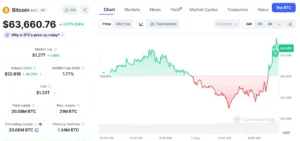
The integration of artificial intelligence into retail trading infrastructure has transformed how market participants interact with global exchanges, yet a fundamental disconnect frequently undermines the utility of these advanced tools. An algorithmic signal is only as reliable as the underlying data feeding it, and that data is only as valuable as the markets it encompasses. A model optimized exclusively for United States equities may perform exceptionally well within its native ecosystem, but it often fails to provide actionable insights when macroeconomic catalysts trigger sudden volatility—such as a geopolitical shock in energy markets, a sharp breakout in cryptocurrency prices, or an unexpected currency cross-repricing following a central bank monetary policy decision.
This critical distinction is frequently obscured in contemporary financial technology coverage, which often reduces software evaluations to superficial feature checklists. A more practical framework for evaluating modern trading technology requires a fundamental operational question: can the research and discovery layer seamlessly follow a trader across disparate asset classes, or does it trap the user within a single structural silo?
Within this competitive landscape, multi-asset brokers and standalone fintech applications approach the intersection of artificial intelligence and workflow integration from vastly different angles. While specialist tools often dominate specific market niches, the broader challenge for retail and professional traders alike is eliminating fragmentation. The modern trading day rarely confines itself to a single asset class, meaning that the efficiency of a platform is increasingly dictated by its ability to unify disparate intelligence streams into a single, cohesive environment.
The Evolution and Fragmentation of AI in Retail Trading
Over the past decade, artificial intelligence has evolved from an institutional novelty into a mainstream retail utility. Early applications were largely confined to basic technical indicators and rigid automated backtesting scripts. Today, the term "AI trading" encompasses a vast spectrum of complex technologies, ranging from natural language processing (NLP) models that scan real-time news feeds for sentiment shifts to advanced pattern-recognition algorithms and autonomous execution frameworks.
Despite these technological strides, the structural fragmentation of trading infrastructure remains a persistent hurdle. Historically, active traders have been forced to assemble a patchwork of disparate services to execute a comprehensive strategy. A typical workflow might involve utilizing one specialized platform for advanced charting and technical scripting, a second terminal for real-time news aggregation and macroeconomic calendars, a third application for stock or crypto scanning, and a completely separate brokerage account for order execution.
Each additional software subscription introduces friction: multiple login credentials, contrasting user interfaces, latency risks, and subscription fatigue. Furthermore, this fragmented approach increases cognitive load. When market correlations shift rapidly—such as when surging U.S. Treasury yields trigger capital outflows from technology equities, strengthen the U.S. dollar, and simultaneously pressure precious metals and digital assets—a fragmented research stack forces traders to manually synthesize divergent data feeds under high-pressure conditions.
Recognizing this inefficiency, a segment of the retail brokerage industry has shifted toward turnkey integration, embedding multi-asset research suites directly into the trading environment. Among firms pursuing this model, OneRoyal has drawn industry attention for combining multi-asset Contract for Difference (CFD) access with centralized AI signals, sentiment analysis, and market scanning tools. Securing recognition at the 2025 Global Forex Awards – Retail as the provider of the Best AI Tools Globally underscores a broader industry push toward embedded intelligence, though platform evaluations must look past marketing accolades to assess functional utility.
Comparative Landscape: Turnkey Ecosystems Versus Specialized Toolkits
To understand the value proposition of integrated multi-asset environments, it is necessary to examine how different platform models serve distinct trading styles. The market generally divides into three distinct categories: turnkey multi-asset brokers, specialized analytical software providers, and ecosystem-specific automation platforms.
Turnkey Multi-Asset Environments
Platforms that bundle research, sentiment tracking, and execution into a single interface aim to reduce workflow friction. OneRoyal exemplifies this approach by integrating Acuity-powered analytical tools and automated market research directly alongside its brokerage infrastructure. The platform provides access to over 2,000 CFD instruments spanning forex, global shares, major indices, commodities, exchange-traded funds (ETFs), and cryptocurrencies.
Rather than operating as isolated add-ons, the platform’s modular tools—such as SignalX for algorithmic analytics, Action News for machine learning-driven news classification, AssetIQ for customizable asset intelligence, and Market Scanner for automated discovery—function within a unified ecosystem. This setup allows a trader monitoring EUR/USD to pivot toward gold, a regional stock index, or cryptocurrency exposure without rebuilding their analytical framework. However, this model operates primarily through CFDs, meaning users gain leveraged exposure to price movements rather than direct ownership of underlying physical securities, with product availability and regulatory protections varying significantly across global jurisdictions.
Institutional Multi-Broker Giants
At the other end of the multi-asset spectrum sit established giants like Interactive Brokers and Saxo, which cater to clients requiring massive raw market access. Interactive Brokers provides connectivity to stocks, options, futures, bonds, and currencies across more than 170 global markets, complemented by advanced APIs and institutional-grade scanners. Saxo offers tens of thousands of instruments supported by extensive human research and proprietary automated Trade Signals.
While these platforms offer unmatched depth and breadth for investors requiring physical asset ownership, complex portfolio margining, or listed derivatives, their sheer scale can require substantial configuration. For active traders prioritizing a streamlined, turnkey research experience where signals and sentiment tools are pre-selected and integrated around the brokerage account, these institutional ecosystems can present an excess of structural complexity.
Focused Analytical Specialists
Conversely, standalone software providers like TradingView, Trade Ideas, and TrendSpider prioritize depth within specific domains over generalized cross-market coverage. TradingView has established a dominant position through its Pine Script ecosystem, enabling advanced custom technical analysis across a broad range of instruments, though execution relies on integrating external broker accounts.
Trade Ideas narrows its scope deliberately, focusing intensely on active U.S. equity markets through real-time scanning, alerts, and its proprietary Holly AI engine. While highly effective for day traders dedicated exclusively to U.S. equities, it lacks the multi-asset breadth required by cross-market participants. TrendSpider occupies a middle ground, offering automated technical analysis across multiple asset classes, but it remains fundamentally an analytical workstation rather than an integrated execution venue.
Regulatory Realities: Data Quality, Drift, and Model Limitations
As financial institutions and retail brokers increasingly incorporate artificial intelligence into their offerings, regulatory bodies worldwide have stepped up scrutiny regarding the limitations and risks inherent in algorithmic models. The International Organization of Securities Commissions (IOSCO) has published comprehensive guidance highlighting critical vulnerabilities in capital market AI applications, specifically emphasizing data quality, algorithmic drift, and inherent training biases.
A foundational principle in computational finance is that automated systems are strictly bound by the quality of their inputs—a concept colloquially summarized as "garbage in, garbage out." Even the most sophisticated machine learning model will generate flawed outputs if trained on incomplete, corrupted, or historically unrepresentative data. Furthermore, financial markets are inherently non-stationary; macroeconomic regimes shift, historical correlations break down during systemic crises, and Black Swan events frequently invalidate prior statistical assumptions.
In the United Kingdom, the Financial Conduct Authority (FCA) has issued explicit warnings to market participants regarding the deployment of AI in investment research, succinctly noting that "AI is analytical, not psychic." The regulator has cautioned that automated systems are susceptible to producing outdated, inaccurate, or hallucinatory information when confronted with unprecedented market conditions.
These regulatory warnings underscore why multi-faceted research environments are structurally superior to single-signal black boxes. When algorithmic signals operate in isolation, traders are forced to trust opaque outputs without verifying the underlying context. Integrated ecosystems that present algorithmic signals alongside real-time news sentiment, macroeconomic calendars, and technical pattern recognition allow traders to cross-reference automated outputs against multiple forms of market evidence before committing capital.
Strategic Implications for Modern Market Participants
The ongoing convergence of artificial intelligence and retail brokerage services suggests that raw market access alone is no longer a sufficient competitive differentiator. As foundational trading tools—such as basic charting, standard technical indicators, and delayed price feeds—become commoditized, the primary battleground for platforms has shifted toward workflow efficiency and intelligence integration.
For retail and professional traders navigating cross-asset volatility, the optimal platform choice ultimately depends on aligning software architecture with individual execution strategies. Investors requiring direct ownership of physical equities, fixed-income instruments, and complex exchange-traded derivatives will continue to find their needs best met by institutional-grade brokers like Interactive Brokers or Saxo. Conversely, technical analysts dedicated to script development and chart customization will likely remain anchored to specialized environments like TradingView.
However, for active multi-asset participants seeking to minimize operational friction, the integration of AI-driven research, sentiment analysis, and execution within a single unified environment represents a significant evolution in retail trading technology. Platforms that successfully bridge the gap between cross-market breadth and workflow cohesion—minimizing the need to juggle multiple disconnected applications—are defining the operational standard for the next generation of retail finance.
Disclaimer: This material is provided for general information and educational purposes only. It does not constitute investment advice, an investment recommendation, a financial promotion, or an offer to buy or sell any financial instrument or crypto asset. Trading CFDs and/or crypto-related products involves a high level of risk and may not be suitable for all clients. You should not trade with funds you cannot afford to lose. Past performance and market sentiment are not reliable indicators of future results.