The broader digital asset market has entered a notably transitional phase, characterized by shifting exchange dynamics, cooling sentiment indicators, and nuanced liquidity movements across major cryptocurrency tokens. According to on-chain data published in the latest CryptoQuant Weekly Report, the flagship cryptocurrency, Bitcoin (BTC), alongside alternative assets like Ethereum (ETH), is experiencing a structural cool-down period. While market fundamentals remain robust, analytical indicators suggest that institutional and retail participants are re-evaluating risk exposure, adjusting portfolio strategies, and reacting to shifting macroeconomic signals.
This report delves into the core metrics shaping the current crypto market cycle, analyzing the interplay between exchange inflows, the Coinbase Premium Index, altcoin activity, and the overarching implications for traders and long-term investors alike.
The Anatomy of a "Bullish Cooldown"
In its September 16 weekly report, analytics platform CryptoQuant introduced the concept of a "Bullish Cooldown" to describe the current market environment. The terminology reflects a cooling off of overheated bullish sentiment rather than a definitive bearish reversal.
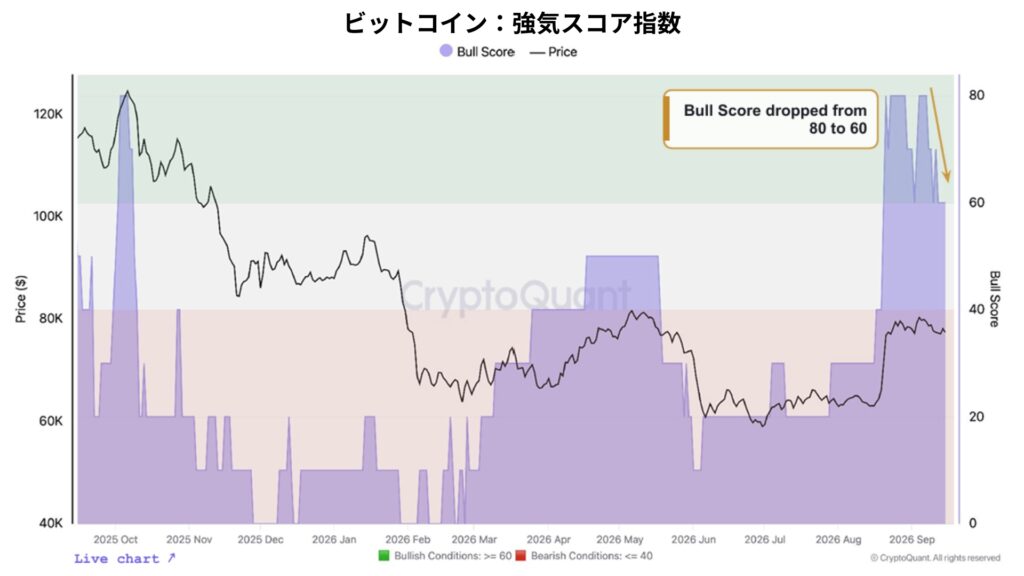
The primary catalyst for this observation is the Bitcoin "Bull Score," a comprehensive momentum indicator that recently retreated from a high of 80 down to approximately 60. Historically, such a contraction signals that the market is shedding speculative excess, allowing leveraged positions to reset and foundational support levels to stabilize. Market analysts view this correction as a healthy mechanism that prevents unsustainable vertical price action, thereby laying the groundwork for more sustainable, long-term price appreciation.
Despite the reduction in the Bull Score, spot prices have managed to hold within a resilient range, demonstrating that underlying institutional demand has not completely vanished. Instead, market participants are displaying a measured approach to risk management, waiting for clearer macroeconomic signals before committing fresh capital to new long positions.
Coinbase Premium and US Institutional Demand
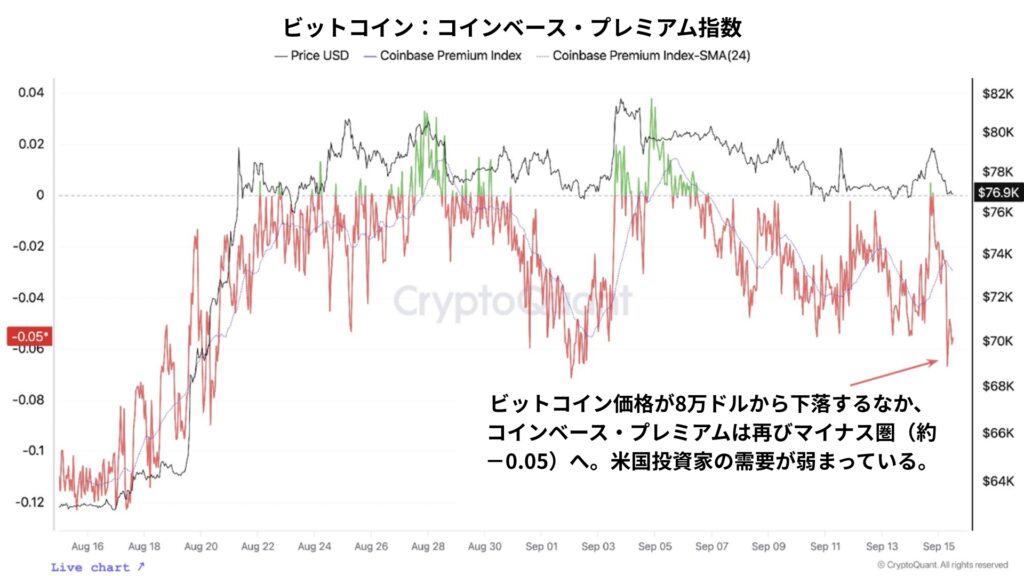
A critical component of Bitcoin price discovery involves monitoring regional demand, particularly through the lens of the Coinbase Premium Index. This metric tracks the price difference between Bitcoin trading pairs on Coinbase Pro (traditionally favored by US institutional investors and high-net-worth individuals) and global exchanges like Binance.
Throughout late August and early September, the Coinbase Premium Index hovered near neutral or slightly negative territories. This indicates that US-based buying pressure has temporarily cooled, aligning with the broader slowdown in the Bitcoin Bull Score. When the premium dips into negative territory, it typically signals that offshore selling pressure or local profit-taking is outpacing US institutional demand.
However, market historians note that neutral-to-negative periods on the Coinbase Premium Index do not necessarily forecast a prolonged bear market. Instead, they often represent accumulation phases where institutional capital steps back to reassess asset valuations before re-entering the market with renewed vigor.
Ethereum Exchange Inflows Signal Caution
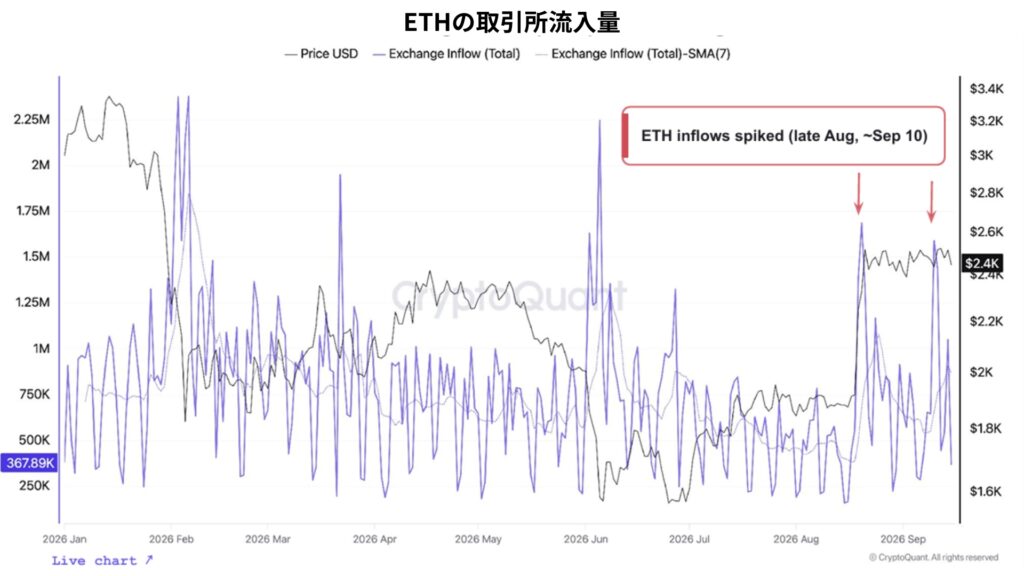
While Bitcoin navigates its cooling phase, Ethereum (ETH) has experienced a distinct set of on-chain pressures characterized by rising exchange inflows. Exchange inflows are a critical metric for gauging potential selling pressure, as moving tokens from private wallets to centralized exchanges often precedes liquidation.
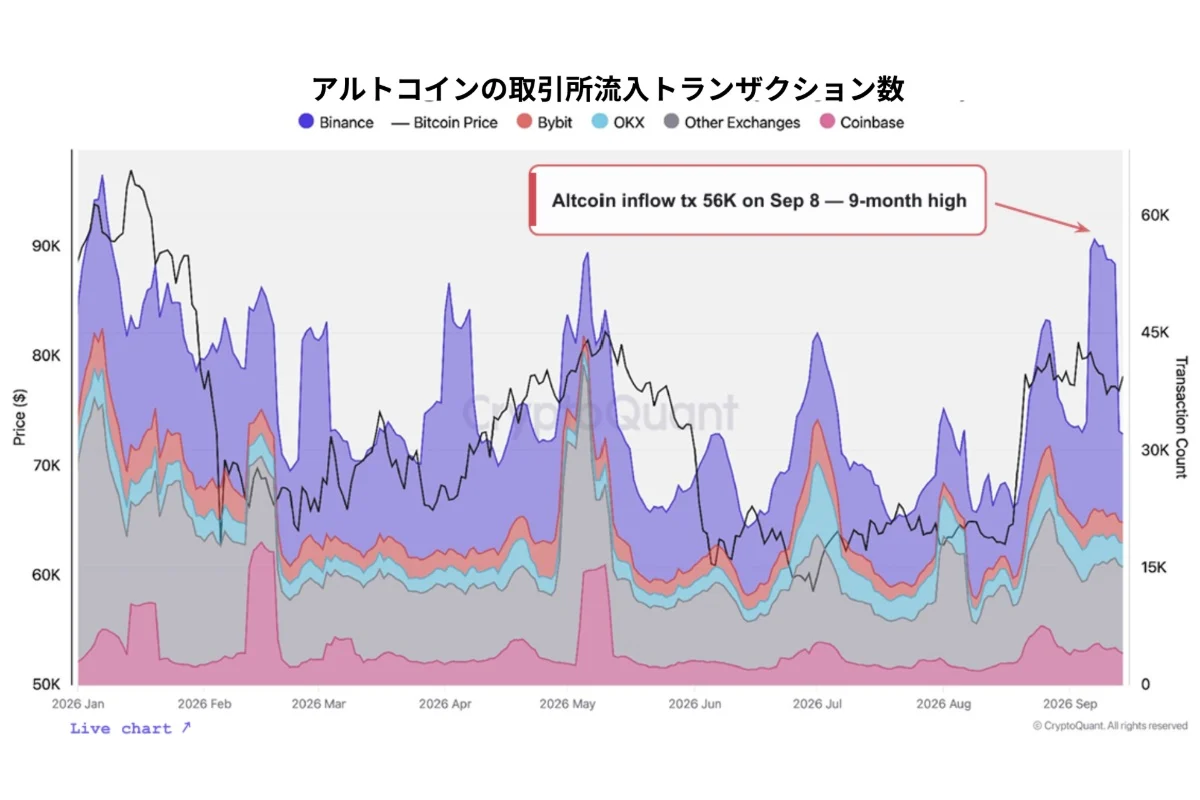
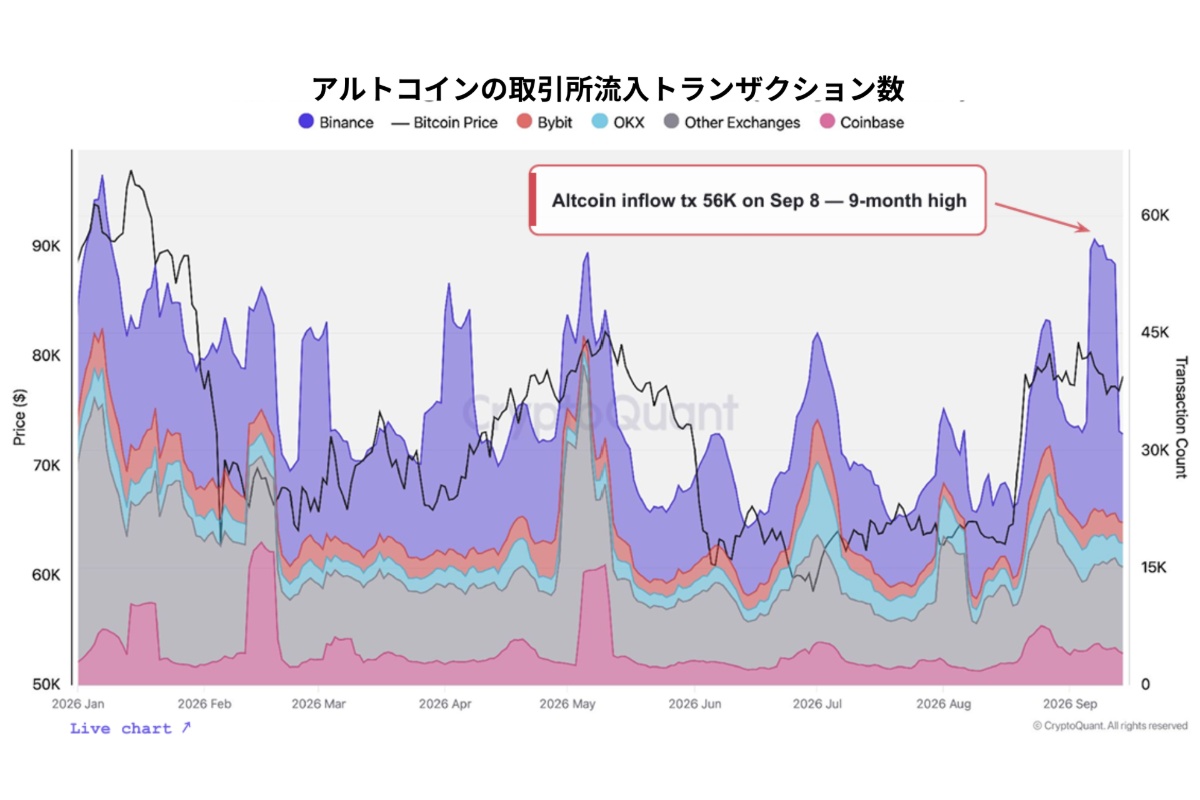
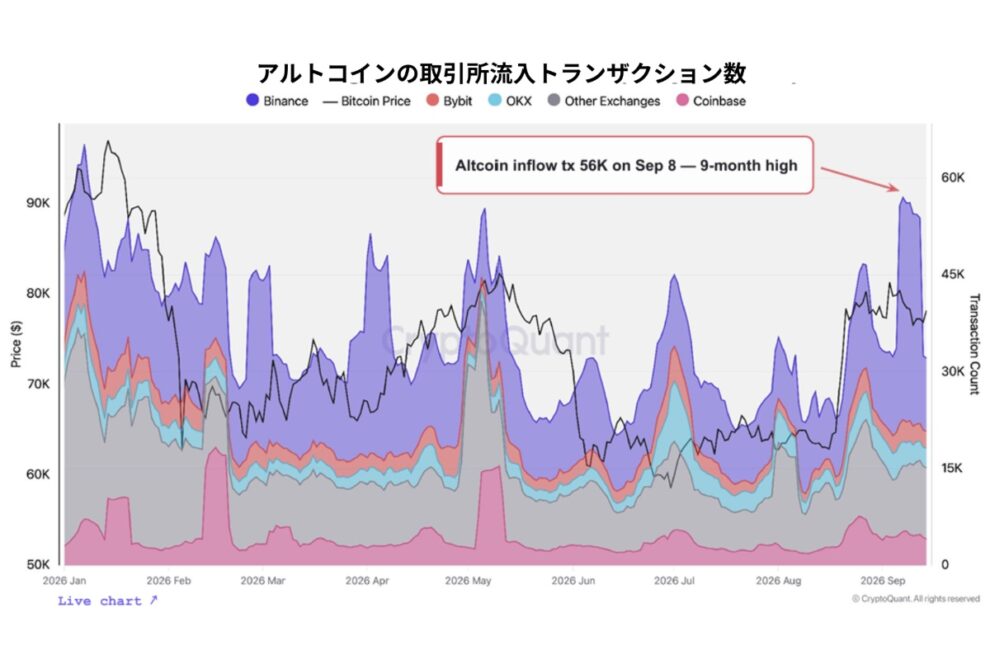
Data from CryptoQuant indicates that Ethereum exchange inflows saw a noticeable upward trend between late August and early September, registering consistent spikes. Notably, altcoin exchange inflow transactions—which encompass Ethereum and major altcoins—surged significantly, hitting a nine-month high on September 8 with over 56,000 transactions recorded in a single day.
This surge in exchange inflows has introduced a layer of caution among market participants. When inflows swell, it suggests that short-term holders and miners are positioning themselves to take profits or hedge against potential downside volatility. Consequently, Ethereum has faced localized resistance near key psychological thresholds, forcing traders to closely monitor whether these inflows will translate into sustained selling pressure or merely reflect routine portfolio rebalancing by institutional funds.
Altcoin Market Dynamics and Liquidity Shifts
The broader altcoin sector is experiencing similar structural adjustments. With Bitcoin trading in a consolidated range between $56,000 and $62,000, altcoin liquidity has seen considerable fragmentation.
Data highlights that daily active addresses across various layer-1 and layer-2 networks have fluctuated, reflecting a cautious stance from retail investors. Rather than engaging in speculative buying sprees across micro-cap tokens, capital is increasingly concentrating in established, high-liquidity assets. This flight to quality is a hallmark of transitional market cycles, where capital preservation takes precedence over aggressive risk-taking.
Furthermore, derivatives markets have shown a contraction in open interest. Futures leverage has flushed out a significant portion of over-leveraged long positions, reducing the risk of cascading liquidation cascades. While this deleveraging process can cause short-term price stagnation, it ultimately creates a healthier, less volatile market structure for the medium term.
Broader Economic Implications and Outlook
The transition observed by CryptoQuant occurs against a backdrop of macroeconomic uncertainty. Central banks globally continue to signal data-dependent monetary policies, leaving investors guessing about the trajectory of interest rates and global liquidity.
As the cryptocurrency market digests these signals, the consensus among analysts is that patience is required. The "Bullish Cooldown" is not necessarily a warning sign of an impending crypto winter, but rather a necessary consolidation phase. As on-chain metrics stabilize and exchange inflows normalize, the market will likely find a clearer direction.
For institutional investors and retail traders alike, the current environment underscores the importance of rigorous on-chain analysis and robust risk management. By closely monitoring metrics such as the Coinbase Premium Index, exchange reserve balances, and derivative leverage ratios, market participants can better navigate the complexities of this transitional phase and position themselves for the next major market move.