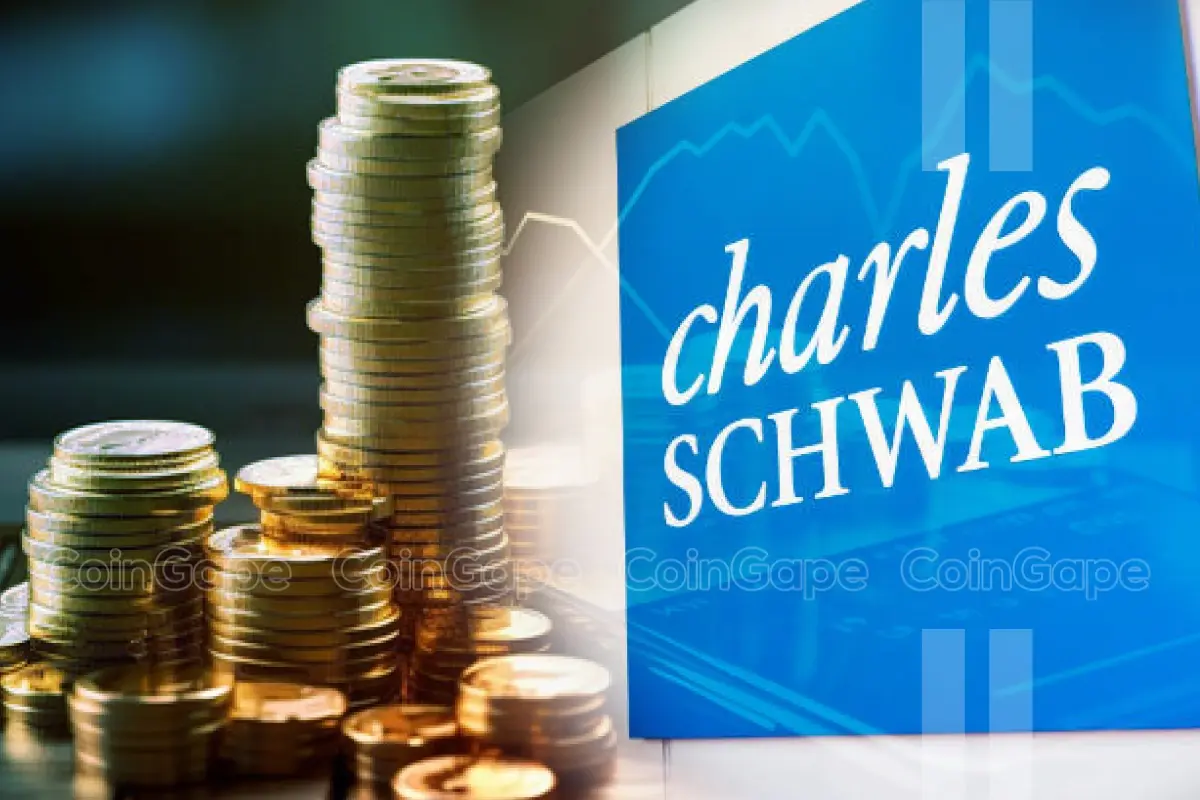
Financial services giant Charles Schwab has officially expanded its digital asset offerings, integrating Solana (SOL), Avalanche (AVAX), and Chainlink (LINK) into its proprietary cryptocurrency trading platform. This strategic move, announced on November 9, 2026, marks a significant milestone in the brokerage’s ongoing transition to accommodate the growing institutional and retail demand for diversified crypto-asset exposure. With over $13.3 trillion in client assets under management, Schwab’s entry into the broader altcoin market signals a maturing landscape where traditional finance (TradFi) increasingly converges with decentralized blockchain technologies.
The inclusion of these three assets brings the total number of supported cryptocurrencies on the Schwab Crypto platform to five, joining the existing roster of Bitcoin (BTC) and Ethereum (ETH). By allowing investors to trade SOL/USD, AVAX/USD, and LINK/USD directly within the Schwab ecosystem, the firm aims to eliminate the friction typically associated with navigating specialized crypto exchanges, offering a centralized hub for managing both legacy equities and modern digital assets.
A Chronology of Schwab’s Digital Asset Integration
The journey toward this expansion has been measured and deliberate. Schwab’s cautious yet steady approach reflects its broader corporate philosophy of prioritizing risk management and regulatory compliance.
- May 2026: Charles Schwab officially launched its crypto trading service for a select group of retail customers, providing direct access to Bitcoin and Ethereum. This rollout served as a pilot program to test platform stability and security protocols.
- August 2026: Following the success of the initial launch, the brokerage publicly signaled its intention to expand the supported asset list. Executives noted that the selection process for new assets would be heavily influenced by market liquidity, security standards, and client feedback.
- October 2026: Schwab broadened the accessibility of its crypto services, making Bitcoin and Ethereum trading available to all eligible retail clients across its platform.
- November 9, 2026: The official launch of SOL, AVAX, and LINK trading pairs marked the first major expansion of the platform’s product variety since the initial inception of the crypto offering.
This phased rollout demonstrates a "safety-first" strategy. By avoiding the rapid, high-frequency listing of dozens of tokens—a practice common among crypto-native exchanges—Schwab positions itself as a stable, regulated gateway for conservative investors who might otherwise be wary of the volatility and operational risks associated with unregulated digital asset platforms.
Market Dynamics and Asset Selection
The selection of Solana, Avalanche, and Chainlink is not coincidental. These three projects represent different, yet vital, sectors of the blockchain economy. Solana is frequently cited for its high-throughput performance, Avalanche is recognized for its sub-second finality and enterprise-grade subnet architecture, and Chainlink remains the industry standard for decentralized oracle networks, connecting smart contracts with real-world data.
By prioritizing these specific assets, Schwab is catering to a demographic of investors who are looking beyond Bitcoin’s "digital gold" narrative and Ethereum’s smart contract dominance, seeking exposure to platforms that drive the utility-heavy side of the Web3 ecosystem.
Supporting this move is a fee structure that aligns with the brokerage’s commitment to transparency. Schwab Crypto imposes a flat 0.75% transaction fee—equating to 75 basis points—for all cryptocurrency trades. While this is significantly higher than the micro-fees found on some global crypto exchanges, it is competitive within the context of traditional brokerage services that prioritize white-glove support, educational resources, and integration with robust tax reporting tools.
Institutional Context and Financial Scale
The scale of this operation is unprecedented. Charles Schwab reported $13.33 trillion in total client assets as of September 30, 2026, representing a 15% year-over-year growth trajectory. With 48.6 million active client accounts and $190.4 billion in quarterly core net new assets, the company possesses the infrastructure to move the needle on digital asset adoption.
The integration of these assets into platforms like thinkorswim and the Schwab Mobile app allows users to treat crypto as a legitimate asset class within their broader portfolios. According to Joe Vietri, Head of Digital Assets at Schwab, the expansion is part of a broader vision to provide clients with "greater choice and flexibility." For the retail investor, this means that rebalancing a portfolio—moving capital from an S&P 500 index fund into Solana, for instance—can be performed in a single environment, simplifying the tax documentation and reconciliation processes that often plague crypto-native trading.
Regulatory and Operational Limitations
Despite the expansion, the availability of these services remains subject to strict geographical and regulatory constraints. Currently, Schwab Crypto is not available in New York, Louisiana, or any U.S. territories. International clients are also currently excluded from the service, a limitation that highlights the brokerage’s focus on navigating the complex and fragmented U.S. state-by-state regulatory landscape.
Furthermore, the company maintains a strict disclosure policy regarding the risks inherent in digital assets. Schwab explicitly notes that cryptocurrencies are not covered by the Federal Deposit Insurance Corporation (FDIC) or the Securities Investor Protection Corporation (SIPC). This distinction is critical; while traditional cash and stocks are protected against bank failure or brokerage insolvency, crypto holdings remain outside these safety nets. This serves as a vital reminder to retail investors that digital assets, even when traded on a reputable institutional platform, carry a fundamentally different risk profile.
Future Implications and The Path Forward
The expansion of Schwab’s crypto offerings is widely viewed by analysts as a bullish signal for the digital asset industry. When a firm of Schwab’s magnitude adds assets like Avalanche or Chainlink to its menu, it effectively grants those tokens a form of institutional validation. This legitimization process is essential for the long-term sustainability of the asset class, as it bridges the gap between early adopters and the institutional capital that has historically been hesitant to engage with the crypto market.
While Schwab has not disclosed which tokens will be added next, the company has confirmed that it intends to continue expanding its digital asset catalog. The industry is currently watching to see if this trend will encourage competitors—such as Fidelity or Vanguard—to accelerate their own crypto offerings.
Ultimately, the inclusion of SOL, AVAX, and LINK marks the end of the "experimentation phase" for Charles Schwab. The brokerage has successfully integrated these assets into its core architecture, provided necessary educational resources through the Schwab Center for Financial Research, and maintained a reliable trading experience. As the company continues to refine its offerings, the focus will likely shift toward more advanced custodial services and perhaps the integration of yield-bearing digital assets or staking services, provided the regulatory environment remains conducive to such growth.
For the average Schwab client, the barrier to entry has never been lower. With the ability to trade blue-chip digital assets alongside a traditional stock portfolio, the traditional finance giant has signaled that cryptocurrency is no longer a fringe interest, but a permanent fixture in the modern wealth management landscape. As the firm moves into 2027, the success of this expansion will likely be measured not just by trading volume, but by how effectively the brokerage integrates these assets into long-term retirement and investment planning strategies for its millions of users.