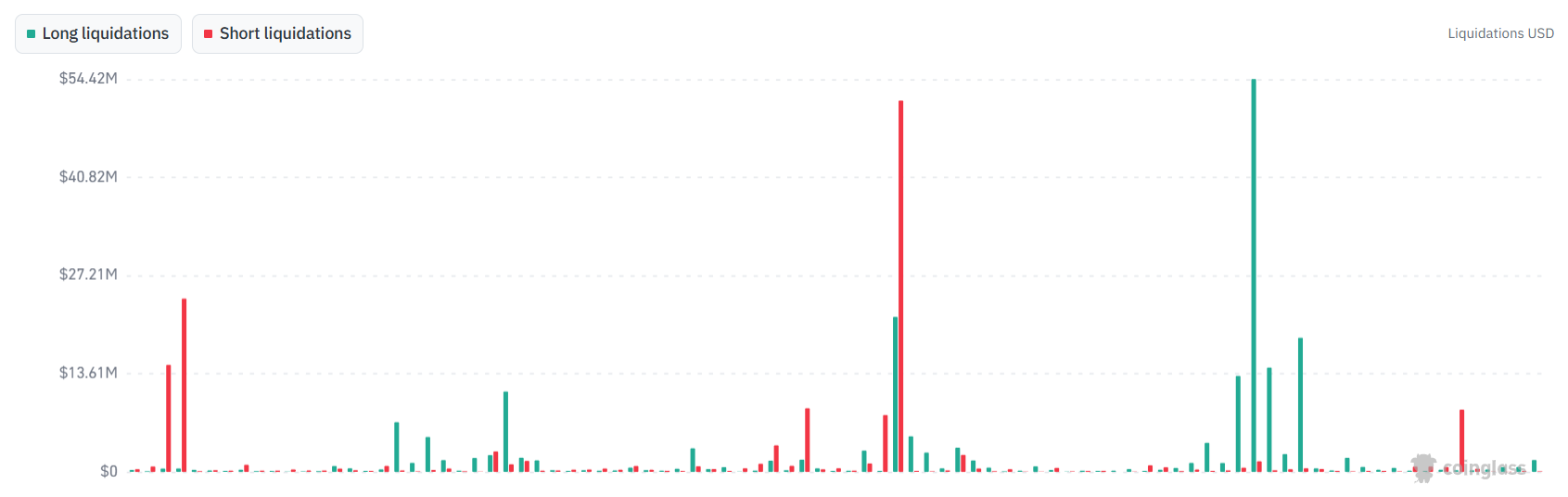
The digital asset sector faced a sharp correction over the last 24-hour cycle, as major cryptocurrencies—led by Bitcoin, Ethereum, and XRP—succumbed to a massive wave of liquidations totaling over $365 million. This volatility arrived in the immediate aftermath of the latest Federal Open Market Committee (FOMC) meeting, where the central bank opted to hold interest rates steady, defying the expectations of some market participants who had priced in a more dovish outlook.
According to data provided by CoinGlass, the market carnage was broad-based, affecting over 82,000 individual traders. The breakdown of these liquidations reveals a market caught in a crossfire between leverage-heavy positions and shifting macroeconomic realities. Specifically, long positions bore the brunt of the pressure, accounting for approximately $210 million in liquidations, while short sellers saw $150 million of their positions wiped out as price action swung violently in both directions. The scale of this event underscores the fragility of the current market structure, which remains tethered to the liquidity cycles dictated by the US Federal Reserve and the performance of high-growth technology stocks.
The Macroeconomic Trigger: A Hawkish Turn
The catalyst for this sudden reversal began in the corridors of the Federal Reserve. Although the FOMC voted 10-2 to maintain the current federal funds rate, the internal dissent from Fed Governor Lisa Cook and Cleveland Fed President Beth Hammack—both of whom advocated for a 25-basis-point hike—signaled that the central bank’s consensus is fraying.
The atmosphere in the markets soured significantly during the subsequent press conference led by Federal Reserve Chair Kevin Warsh. While the decision to hold rates was widely anticipated, Chair Warsh’s commentary was perceived by institutional investors as decidedly hawkish. He articulated concerns regarding persistent inflationary pressures, the rising cost of energy—exacerbated by the ongoing conflict between the United States and Iran—and a general lack of visibility into future monetary policy shifts. By refusing to rule out further aggressive action in the final months of the year, Warsh effectively ended the market’s rally, which had briefly pushed Bitcoin above the $81,000 threshold.

The reaction from the interest rate markets was swift. CME FedWatch data now suggests an 81% probability of a rate hike in December, a dramatic increase from earlier projections. As bond yields reacted to this uncertainty, the US 10-year Treasury yield surged above 5%, creating an unattractive environment for risk-on assets. Furthermore, the US Dollar Index (DXY), which serves as a barometer for global risk appetite, climbed toward 102.23, adding downward pressure on non-yielding assets like Bitcoin and Ethereum.
Correlation with Tech and AI Skepticism
The crypto market’s defensive posture is not occurring in a vacuum. It is heavily correlated with the recent volatility observed in the US tech sector. A growing wave of skepticism regarding the return on investment for large-scale AI infrastructure projects has prompted a selloff in major tech equities. Because crypto assets have increasingly traded in lockstep with tech-heavy indices like the Nasdaq, the pullback in capital allocation toward AI-focused companies has served as a drag on digital asset valuations.
The impact of this sentiment shift is evident in the specific liquidation data. Beyond the blue-chip assets, tokens such as Solana (SOL), ZEC, and various speculative assets experienced high-volume liquidations, as liquidity was pulled from the market in favor of capital preservation. The largest single liquidation order reported was an ETH-USDT contract worth $6.53 million on the Binance exchange, a figure that highlights the significant leverage still present in the Ethereum ecosystem despite the recent price consolidation.
Chronology of the Market Shift
The past 48 hours have been defined by a rapid transition from optimism to defensive positioning. On the day of the FOMC announcement, the market initially reacted with a relief rally, pushing Bitcoin to test its $81,000 resistance level. This movement was likely driven by short-covering and speculative optimism that the Fed would adopt a more neutral tone.
However, the mood shifted within minutes of the press conference. As Warsh outlined the risks of an inflationary environment—specifically referencing energy prices and the geopolitical implications of the US-Iran situation—the algorithmic trading community began offloading positions. By the following morning, the liquidation cascade had hit its peak, forcing retail and institutional traders to unwind their leveraged bets. As of this writing, market participants are looking ahead to the upcoming release of the US Personal Consumption Expenditures (PCE) price index, the Federal Reserve’s preferred measure of inflation. Economists are forecasting a 0.3% increase in Core PCE for September, with annual inflation expected to rise to 3.6%, a figure that would likely solidify the Fed’s hawkish stance for the remainder of the quarter.
The Derivatives Landscape: Options Expiry and Max Pain
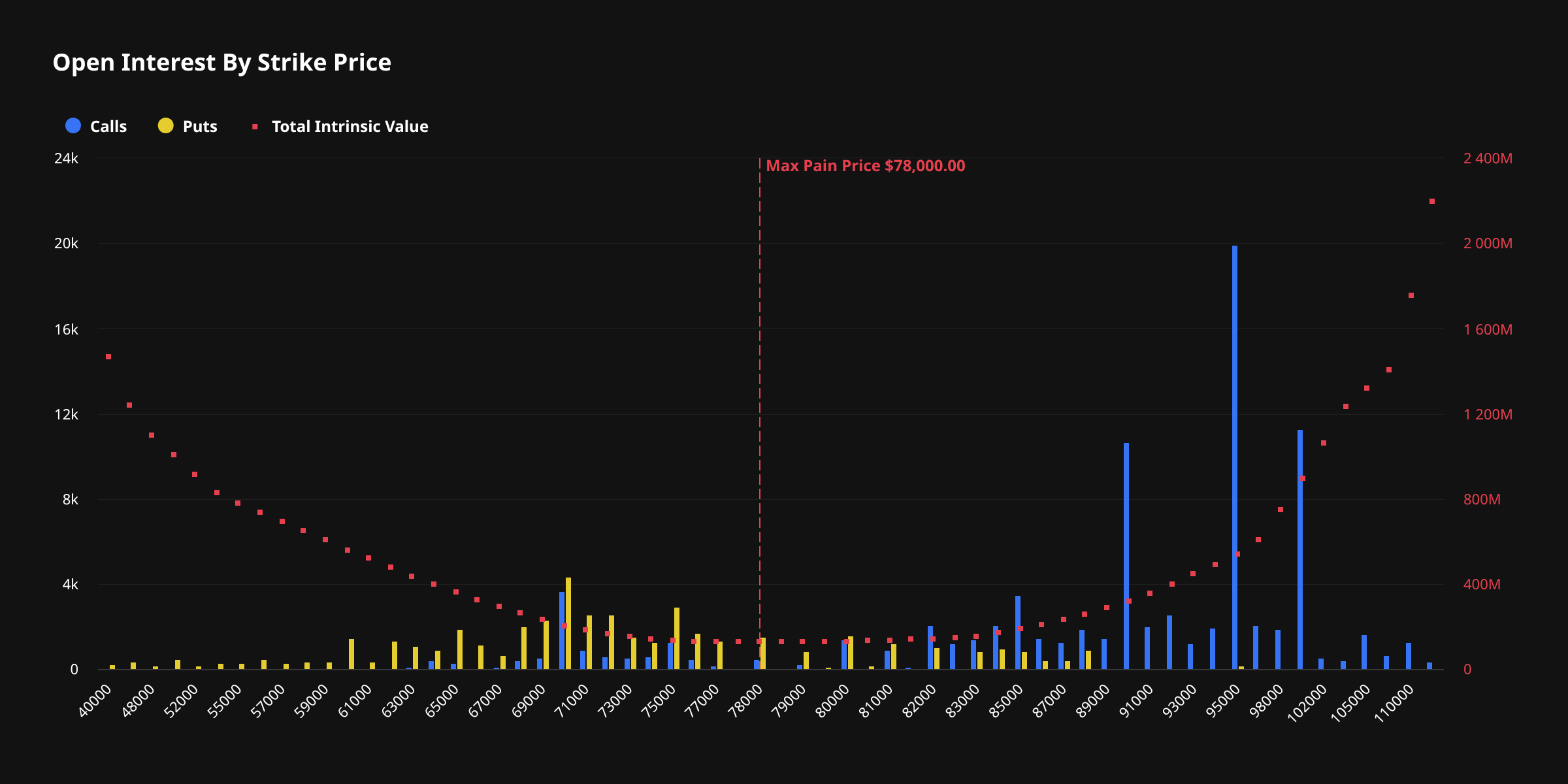
Compounding the volatility is the impending monthly options expiry, a recurring event that often results in amplified price swings. On the Deribit exchange, more than 135,000 Bitcoin options with a notional value of $10.8 billion are set to expire this Friday.
The current market structure suggests a state of "max pain" at the $78,000 mark for Bitcoin. In options theory, the max pain price is the level at which the maximum number of option contracts expire worthless, causing the greatest financial loss to option holders. With the put-call ratio for Bitcoin standing at 0.52, there is a clear bias toward call options, reflecting long-term institutional bullishness. However, the short-term reality is starker: the probability of Bitcoin holding above the $80,500 strike price is currently estimated by the market at less than 50%.
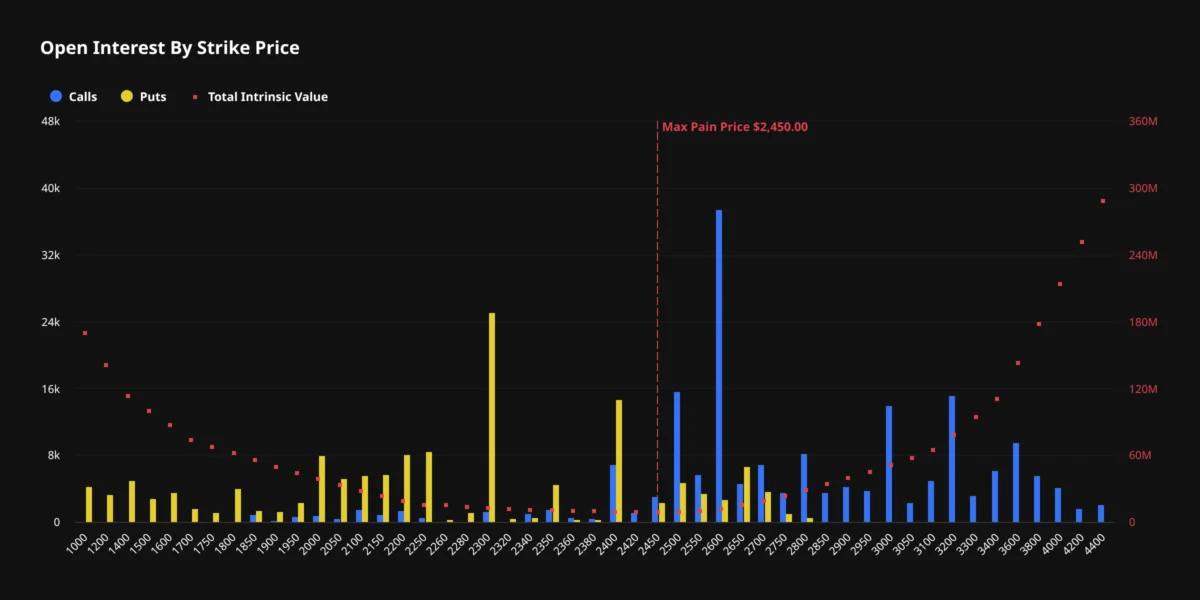
Ethereum faces a similar, albeit smaller, challenge, with $775 million in notional value set to expire. With a put-call ratio of 0.78 and a max pain price of $2,450, Ethereum is currently trading below its equilibrium point, further incentivizing downward pressure as traders adjust their hedging strategies ahead of the weekend.
Implications and Future Outlook
The confluence of Fed hawkishness, cooling tech sector enthusiasm, and the massive monthly options expiry creates a complex outlook for the crypto market. While long-term institutional interest remains high, as evidenced by the volume of open interest on derivatives exchanges, the immediate trajectory is clearly under pressure.
The primary risk for the market remains the persistent inflation data. If the upcoming PCE report confirms that inflation is accelerating, the Fed will have little choice but to maintain its restrictive stance. This would likely sustain the strength of the US dollar and keep Treasury yields elevated, both of which are historically negative for Bitcoin and its peers.
For retail and professional traders, the current environment serves as a stark reminder of the risks associated with high leverage. The $365 million in liquidations underscores that even in a maturing asset class, the combination of macroeconomic uncertainty and high-leverage positions creates a recipe for volatility. As the market digests these developments, the focus will shift toward how institutional liquidity providers navigate the potential for a December rate hike. For now, the "buy the dip" sentiment that characterized much of the earlier year has been replaced by a more cautious, data-dependent approach.
Ultimately, the market is bracing for a monthly close that may fall below the critical $80,000 threshold for Bitcoin. Whether this represents a structural correction or a temporary shakeout will likely be determined by the resilience of the US labor market and the trajectory of energy prices in the coming weeks. For the time being, the crypto sector remains in a defensive posture, awaiting a clearer signal from both the macroeconomic data and the technical indicators surrounding options expiry.