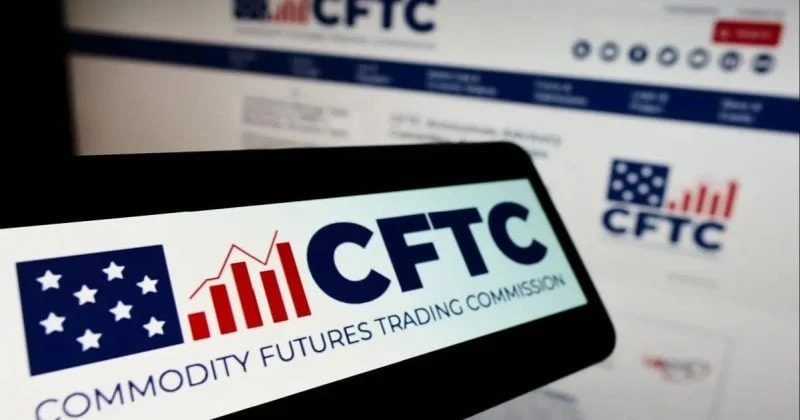
The submission of a formal proposal to the White House’s Office of Management and Budget (OMB) on September 17 marks a critical milestone in this ongoing process. While the agency has previously relied on enforcement actions and "no-action" letters to govern the sector, this new framework seeks to create a permanent, transparent structure for crypto asset transactions and market operations.
The Legislative Impasse and Regulatory Intervention
For years, the U.S. crypto industry has clamored for comprehensive federal oversight. However, the legislative process in Washington has been characterized by stalled progress. Bills such as the CLARITY Act, which sought to establish clear jurisdictional lines between the Securities and Exchange Commission (SEC) and the CFTC, have failed to gain sufficient traction in the Senate. This legislative inertia has left market participants in a state of uncertainty, often forcing firms to operate in a legal gray area.
CFTC Chairman Michael Selig has frequently articulated the necessity of a proactive stance. During the inaugural meeting of the CFTC’s Innovation Advisory Committee in August, Selig outlined a forward-looking agenda. His focus encompasses not only crypto assets but also the growing intersection of artificial intelligence in compute markets and the proliferation of prediction markets. Selig’s argument is rooted in the preservation of American financial competitiveness: without clear, fit-for-purpose rules, the U.S. risks losing its position as a global leader in financial innovation to more permissive jurisdictions.
Proposed Framework: A New Market Category
The heart of the CFTC’s strategy involves the creation of a new category of "crypto asset market." Under existing authorities, the agency is exploring ways to designate specific platforms—including those that are currently non-registered—as a type of Designated Contract Market (DCM). This would allow these entities to offer crypto asset trading on a leveraged or margined basis, provided they adhere to stringent regulatory standards tailored to the unique risks of digital assets.
By leveraging the DCM designation, the CFTC aims to bring crypto exchanges under the same rigorous oversight as traditional commodities markets. This would necessitate compliance with anti-money laundering (AML) protocols, capital requirements, and transparency reporting, thereby enhancing investor protection and market integrity. For existing registrants, this provides a clear pathway to expanded service offerings; for non-registrants, it offers a potential "gold standard" of compliance that could legitimize their operations in the eyes of institutional investors.
Chronology of Regulatory Action
The journey toward this proposal has been marked by a series of incremental steps and tactical shifts:
- Mid-2023: Increased pressure from industry stakeholders leads to bipartisan discussions regarding market structure legislation.
- Early 2024: The SEC and CFTC continue to clash over jurisdictional boundaries, particularly regarding the classification of various digital assets as securities versus commodities.
- August 2024: Chairman Selig officially announces the "innovation agenda" at the Innovation Advisory Committee meeting, signaling the intent to use existing authority to codify market rules.
- September 17, 2024: The CFTC submits its proposed framework to the OMB for review, initiating the formal administrative process.
- Late 2024 (Projected): Subject to OMB approval, the proposal will be returned to the Commission for a formal vote, after which a public comment period will commence.
Supporting Data and Market Context
The necessity for this framework is underscored by the sheer volume of crypto-derivatives trading. Recent data suggests that global crypto-derivatives volumes frequently exceed spot trading volumes, with billions of dollars in daily turnover on decentralized and centralized exchanges. However, much of this activity occurs on platforms that lack the oversight mechanisms typical of the New York Stock Exchange or the Chicago Mercantile Exchange.
Furthermore, the SEC’s recent decision to approve a five-year conditional exemption for blockchain-based platforms to facilitate tokenized securities trading highlights a growing trend of "regulatory by-design" approaches. By allowing tokenized stocks to trade on-chain through automated market makers without full registration as traditional exchanges, the SEC is effectively conceding that legacy frameworks are ill-equipped for modern blockchain technology. The CFTC’s current move complements this trend, suggesting a coordinated—albeit independent—effort by federal regulators to accommodate blockchain innovation.
Implications for Market Participants
The impact of this proposed framework, if finalized, would be profound. For crypto wallets and trading interfaces, the potential to connect users to regulated derivatives—such as perpetual contracts and event contracts—could usher in a new era of mainstream adoption. By extending "no-action" relief to qualifying providers of passive trading software, the CFTC has already demonstrated a willingness to distinguish between infrastructure providers and centralized exchanges. This nuanced approach suggests that the upcoming rules will likely differentiate between different types of market participants based on their level of control and custody over user assets.
Critics of the agency’s approach argue that "purpose-fit" rules might still be too burdensome for smaller, decentralized protocols. Conversely, proponents argue that the lack of regulation is the primary barrier to institutional capital. By providing a clear regulatory "safe harbor," the CFTC could effectively incentivize decentralized projects to adopt compliance standards that allow them to interface with the regulated financial system.
Analysis of the OMB Review Process
The submission to the OMB is not a formality; it is a critical gatekeeping mechanism. The OMB assesses whether the regulation is cost-effective, necessary, and aligned with the administration’s broader economic goals. Because the CFTC is proposing to act without new congressional legislation, the OMB review will likely focus on whether the agency is overstepping its statutory mandate.
Should the OMB request revisions, the proposal may be delayed. However, if it proceeds to a public comment period, the industry will have a rare opportunity to shape the specifics of the crypto asset market designation. This period will be a barometer for the industry’s appetite for regulation; major firms will likely push for rules that prioritize operational efficiency, while consumer advocacy groups will focus on robust custody and margin requirements.
The Broader Economic Impact
The move by the CFTC should be viewed within the context of global financial competition. Other major economies, such as the European Union with its Markets in Crypto-Assets (MiCA) regulation, have already established comprehensive frameworks. The United States, by relying on an "enforcement-first" strategy, has historically lagged in providing a predictable environment for crypto-native firms.
If the CFTC succeeds in creating a functional, predictable, and fair market structure for crypto assets, it could catalyze a wave of domestic investment. By bringing crypto derivatives into the light of federal oversight, the agency is not just creating rules; it is attempting to insulate the broader U.S. economy from the systemic risks that have historically been associated with unregulated, offshore crypto exchanges.
Conclusion
The CFTC’s decision to move forward with a crypto market-structure framework marks a turning point in the U.S. government’s approach to digital assets. While the road to a final rule is long—requiring OMB approval, a public comment period, and a final commission vote—the agency has clearly demonstrated that it is no longer content to wait for a polarized Congress to reach a consensus.
By building upon its existing authority, the CFTC is creating a bridge between the innovative, decentralized world of crypto and the established, regulated world of commodities. Whether this initiative will succeed in fostering innovation while maintaining market stability remains to be seen, but it represents the most substantive effort by a U.S. federal agency to bring clarity to a sector that has long demanded it. As the regulatory landscape shifts, all eyes will be on the OMB and the subsequent public discourse, as the rules established here will likely define the trajectory of the U.S. crypto market for the coming decade.