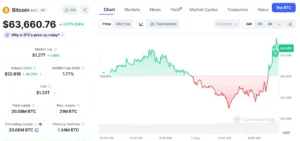
Bitcoin, the world’s leading cryptocurrency, appears to be flashing one of its most closely watched contrarian signals, as over 10 million BTC are now held below their acquisition cost, indicating a significant portion of the market is currently "underwater." This critical development, highlighted by recent on-chain observations from analyst Ali Martinez and data from Glassnode, places Bitcoin in a historical zone that has frequently coincided with major market turning points, sparking intense debate among investors and analysts regarding whether the latest price decline is nearing a definitive bottom.
The Historic Threshold: 10 Million BTC in Loss
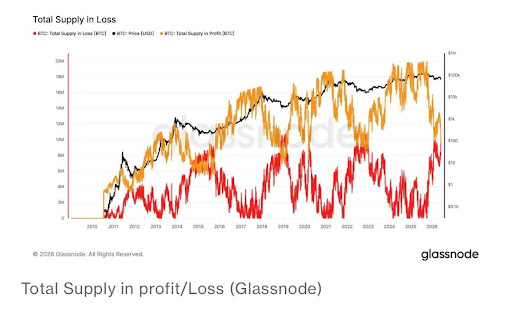
The latest data from on-chain analytics firm Glassnode reveals a profound shift in Bitcoin’s market positioning. The "Total Supply in Loss" metric shows that approximately 10.46 million BTC are currently being held at a loss. To put this figure into perspective, given Bitcoin’s circulating supply of just under 21 million coins, this means roughly half of all existing Bitcoins are presently held by investors who purchased them at a higher price than the current market value. This metric identifies coins whose last movement on the blockchain occurred when the price was above the present trading price, signifying an unrealized loss for the holder.
This substantial increase in "underwater" supply is a direct consequence of Bitcoin’s recent price retreat from its cycle highs. While the exact date of the data point from the original source is cited as June 2026, the principle remains relevant for understanding market dynamics. As the price contracted, the number of coins held in profit diminished, while the supply held at a loss expanded considerably, pushing the market into a zone historically associated with severe downturns and heightened investor stress. At the time of the original observation, Bitcoin was trading around $63,242, having experienced losses extending across multiple timeframes, including a significant decline of over 40% from its previous year’s highs. Such a steep correction naturally leads to a large segment of the network holding unrealized losses.
Historical Precedent: Echoes of Past Market Bottoms

The significance of the 10-million-BTC-in-loss threshold becomes markedly clearer when viewed against Bitcoin’s historical market cycles. Previous major market bottoms have frequently developed when the amount of BTC held at a loss climbed beyond this or similar critical levels. This pattern suggests a recurring dynamic where widespread unrealized losses precede a stabilization and eventual recovery phase.
For instance, during the protracted bear market of 2018, following the euphoric highs of 2017, the supply in loss metric climbed steadily as Bitcoin’s price plummeted. This period of intense capitulation saw a significant portion of the network holding coins below their acquisition cost. The eventual bottom that formed in late 2018/early 2019 was characterized by a large "underwater" supply, which ultimately paved the way for the subsequent bull run.
Similarly, the sharp, albeit brief, market crash in March 2020, often referred to as "Black Thursday," saw an immediate surge in the supply held at a loss. While the recovery was swift due to unprecedented global monetary easing, the sudden increase in unrealized losses acted as a short-term capitulation event before the market rebounded.
More recently, the 2022 bear market, exacerbated by events like the collapse of Terra/Luna and FTX, also witnessed a dramatic expansion of the "Total Supply in Loss." Throughout 2022, as Bitcoin struggled to find a floor amidst a challenging macroeconomic environment and widespread deleveraging, this metric provided crucial insights into the extent of investor pain. Each time the metric approached or surpassed historical thresholds, it signaled periods of extreme undervaluation and often preceded periods of accumulation by long-term holders. These historical instances underscore a powerful correlation: deep corrections that push a large portion of the supply into an unrealized loss position have frequently marked the final stages of a bear market or significant corrections, laying the groundwork for future recoveries.
Understanding On-Chain Signals: Beyond Just Price
To fully grasp the implications of the "underwater" supply, it is essential to delve deeper into the sophisticated on-chain metrics that analysts utilize. These metrics provide an objective, real-time look into the network’s health and investor behavior, often revealing underlying trends not immediately apparent from price charts alone.

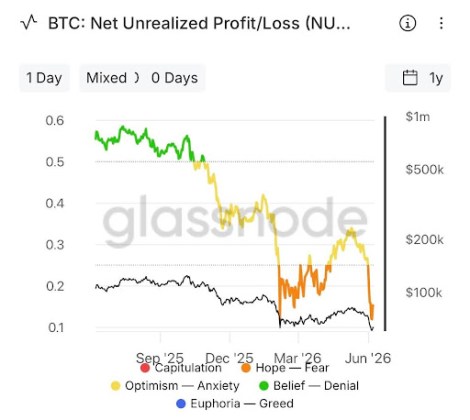
One such crucial indicator is the Net Unrealized Profit/Loss (NUPL). This metric, also provided by Glassnode, measures the overall sentiment and profitability of the Bitcoin market by calculating the difference between relative unrealized profit and relative unrealized loss. It is categorized into several distinct zones, each reflecting a specific psychological state of the market:
- Euphoria (Blue): Market participants are experiencing high profits, often signaling overheating.
- Belief (Green): Strong belief in future price appreciation, still profitable.
- Hope-Fear (Yellow): A transitional zone where confidence is shaken, but widespread capitulation hasn’t fully set in. This is where the market finds itself currently.
- Capitulation (Orange): Extreme fear, widespread losses, often associated with market bottoms.
- Disbelief (Red): Investors are in significant loss, giving up hope.
Recent Glassnode data confirms that Bitcoin’s NUPL indicator has indeed fallen into the "Hope-Fear" zone, after spending much of the preceding year in more optimistic territory. Historically, these lower NUPL ranges reflect periods where confidence has been severely shaken, indicating a substantial shift from prior bullish sentiment. While the "Hope-Fear" zone suggests significant investor stress, it implies that the market has not yet entered full-blown "Capitulation," which is often characterized by even deeper unrealized losses and panic selling. This distinction is critical, as it suggests that while pain is prevalent, there might still be room for further price discovery, or conversely, that the current level of pain is sufficient to deter further selling.
The Psychology of "Underwater" Holdings and Market Dynamics
Analyst Ali Martinez argues that elevated loss holdings can paradoxically reduce the intensity of selling activity. This concept is rooted in behavioral economics, specifically the phenomenon of loss aversion bias. When a large number of investors are already deeply "underwater," the incentive to liquidate positions often diminishes significantly. Rather than locking in substantial losses, many holders—especially those with a long-term conviction in Bitcoin—choose to wait out the downturn, hoping for a recovery that will bring their holdings back into profit or at least reduce their losses. This collective decision to hold, rather than sell, causes selling pressure to gradually weaken over time.
This dynamic creates a self-reinforcing loop: as fewer coins are actively sold, the downward price momentum can decelerate, potentially forming a base. This period is often characterized by long-term holders (LTHs) accumulating coins from short-term holders (STHs) who capitulate under pressure. LTHs, defined by Glassnode as entities holding Bitcoin for more than 155 days, typically exhibit stronger conviction and are less likely to sell during market downturns. Their accumulation during these phases removes supply from the active market, further contributing to reduced selling pressure.
Furthermore, the "underwater" status can also influence miner behavior. During severe bear markets, mining profitability decreases significantly, forcing some miners, particularly those with less efficient operations or higher debt, into capitulation. This involves selling their Bitcoin reserves, even at a loss, to cover operational costs or debt repayments. While miner capitulation can initially add to selling pressure, it is historically seen as a cleansing event that removes weaker hands from the network, often preceding market bottoms as the remaining, stronger miners consolidate their positions.
The Broader Economic and Regulatory Backdrop
The current state of Bitcoin’s market cannot be fully understood in isolation. The broader macroeconomic environment and evolving regulatory landscape play significant roles in shaping investor sentiment and asset prices. The period leading up to the "underwater" threshold being reached has been marked by several global economic headwinds. Persistent inflation across major economies has prompted central banks, particularly the U.S. Federal Reserve, to implement aggressive interest rate hikes. Higher interest rates typically reduce liquidity in financial markets and make riskier assets like cryptocurrencies less attractive compared to traditional, less volatile investments. This "risk-off" sentiment has contributed significantly to the depreciation of Bitcoin’s price.
Additionally, regulatory uncertainty continues to be a factor. Governments and regulatory bodies worldwide are grappling with how to classify, oversee, and integrate cryptocurrencies into existing financial frameworks. Varying approaches, from outright bans in some regions to cautious integration in others, create a complex and often unpredictable environment for investors. Legal challenges and enforcement actions against crypto firms in key markets can also trigger waves of FUD (Fear, Uncertainty, and Doubt), leading to selling pressure and further pushing coins into unrealized loss territory. These external pressures compound the internal market dynamics, making the current period a confluence of both on-chain signals and macro factors.
Expert Perspectives and Cautionary Notes
While the confluence of over 10 million BTC in loss, weak sentiment reflected by NUPL, and a steep decline from previous highs has historically appeared near major market bottoms, it is crucial to temper optimism with caution. As Ali Martinez and other analysts frequently emphasize, historical correlation does not guarantee future performance. The crypto market, while exhibiting recurring cycles, is also highly susceptible to unforeseen events and evolving external factors.
A definitive bottom remains unconfirmed. While the current scale of unrealized losses across the network strongly indicates that Bitcoin is trading in a zone often associated with accumulation and recovery, several risks could prolong the correction or even lead to further declines. These include:
- Further Macroeconomic Shocks: An unexpected global recession, significant geopolitical events, or a resurgence of inflation could trigger another wave of "risk-off" sentiment, leading to further liquidation.
- Unexpected Regulatory Actions: A sudden, restrictive regulatory crackdown in a major jurisdiction could destabilize the market.
- Black Swan Events: Unforeseen market-specific events, similar to past exchange hacks or project collapses, could erode trust and trigger panic selling.
Therefore, while the signals are compelling, investors are advised to exercise prudence and conduct thorough due diligence. The current environment is one of significant opportunity for those with a long-term perspective, but also one of continued volatility and potential for further downside.
Implications for the Road Ahead: Accumulation or Further Descent?
The present situation presents two primary scenarios for Bitcoin’s immediate future. The first, and arguably more optimistic, scenario posits that the market is entering an accumulation phase. In this view, the current levels of unrealized losses represent a period where "weak hands" have been flushed out, and long-term oriented investors are quietly accumulating Bitcoin at what they perceive to be discounted prices. The reduced selling pressure, combined with the historical precedent of such "underwater" thresholds preceding recoveries, suggests that the worst of the downturn may be over, and a gradual ascent could begin. This phase is characterized by sideways price action, often frustrating short-term traders but rewarding patient accumulators.
The second scenario suggests that the market could still experience a further correction. While the current signals are strong, they might not represent the absolute rock bottom. If macroeconomic conditions worsen, or if a significant market event triggers a new wave of panic, the price could still fall further, pushing even more supply into loss and potentially driving NUPL into the "Capitulation" zone. Such a scenario would represent a deeper cleansing of the market before a sustained recovery can truly begin.
Ultimately, the combination of more than 10 million BTC in unrealized losses, weak sentiment reflected in the "Hope-Fear" NUPL zone, and a substantial decline from recent highs collectively points to Bitcoin being in a historically significant and critical phase. This period has consistently been associated with market turning points, often preceding periods of accumulation and subsequent recovery. While the path forward remains uncertain, the sheer scale of the network’s unrealized losses strongly suggests that Bitcoin is once again trading in a zone that has historically offered compelling opportunities for those with a long-term investment horizon, even as the market grapples with inherent uncertainties and the ongoing debate over the definitive bottom. Investors will continue to monitor these vital on-chain metrics for further clues regarding Bitcoin’s trajectory.