The landscape of decentralized finance (DeFi) derivatives trading continues to mature rapidly, shifting away from rudimentary spot swaps toward sophisticated execution infrastructure traditionally reserved for institutional traditional finance (TradFi) desks. A prime example of this evolution is the deployment of scaled orders on Synthetix Perps, a feature designed to automate the generation of a series of limit orders across a predefined price range. Rather than committing capital to a single, monolithic price point—which can introduce massive slippage, increase market impact, and signal intent to predatory high-frequency trading bots—traders can now break down large positions into micro-allocations. This architectural approach, frequently referred to as "laddering in" during market drawdowns or "laddering out" during rallies, represents a fundamental shift in how decentralized exchange (DEX) participants manage market exposure, average entry prices, and execution risk.
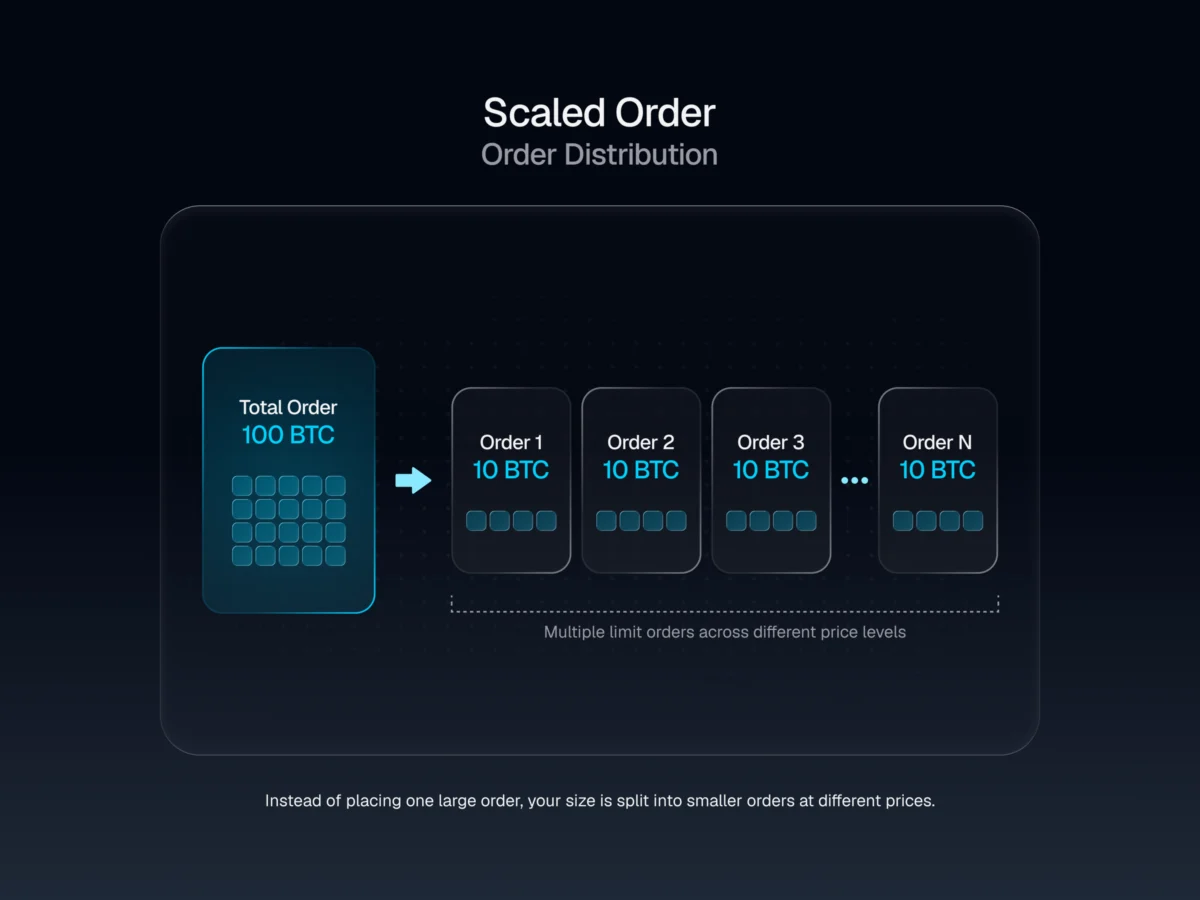
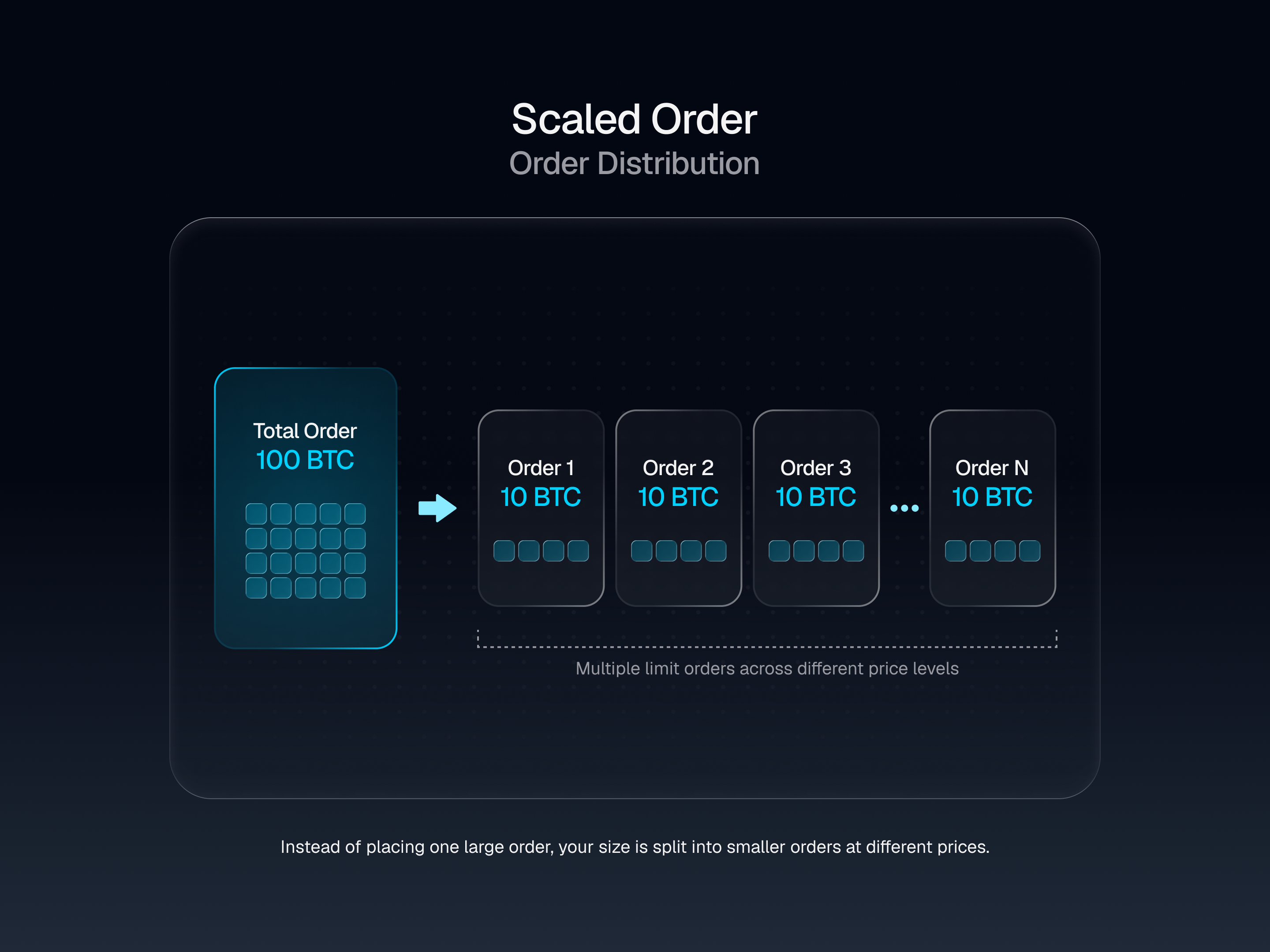
To understand the operational mechanics of this feature, one must examine the core anatomy of a scaled order. Historically, executing a large-size perpetual swap order on-chain involved either a market order, which frequently suffered from degraded execution quality during periods of low liquidity, or a single limit order, which risked being entirely missed if the market reversed a tick away from the target price. Scaled orders solve this structural inefficiency by splitting a single macro order amount into several smaller suborders and distributing them mathematically across a customizable price corridor. The immediate result is a staggered matrix of limit orders that scale into or out of a position gradually. This execution methodology not only helps traders capture a superior average execution price but also mitigates the cryptographic and market-impact footprint that any single monolithic execution would leave on the public order book.
The strategic utility of this tool spans both long-term accumulation phases and tactical short-term trading within highly volatile market regimes. In traditional financial markets, algorithmic execution suites provided by prime brokers have long utilized TWAP (Time-Weighted Average Price) and VWAP (Volume-Weighted Average Price) alongside scaled distribution models to handle large institutional blocks without moving the underlying spot or derivatives price. By bringing a version of these execution parameters on-chain, Synthetix Perps empowers retail and prosumer traders alike to mimic institutional execution hygiene. Whether a participant is attempting to build a long-term bullish exposure in a descending crypto market or systematically lock in profits as an asset surges past resistance zones, the elimination of manual order management dramatically reduces cognitive load and execution error.
At the heart of the Synthetix Perps implementation are three distinct quantity distribution types, providing traders with granular control over how their total capital allocation is dispersed across the designated price range. The first and most straightforward setting is the Equal, or Flat, distribution model. Under this configuration, every suborder receives an identical size, ensuring that capital is spread uniformly across every price increment in the range. Traders typically deploy the Equal distribution when they maintain a neutral directional bias but expect the asset to oscillate or consolidate within a specific high-low corridor.
The second option, known as the Increasing distribution model, alters the dynamic by scaling the size of the suborders upward as the price moves in a specific direction. Specifically, the suborder placed at the highest price carries the largest absolute quantity, meaning that a greater volume of the asset is traded at elevated prices. This distribution is heavily favored by market participants looking to construct strategic sell orders or take-profit matrices, effectively lifting the overall average selling price by committing more capital to favorable upside executions.
Conversely, the Decreasing distribution model operates in reverse, shrinking individual suborder sizes as the price rises. Under this schema, the suborder stationed at the highest price carries the smallest quantity, while the heaviest volume is concentrated at the lower end of the price range. This layout is the go-to choice for traders executing accumulation strategies, as it automatically deploys larger capital amounts closer to support levels, thereby lowering the cumulative average buy price and optimizing capital efficiency during market corrections.
Beyond quantity distribution, Synthetix Perps incorporates customizable price distribution intervals. Accessible via the dedicated price distribution subsection within the trading interface, users possess the flexibility to space out their suborders at wider or narrower price intervals. By pairing price interval adjustments with the aforementioned quantity distribution types—Equal, Increasing, or Decreasing—traders can construct highly tailored execution profiles that align precisely with their proprietary technical analysis, volatility forecasts, and risk management parameters.
Deploying a scaled order within the Synthetix ecosystem requires a structured approach through the protocol’s derivatives interface. Traders begin by navigating to the Synthetix Perps trading portal, selecting their desired asset market, and opening the advanced order routing menu. From there, the user inputs the total desired position size, defines the overarching upper and lower price boundaries, selects the preferred quantity distribution type (Equal, Increasing, or Decreasing), and sets the desired suborder count and price intervals. Once reviewed, the protocol automatically computes and populates the series of limit orders, locking the necessary margin and deploying the strategy directly to the decentralized order book or matching engine.
While the advantages of automated order scaling are profound, market participants must keep several key risk management principles in mind. Because scaled orders generate multiple active limit orders, traders must ensure they maintain adequate margin coverage across their account to support the potential execution of all suborders simultaneously. A failure to account for total margin utilization can lead to unexpected liquidations if the market trends aggressively against open suborders before sufficient capital can be reallocated. Furthermore, because limit orders remain resting on the order book until filled or canceled, traders must actively monitor prevailing macroeconomic data releases, liquidity shifts, and structural trend breaks that might render their pre-set price corridors obsolete.
The launch of scaled orders on Synthetix Perps arrives at a critical juncture for decentralized derivatives exchanges. Over the past several cycles, DeFi protocols have steadily closed the feature gap with centralized exchanges (CEXs), offering deeper liquidity, self-custody guarantees, and composable financial primitives. However, order execution tooling has occasionally lagged behind the sophisticated execution algorithms available on legacy platforms. By introducing native scaled order architecture, Synthetix is addressing one of the primary friction points for advanced traders operating on the Ethereum mainnet and its associated scaling networks.
Industry analysts note that as decentralized perpetual exchanges capture a larger percentage of total crypto derivatives volume, execution quality will serve as the primary differentiator for protocol adoption. Institutional market makers and high-volume retail traders demand deterministic execution paths that minimize adverse selection. Features like automated order scaling not only improve individual trade performance through optimized average pricing but also enhance overall market depth by encouraging passive liquidity distribution across wider price bands.
Synthetix’s broader strategic vision emphasizes cementing the Ethereum mainnet and its high-performance scaling environments as the premier settlement layer for institutional-grade decentralized derivatives. As the protocol continues to ship advanced trading features, community engagement remains robust across official communication channels. Traders seeking technical documentation, strategy guides, or direct assistance from the core development team can access the official Synthetix documentation portal or utilize the embedded support chat features. Furthermore, community governance discussions, feature proposals, and real-time market updates continue to be coordinated via the official Synthetix Discord server, Telegram announcements channel, and verified social media feeds on X.