Synthetix, a leading decentralized synthetic asset protocol on the Ethereum blockchain, has significantly augmented its suite of trading tools with the official launch of Time-Weighted Average Price (TWAP) orders on its Mainnet. This development marks a crucial step forward in providing sophisticated execution strategies previously more common in traditional finance to the burgeoning decentralized finance (DeFi) landscape. TWAP orders are designed to empower traders to scale into and out of substantial positions with greater precision, particularly in markets characterized by fluctuating liquidity and the potential for significant price impact from large single executions. By automating the division of large orders into smaller, more manageable slices executed over a specified time frame, Synthetix aims to offer a smoother, more efficient, and less disruptive trading experience for its users.
Understanding TWAP Orders: A Strategic Approach to Execution
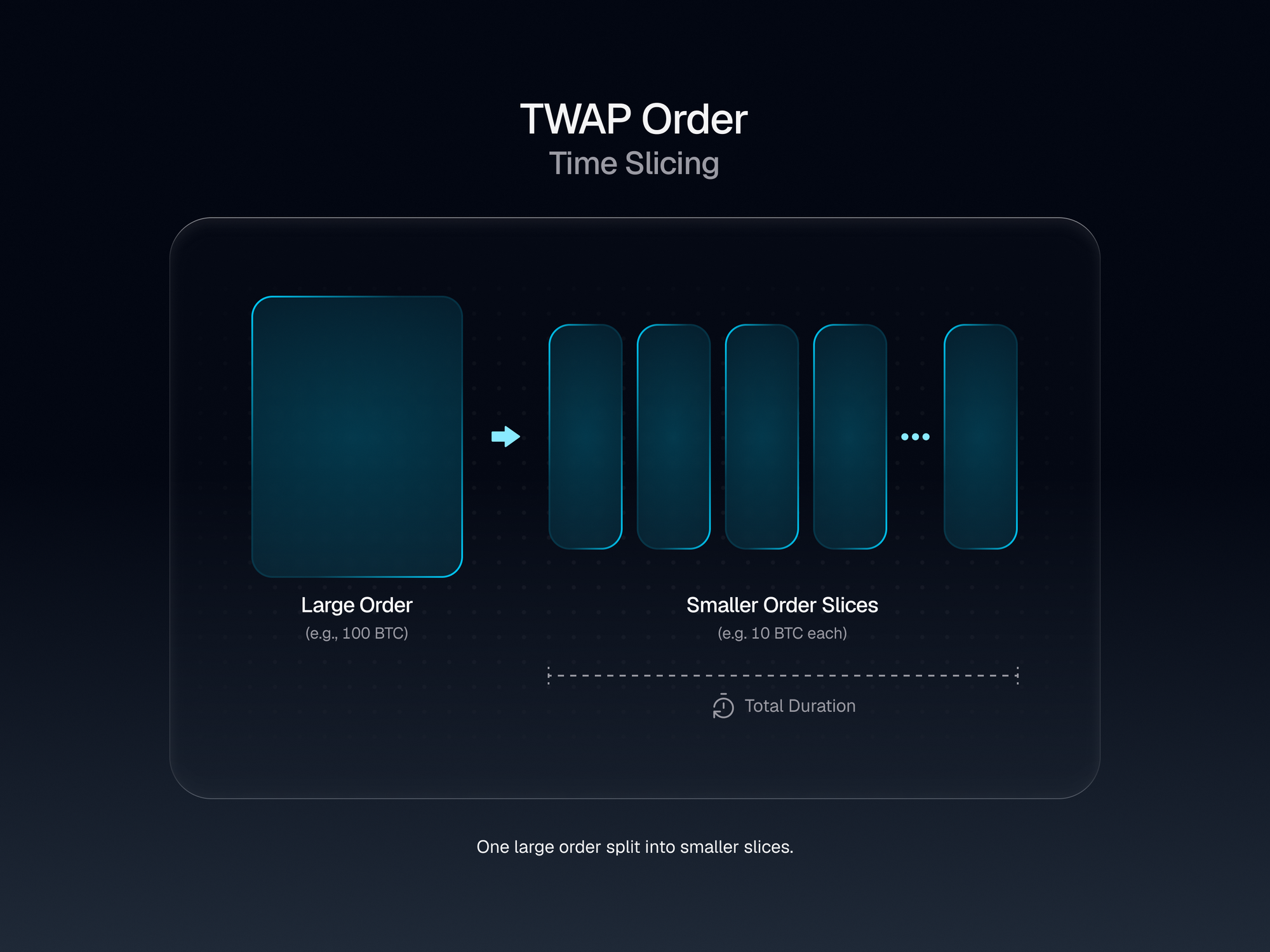
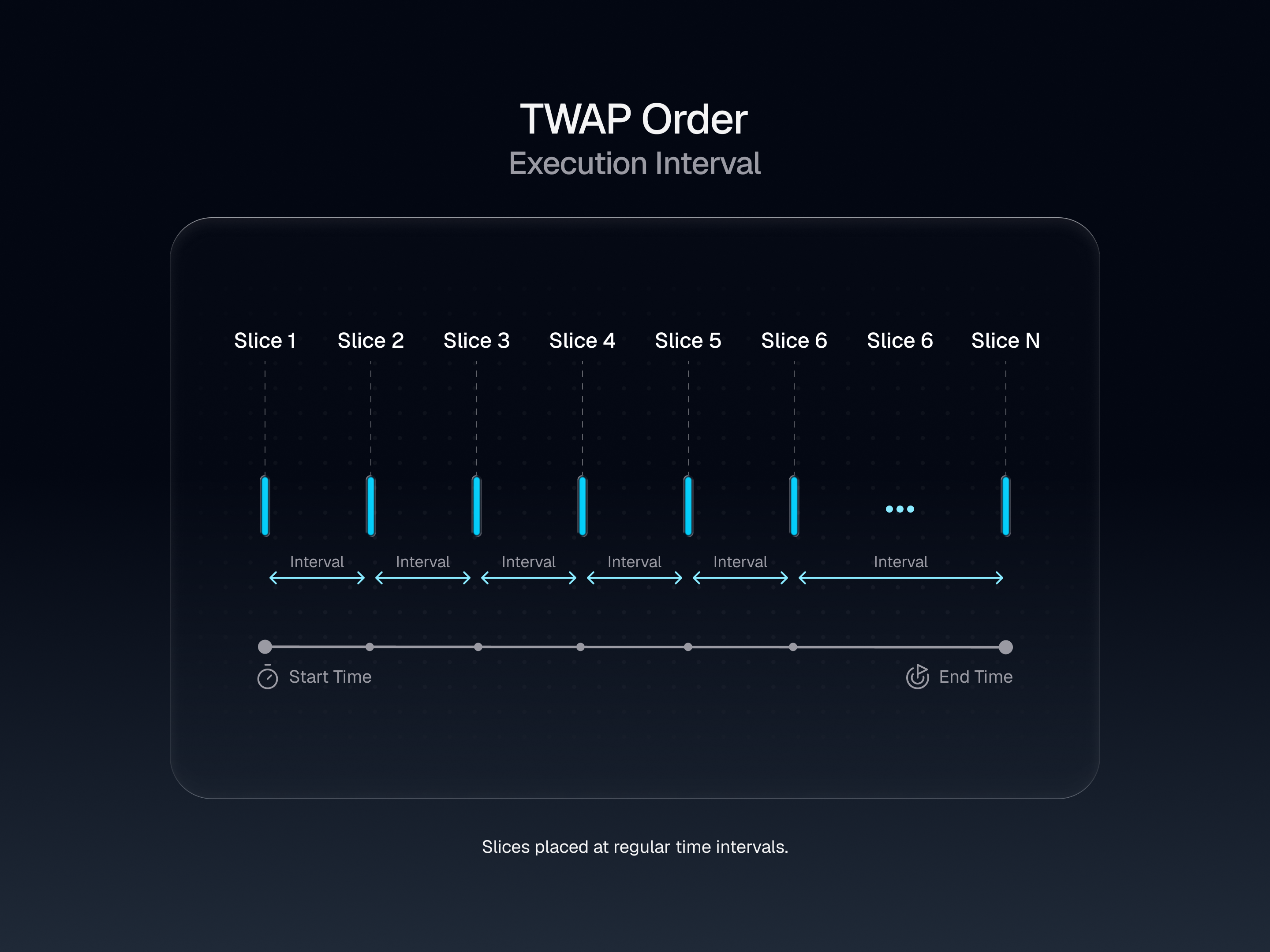
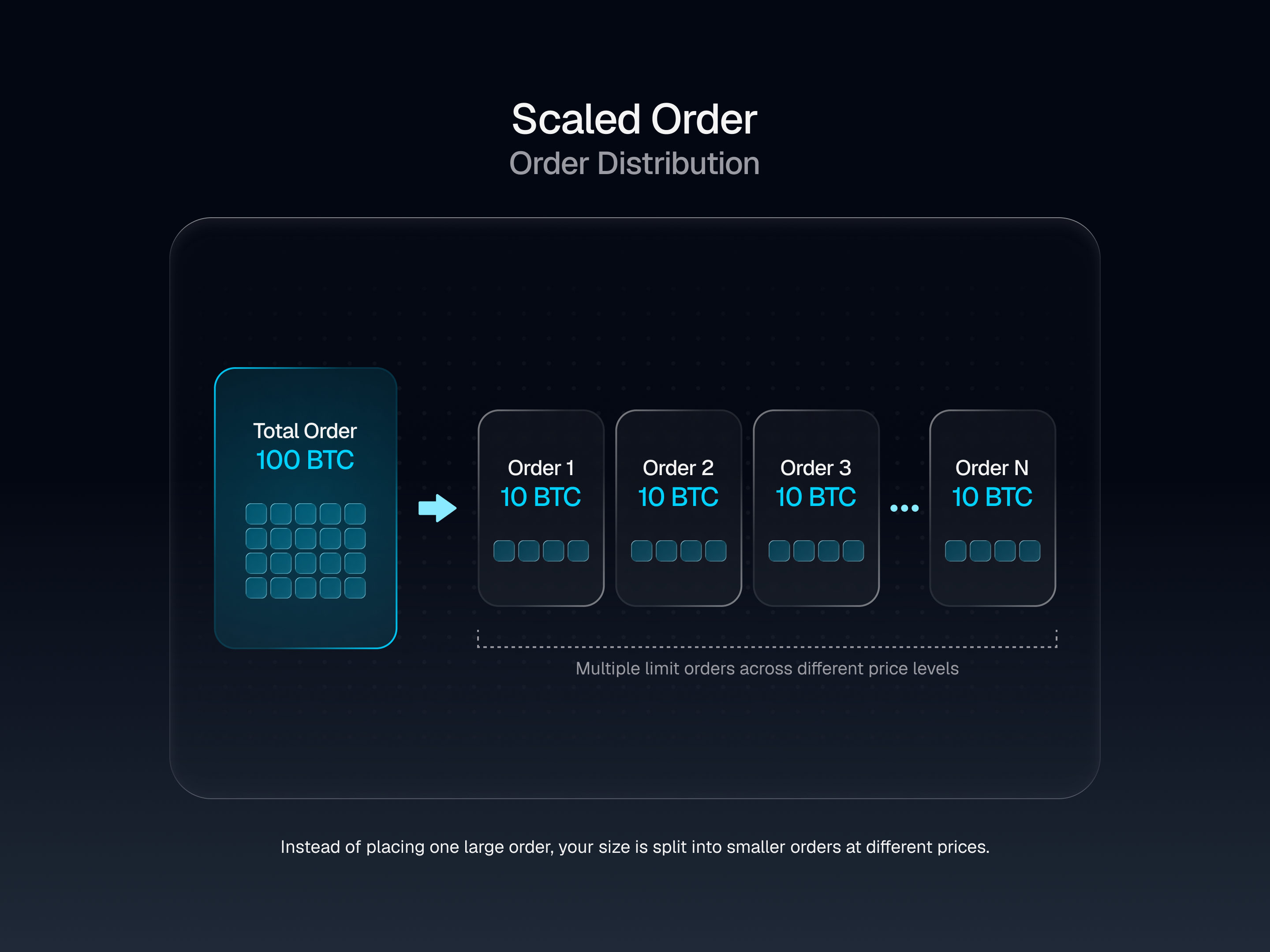
At its core, a TWAP order is an algorithmic execution strategy that breaks down a single large order into multiple smaller orders, distributing their execution across a predefined duration. Instead of attempting to fill an entire position at a single point in time, which can lead to substantial slippage and adverse price movements in illiquid markets, TWAP systematically executes trades over a period. This method averages the fill price over the chosen interval, thereby minimizing the impact of any individual execution on the overall market price. For instance, a trader looking to acquire or divest a 100 BTC position, which would typically cause considerable market ripples if executed as a single block trade, can now program the Synthetix protocol to gradually fill this order over several hours or even a full day. This gradual accumulation or distribution is particularly advantageous in the often-volatile and sometimes thinly traded environment of long-tail crypto assets.
The implementation of TWAP orders addresses a fundamental challenge in both centralized and decentralized markets: the trade-off between speed of execution and price impact. In highly liquid markets, a large order might be absorbed with minimal disruption. However, in less liquid pairs or during periods of heightened volatility, a substantial market order can "walk the book," consuming available liquidity at increasingly unfavorable prices. TWAP orders provide a mechanism to circumvent this by ensuring that the market is not overwhelmed by a single, aggressive demand or supply shock from one large participant.
Averaging Through Market Volatility: A Shield Against Price Swings
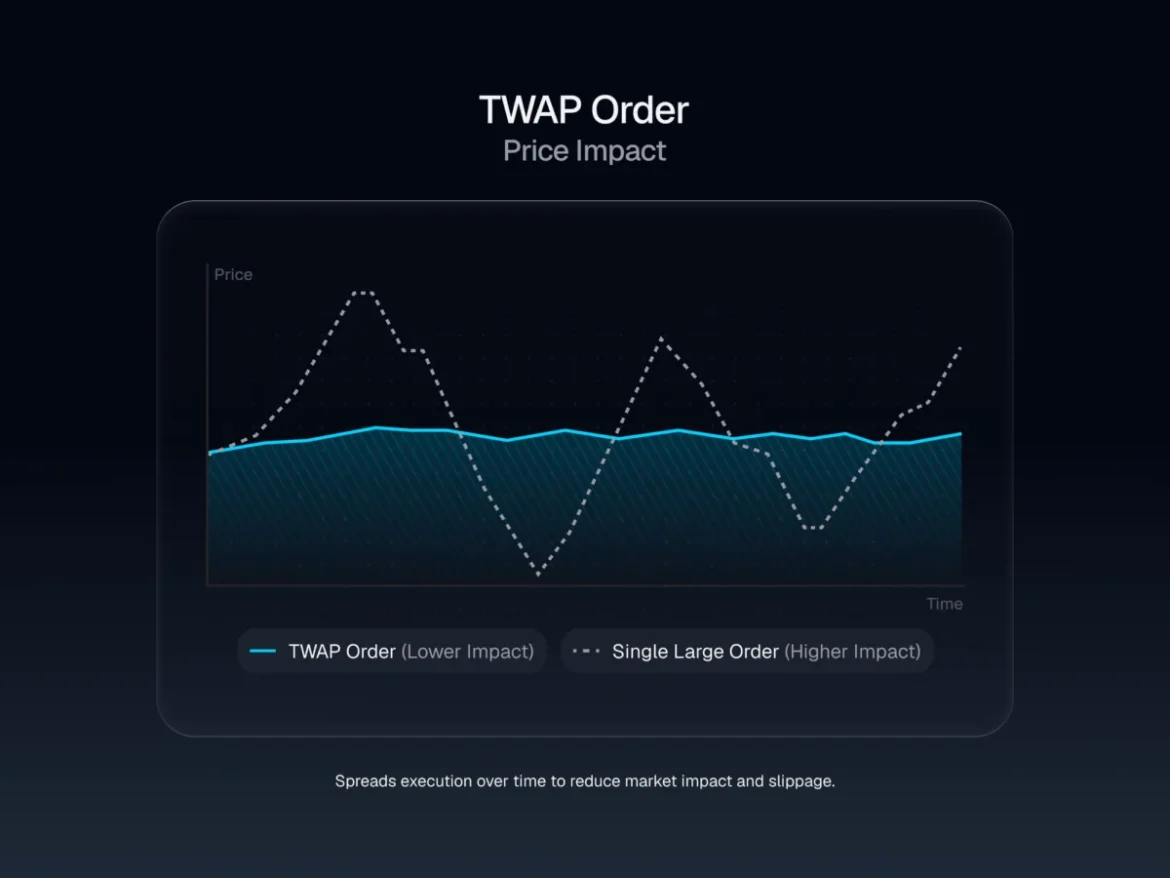
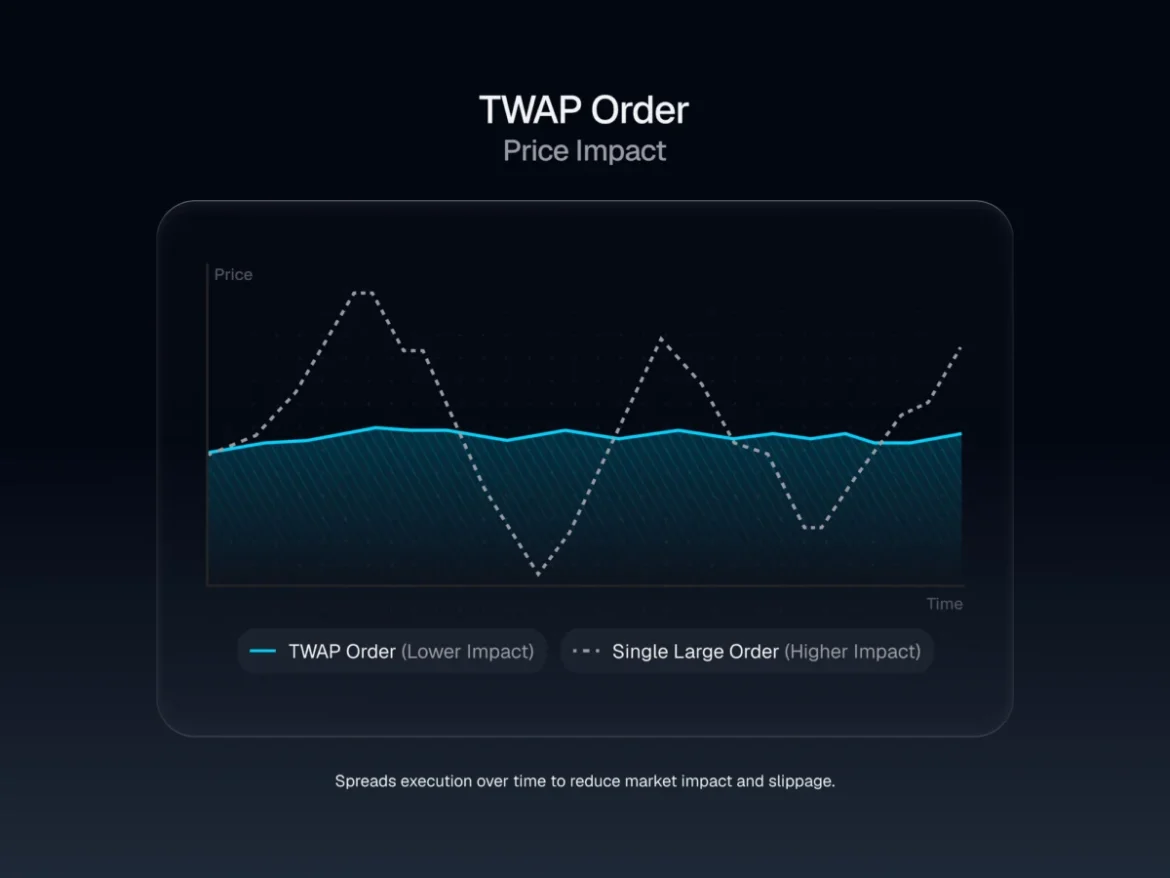
One of the most compelling benefits of TWAP orders lies in their ability to average execution prices across defined time intervals. The cryptocurrency market is notorious for its rapid and often unpredictable price fluctuations, commonly referred to as "wicks" or "spikes." These short-term aberrations can significantly impact the effective entry or exit price for traders executing large orders manually or through instant market orders. By distributing executions over time, TWAP orders effectively smooth out the impact of these temporary volatilities. Traders are less exposed to the risk of having a significant portion of their order filled at an outlier price point caused by a fleeting market movement.
Synthetix’s TWAP orders offer flexible durations, ranging from a brisk 5 minutes up to a comprehensive 24 hours. This adaptability allows traders to tailor their strategy to prevailing market conditions and their specific objectives. Shorter durations (e.g., 5-30 minutes) are ideal for situations where a trader wants to remain relatively close to the current market price but still mitigate the immediate impact of a single large execution. These shorter intervals provide a balance, preventing an abrupt market reaction while ensuring the trade completes within a reasonable timeframe.
Conversely, longer durations (e.g., several hours to 24 hours) are invaluable for smoothing out short-term market fluctuations over an extended period, potentially achieving a daily average fill price. This extended averaging is particularly useful for:

- Strategic Position Building/Unwinding: Traders with a long-term outlook who are not sensitive to minor intraday price movements but want to optimize their average entry/exit price over days.
- Large-Scale Institutional Trading: Funds or large individual traders managing substantial capital who need to execute significant trades without causing noticeable market disturbances.
- Illiquid Markets: Trading assets with limited order book depth, where any substantial order could otherwise drastically move the price.
- Reducing Exposure to Sudden News Events: While not a perfect hedge, spreading an order over time can reduce the chance of a disproportionate fill just as unexpected news hits the market.
Reduced Market Impact: Navigating Thin Liquidity with Precision
Beyond volatility mitigation, a primary advantage of TWAP orders is the reduction of market impact. In decentralized exchanges (DEXs), especially those built on AMM (Automated Market Maker) models or featuring synthetic assets like Synthetix, liquidity can vary significantly between different trading pairs. "Long-tail markets"—less popular or newly listed assets—often suffer from thin liquidity, meaning there are fewer buyers and sellers at any given price point. In such environments, a single large market order can consume all available depth on one side of the order book, leading to substantial slippage and an unfavorable average execution price.
TWAP orders counteract this by breaking the large principal order into numerous smaller slices. Each smaller slice is less likely to exhaust the available liquidity at a given price level, thus minimizing the price movement caused by its execution. This strategy allows traders to manage larger positions without aggressively pushing the market against themselves. Instead of "forcing" a single, hefty fill into thin liquidity, TWAP intelligently distributes the execution burden over time and across multiple micro-fills. This nuanced approach helps maintain market stability and provides a fairer average price for the trader, ultimately contributing to healthier market dynamics. For instance, studies in traditional markets have shown that algorithmic orders like TWAP can reduce transaction costs by 10-20% for large block trades by minimizing market impact. While direct comparable data for DeFi is still emerging, the principles remain robust.
The DeFi Landscape and the Need for Sophisticated Tools
The introduction of TWAP orders by Synthetix is not merely an incremental update; it reflects a broader maturation of the DeFi ecosystem. Decentralized trading, while offering unparalleled transparency and censorship resistance, has historically lagged behind centralized exchanges in terms of execution sophistication and tools for institutional-grade trading. Challenges such as gas fees, potential for Miner Extractable Value (MEV) attacks (where validators front-run or sandwich transactions for profit), and fragmented liquidity across various DEXs have made large-scale trading in DeFi complex and often expensive.
Synthetix, as a protocol focused on deep liquidity for synthetic assets (synths), plays a critical role in bridging this gap. By offering synthetics that track real-world assets (forex, commodities, equities) and cryptocurrencies, Synthetix aims to provide highly liquid markets on-chain. However, even with deep liquidity pools, the underlying nature of blockchain transactions means that large, instantaneous orders can still be vulnerable to price impact and MEV. TWAP orders serve as a powerful countermeasure, offering traders a way to execute large orders more discreetly and effectively, reducing the footprint that MEV bots or arbitrageurs might exploit. This enhances the overall fairness and efficiency of trading on Synthetix, making it a more attractive venue for both retail and increasingly, institutional participants.
Synthetix’s Innovation Trajectory: A History of Enhancing DeFi Trading
Synthetix has a consistent track record of innovating within the DeFi space, constantly shipping new features designed to improve user experience and expand trading capabilities. Since its inception, the protocol has focused on providing a robust infrastructure for synthetic assets, allowing users to gain exposure to various assets without holding the underlying. This includes offering perpetual futures, which have become a cornerstone of crypto trading. The development of TWAP orders aligns perfectly with this trajectory, building on previous advancements such as:
- Atomic Swaps: Facilitating instant, gas-efficient swaps between synths.
- Perpetual Futures Markets: Offering leveraged trading on a wide range of assets.
- Decentralized Liquidity: Creating deep on-chain liquidity pools for synthetic assets.
- Optimized Fee Structures: Continuously refining transaction costs to remain competitive.
The introduction of TWAP orders is a natural evolution, responding to the growing demand for more sophisticated order types that can handle larger volumes and manage market dynamics more effectively. This strategic enhancement positions Synthetix not just as a provider of synthetic assets, but as a comprehensive, institution-ready trading platform within the decentralized ecosystem. The team’s proactive approach to development underscores a commitment to making Ethereum Mainnet the premier destination for perpetual futures trading, offering features that rival, and in some aspects, surpass those found on centralized exchanges.
Strategic Advantages for Diverse Traders
The utility of TWAP orders extends across a broad spectrum of traders, from large-scale individual investors to nascent institutional players entering the DeFi space.

- For High-Net-Worth Individuals and Whales: TWAP orders enable these participants to enter or exit significant positions without signaling their intentions to the market or incurring substantial slippage. This allows for more discreet and cost-effective capital deployment.
- For Fund Managers and Institutional Investors: As more traditional financial entities explore DeFi, they require robust execution strategies. TWAP orders provide a familiar and effective tool for managing large portfolio rebalancing or allocation shifts on-chain, offering a level of control and risk mitigation essential for compliance and performance.
- For Arbitrageurs and Market Makers (with caution): While direct arbitrage might require instantaneous execution, TWAP could be used by market makers to gradually build or unwind inventory, reducing their own market impact when managing large books.
- For Retail Traders in Illiquid Assets: Even retail traders dealing with moderately large positions in less popular assets can benefit, avoiding disproportionate losses due to limited liquidity.
The underlying principle is to democratize access to advanced trading strategies, ensuring that efficient execution is not solely the preserve of high-frequency trading firms or centralized exchanges with proprietary algorithms.
Implementation and Accessibility: How to Place a TWAP Order
Synthetix has integrated TWAP order functionality directly into its Mainnet exchange interface, aiming for a seamless user experience. While the specific steps involve navigating to the trading interface, selecting the desired asset, inputting the total order size, and then configuring the TWAP parameters (duration), the underlying mechanism abstracts much of the complexity.
Crucially, TWAP orders on Synthetix currently require a minimum order size of $10,000 USD notional. This minimum threshold is strategic, targeting the segment of traders who stand to benefit most from market impact reduction and volatility averaging—those dealing with larger capital allocations where single executions would otherwise be problematic. The term "notional" refers to the final position size after leverage is applied, ensuring that the minimum applies to the actual exposure being managed. This requirement helps to optimize network resources by focusing the use of this sophisticated tool on trades where its benefits are most pronounced.
The Synthetix documentation portal provides comprehensive guides and tutorials for users seeking to leverage this new feature, and a dedicated support channel via a chat icon offers direct assistance from the Synthetix team. This commitment to user support is vital for fostering adoption of new, complex trading primitives.
Community and Ecosystem Impact
The rollout of TWAP orders is expected to generate significant positive traction within the Synthetix community and the broader DeFi ecosystem. By enhancing the platform’s capacity to handle larger trades with reduced friction, Synthetix solidifies its position as a go-to venue for serious traders. This could lead to:
- Increased Trading Volume: More efficient execution for large orders may attract higher trading volumes, benefiting stakers and liquidity providers within the Synthetix ecosystem through increased fees.
- Enhanced Liquidity Depth: As more sophisticated traders utilize the platform, it could indirectly lead to even deeper and more stable liquidity for synthetic assets, creating a virtuous cycle.
- Competitive Advantage: This feature gives Synthetix a distinct edge over other decentralized exchanges that may not offer such advanced algorithmic order types, drawing in users seeking professional-grade tools.
- Protocol Revenue Growth: Higher trading activity translates to greater protocol revenue, which can be reinvested in further development, security audits, and community initiatives.
Synthetix’s strategic move also sends a clear signal to the DeFi space: decentralized trading is rapidly evolving beyond simple spot swaps and basic limit orders. The demand for advanced execution strategies is undeniable, and protocols that can deliver these will be at the forefront of DeFi’s institutionalization.
Broader Implications for Decentralized Finance: Maturing the Market
The integration of TWAP orders by Synthetix holds broader implications for the trajectory of decentralized finance as a whole. It signifies a continued convergence of traditional finance (TradFi) sophistication with blockchain’s inherent advantages. As DeFi protocols increasingly offer tools that parallel or even surpass those available in TradFi, the barrier to entry for institutional capital and professional traders diminishes.

This development contributes to:
- Reduced Friction in Capital Flows: Making it easier for large capital pools to enter and exit DeFi positions efficiently.
- Increased Market Efficiency: By mitigating market impact and volatility exposure, TWAP orders foster more efficient price discovery and reduce arbitrage opportunities stemming from poor execution.
- A More Resilient Ecosystem: Protocols that can handle large orders gracefully contribute to the overall stability and maturity of the DeFi landscape, making it less susceptible to manipulation or flash crashes caused by large, single-point transactions.
- Innovation Catalyst: Other DeFi protocols may be inspired to develop similar or even more advanced algorithmic trading strategies, accelerating the innovation cycle within the space.
The journey towards a fully mature and robust decentralized financial system requires continuous innovation in infrastructure, security, and user experience. Synthetix’s introduction of TWAP orders is a tangible example of this ongoing evolution, demonstrating a commitment to building the essential tools needed for DeFi to reach its full potential.
Looking Ahead: The Future of Algorithmic Trading in DeFi
The launch of TWAP orders is likely just the beginning of a broader trend towards algorithmic trading solutions in DeFi. As blockchain technology evolves, particularly with scalability solutions like Ethereum’s Layer 2 networks, the computational and transactional costs associated with complex algorithmic strategies will decrease, opening the door for even more sophisticated tools. We might foresee future developments including:
- Volume-Weighted Average Price (VWAP) Orders: Executing orders based on market volume rather than just time.
- Pegged Orders: Orders that automatically adjust their price to track a specific reference price.
- Iceberg Orders: Hiding the true size of a large order by displaying only a small portion publicly.
- Smart Order Routers: Algorithms that intelligently route trades across multiple liquidity sources to find the best execution price.
Synthetix, by being an early adopter and implementer of such advanced features, positions itself as a thought leader and an essential player in shaping the future of decentralized trading. The protocol’s commitment to continuous development, evidenced by tools like TWAP orders, ensures that it remains at the vanguard of providing professional-grade infrastructure for the global financial ecosystem transitioning to blockchain.
The introduction of TWAP orders on Synthetix Mainnet is a significant milestone for both the protocol and the wider DeFi landscape. By providing a powerful tool for managing large positions, mitigating market impact, and averaging through volatility, Synthetix is enhancing the efficiency, fairness, and overall sophistication of decentralized trading. This move not only benefits individual traders seeking better execution but also reinforces Synthetix’s role as a pioneering force in bringing institutional-grade capabilities to the on-chain world, further solidifying Ethereum Mainnet as a robust platform for perpetual futures and synthetic asset trading.