Decentralized finance (DeFi) protocol Synthetix has officially launched multicollateral margin on Ethereum Mainnet, marking a significant milestone for the ecosystem by allowing Ether (ETH) to be utilized directly as native collateral for perpetual swap (perp) trading. This structural upgrade represents the first time in Ethereum’s history that native ETH can back leveraged derivatives trading on Layer 1 without requiring users to wrap, bridge, or sell their primary holdings.
By integrating ETH alongside USDT within a unified multicollateral margin account, Synthetix aims to unlock billions of dollars in dormant capital. The deployment positions Ethereum Mainnet as an increasingly competitive venue for high-volume derivatives trading, combining on-chain settlement transparency with the capital efficiency historically associated with centralized exchanges.
The Mechanics of Native ETH Margin
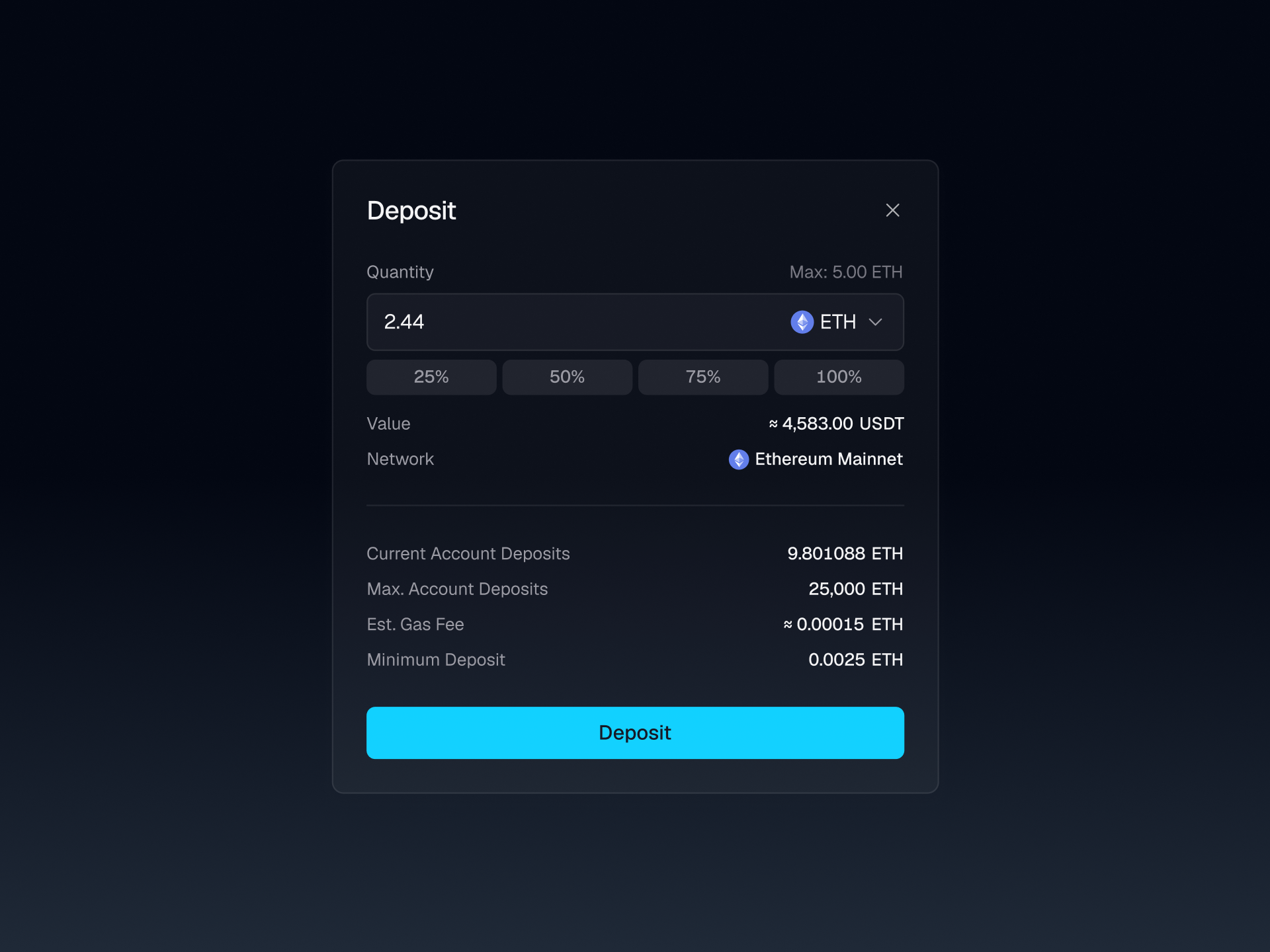
Under the newly deployed system, traders can deposit native ETH directly into a unified Synthetix margin account to back USDT-settled perpetual positions. Rather than forcing users to liquidate their long-term token holdings to fund short-term trading strategies, the protocol enables participants to maintain bullish exposure to ETH while simultaneously managing risk and opening directional positions across a variety of supported markets.
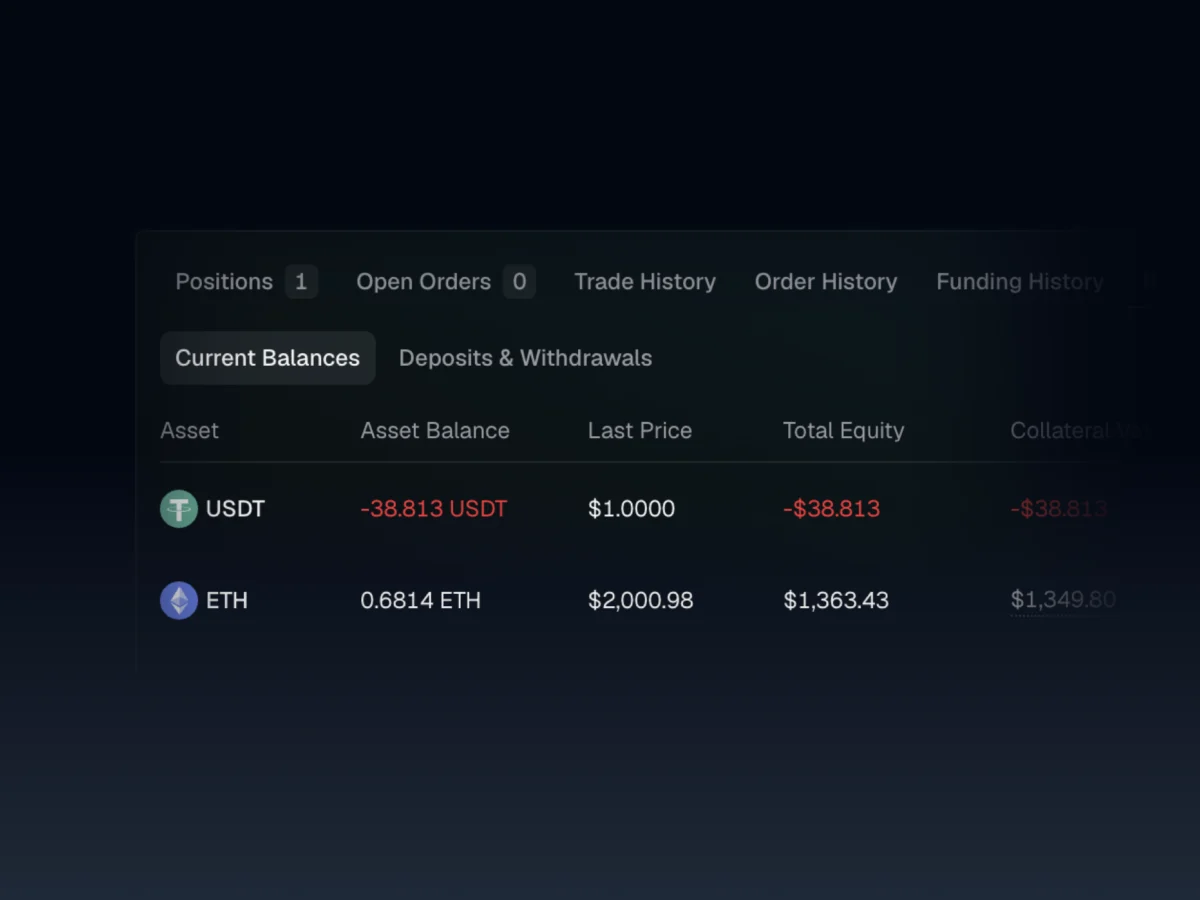
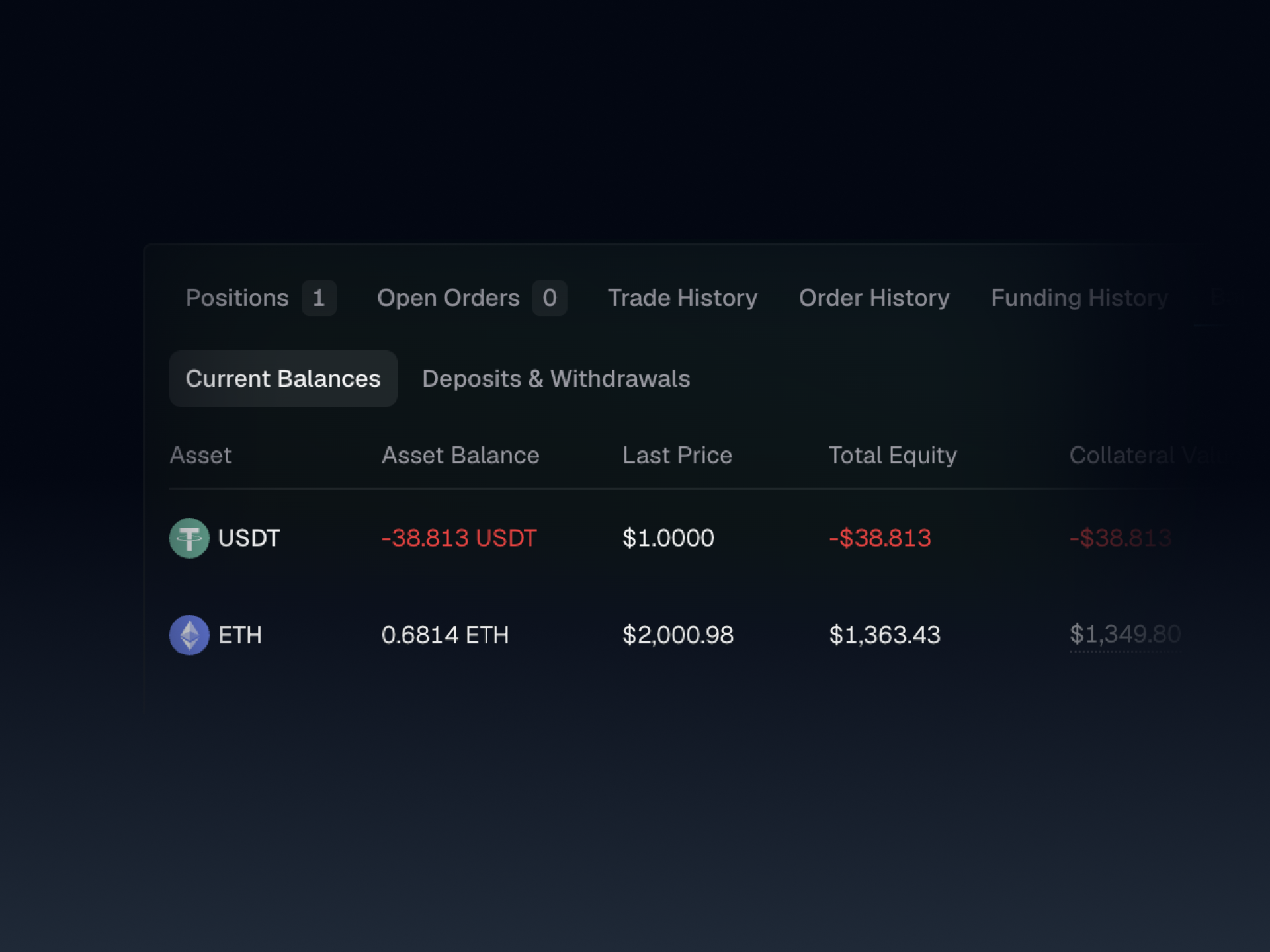
From a technical perspective, deposited ETH is valued using its real-time oracle index price, adjusted by a protocol-defined risk discount known as a "haircut." This dynamic calculation establishes the user’s effective Collateral Value, which dictates their overall account leverage and margin health. Because trading accounts settle positions in USDT, fees, funding rates, and profit-and-loss (PnL) outcomes continue to be denominated in USDT. Consequently, a trader utilizing exclusively ETH as collateral may temporarily incur a negative USDT balance while maintaining open positions, an intentional feature backed entirely by the underlying value of their deposited ETH.
Users retain the flexibility to neutralize negative USDT balances at any time by executing an internal account swap, converting a portion of their ETH holdings directly into USDT within the interface. Conversely, to protect the protocol from insolvency, Synthetix employs an automated risk-management mechanism: if a user’s USDT debt exceeds allowed account limits due to adverse price movements in the underlying collateral, the system can automatically liquidate or convert a portion of the deposited ETH to maintain solvency.
Unlocking Advanced DeFi Strategies: The Basis Trade
The introduction of native ETH margin immediately enhances capital efficiency for institutional and retail market participants alike, most notably by streamlining the execution of basis trades—a foundational pillar of crypto-native market-neutral strategies.
Previously, executing a basis trade on-chain required acquiring stablecoins, posting them as collateral, and simultaneously managing spot and derivative exposure across potentially fragmented liquidity pools. With the new multicollateral architecture, a trader can deposit ETH as collateral and open an equivalent short ETH perpetual position within the same unified account.
This configuration creates a delta-neutral position where the spot price fluctuations of the collateral and the PnL of the short perpetual contract offset one another. While directional risk is neutralized, the trader continues to collect periodic funding rate payments from the perpetual market. Market analysts note that by reducing friction for basis traders, Synthetix expects to see tighter bid-ask spreads, deeper market liquidity, and more reliable funding rate convergence across its entire suite of derivatives markets.
Broader Economic Implications for the Ethereum Ecosystem
The decision by Synthetix to double down on Ethereum Mainnet as its primary operational venue contrasts with the broader industry trend of migrating high-frequency DeFi activity exclusively to Layer 2 rollups and alternative high-speed layer-one networks. By anchoring its derivatives liquidity directly to the L1 settlement layer, Synthetix is positioning itself to capture a share of the more than $100 billion in idle ETH currently resting on the Ethereum main chain.
Industry observers and core contributors point out that unlocking utility for native ETH on L1 creates a powerful economic flywheel. If the protocol successfully captures even a fraction of the broader crypto derivatives volume typically observed on major centralized exchanges, the resulting transaction throughput, fee generation, and network activity promise to trickle down to the wider Ethereum DeFi stack. Increased trading volume inherently drives deeper composability, bolstering total value locked (TVL) across integrated lending markets, liquidity pools, and yield aggregators.
Roadmap and Future Collateral Expansion
While ETH serves as the inaugural non-stablecoin asset accepted under the new multicollateral framework, the development team has confirmed that the underlying infrastructure has been architected to support a diverse array of digital assets over time. Upcoming updates are slated to introduce broader account caps, expanded token support, and integration with yield-bearing assets, allowing users to earn passive yield on their collateral while simultaneously utilizing it to back active derivative positions.
Synthetix representatives emphasize that the rollout of native ETH margin is the first phase of a comprehensive product roadmap designed to redefine on-chain derivatives trading. Detailed documentation concerning margin haircuts, liquidation thresholds, account health indicators, and token-specific deposit caps is available via the official Synthetix documentation portal, providing traders with the technical guidelines necessary to navigate the newly expanded margin environment.