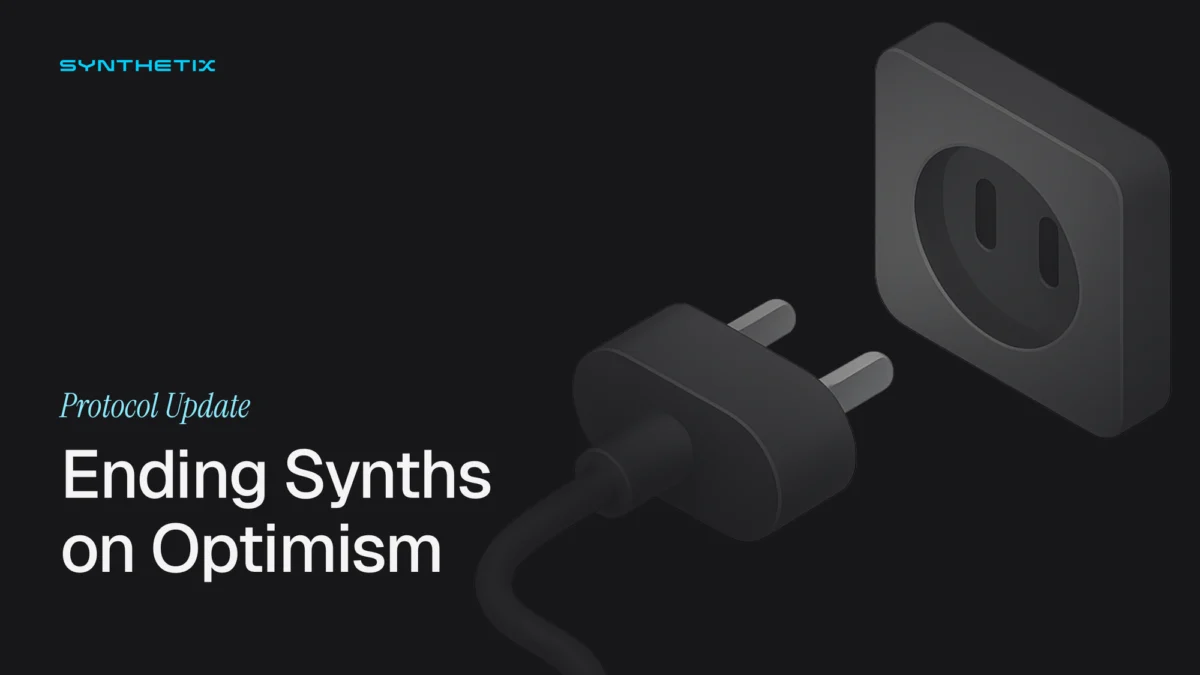
Decentralized liquidity and derivatives protocol Synthetix has officially announced the comprehensive deprecation of all legacy Synths operating on the Optimism layer-2 network. The sweeping operational change marks another major milestone in the protocol’s ongoing strategic migration away from legacy infrastructure and toward a consolidated home on Ethereum Mainnet. The phased wind-down plan encompasses strict deadlines, detailed guidelines for digital asset holders, a formalized treasury redemption structure, and specific parameters regarding how users can salvage or convert their remaining token holdings ahead of the final system shutdown scheduled for late 2026.
According to official protocol communications, the core motivation behind this strategic pivot centers on modernizing the Synthetix ecosystem. By pruning legacy architectures that no longer serve a vital function within current core product offerings, the protocol can channel its engineering resources, developer bandwidth, and liquidity frameworks directly into its next-generation applications, particularly its perpetual futures (perps) trading engine centered on Ethereum Mainnet.
Although the removal of these assets signifies the closure of a foundational chapter for Synthetix on Optimism, the core team has stressed that the operational impact on active users will remain minimal. Synths—which are synthetic asset tokens designed to track the value of various underlying real-world and digital assets such as sETH, sBTC, and other spot alternatives—are no longer utilized by any active integrations or core protocol applications within the ecosystem. Nevertheless, thousands of digital wallets potentially harbor dormant or forgotten balances, prompting the protocol to issue urgent warnings urging participants to audit their holdings and execute necessary token conversions before administrative deadlines lock in.
Understanding the Phased Deprecation Timeline
To facilitate an orderly exit for liquidity providers and retail holders alike, Synthetix has structured the deprecation process into four distinct chronological phases across the 2026 calendar year. Each phase introduces progressive constraints designed to encourage prompt token migration while establishing a safety net for delayed participants, albeit with financial disincentives over time.
The first critical milestone falls on January 31, 2026. This date marks the final day that standard, open-market swaps of Synths will remain enabled on the Optimism network. Protocol developers strongly advise holders of spot Synths, including sETH and sBTC, to proactively swap their holdings into sUSD ahead of this deadline. Doing so allows users to bypass the friction of manual treasury redemption processes and potential valuation penalties. Authorized swaps can be conducted via established legacy interfaces such as Kwenta or decentralized exchange aggregators like 1inch.
Following the close of open-market trading, Phase Two commences on February 1, 2026, extending through April 30, 2026. During this window, smart contracts governing the legacy Synths will be formally deprecated, and oracle prices will be permanently frozen. Specifically, the redemption valuation for any remaining Synths will be locked to the exact oracle price recorded at 23:59:59 UTC on January 31, 2026. Holders who miss the open-market swap deadline will still have a pathway to recover value, but they must do so directly through the Synthetix Treasury. This requires users to open a support ticket via the official Synthetix support portal, where automated AI chat routing assists in connecting individuals with core administrative teams for manual disbursement.
Crucially, protocol rules dictate strict eligibility criteria for treasury redemptions: only individuals who held the Synths in question at the precise moment of deprecation on February 1, 2026, are eligible for treasury redemption payouts. The protocol has issued explicit warnings advising market participants against purchasing or transferring Synths on secondary open markets after this cutoff date in an attempt to arbitrage the treasury redemption mechanism, as such subsequent acquisitions will not be honored.
Phase Three takes effect on May 1, 2026, and runs through December 31, 2026. During this period, a dynamic discount rate is systematically applied to all treasury redemptions. The discount is structured to escalate linearly at a rate of 12.5% of the frozen oracle price per month. Consequently, holders who delay redeeming their assets face mounting financial penalties as the months progress. Once the discount rate reaches its maximum threshold of 100%, the entire redemption facility will permanently close on December 31, 2026, rendering any unredeemed legacy Synths completely valueless.

Broader Implications for sUSD, SNX, and the Optimism Ecosystem
While the removal of spot Synths represents a significant structural contraction for Synthetix on Optimism, the protocol has clarified that not all tokens residing on the layer-2 network face immediate extinction. Both sUSD and the native governance and collateral token, SNX, will remain live on Optimism for the time being. However, their utility on the layer-2 network will diminish substantially as engineering and liquidity initiatives migrate entirely to Ethereum Mainnet.
Users holding sUSD or SNX on Optimism are encouraged to prepare for future deprecation cycles by proactively bridging their assets to Ethereum Mainnet using the legacy Synthetix staking and bridging infrastructure. Despite this long-term trajectory, active participants currently engaged in the Optimism-based "debt jubilee" initiative need not panic. Protocol maintainers have confirmed that debt jubilee positions remain entirely unaffected by the current synth deprecation. Furthermore, participant SNX tokens will remain fully transferable on Optimism even after their respective debt jubilee obligations have been successfully fulfilled.
Other core operational products within the Synthetix suite—including active trading implementations and the 420 staking modules—will continue to operate without disruption. The team’s overarching narrative emphasizes a definitive corporate and technical consolidation: "Mainnet is where the heart is," echoing the protocol’s renewed dedication to unleashing the full potential of its decentralized perpetual swap infrastructure on Ethereum’s base layer.
Context, Background, and Industry Analysis
The deprecation of legacy Synths on Optimism reflects a broader, maturing trend across the decentralized finance (DeFi) landscape. In the early and middle phases of the layer-2 scaling boom, protocols aggressively deployed multichain strategies, seeding liquidity across various scaling networks to capture immediate user adoption and transaction volume. However, as the ecosystem matured and operational efficiency became paramount, many protocols realized that maintaining sprawling, fragmented architectures across multiple chains introduced unnecessary smart contract risk, increased administrative overhead, and diluted core liquidity.
Synthetix’s decision to prune its legacy Optimism architecture aligns with its strategic evolution toward modularity and specialized execution. By centralizing its core derivatives engine—particularly its high-performance perpetual futures platform—on Ethereum Mainnet, Synthetix aims to optimize capital efficiency, streamline governance, and deliver a more cohesive user experience.
Industry analysts note that while historical multi-chain expansions allowed protocols to capture transient yield-farming capital, long-term protocol survival increasingly hinges on deep, unified liquidity pools. By systematically sunsetting outdated product lines that no longer serve active integrations, Synthetix is reducing its overall attack surface and administrative debt. This disciplined approach to product lifecycle management is increasingly viewed by institutional investors and core contributors as a hallmark of a maturing DeFi protocol.
Next Steps and User Action Plan
For participants holding legacy assets within the ecosystem, immediate action is recommended to mitigate friction. Wallet holders are urged to take the following steps well ahead of the established deadlines:
- Audit Wallets: Inspect all web3 wallets interacting with Optimism to identify any legacy sETH, sBTC, or other spot Synth balances.
- Execute Swaps: Utilize supported legacy trading interfaces such as Kwenta or liquidity aggregators like 1inch to swap spot Synths into sUSD before the January 31, 2026 deadline.
- Prepare for Mainnet Migration: Review holdings of sUSD and SNX on Optimism, and evaluate the protocol-provided bridging tools to transition assets to Ethereum Mainnet in anticipation of future network updates.
- Utilize Official Channels: For users requiring assistance with treasury redemptions after February 1, 2026, rely exclusively on verified support channels at support.synthetix.io to avoid phishing scams and fraudulent redemption schemes.
As the decentralized exchange landscape continues to evolve, the successful execution of this deprecation plan will allow Synthetix to close out a vital chapter of its multi-chain experiment while focusing its capital and intellectual resources entirely on the future of decentralized derivatives trading on Ethereum Mainnet.