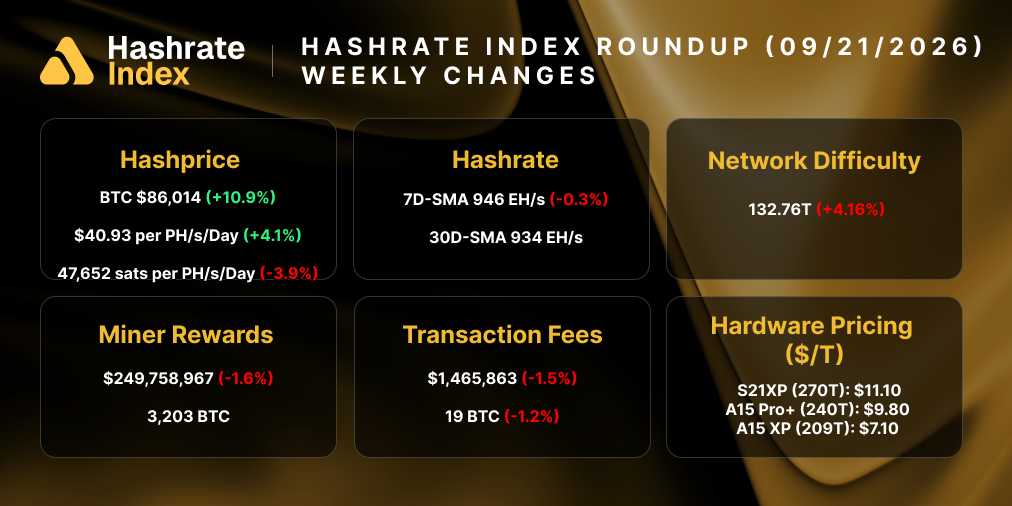
The global Bitcoin mining landscape experienced a notable shift during the week ending September 21, 2026, characterized by a sharp appreciation in the underlying asset price, a slight contraction in network hashrate, and a moderate increase in USD-denominated mining profitability. As the Bitcoin network navigates the complexities of the current halving cycle, miners are increasingly focused on operational efficiency and energy cost management to maintain viability in an environment where hashprice remains near historical breakeven points.
Market Performance and Price Action
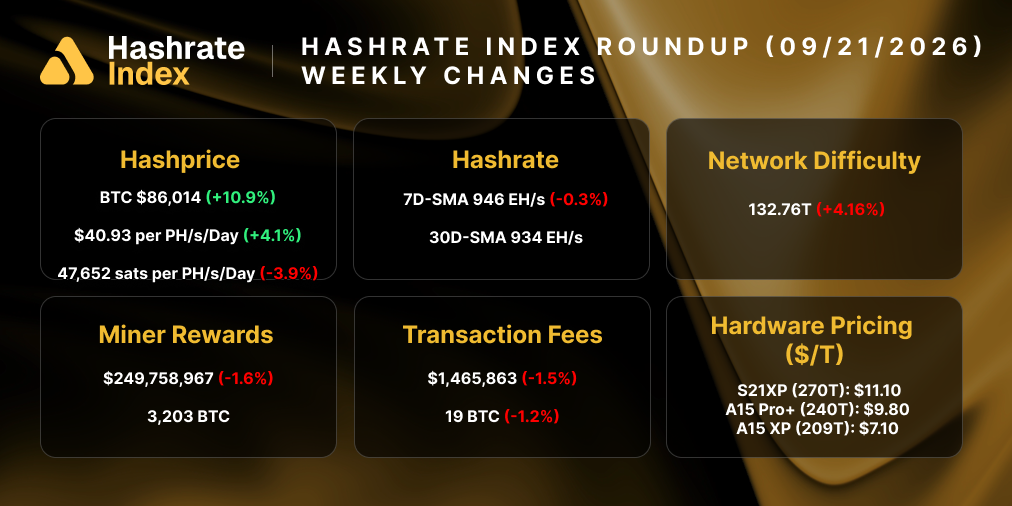
Bitcoin demonstrated significant bullish momentum throughout the reporting period, climbing 10.9% to reach a spot price of approximately $86,003. This rally, which saw the digital asset rise from a seven-day low of $77,567, provides a much-needed tailwind for mining operators struggling with the post-halving subsidy reduction. Despite this weekly surge, the year-to-date performance remains slightly negative at -1.6%, highlighting the volatility that has defined the 2026 fiscal year for crypto-assets.
Market participants are observing the CME futures market with interest, as October and November contracts are trading at premiums of 0.7% and 1.1% respectively, suggesting that institutional traders anticipate continued price stability or growth. This pricing structure is crucial for large-scale mining operations that utilize derivative markets to hedge against price volatility, ensuring that their capital expenditure remains covered by future revenue projections.
Hashprice Dynamics and Mining Revenue
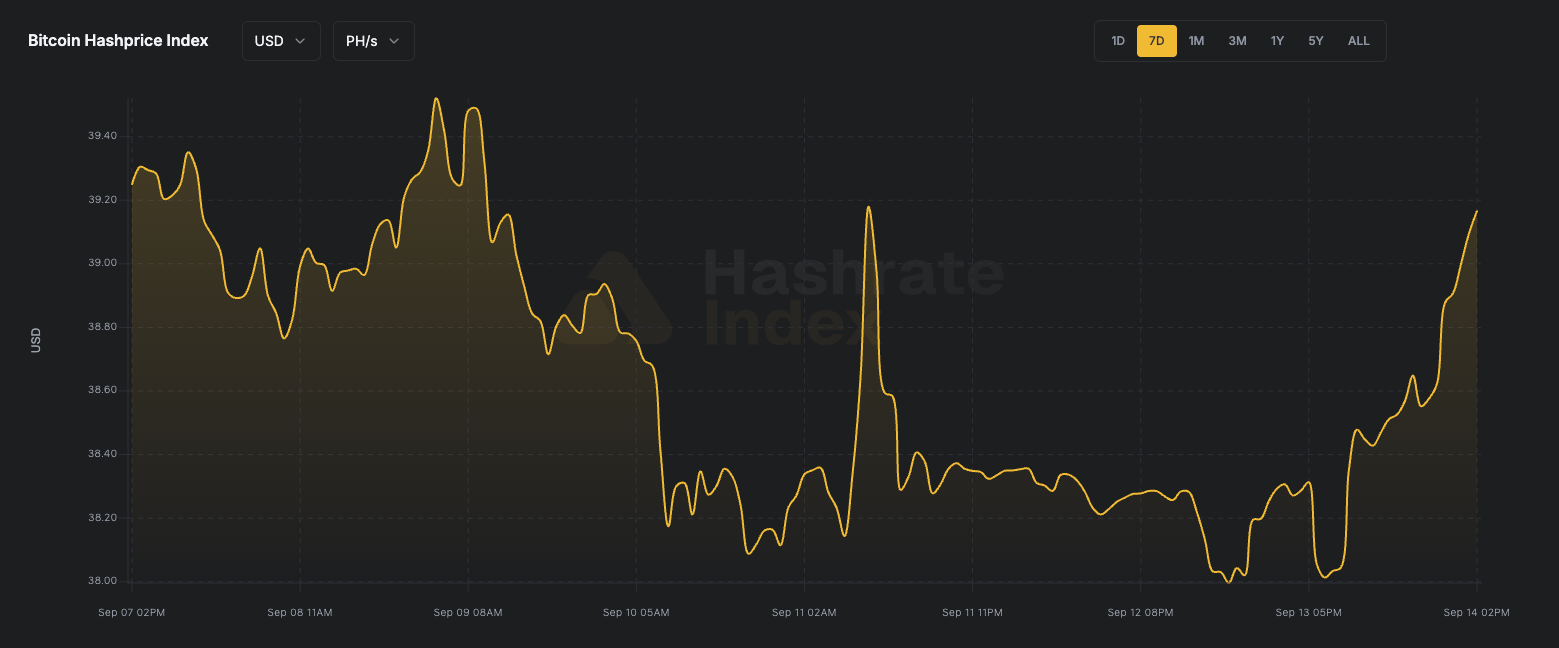
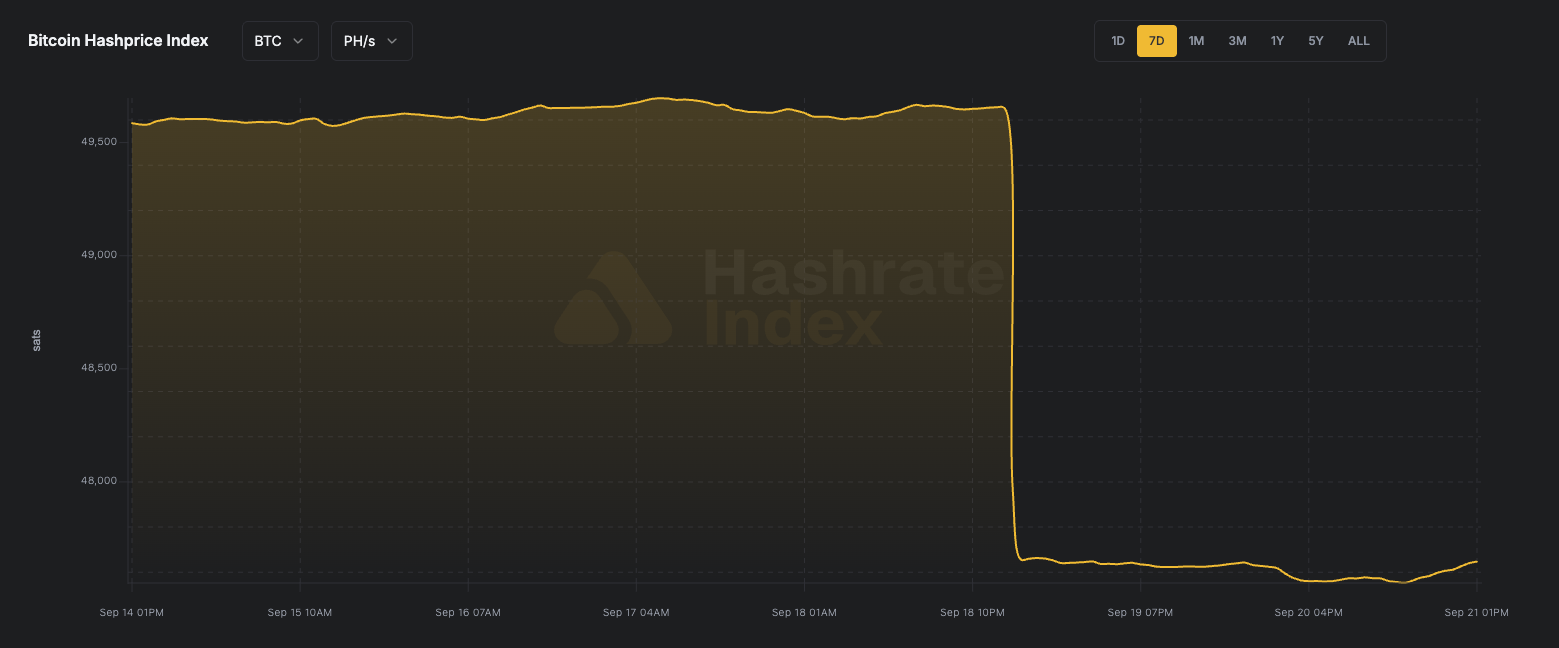
The USD hashprice—the daily revenue generated per unit of computing power—saw a 4.1% increase, rising from $39.31 to $40.93 per PH/s/Day. This improvement is primarily a function of the rising Bitcoin spot price, which effectively offsets the minor decline in network hashrate. However, when measured in BTC, the hashprice actually contracted by 3.9%, falling to 0.00047652 BTC per PH/s/Day.
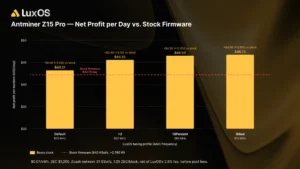
This dichotomy between USD and BTC revenue underscores the precarious position of modern mining fleets. While dollar-denominated revenue is increasing, the actual amount of Bitcoin earned per unit of work is shrinking, forcing miners to optimize their hardware performance. For operators running older-generation equipment, such as the S19 series, the current hashprice level of $40 per PH/s/Day sits precariously near the operational breakeven threshold. Consequently, there is an industry-wide trend toward upgrading to more efficient firmware, such as custom solutions that push hardware to higher efficiency tiers, thereby lowering the energy-per-hash cost.
Network Hashrate and Difficulty Adjustments
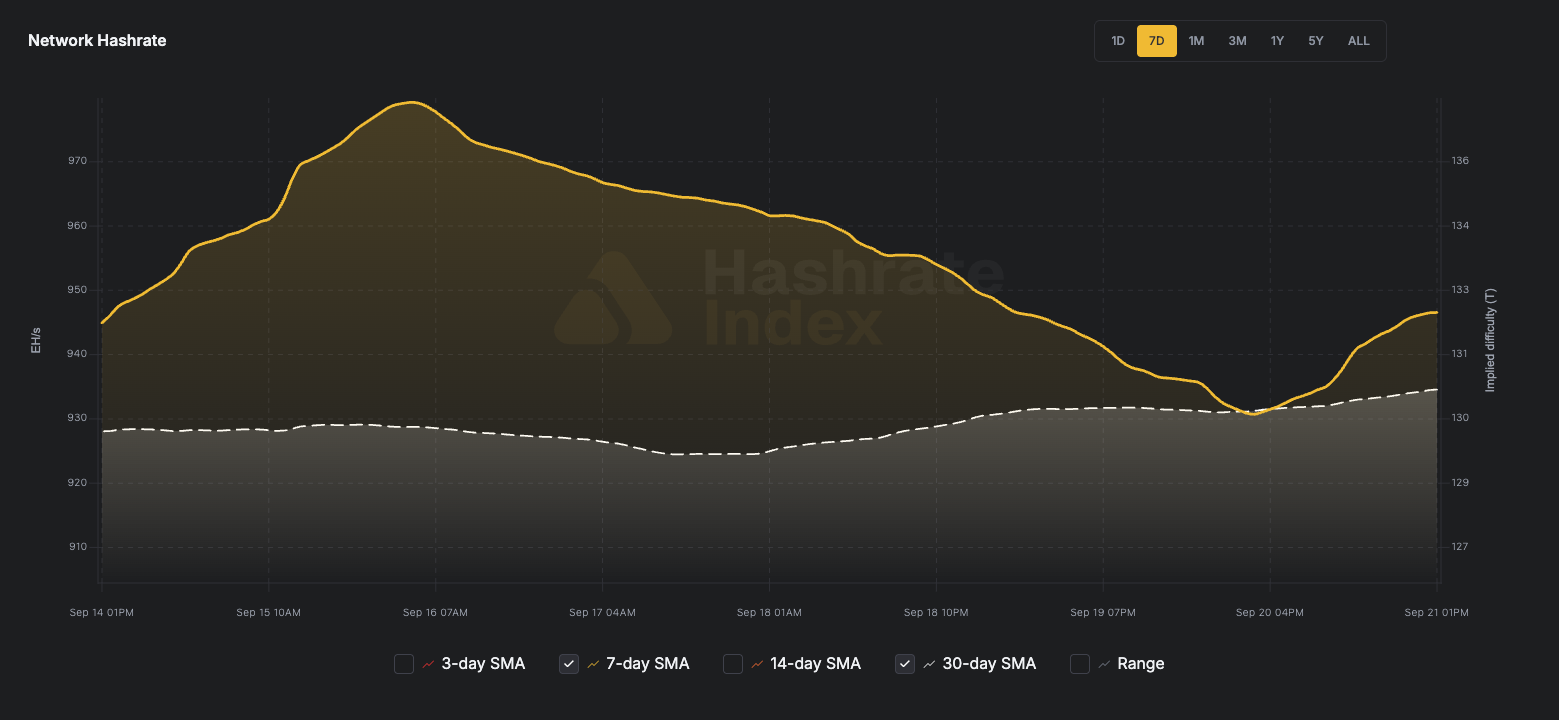
The Bitcoin network’s total computing power witnessed a minor contraction, with the 7-day simple moving average (SMA) for hashrate settling at 946 EH/s, down from 949 EH/s the previous week. This slight dip likely reflects the ongoing recalibration of mining fleets in response to the recent difficulty increase.
On September 19, 2026, the network underwent a significant difficulty adjustment, rising 4.16% to 132.76T. This adjustment represents the competitive nature of the network, as the difficulty protocol seeks to maintain a consistent 10-minute block interval despite changes in total active hashrate. Looking ahead, early estimates for the October 3, 2026, adjustment point to a potential decrease of 1.80%. While these early-epoch projections are subject to change based on short-term variance in block discovery times, they provide a preliminary signal that the network may see a slight easing in competitive pressure as the difficulty epoch progresses.
Transaction Fees and Revenue Composition
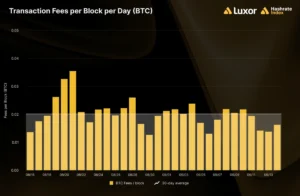
Miners collected a total of approximately 3,203 BTC in block rewards over the past week, with a valuation of roughly $249 million. Notably, transaction fees accounted for 19 BTC, or approximately 0.59% of the total block rewards. While this percentage remains modest, the average transaction fee per block per day rose by 4% to 0.0191 BTC, compared to the 0.0185 BTC recorded in the prior week.
The reliance on transaction fees as a secondary revenue stream is becoming an increasingly critical topic of discussion among industry analysts. As block subsidies continue to decline through subsequent halving events, the sustainability of the mining industry will rely more heavily on network utilization and the subsequent fees generated by on-chain activity. The current uptick, however small, serves as a positive indicator for long-term network security.
Financial Performance of Mining Equities
Publicly traded Bitcoin mining stocks saw a broad-based rally during the week, largely tracking the 10.9% increase in the price of Bitcoin. Notable performers included BTBT, which saw a 23.7% increase, and CIFR, which climbed 20.8%. Other major players such as RIOT and MARA experienced gains of 17.3% and 17.4%, respectively.
This strong performance in equity markets suggests that investors are regaining confidence in the sector, viewing miners as a leveraged proxy for the broader crypto market. The expansion in market capitalization for companies like IREN, which reached $18.98 billion, highlights the institutionalization of mining as a recognized sub-sector of the global energy and technology markets. However, analysts warn that these stock valuations remain highly sensitive to Bitcoin’s spot price, and any reversal in the underlying asset’s trajectory could lead to sharp corrections in mining equity values.
Strategic Implications and Future Outlook
As the industry looks toward the next six months, the Luxor Hashrate Forward Market is pricing in an average hashprice of approximately $38.96. This forward-looking metric is a vital tool for miners planning their capital expenditures for the upcoming quarter.
The current mining environment necessitates a dual strategy: managing operational overhead to account for the tightening margins on hashprice, and leveraging financial instruments to secure future revenue. The modest decline in the 30-day SMA of network hashrate suggests that the industry is currently in a consolidation phase. Smaller or less efficient operators are likely ceding ground to larger, more energy-efficient firms that possess the capital to deploy the latest ASIC technology.
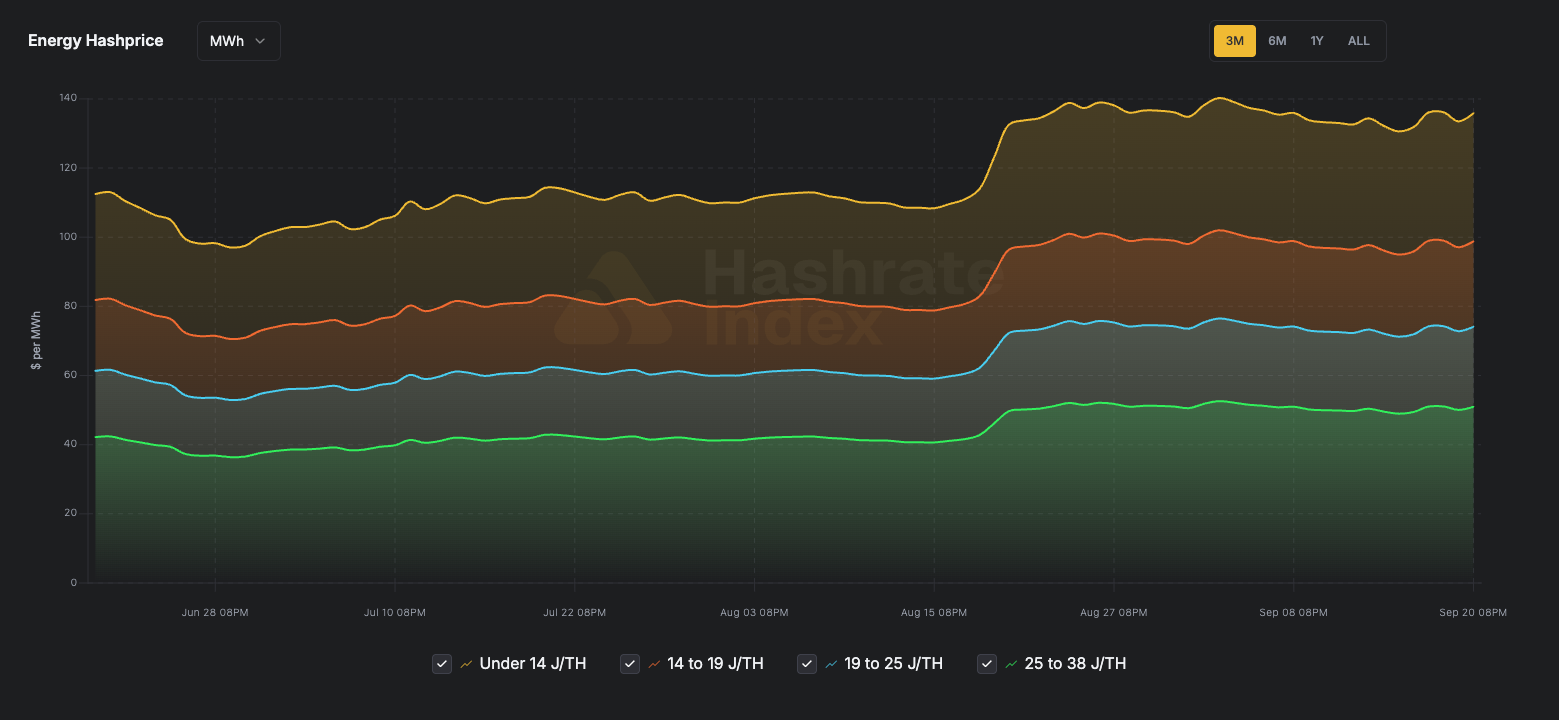
The focus for the remainder of the year will likely remain on energy procurement and infrastructure expansion. With the network difficulty at historic highs, the ability to secure low-cost, consistent power remains the ultimate competitive advantage. For now, the mining sector remains resilient, bolstered by the recent price appreciation of Bitcoin, yet tempered by the reality of a competitive landscape that demands constant technological and operational innovation. As the market approaches the next scheduled difficulty adjustment in early October, all eyes will be on whether the network hashprice can sustain its current upward momentum or if it will face further downward pressure as mining efficiency continues to evolve.