The Bitcoin mining landscape experienced a notable shift during the week ending September 21, 2026, characterized by a substantial rally in the price of Bitcoin, concurrent adjustments in network difficulty, and a significant strengthening of mining-related equities. As Bitcoin’s spot price ascended to approximately $86,003, miners saw a moderate improvement in USD-denominated hashprice, despite a slight contraction in the total network hashrate. This convergence of market factors underscores the ongoing evolution of mining economics in the post-halving era, where operational efficiency and energy management remain the primary determinants of profitability.
Market Overview and Financial Performance
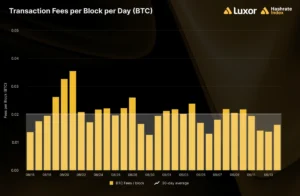
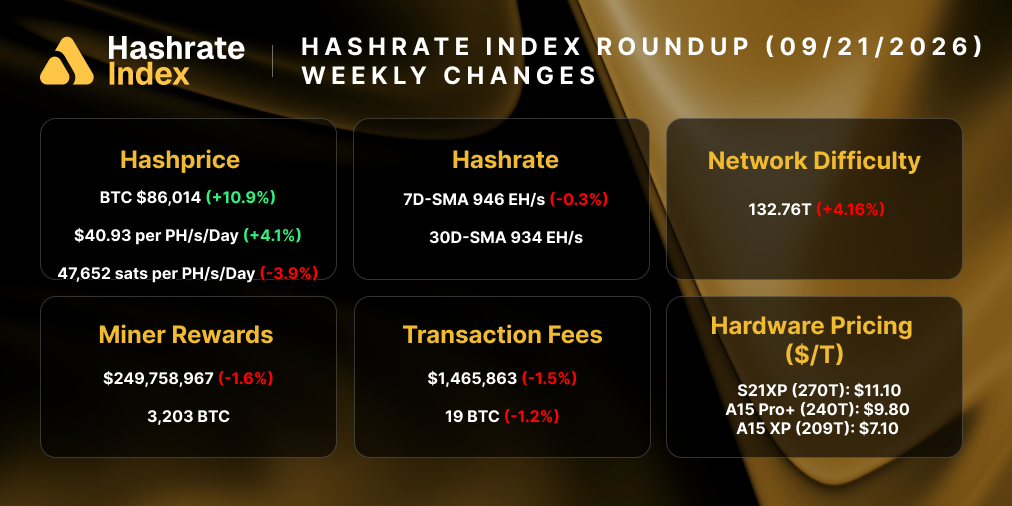
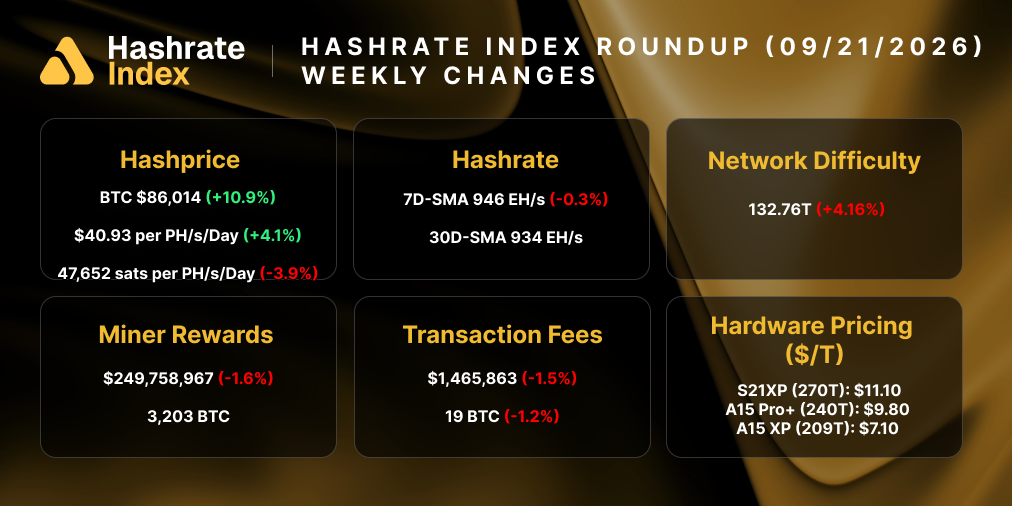
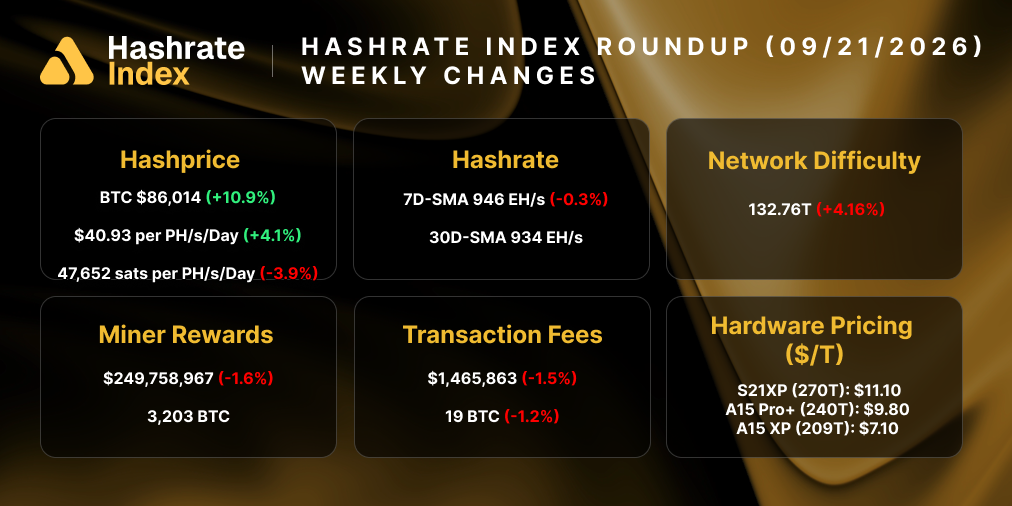
Miners concluded the week having secured approximately 3,203 BTC in aggregate block rewards, a figure valued at roughly $249 million. Of this total, transaction fees accounted for a minor portion of revenue, contributing 19 BTC—or approximately $1.47 million—to the bottom line. This reflects a period where the block subsidy continues to serve as the dominant revenue stream, as on-chain transaction volume remains steady but not exceptionally high relative to historical spikes.
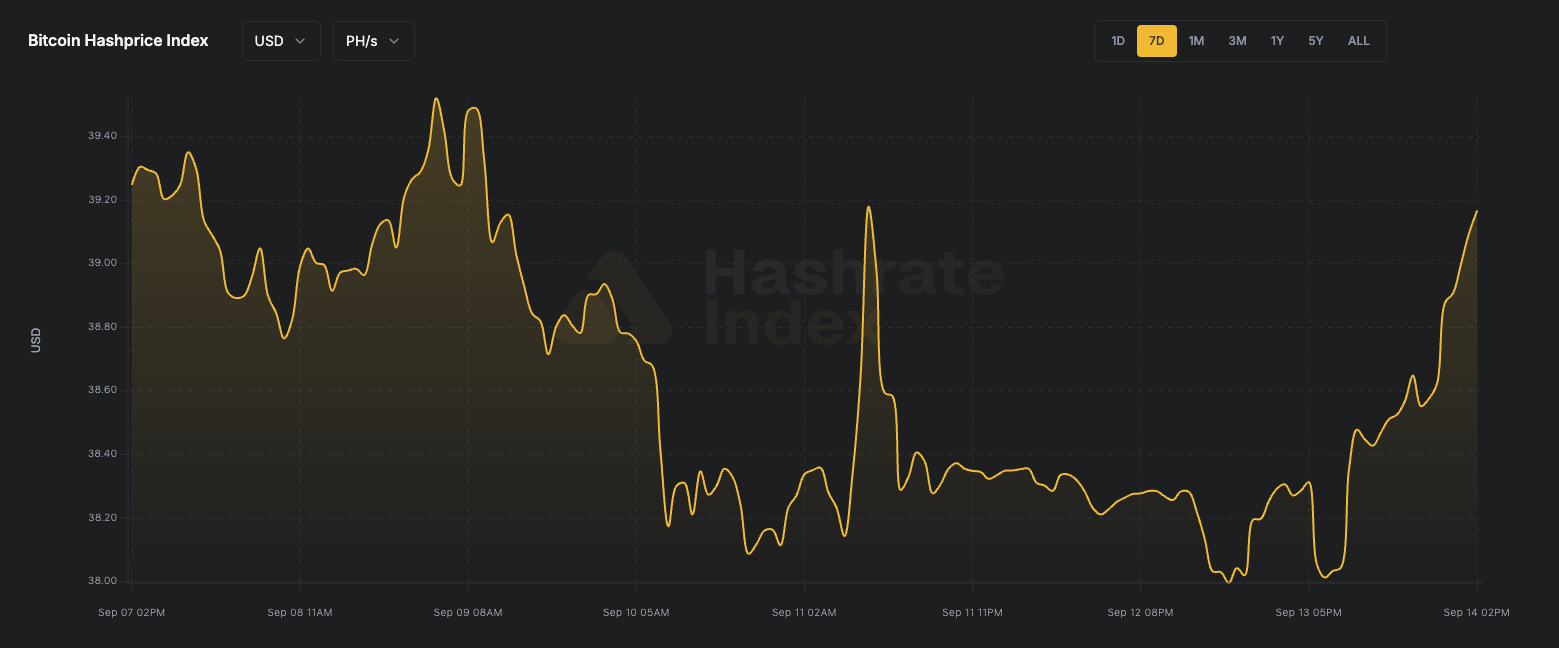
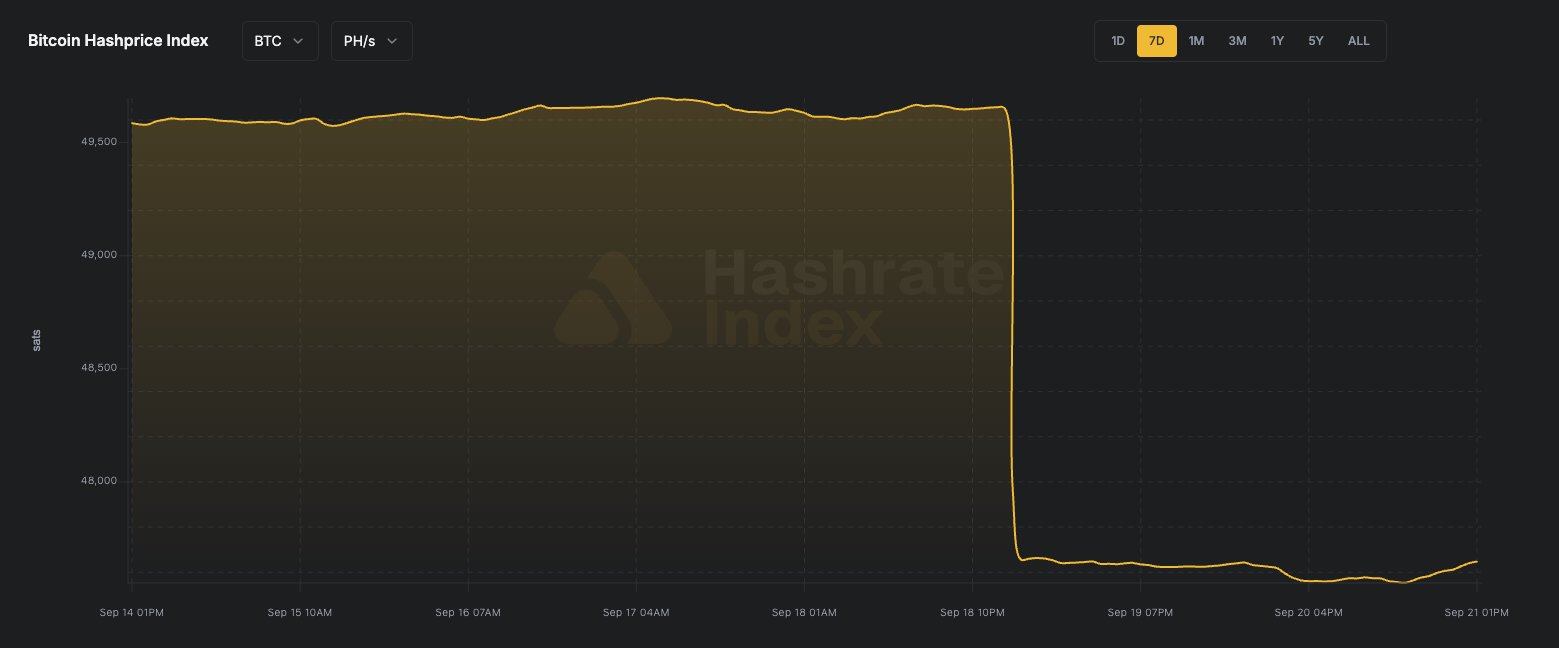
The most significant driver of improved miner sentiment was the 10.9% appreciation in Bitcoin’s price, which surged from $77,567 to over $86,000. This price action acted as a buffer against the rising difficulty levels that typically exert downward pressure on individual miner revenue. While the USD hashprice climbed by 4.1% to $40.93 per PH/s/Day, the BTC-denominated hashprice saw a decline of 3.9%, settling at 0.00047652 BTC per PH/s/Day. This divergence highlights a recurring trend: when Bitcoin’s fiat value rises significantly, miners benefit from higher USD margins, even if the absolute amount of Bitcoin earned per unit of compute power decreases due to the competitive nature of network participation.
Network Dynamics: Hashrate and Difficulty Adjustments
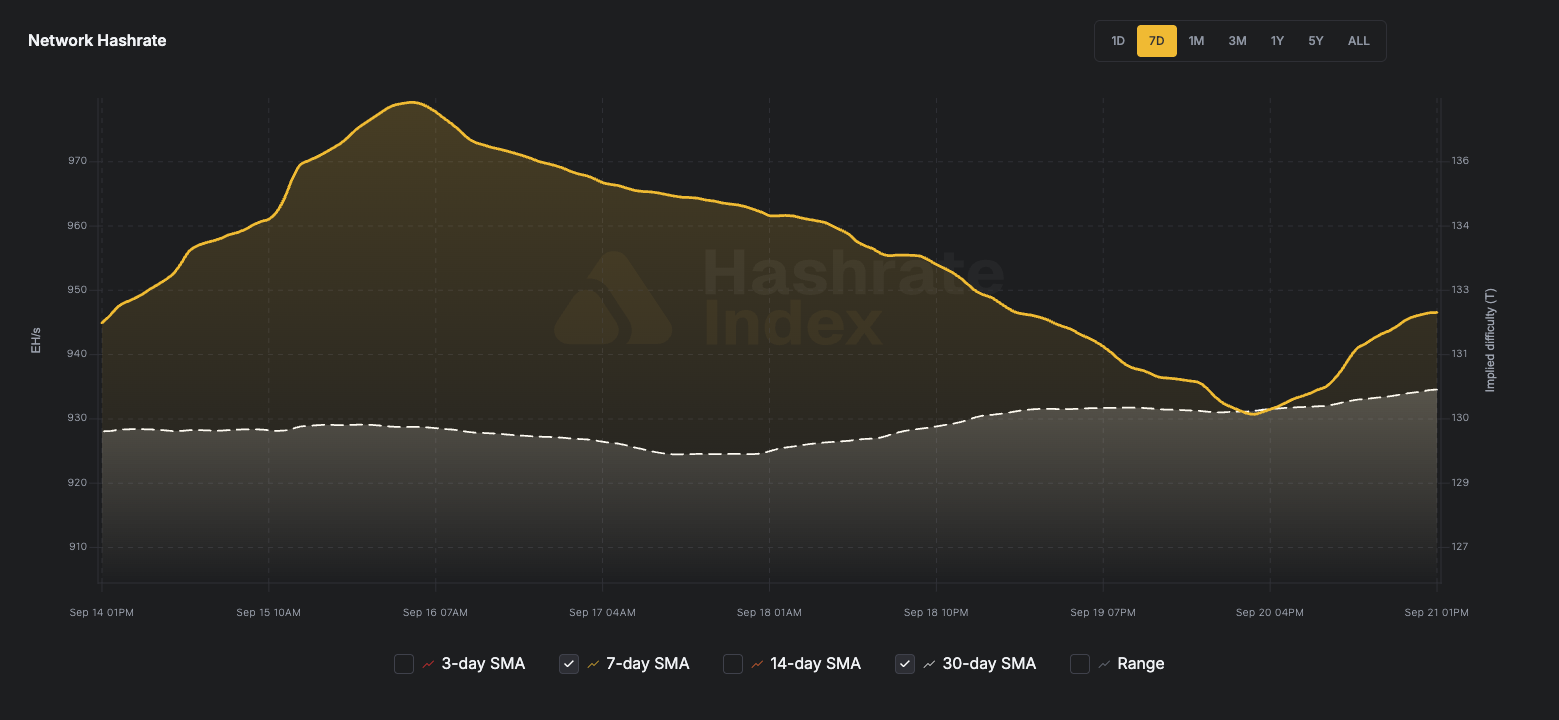
The Bitcoin network’s security infrastructure remains robust, though it displayed a minor contraction over the seven-day period. The network hashrate, measured by a seven-day simple moving average (SMA), dipped slightly from 949 EH/s to 946 EH/s. While this 0.3% decrease is statistically negligible, it provides a glimpse into the ongoing hardware turnover occurring within the industry. As older, less efficient rigs are decommissioned in favor of newer, more power-efficient models—such as the latest S21 series units—short-term fluctuations in total hashrate are to be expected.
On September 19, 2026, the network underwent a scheduled difficulty adjustment, rising by 4.16% to reach 132.76T. This adjustment reflects the high competition among miners who are continuously optimizing their operations to maintain profitability. Currently, block times are averaging 10 minutes and 11 seconds, indicating that the network is operating slightly slower than the theoretical 10-minute target. Looking ahead, analysts project a slight reversal in the next adjustment cycle, with an estimated decrease of 1.80% expected by October 3, 2026. However, as noted by industry observers, these early-cycle projections are subject to variance and may be revised as more blocks are mined and the difficulty epoch matures.
Institutional Mining Equities Rally
The public equity markets witnessed a pronounced bullish trend for companies heavily exposed to Bitcoin mining operations. Investors appear to be pricing in the combined benefits of a rising Bitcoin spot price and improved operational efficiencies among the industry’s largest players.
Leading the gains, companies like BTBT and CIFR saw significant weekly appreciation, with gains of 23.7% and 20.8%, respectively. Larger, established miners such as Riot Platforms (RIOT) and Marathon Digital (MARA) also followed the broader market trend, posting gains of 17.3% and 17.4%. Even with the volatility inherent in mining stocks, the sector-wide rally—with most tickers showing double-digit growth—suggests that market participants are regaining confidence in the sector’s ability to navigate the current high-difficulty environment. The total market capitalization of major mining firms continues to reflect this optimism, with industry giants like IREN reaching market caps in the range of $18.98 billion.
Strategic Implications for Miners
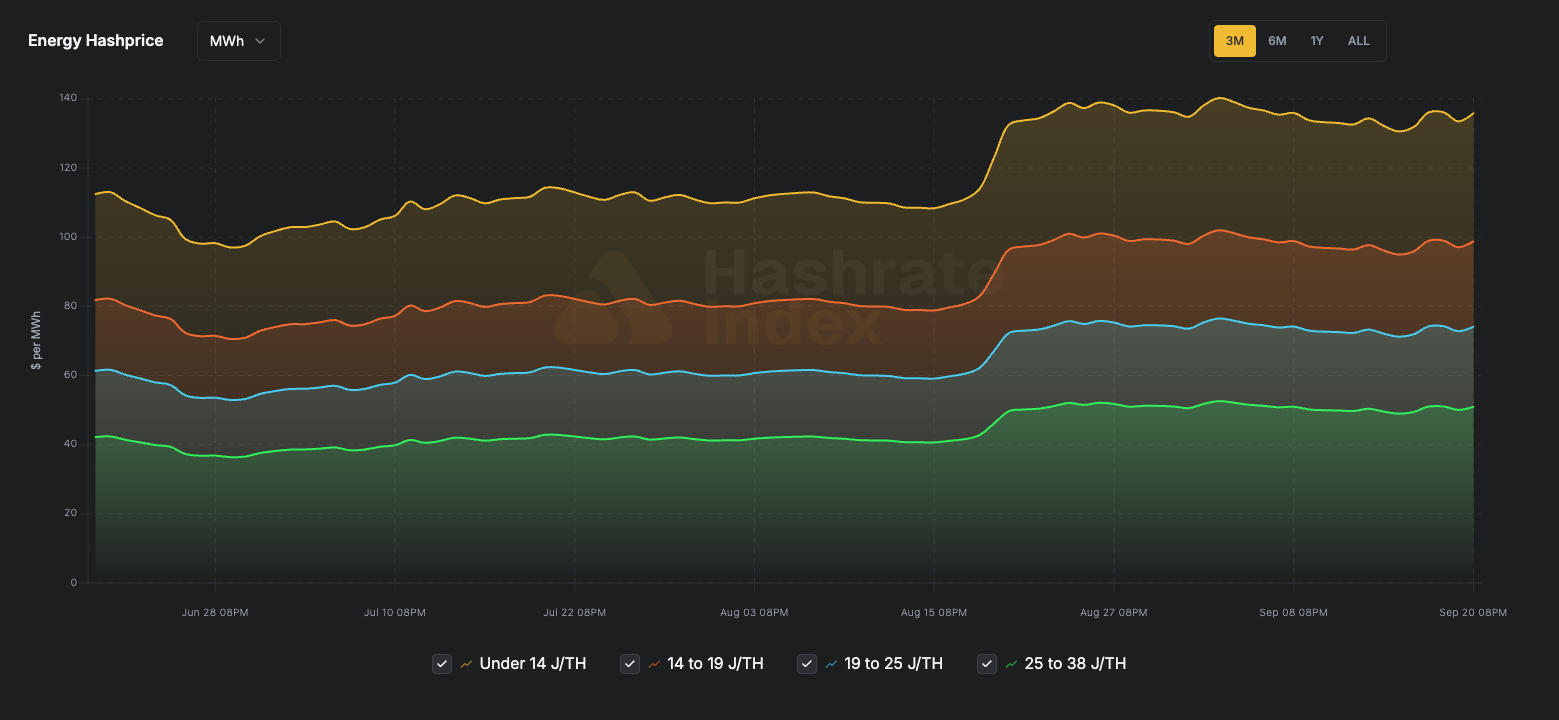
For operators, the current hashprice of $40 per PH/s/Day represents a critical threshold. Many mining firms are currently operating at or near their break-even point, making electricity costs and hardware efficiency the defining factors of success. In this environment, the deployment of optimized firmware—such as Luxor’s LuxOS—has become a standard tactical maneuver to extract additional efficiency from existing hardware fleets. By increasing the hashrate-to-watt-hour ratio, miners can protect their margins against the inevitable cycles of difficulty increases.
The forward market for hashrate further illustrates the industry’s outlook. Derivatives markets are currently pricing in an average hashprice of approximately $38.96, or 0.00045 BTC, over the next six months. This suggests that while miners are enjoying the current price rally, they are also bracing for continued difficulty growth and potential price stabilization, leading many to utilize forward contracts to hedge against future revenue volatility.
Broader Market Context
The week’s developments occur against a backdrop of broader macroeconomic uncertainty and the ongoing maturation of the Bitcoin mining industry. The transition from a speculative mining model to a sophisticated, energy-focused industrial sector is now largely complete. Modern miners are no longer just computing operations; they are integrated energy players that manage power grids, utilize demand-response programs, and engage in complex financial hedging.
The recent performance metrics confirm that the network remains healthy, with security maintained at near-record levels despite the challenges introduced by the post-halving environment. The combination of sustained hashrate and increased mining stock valuations indicates that the market views Bitcoin mining as a viable, long-term industrial endeavor.
Conclusion and Future Outlook
As we look toward the final quarter of 2026, the primary narrative for the mining industry remains the struggle for efficiency. The 4.16% difficulty increase confirms that despite fluctuations in price, the global network of miners remains committed to expanding capacity. However, with hashprice hovering near the break-even point for older hardware, the focus for the coming months will likely shift toward the retirement of legacy assets and the mass deployment of next-generation, liquid-cooled, or high-efficiency air-cooled machines.
Investors and stakeholders will be watching the October 3 difficulty adjustment closely. Should the network experience a decrease in difficulty, as currently projected, it would provide a temporary reprieve for miners, potentially improving margins and incentivizing the activation of dormant or sidelined mining hardware. Until then, the industry remains in a period of cautious optimism, characterized by aggressive technical optimization and a reliance on the sustained strength of the underlying Bitcoin asset.
Data Summary Table: September 21, 2026
| Metric | Current Value | 7-Day Change |
|---|---|---|
| Bitcoin Spot Price | $86,014 | +10.9% |
| Network Difficulty | 132.76T | +4.16% |
| USD Hashprice | $40.93/PH/s/Day | +4.1% |
| Network Hashrate (SMA) | 946 EH/s | -0.3% |
| Avg. Transaction Fees | 0.0191 BTC | +4.0% |
This summary of the week’s events provides a comprehensive look at the interplay between Bitcoin price action and the underlying technical metrics of the mining network. As the industry continues to professionalize, the importance of these data points in forecasting long-term viability becomes increasingly paramount for both operators and investors.