The United States Senate is navigating a precarious legislative calendar as leadership attempts to initiate floor proceedings for the Digital Asset Market Clarity Act, a landmark piece of legislation intended to provide a comprehensive regulatory framework for the cryptocurrency industry. Senate Majority Leader John Thune expressed a desire on Thursday to begin the formal floor process for the bill before the chamber adjourns for its summer recess. However, the prospect of finalizing the crypto market structure bill by the industry’s preferred deadline of August 7 appears increasingly dim. The complexity of the legislation, coupled with a crowded legislative docket and deep-seated partisan divisions over specific provisions, suggests that while the process may start in the coming days, a final vote is likely to be deferred until the autumn.
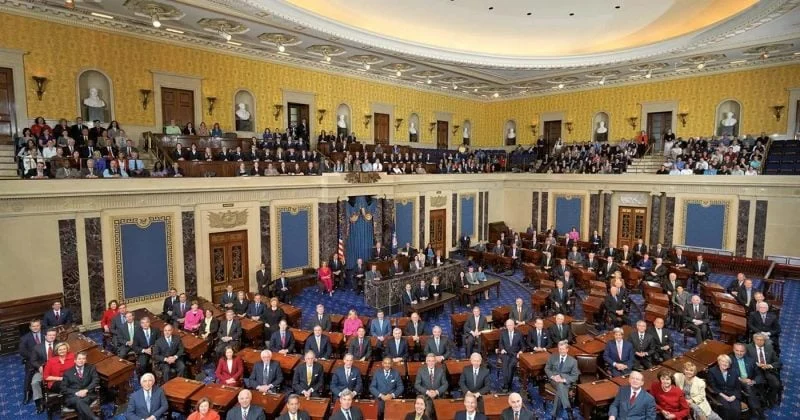
Majority Leader Thune, speaking to reporters at the Capitol, indicated that his priority is to move the bill into the active consideration phase to gauge the level of support among the 100 members of the Senate. "I would like to at least get Clarity started," Thune remarked, referring to the bill by its colloquial name. "We’ll see where the votes are." This strategic move to begin consideration before the break is seen by many political analysts as a "placeholder" maneuver. By starting the floor process now, the Senate can preserve a procedural path that allows for a smoother resumption of work when lawmakers return to Washington in September.
The legislative clock is a significant factor in the current tension. The Senate is scheduled to begin its summer state work period on August 10, with lawmakers not expected to return to the floor until September 14. Industry representatives and congressional negotiators have long viewed August 7 as the practical deadline for the bill’s passage. This date is seen as a "point of no return" because, upon returning in mid-September, the focus of both parties will shift almost exclusively toward the November midterm elections. Legislative windows in an election year are notoriously brief, and any bill that is not substantially advanced by the end of summer faces a high risk of being sidelined in favor of campaign-related priorities and essential funding measures.
The Legislative Journey and Chronology
The Digital Asset Market Clarity Act represents the culmination of several years of intensive debate regarding how the United States should govern the burgeoning digital asset sector. The current momentum follows a significant milestone reached in July 2025, when the House of Representatives approved its own version of a market structure bill. That House bill was characterized by a more aggressive push toward empowering the Commodity Futures Trading Commission (CFTC) and was largely supported by industry advocacy groups seeking a departure from the "regulation by enforcement" approach often attributed to the Securities and Exchange Commission (SEC).
Following the House’s action, the Senate spent nearly a year drafting its own response. The latest draft of the Clarity Act is a sophisticated synthesis of proposals from two powerful committees: the Senate Banking Committee and the Senate Agriculture Committee. This dual-committee approach was necessary because of the overlapping jurisdictions regarding digital assets; the Banking Committee oversees the SEC and traditional financial markets, while the Agriculture Committee oversees the CFTC and commodity markets.
The combined draft was released earlier this week, sparking a flurry of activity among lobbyists and policymakers. The bill aims to set clear rules for digital asset exchanges, intermediaries, issuers, and federal oversight bodies. It seeks to provide a definitive answer to the long-standing question of which digital assets are securities and which are commodities, a distinction that carries massive implications for compliance costs and operational requirements for firms like Coinbase, Kraken, and various decentralized finance (DeFi) protocols.
Core Provisions and Regulatory Oversight
At the heart of the Digital Asset Market Clarity Act is the establishment of a joint regulatory framework between the SEC and the CFTC. For years, the digital asset industry has complained of a lack of "clarity," arguing that the absence of a clear statutory definition has allowed regulators to flip-flop on the status of various tokens. The Act proposes a "functional" test to determine an asset’s status. Under the current draft, assets that are decentralized and do not offer the holder a financial interest in an entity would largely fall under the CFTC’s jurisdiction as digital commodities. Conversely, assets that involve a centralized team and the expectation of profit based on the efforts of others would remain under the SEC’s purview as securities.
The bill also introduces rigorous requirements for digital asset exchanges. These include:
- Customer Protection Standards: Mandatory segregation of customer funds from corporate assets, a provision directly inspired by the collapse of major platforms in previous years.
- Disclosure Requirements: Issuers of digital assets would be required to file periodic disclosures with their respective regulator, ensuring transparency regarding the project’s development, tokenomics, and potential risks.
- Operational Resilience: Exchanges would be required to meet specific cybersecurity and system safeguards to protect against hacks and outages.
- Federal Oversight of Intermediaries: Brokers and dealers operating in the crypto space would be required to register with a self-regulatory organization (SRO), similar to the oversight provided by FINRA in traditional markets.
Despite these foundational improvements, the bill has encountered significant friction in the Senate. As of Thursday, the chamber had not yet entered floor consideration for the Clarity Act. Instead, the Senate floor has been occupied by a backlog of judicial nominations, a high-stakes Iran war powers resolution, and the annual defense authorization bill, which remains a "must-pass" priority for both parties.
Partisan Divisions and Contentious Issues
The primary obstacles to the bill’s advancement are not found in its general goals but in its specific implementation. Lawmakers remain deeply divided over two primary issues: stablecoin rewards and ethics restrictions on senior government officials.
The debate over stablecoin rewards centers on whether certain types of yield-bearing stablecoins should be classified as banking products or securities. Democrats have expressed concerns that allowing stablecoins to offer rewards without traditional banking oversight could create a "shadow banking" system that poses systemic risks to the broader financial economy. Some Republicans, on the other hand, argue that overly restrictive rules on stablecoin rewards would stifle innovation and drive the stablecoin market—currently dominated by U.S. dollar-pegged assets—to offshore jurisdictions.
Ethics restrictions have emerged as another flashpoint. The bill includes provisions that would limit the ability of senior government officials at the SEC and CFTC to transition immediately into high-paying roles within the digital asset industry after leaving public service. Democrats have pushed for the Justice Department (DOJ) to have the primary responsibility for enforcing these ethics rules, arguing that an independent law enforcement body is necessary to prevent "regulatory capture." This proposal has met with stiff resistance from Republicans and some moderate Democrats, who argue that the DOJ’s involvement would overly politicize the regulatory process and that the agencies themselves are better equipped to handle internal ethics.
Senator Cynthia Lummis, a long-time advocate for crypto legislation, acknowledged these hurdles but remained optimistic about the possibility of a compromise. She noted that the most contentious provisions remain open to revision as negotiators seek the Democratic support necessary to reach the 60-vote threshold required to overcome a filibuster in the Senate. "We are in the ‘fine-tuning’ phase," Lummis said. "The goal is to create a framework that can garner broad bipartisan support, but that requires concessions on both sides regarding enforcement and stablecoin structures."
The 60-Vote Hurdle and Political Pressures
The arithmetic of the Senate remains the biggest challenge for the Digital Asset Market Clarity Act. With a narrowly divided chamber, the bill’s proponents must secure at least 60 votes to advance. This means that even if the Republican leadership is unified, they must win over a significant number of Democrats.
The looming midterm elections add a layer of volatility to these negotiations. For many lawmakers, a vote on a complex financial bill like the Clarity Act is a "high-risk, low-reward" endeavor so close to an election. Opponents could easily frame the bill as a "bailout for crypto billionaires" or, conversely, as "government overreach that kills American innovation." As the November elections approach, the political appetite for nuanced, bipartisan compromise often evaporates in favor of more populist, base-pleasing rhetoric.
Furthermore, even if the Senate manages to pass an amended version of the bill in September, the legislative process is far from over. Any changes made by the Senate would require the bill to return to the House of Representatives for a "concurrence" vote or go to a conference committee to resolve differences between the two versions. Only after both chambers agree on identical language can the bill be sent to the desk of President Donald Trump for his signature.
Market Implications and Industry Reaction
The digital asset industry has been following the progress of the Clarity Act with a mixture of hope and anxiety. Market data suggests that regulatory uncertainty remains one of the primary headwinds for institutional adoption of digital assets in the United States. According to recent industry reports, several major financial institutions have paused their plans to launch crypto-related services pending the outcome of the market structure debate.
The "August 7 window" is viewed by the industry as a critical milestone. Missing this window would likely mean that no federal framework will be established until 2027 at the earliest, given the time required for a new Congress to organize and restart the legislative process. This delay could have tangible economic consequences. Data from blockchain analytics firms indicate a steady "capital flight" of crypto startups moving their headquarters to regions with more established rules, such as the European Union under its Markets in Crypto-Assets (MiCA) regulation, or the United Arab Emirates.
Industry representatives have urged the Senate to move quickly. In a statement released following Senator Thune’s comments, a coalition of digital asset trade groups emphasized the urgency of the situation: "The United States is currently at a competitive disadvantage. Without a clear federal framework, innovation will continue to move offshore, and American investors will remain without the protections they deserve. We urge the Senate to prioritize the Digital Asset Market Clarity Act before the summer recess."
Broader Impact and Future Outlook
The outcome of the Digital Asset Market Clarity Act will serve as a bellwether for the future of financial regulation in the United States. If the bill passes, it would represent one of the most significant updates to federal securities and commodities laws in decades. It would signal that the U.S. government is willing to adapt its regulatory philosophy to accommodate new technologies while maintaining market integrity.
If the bill fails to gain traction before the recess, the focus will shift to the SEC’s ongoing enforcement actions. Without new statutory guidance from Congress, the SEC is expected to continue its current trajectory of bringing lawsuits against exchanges and token issuers based on existing, decades-old case law. This "status quo" is exactly what the Clarity Act seeks to change, but the path to reform is narrow and fraught with political obstacles.
As the Senate enters the final days before its August break, all eyes will be on the floor to see if Majority Leader Thune follows through on his intent to "get Clarity started." While a full passage by August 7 seems improbable, the mere act of beginning the debate could be the catalyst needed to ensure the bill remains a priority in a crowded September schedule. For the digital asset industry, the stakes could not be higher, as the window for legislative action in this Congress begins to close.