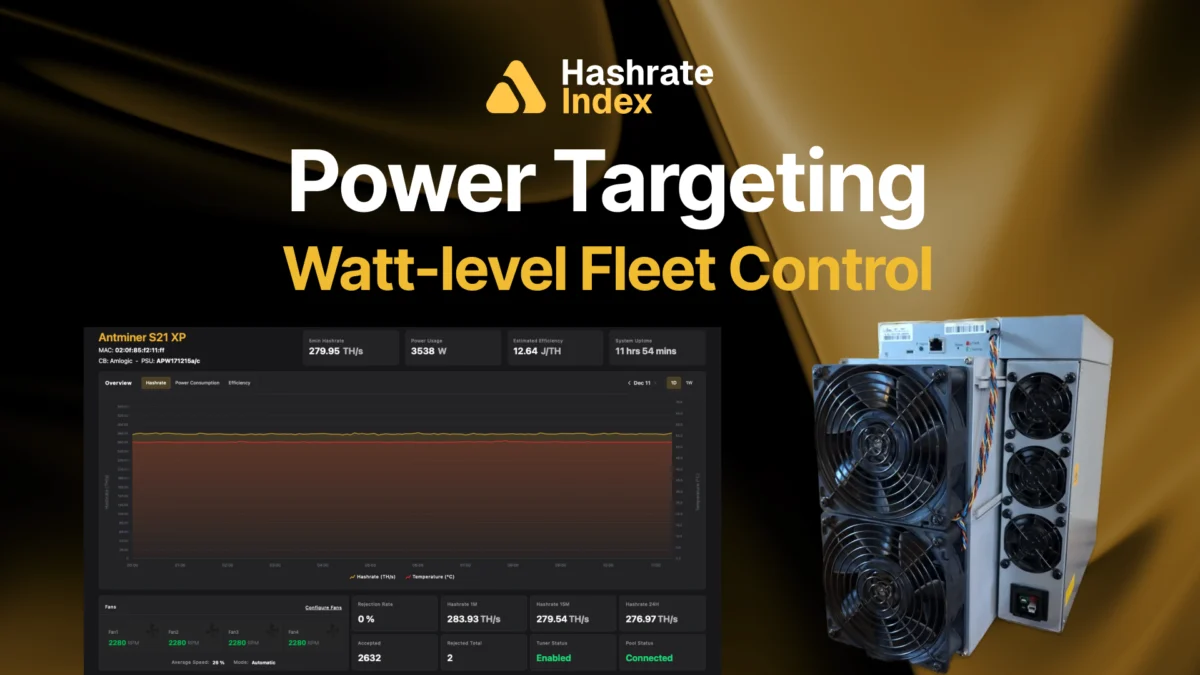
The landscape of Bitcoin mining infrastructure is undergoing a fundamental shift from hardware-centric operations to software-defined energy management, a transition exemplified by the latest advancements in Luxor Technology Corporation’s LuxOS firmware. As the global hashrate continues to climb and profit margins remain sensitive to energy costs, the introduction of Power Targeting represents a departure from traditional frequency-based tuning, offering operators a more granular approach to fleet management. By allowing miners to anchor their performance to specific wattage targets rather than arbitrary clock speeds, Luxor is addressing a critical need for predictability in an industry increasingly integrated with the broader energy grid.
The Shift from Frequency to Wattage-Anchored Tuning
Historically, the optimization of Application-Specific Integrated Circuits (ASICs) has relied on frequency presets. Operators would select a megahertz (MHz) value, and the machine would draw whatever power was necessary to maintain that speed. This method, while functional, created significant variance in power consumption due to differences in chip quality (the "silicon lottery") and ambient environmental conditions. A fleet of 1,000 miners set to the same frequency could exhibit a power draw variance of several hundred kilowatts, making it difficult for large-scale facilities to adhere to strict power purchase agreements (PPAs).
Power Targeting "flips the script" by making wattage the primary variable. In this model, the operator defines a specific power target—for instance, 3,400 Watts—and the firmware’s AutoTuner dynamically adjusts the frequency and voltage to meet that target. This ensures that the power draw remains constant regardless of individual chip efficiency or temperature fluctuations. The architectural foundation for this feature was first introduced by Luxor in late 2025 and has since been refined to provide a more robust interface for industrial miners.
Technical Mechanism: The Power Supply Heartbeat
One of the most significant technical distinctions of Power Targeting in LuxOS is its reliance on direct hardware feedback. Most standard firmware versions estimate power consumption based on theoretical models of the hashboard’s activity. These estimates are often inaccurate, as they fail to account for the efficiency losses within the Power Supply Unit (PSU) or the power consumed by cooling fans.
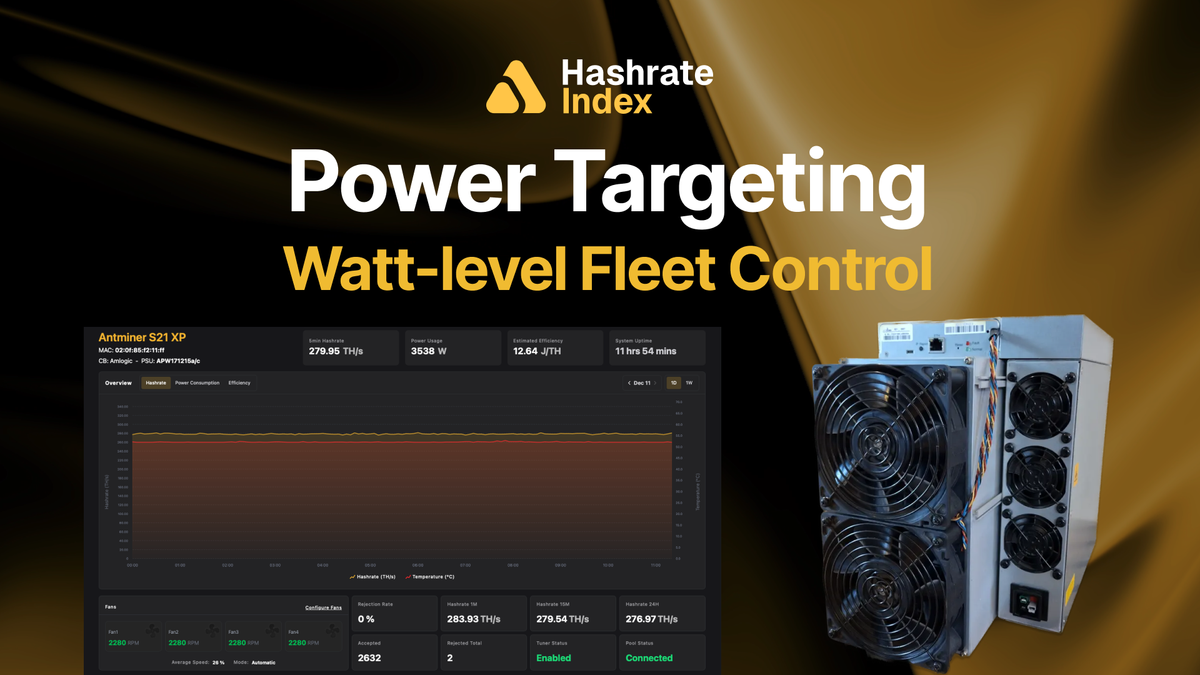
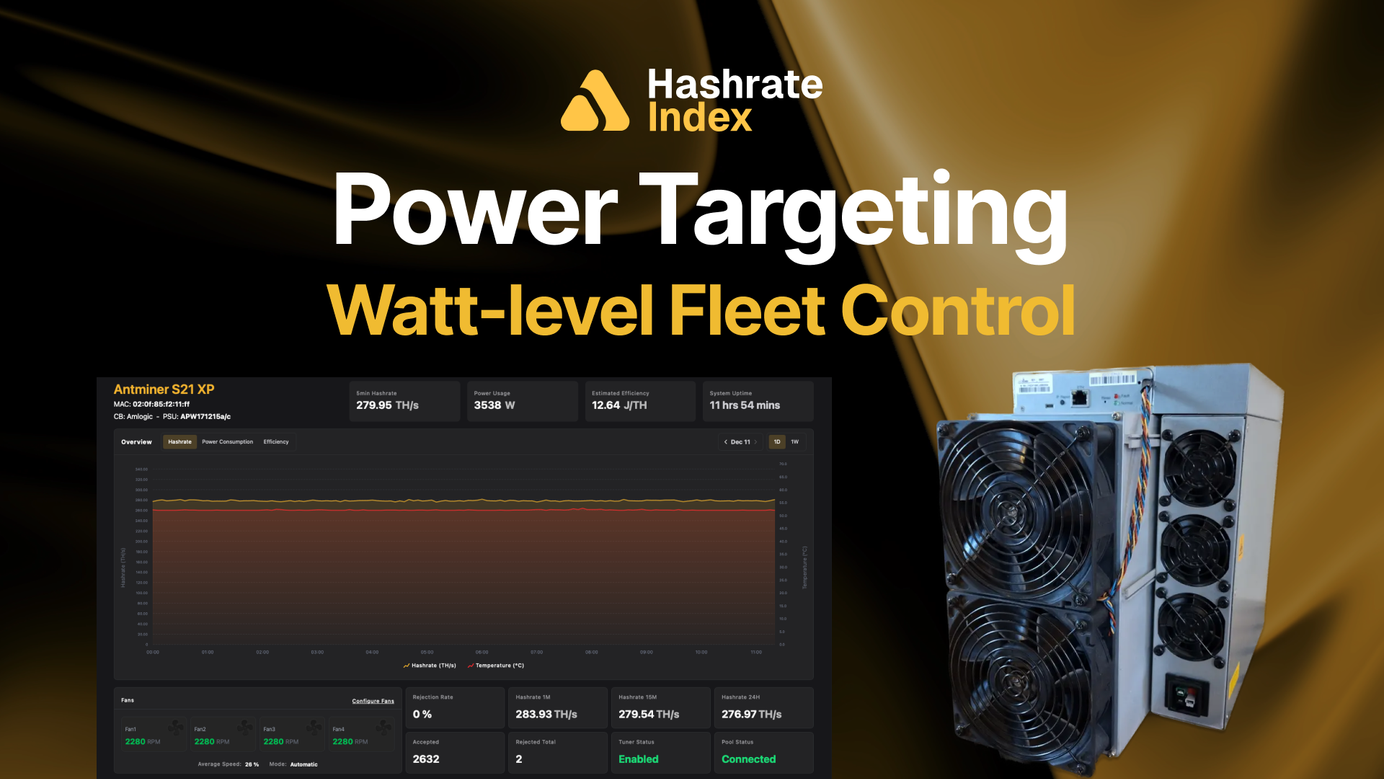
LuxOS utilizes what is known as a "power-supply heartbeat." The firmware reads data directly from the PSU in real-time, measuring the actual draw at the wall. This hardware-level integration allows the AutoTuner to make precise adjustments. When an operator sets a target on their dashboard, the figure represents a measured reality rather than a calculated approximation. This level of transparency is essential for "intelligent mining" strategies, where energy costs are calculated down to the millisecond.
Defining the Operating Corridor: Target, Limit, and Minimum
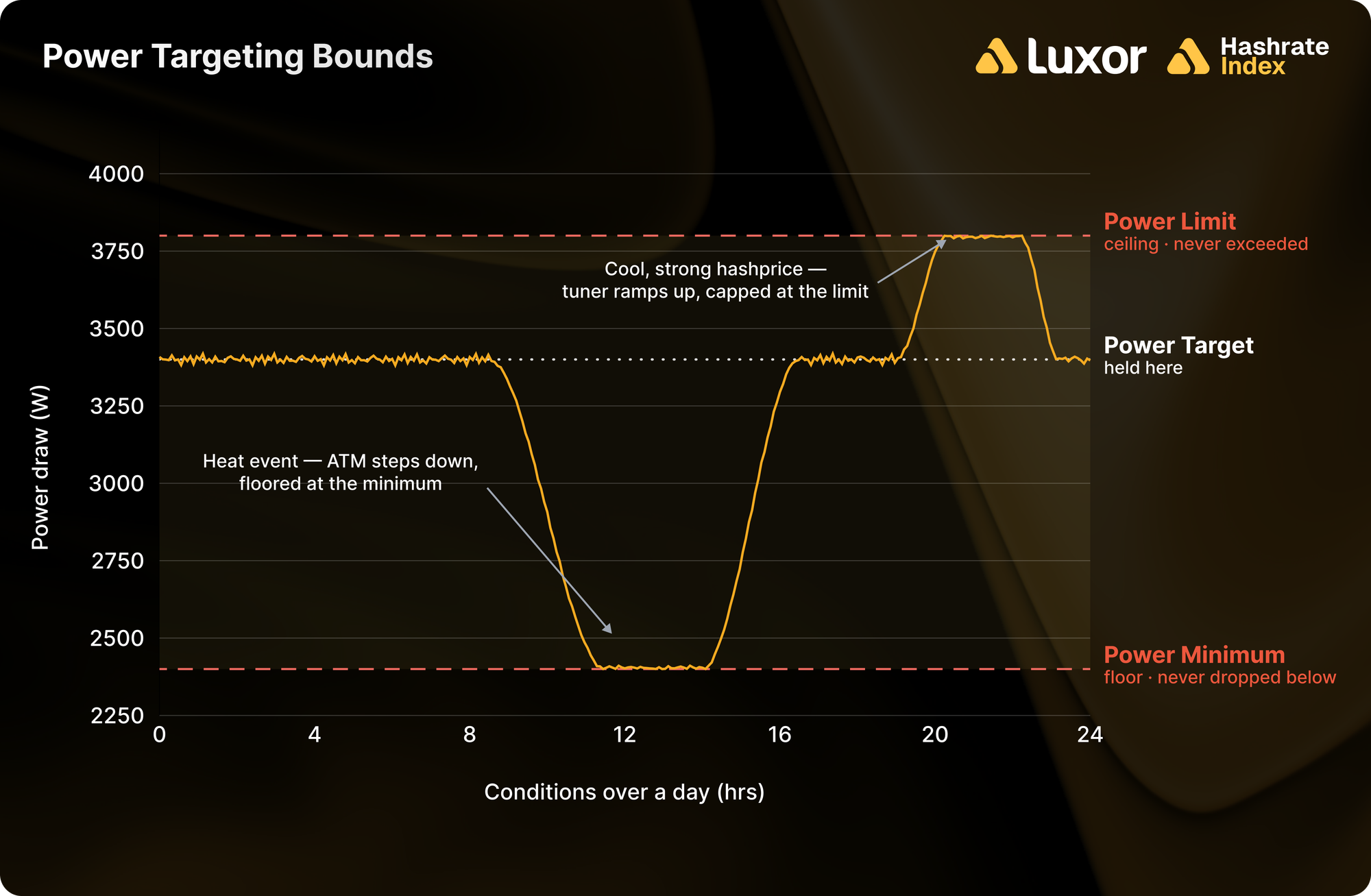
The latest iteration of Power Targeting introduces a triple-constraint system that allows operators to define a precise "operating corridor" for their fleet. This system is composed of three independent controls:
- The Power Target: This is the primary wattage the tuner aims to maintain during standard operations. It serves as the anchor point for the machine’s performance.
- The Power Limit (Ceiling): This defines the absolute maximum wattage the machine is permitted to draw. This is a critical safety and compliance feature, ensuring that a miner never exceeds the circuit rating of the data center or the contracted load limits of the utility provider.
- The Power Minimum (Floor): This defines the lowest wattage the machine should drop to during a "down-clocking" event. This is particularly important for facilities that provide grid stabilization services, where maintaining a minimum load is often a contractual requirement.
This corridor allows for unattended automation. If the ambient temperature rises, the firmware’s Advanced Thermal Management (ATM) system will begin to reduce the power draw to protect the hardware. However, instead of ramping down indefinitely or shutting off, the machine will stop at the "Power Minimum." Conversely, if temperatures drop and hashprice (the expected value of 1 TH/s of hashing power per day) increases, the tuner can ramp up toward the "Power Limit" to maximize revenue, but it will never "blow" a fuse by exceeding the ceiling.
Integration with Advanced Thermal Management (ATM)
The synergy between Power Targeting and Advanced Thermal Management is a cornerstone of Luxor’s full-stack approach to mining. In traditional setups, heat events often lead to "thermal runaway" or abrupt shutdowns, both of which stress the hardware and lead to downtime.
With LuxOS, the ATM and Power Targeting features run in parallel. The ATM monitors the temperature of the individual ASIC chips. If a chip exceeds its safe operating threshold, the ATM signals the Power Targeting system to lower the wattage. The transition is smooth and incremental, moving the miner down within the defined corridor. Once the thermal event passes—perhaps due to the sun setting or an improvement in data center airflow—the system automatically ramps the power back up to the target. This ensures the highest possible uptime and "five-nines" reliability for industrial fleets.
Implications for Energy Markets and Demand Response
The broader implications of Power Targeting extend beyond individual miner efficiency; they touch upon the evolving relationship between Bitcoin mining and the electrical grid. As miners become some of the largest consumers of industrial electricity, their ability to act as a "dispatchable load" is becoming a valuable asset.
Demand response programs require large energy consumers to reduce their load during times of peak grid stress. Traditionally, this meant turning machines off entirely. With Power Targeting, a mining farm can "tune" its entire load with surgical precision. If a grid operator requests a 10-megawatt reduction, the farm operator can simply adjust the power targets across their fleet via a centralized management platform like Luxor Commander. The miners remain online, continuing to secure the network and generate revenue, albeit at a lower hashrate, while the grid receives the necessary relief.
This capability is also vital for "interval energy trading," where miners buy and sell power in short-term blocks. Having a "watt-anchored" fleet allows operators to know exactly how much energy they will consume in the next hour, enabling them to participate in sophisticated energy hedging strategies that were previously reserved for traditional heavy industries.
Hardware Compatibility and Deployment
As of mid-2026, Power Targeting is supported on a wide array of Bitmain Antminer models, which remain the industry standard for high-performance mining. This includes the S19 XP and the S21 families, as well as their various sub-models (Pro, j Pro, etc.). Luxor has also been progressively adding support for hydro-cooled models, which are becoming increasingly popular in regions with high ambient temperatures or for applications involving heat recycling.
For operators, the implementation of Power Targeting is designed to be seamless. Manual frequency and voltage commands are bypassed when Power Targeting is active, preventing conflicting signals to the hashboards. Operators can change targets on the fly without restarting the machines, allowing for "smooth ramping" that minimizes electrical surges within the facility.
Fact-Based Analysis of Industry Impact
The move toward Power Targeting is a clear indicator of the professionalization of the Bitcoin mining sector. In the early years of mining, "overclocking" was a hobbyist pursuit aimed at squeezing every possible terahash out of a machine, often at the expense of longevity and efficiency. Today, the focus has shifted to "Total Cost of Ownership" (TCO) and "Jules per Terahash" (J/T) efficiency.
By providing a tool that prioritizes wattage—the primary cost driver of mining—Luxor is aligning its software with the financial realities of its clients. Supporting data suggests that fleets utilizing precision firmware like LuxOS can see an improvement in "uptime-adjusted efficiency" of 5-15% compared to those using stock firmware. Furthermore, the ability to prevent thermal shutdowns through the "corridor" method reduces mechanical stress on the PSU and fans, potentially extending the lifespan of the hardware by 12 to 18 months.
Conclusion and Future Outlook
Luxor Technology Corporation’s development of Power Targeting marks a milestone in the evolution of Bitcoin mining firmware. By transforming a mining fleet into a precise, dispatchable load, the company is providing the tools necessary for the next generation of intelligent energy strategies. Whether an operator is focused on maximizing hashrate during low-cost energy windows, recycling heat for industrial processes, or participating in complex grid-balancing programs, the ability to set a hard wattage target is the fundamental requirement.
As the industry moves toward the next halving cycle and beyond, the distinction between "mining" and "energy management" will continue to blur. Software like LuxOS, which offers a bridge between the digital world of Bitcoin and the physical world of the electrical grid, will be the determining factor in which operations remain profitable in an increasingly competitive global market. Luxor’s commitment to "full-stack" services—spanning hardware, firmware, and financial derivatives—positions the company as a central architect in this new era of software-defined mining.