The decentralized finance (DeFi) landscape witnessed a significant evolution with Synthetix, a leading synthetic asset protocol, announcing the live launch of its multicollateral margin system, fundamentally altering how perpetual futures are traded on the Ethereum Mainnet. For the first time in the history of Ethereum, traders can now directly utilize Ether (ETH), the blockchain’s native asset, as collateral for perpetual futures (perps) trading. This groundbreaking integration allows users to deposit ETH, engage in various market trades, and manage their positions from a unified multicollateral margin account, all while maintaining their core ETH holdings. This move not only enhances capital efficiency for traders but also marks a crucial step in cementing Ethereum’s Layer 1 (L1) as a premier venue for sophisticated decentralized derivatives.
The Evolution of Collateral in Decentralized Finance
Historically, the majority of derivatives trading, both in centralized exchanges (CEXs) and decentralized platforms (DEXs), has relied heavily on stablecoins like USDT or USDC as collateral. This preference stems from stablecoins’ inherent price stability, which simplifies risk management and liquidation processes. However, this reliance presents a significant limitation for investors holding volatile assets such as ETH. To use ETH for margin trading, holders typically had two options: either sell their ETH to acquire stablecoins, thereby forfeiting potential upside exposure to ETH, or collateralize their ETH in a lending protocol to borrow stablecoins, introducing additional layers of complexity, interest rate risk, and potential liquidation cascades. Neither option was ideal for traders bullish on ETH’s long-term prospects who also wished to actively trade other assets or hedge their positions.
Synthetix’s introduction of native ETH collateral directly addresses this challenge. By allowing ETH to serve as collateral without conversion, the protocol empowers traders to maintain their long-term ETH exposure while simultaneously leveraging its value for trading. This innovation is particularly pertinent given the substantial market capitalization of ETH, which frequently exceeds $200 billion, with a significant portion held by long-term investors. Tapping into this vast pool of "idle" ETH capital represents a monumental shift in how capital can be deployed within DeFi.
Synthetix’s Strategic Focus on Mainnet Perpetuals
Synthetix has been a pioneering force in DeFi since its inception, initially focusing on synthetic assets that mirrored real-world and crypto assets. Over time, the protocol has strategically pivoted, increasingly emphasizing decentralized perpetual futures trading. This shift was driven by the recognition of the immense market demand for perps and the desire to offer a robust, censorship-resistant, and highly liquid trading environment directly on Ethereum’s secure L1.
Operating directly on Ethereum Mainnet is a core tenet of Synthetix’s vision. While many DEXs for perps have opted for Layer 2 (L2) solutions or sidechains to mitigate gas costs and improve transaction speeds, Synthetix has committed to the L1 experience, believing that the unparalleled security, decentralization, and composability of the Ethereum Mainnet offer unique advantages for sophisticated financial primitives. The ability for every trade to live and settle on Ethereum Mainnet aligns with the ethos of true decentralization and offers a level of settlement finality and transparency unmatched by off-chain or federated solutions. The development of multicollateral margin, especially with ETH, underscores this commitment, providing a powerful incentive for traders to utilize an L1-native solution without sacrificing capital efficiency.
Understanding Multicollateral Margin with Native ETH
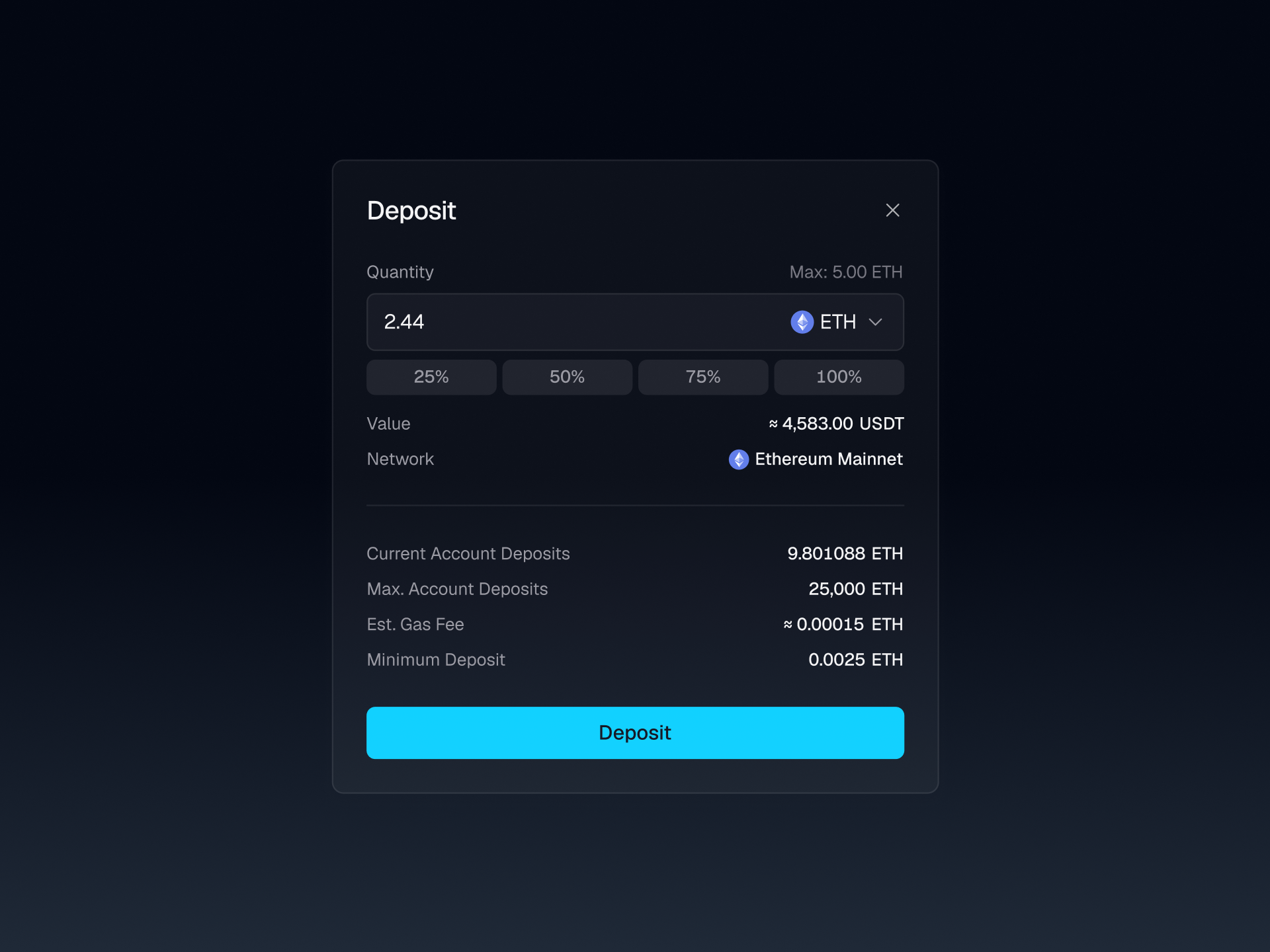
The new system allows users to deposit ETH directly into a unified multicollateral margin account. Within this account, ETH and USDT (and soon, other assets) work in concert, with their combined value backing every open position. This unified approach eliminates the need for separate margin accounts for different collateral types, streamlining the trading experience and significantly improving capital efficiency.
A primary benefit for ETH holders is the ability to "Trade Without Selling Your ETH." Traders can now post ETH directly as collateral, maintaining their exposure to the asset they are most bullish on, while simultaneously trading various perpetual markets. The system effectively allows an ETH-denominated mindset to merge with margin trading. For instance, if a trader holds ETH and believes it will appreciate, but also sees opportunities in other markets or wishes to hedge, they can now do so without liquidating their ETH. Their ETH stack backs their account, with USDT-settled positions running on top of it. This functionality is a stark contrast to previous methods that often forced a trade-off between maintaining ETH exposure and participating in active derivatives trading.
Mechanics of ETH Collateral: Valuation and Risk Management
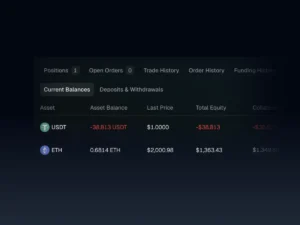
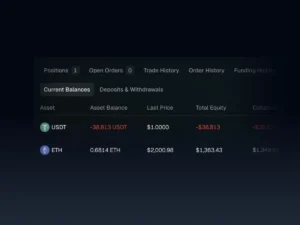
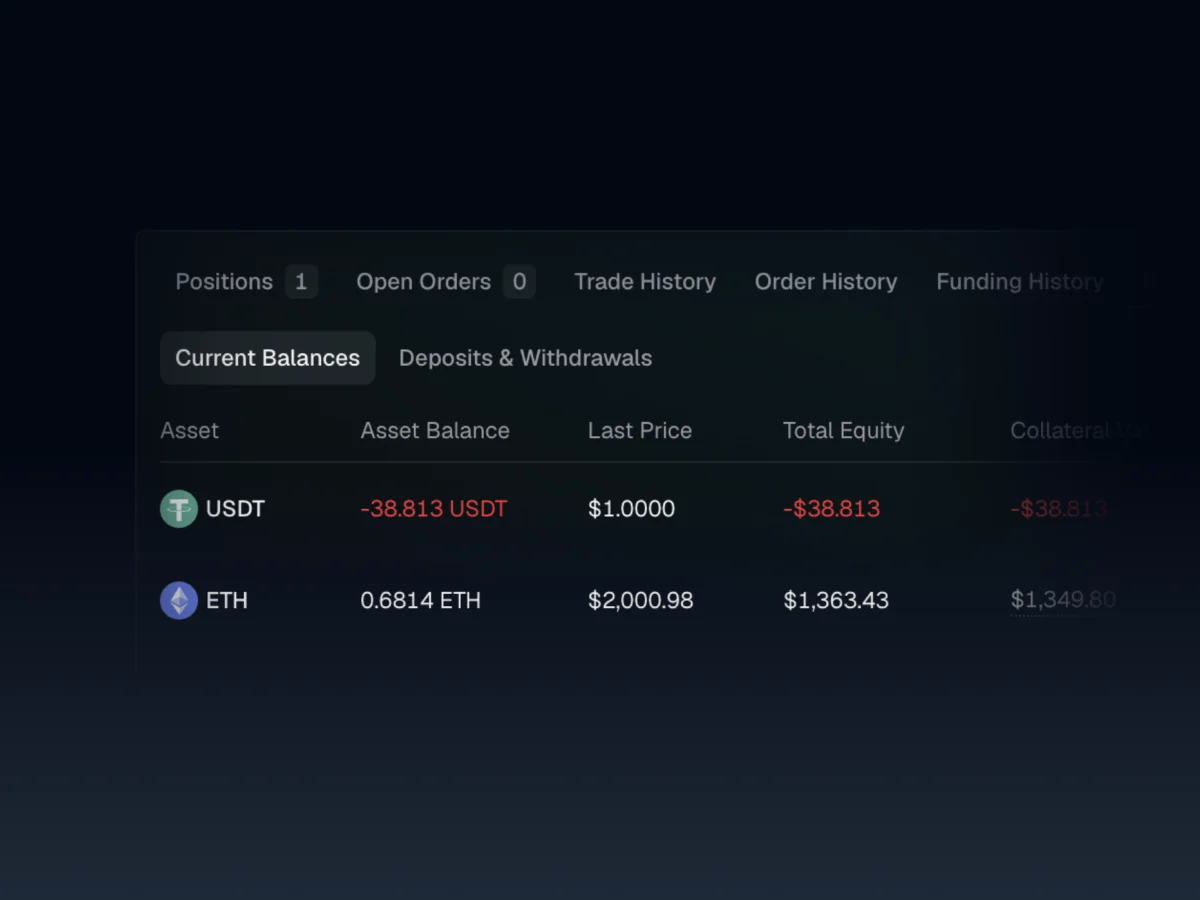
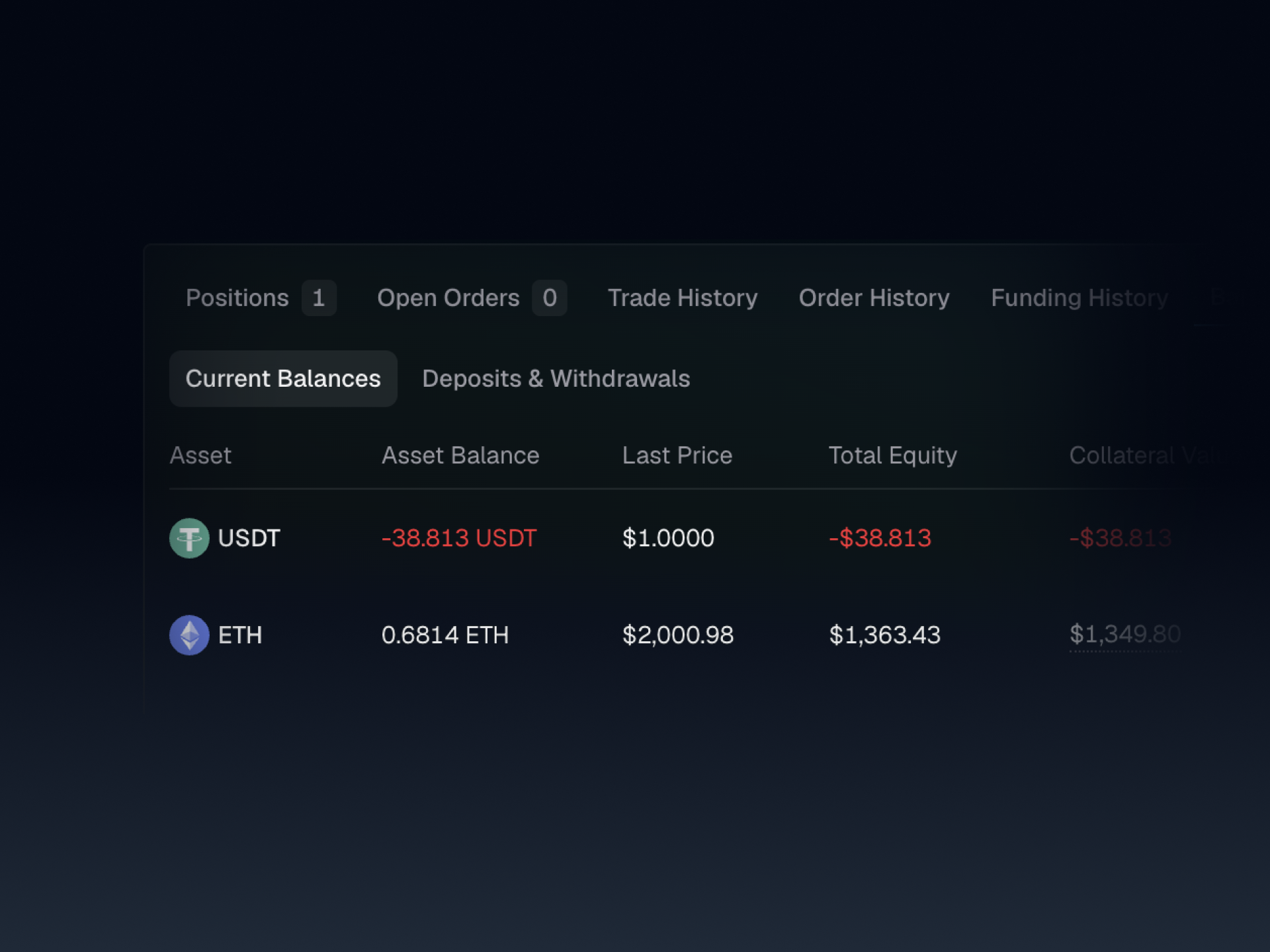
When ETH is deposited as collateral on Synthetix, its value is determined using its live index price. To account for its inherent volatility and ensure protocol stability, a standard risk discount, known as a ‘haircut,’ is applied. The resulting figure is the ‘Collateral Value,’ which is the actual amount of the deposited ETH that counts towards the trader’s margin. This real-time valuation is crucial for managing risk and ensuring the solvency of the system. Traders can monitor their Collateral Value at any time within their balance table.
It is important to note that while ETH can be used as collateral, positions, fees, funding, and profit/loss (PnL) continue to be settled in USDT. This design choice maintains consistency across the platform’s trading mechanics. If a trader is operating solely on ETH collateral without a positive USDT balance, their USDT balance can temporarily go negative as fees and losses accrue. This negative USDT balance is intentionally designed to be backed by the deposited ETH. Users have the option to repay this negative balance at any time by utilizing an internal swap function to convert a portion of their ETH collateral into USDT directly within their account.
Managing volatile collateral requires vigilance. A drop in the market price of ETH will directly reduce the Collateral Value, even if open positions remain unchanged. This necessitates traders to actively monitor the price of their collateral, not just their position PnL, and maintain a sufficient buffer to avoid premature liquidation. The protocol incorporates an automatic conversion mechanism: if the negative USDT debt climbs past the account’s allowed limit, the system can automatically convert a portion of ETH to USDT to restore solvency. Users are encouraged to proactively manage their accounts and repay any negative USDT balance voluntarily before reaching critical thresholds. Comprehensive details regarding haircuts, swap functionalities, withdrawal procedures, and account health metrics are available in the Synthetix documentation, providing full transparency for traders.
Enhanced Strategies: More Efficient Basis Trades
The introduction of ETH as multicollateral margin significantly enhances the efficiency of several core DeFi strategies, particularly basis trades. A basis trade typically involves simultaneously holding a spot asset and taking an opposite position in a futures contract for the same asset, aiming to profit from the difference (basis) between the spot price and the futures price, often by collecting funding rates.
With native ETH collateral, basis traders can now deposit ETH and simultaneously short ETH perpetual futures of an equal size. This creates a delta-neutral position where the collateral value and the position PnL largely offset each other, effectively reducing directional market risk. The primary objective then becomes to collect the funding rate on the short position. By making this strategy more capital-efficient and seamless, Synthetix empowers basis traders to operate with reduced friction and lower opportunity costs. This efficiency is not just beneficial for individual traders; basis traders play a vital role in keeping funding rates aligned across markets. When they can execute these strategies more efficiently, the entire exchange ecosystem benefits from tighter spreads, increased liquidity, and more competitive markets, ultimately improving the trading experience for all participants.
Statements and Expert Insights
Core contributors to Synthetix expressed enthusiasm for this milestone, highlighting its importance for the protocol’s long-term vision. "This is a pivotal moment for Synthetix and the broader Ethereum ecosystem," stated a lead developer, preferring anonymity given the decentralized nature of the project. "We’ve always believed in the power of L1 for robust financial primitives, and unlocking native ETH collateral removes a major barrier for sophisticated traders. It’s about empowering users to leverage their assets without compromise, fostering deeper liquidity and more complex strategies directly on Mainnet."
DeFi analysts have echoed this sentiment, recognizing the strategic implications. Dr. Anya Sharma, a blockchain economist specializing in decentralized derivatives, commented, "Synthetix’s move to accept native ETH as collateral for perps on L1 is a significant leap forward in capital efficiency for the DeFi space. It challenges the prevailing narrative that L2s are the only viable solution for high-frequency trading. While gas fees remain a consideration, the security and composability advantages of L1 for specific types of traders, especially those with substantial ETH holdings, are undeniable. This could attract a new segment of institutional and sophisticated retail traders to decentralized platforms." This innovation positions Synthetix to compete more effectively with both centralized exchanges and other decentralized derivatives protocols that might rely on wrapped assets or L2 solutions for collateral.
Broader Implications for the Ethereum Ecosystem
The opportunity presented by ETH as collateral on an L1 perp DEX is profound. Synthetix can now directly access the vast pool of ETH capital, estimated to be well over $100 billion in potential "idle" assets. By providing a utility layer for ETH directly on its native blockchain, Synthetix is enhancing ETH’s fundamental value proposition beyond just gas fees, staking, and governance. This broadens ETH’s functionality, cementing its role as a premier collateral asset within the decentralized financial system.
This increased utility could catalyze a "virtuous flywheel" for the entire Ethereum ecosystem. By attracting significant trading volume to an L1 DEX, Synthetix could generate substantial transaction fees, which in turn could be used to further secure the protocol, incentivize liquidity providers, and fund ongoing development. If Synthetix manages to capture even 10% of today’s average monthly derivatives volume – a market that frequently sees trillions of dollars in activity across both centralized and decentralized venues – it would translate into billions of dollars in new trading activity and fees flowing through the Ethereum Mainnet. This surge in activity would benefit every protocol integrated within the Ethereum DeFi stack, making the entire ecosystem exponentially more valuable through enhanced composability, deeper liquidity pools, and increased user engagement. It would also further validate the long-term viability and security of L1-based DeFi applications, potentially attracting more developers and capital to build on Ethereum.
The Road Ahead: More Collateral Types Coming Soon
While ETH is the inaugural non-USDT collateral asset on Synthetix Perps, it represents merely the first step in a broader strategic rollout. The underlying infrastructure has been designed with scalability and flexibility in mind, built to support a diverse array of additional assets in the future. The roadmap includes plans for integrating more collateral types, with a particular emphasis on yield-bearing assets. The introduction of yield-bearing collateral would represent another significant leap in capital efficiency, allowing traders to earn yield on their collateral while simultaneously using it for margin trading, maximizing their returns.
This initiative is just the beginning of Synthetix’s journey to deliver a truly comprehensive and capital-efficient multicollateral trading experience directly on the Ethereum Mainnet. The protocol aims to continuously expand its offerings, catering to a wider range of traders and strategies, further solidifying its position as a leading decentralized derivatives platform.
Trade with ETH Now
The multicollateral margin system with native ETH collateral is now fully live on Synthetix Perps. Traders interested in leveraging this innovative feature can access the platform, deposit ETH, and begin trading various perpetual futures markets. For detailed instructions on how to get started, manage accounts, and understand the intricacies of ETH collateral, comprehensive documentation is available on the Synthetix website. Users seeking direct assistance or having further questions can also utilize the chat support feature integrated into the documentation site to connect with the Synthetix team. This release marks a new era for decentralized derivatives, promising greater flexibility and efficiency for traders and a bolstered role for Ethereum’s native asset within the DeFi ecosystem. The Synthetix team invites the community to follow their progress as they continue to innovate and shape Ethereum Mainnet into the premier venue for perpetual futures trading.